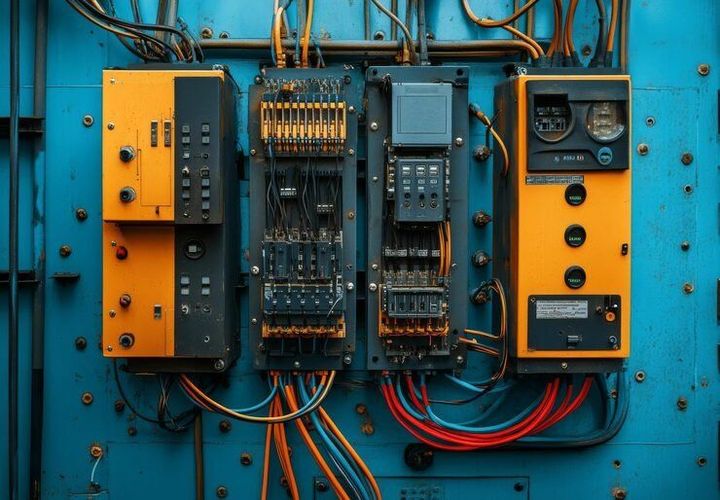
Industrial Electrical Equipment Explained: Types, Components, Functions, Applications and Benefits
Industrial electrical equipment includes the devices and systems used to generate, distribute, control, protect, and monitor electrical power in factories, warehouses, commercial buildings, and infrastructure facilities. It forms an important part of modern industrial operations because machines, production lines, lighting systems, pumps, and automated processes depend on a reliable electrical supply.
Context
Industrial electrical equipment includes the devices and systems used to generate, distribute, control, protect, and monitor electrical power in factories, warehouses, commercial buildings, and infrastructure facilities. It forms an important part of modern industrial operations because machines, production lines, lighting systems, pumps, and automated processes depend on a reliable electrical supply.
The development of industrial electrical equipment followed advances in electrical generation, electric motors, power distribution, and control technology. As factories expanded and machinery became more complex, industries needed equipment that could manage electrical loads, protect circuits, regulate machine operation, and reduce the risks associated with electrical faults.
Today, industrial electrical equipment ranges from basic switches and circuit breakers to sophisticated motor drives, control panels, sensors, and digital monitoring systems. Each component has a specific role in keeping electrical systems organized and supporting the operation of industrial machinery.
Main Types of Industrial Electrical Equipment
Industrial electrical equipment can be grouped according to its primary function.
Power distribution equipment: Distribution boards, switchgear, busbars, and transformers help route electrical power to different parts of a facility.
Protection equipment: Circuit breakers, fuses, overload relays, and protective relays interrupt or isolate electrical circuits under specified fault conditions.
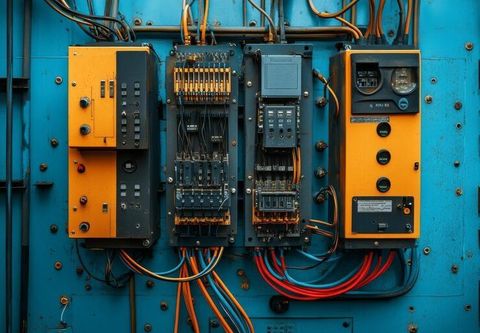
Control equipment: Contactors, switches, relays, and programmable logic controllers manage the operation of machines and electrical circuits.
Motor control equipment: Motor starters and variable frequency drives regulate how electric motors start, stop, and operate.
Monitoring equipment: Meters, sensors, and monitoring systems measure voltage, current, power consumption, temperature, and other operating conditions.
Backup power equipment: Uninterruptible power supplies and standby generators support selected equipment when the normal power supply is interrupted.
The equipment required depends on the electrical load, operating environment, machine design, and applicable safety requirements.
Importance
Industrial electrical equipment matters because electrical power supports a wide range of essential industrial activities. Manufacturing plants use it to operate conveyors, welding machines, compressors, pumps, heating systems, and robotic equipment. Warehouses depend on electrical distribution, lighting, charging stations, and automated handling systems.
Incorrect equipment selection, poor maintenance, or inadequate protection can contribute to equipment damage, production interruptions, electric shock, or fire. Understanding the functions of different components helps facility operators, maintenance personnel, engineers, and general readers recognize how industrial electrical systems are organized.
Core Components and Their Functions
Industrial electrical systems usually contain several connected components that perform different tasks.
Transformers: Change alternating-current voltage levels to suit distribution or equipment requirements.
Switchgear: Contains switching, isolation, and protection devices used to manage electrical circuits.
Circuit breakers: Interrupt electrical current when specified fault conditions occur.
Contactors: Electrically operated switches commonly used to control motors and other loads.
Overload relays: Detect sustained motor overcurrent conditions within their operating characteristics and help initiate protective action.
Variable frequency drives: Adjust the frequency and voltage supplied to compatible motors to control their speed.
Programmable logic controllers (PLCs): Execute programmed instructions to coordinate machine operations using input and output signals.
Electrical meters: Measure quantities such as voltage, current, energy use, and power.
These components work together, but they are not interchangeable. For example, a contactor controls a circuit, while a circuit breaker provides a protective function according to its design and rating.
Industrial Electrical Equipment by Application
Different industries use different combinations of equipment depending on their processes.
| Industrial application | Common equipment | Main purpose |
|---|---|---|
| Manufacturing lines | Motors, drives, PLCs | Machine movement and process control |
| Water treatment plants | Pumps, control panels, meters | Fluid movement and system monitoring |
| Warehouses | Distribution boards, motor controls | Power distribution and material handling |
| Food processing | Motors, sensors, protective devices | Equipment operation and process coordination |
| Heavy industry | Transformers, switchgear, protective relays | Power management and circuit protection |
| Data facilities | UPS systems, distribution equipment | Continuity of selected electrical loads |
The actual equipment arrangement varies according to the facility's size, electrical supply, process requirements, and safety design.
Recent Updates
Industrial electrical equipment is evolving alongside factory automation, digital monitoring, energy management, and electrification. Developments from 2024 through 2026 reflect growing interest in connected equipment, condition monitoring, variable-speed motor control, and systems that help facilities understand their electricity use. Adoption differs across industries and depends on technical requirements, existing infrastructure, and investment priorities.
Smart Monitoring and Industrial Automation
Modern electrical equipment increasingly includes digital communication capabilities. Smart meters, connected protection devices, and industrial sensors can provide information about current, voltage, temperature, operating status, and fault events. When integrated into suitable monitoring systems, these measurements help operators identify unusual conditions and review equipment performance.
Programmable logic controllers and supervisory control and data acquisition (SCADA) systems also support coordinated industrial operations. PLCs handle machine-level control, while SCADA systems can collect and display information from multiple devices or processes. Their functions depend on system configuration and the quality of the data available.
Energy Efficiency and Predictive Maintenance
Variable frequency drives can adjust motor speed to match process requirements. In applications involving pumps and fans, appropriate speed control may reduce electricity consumption compared with operating a motor continuously at a fixed speed, although results depend on the equipment and operating conditions.
Predictive maintenance uses information such as vibration, temperature, electrical measurements, and operating history to identify possible equipment deterioration. These methods can help maintenance teams investigate developing problems, but they do not eliminate breakdowns or replace required inspections.
Digital Security and Equipment Integration
Connected industrial electrical equipment introduces cybersecurity considerations. Unauthorized access to control systems can affect equipment operation, production processes, and safety. Facilities therefore increasingly consider network separation, access permissions, secure configuration, software updates, and monitoring when connecting industrial systems to wider networks.
Integrating equipment from different manufacturers can also require attention to communication protocols, control interfaces, and compatibility. A device's ability to exchange data depends on supported standards and the configuration of the wider system.
Laws or Policies
Industrial electrical equipment is subject to electrical safety rules, product standards, installation requirements, and workplace regulations. The exact requirements depend on the country, facility type, voltage level, equipment category, and intended application.
Electrical Safety Requirements in India
In India, the Electricity Act, 2003, provides a legal framework for electricity generation, transmission, distribution, and use. The Central Electricity Authority issues regulations covering relevant technical and safety matters, including electrical installations and safety requirements. Applicable provisions should be checked against the current regulations and the circumstances of the installation.
The Bureau of Indian Standards develops Indian Standards for electrical products, installations, and related technical matters. Certain products may be subject to mandatory conformity requirements or quality-control orders, depending on their category and the regulations in force. Product compliance should be verified for the specific equipment rather than assumed for an entire product group.
Installation, Testing, and Workplace Protection
Industrial electrical installations require appropriate design, grounding or earthing, overcurrent protection, isolation arrangements, and equipment ratings. Maintenance and testing requirements depend on the installation, applicable rules, manufacturer instructions, and operating conditions.
Important safety considerations include:
Electrical isolation: Equipment must be isolated appropriately before maintenance, following established procedures.
Protective grounding: Earthing arrangements help manage certain fault conditions and reduce electrical hazards.
Overcurrent protection: Protective devices must be selected for the circuit and anticipated fault conditions.
Enclosure ratings: Enclosures should suit environmental conditions such as dust, moisture, and exposure to chemicals.
Qualified personnel: Electrical installation, testing, and repair should be carried out by appropriately qualified people under applicable requirements.
These are general principles, not a substitute for a site-specific electrical design or formal safety assessment.
Tools and Resources
Technical references and diagnostic tools help users understand industrial electrical equipment, check specifications, and organize maintenance information. Their appropriate use depends on the user's training and the type of equipment involved.
Electrical Calculation and Selection Tools
Electrical engineers use calculation methods and suitable software to assess load requirements, cable sizing, voltage drop, fault current, and protective-device coordination. Manufacturer selection tools may also help compare motor drives, circuit breakers, contactors, and transformers against stated technical requirements.
Common measurement instruments include digital multimeters, clamp meters, insulation resistance testers, and power quality analyzers. Each instrument has specific measurement limits and safety requirements. Electrical measurements on energized industrial equipment should be performed only by appropriately trained personnel using suitable equipment and procedures.
Standards and Technical Documentation
The following resources provide information about equipment requirements and industrial electrical systems:
Bureau of Indian Standards (BIS): Indian Standards and relevant product conformity information.
Central Electricity Authority (CEA): Applicable electricity safety regulations and technical requirements.
International Electrotechnical Commission (IEC): International standards covering electrical equipment, switchgear, controlgear, and industrial automation.
Manufacturer datasheets: Rated voltage, current, operating temperature, enclosure protection, wiring requirements, and compatible accessories.
Maintenance records: Inspection findings, fault history, test results, and equipment replacement information.
A useful equipment register records each device's identification number, location, rating, installation details, inspection history, and maintenance status. Accurate records can support maintenance planning and help technicians understand the configuration of an electrical installation.
FAQs
What is industrial electrical equipment?
Industrial electrical equipment includes devices used to distribute, control, protect, convert, and monitor electrical power in industrial facilities. Examples include transformers, circuit breakers, motors, contactors, drives, and control panels.
What are the main types of industrial electrical equipment?
The main categories include power distribution equipment, circuit protection devices, motor control systems, automation controllers, monitoring instruments, and backup power equipment. Each category performs a different role within an electrical system.
What is the function of industrial electrical control equipment?
Industrial electrical control equipment manages the operation of machines and electrical loads. Contactors switch circuits, motor drives regulate motor operation, and PLCs coordinate processes using programmed instructions.
How does industrial electrical equipment support energy efficiency?
Equipment such as variable frequency drives, efficient motors, and monitoring systems can help manage electricity use. The results depend on equipment selection, system design, operating conditions, and maintenance practices.
Which standards apply to industrial electrical equipment in India?
Applicable requirements may involve Indian Standards, Central Electricity Authority regulations, and relevant product conformity rules. The specific standards depend on the equipment category, installation, and regulations currently in force.
Conclusion
Industrial electrical equipment supports power distribution, machine control, electrical protection, and monitoring across many industries. Its main categories include transformers, switchgear, circuit breakers, motor drives, controllers, and measurement devices. Digital monitoring and energy management are influencing how facilities operate and maintain these systems. Appropriate equipment selection, compliance with applicable requirements, and sound maintenance practices are important parts of industrial electrical safety and reliability.

You May Also Like