Industrial Filtration Equipment Explained: Types, Components, Applications, Benefits and Selection Factors
Industrial filtration equipment is used to remove unwanted particles, contaminants, and other materials from liquids, gases, and air during manufacturing and processing. These systems help maintain product quality, protect machinery, reduce emissions, and support controlled production environments. Industrial filtration equipment is found in factories, chemical processing facilities, water treatment plants, food production units, pharmaceutical manufacturing, and many other industries.
Context
Industrial filtration equipment is used to remove unwanted particles, contaminants, and other materials from liquids, gases, and air during manufacturing and processing. These systems help maintain product quality, protect machinery, reduce emissions, and support controlled production environments. Industrial filtration equipment is found in factories, chemical processing facilities, water treatment plants, food production units, pharmaceutical manufacturing, and many other industries.
Filtration developed from basic methods such as cloth screening, sand filtration, and settling systems. As industrial production expanded, manufacturers required equipment capable of handling larger fluid volumes, higher temperatures, different chemical properties, and smaller particles. Modern industrial filtration systems combine filter media, housings, pumps, pressure controls, and monitoring instruments to separate unwanted substances from a flowing material.
Understanding Industrial Filtration Equipment
Industrial filtration equipment works by passing a liquid or gas through a material that captures or separates selected contaminants. The process may use physical barriers, porous materials, membranes, centrifugal forces, or combinations of these methods. The appropriate design depends on the material being filtered and the required level of separation.
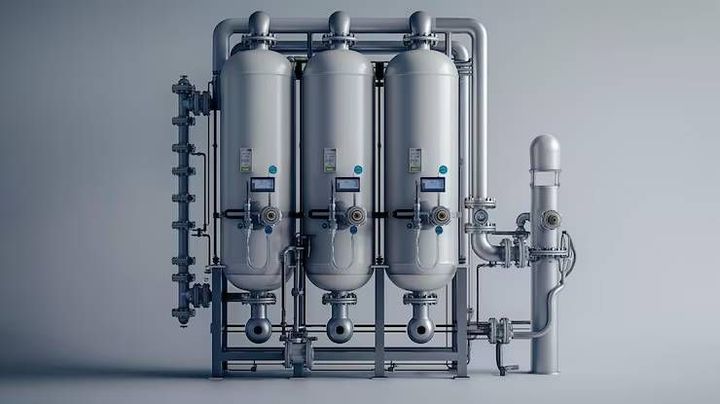
Common components include:
Filter media: Cloth, paper, mesh, cartridges, membranes, or granular materials that capture particles.
Filter housing: A protective enclosure that holds the filter element and directs the flow.
Pumps and blowers: Equipment that moves liquids or gases through the filtration system.
Valves and pipelines: Components that control flow, pressure, and isolation during operation.
Sensors and controls: Instruments that monitor pressure, flow rate, temperature, or filter condition.
Collection units: Containers or discharge arrangements that collect separated particles or waste materials.
Not every filtration system uses all these components. Equipment design varies according to the process, operating environment, contaminant type, and required filtration performance.
Importance
Industrial filtration equipment matters because contaminants can affect production quality, machinery reliability, worker safety, and environmental conditions. Dust entering a manufacturing process may damage equipment, while unwanted particles in industrial water can interfere with cleaning, cooling, or product preparation. Air filtration can also help control airborne dust and certain process emissions when the system is correctly designed and maintained.
These systems affect industries that produce metals, chemicals, beverages, electronics, textiles, paper, and construction materials. Their performance influences maintenance schedules, material recovery, workplace conditions, and compliance with applicable environmental requirements.
Main Types of Industrial Filtration Equipment
Different filtration technologies address different materials and operating conditions.
Bag filters: Use fabric bags to capture suspended particles from liquids or gases, depending on the design. They are commonly used in industrial liquid processing and dust collection applications.
Cartridge filters: Contain replaceable filter elements in compact housings. They are used in water treatment, chemical processing, and other applications that require controlled particle removal.
Dust collectors: Capture airborne particles generated by grinding, cutting, sanding, mixing, and material handling. Baghouse and cartridge dust collectors are common designs.
Membrane filtration systems: Use selective membranes to separate particles or dissolved substances according to membrane properties and process conditions. Applications include water treatment and specialized industrial processing.
Centrifugal separators: Use rotational forces to separate materials with different densities, often removing solids from liquids or separating droplets from gas streams.
Electrostatic precipitators: Use electrical forces to collect particles from gas streams. They are used in certain industrial exhaust and emission-control applications.
Sand and media filters: Pass water through granular materials to capture suspended solids. These systems are used in water treatment and some industrial circulation processes.
Comparing Filtration Technologies
| Equipment type | Main separation method | Typical application |
|---|---|---|
| Bag filter | Particle capture in filter media | Industrial liquid processing |
| Cartridge filter | Fine particle retention | Process water and chemical liquids |
| Dust collector | Airborne particle capture | Manufacturing and material handling |
| Membrane system | Selective separation | Water treatment and process liquids |
| Centrifugal separator | Density-based separation | Slurries, oils, and process fluids |
| Electrostatic precipitator | Electrical particle collection | Industrial exhaust gases |
| Sand filter | Particle retention in granular media | Water treatment and circulation |
Actual performance depends on the equipment specification, filter material, operating conditions, and properties of the material being treated.
Industrial Applications
Industrial filtration equipment supports many production activities. In metalworking, it can remove particles from cooling fluids and collect dust created during cutting or grinding. In food and beverage processing, filtration may help clarify liquids, protect processing equipment, and meet applicable hygiene requirements.
Water treatment facilities use filtration to reduce suspended solids before further treatment or reuse. Chemical plants may filter process liquids to remove unwanted particles, while electronics manufacturing can require controlled air and liquid filtration to protect sensitive production environments. Oil, gas, and power facilities may use specialized systems to separate solids, droplets, or other contaminants from process streams.
Recent Updates
Industrial filtration developments from 2024 through 2026 have continued to focus on energy efficiency, automated monitoring, improved filter materials, and environmental performance. The adoption rate differs by industry, facility size, and local regulatory requirements. These developments generally aim to improve process control and provide clearer information about filtration conditions.
Automation and Condition Monitoring
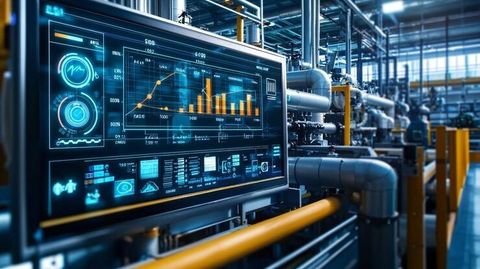
Modern filtration systems may use sensors to monitor pressure differences across filter elements, flow rates, temperature, and operating status. A rising pressure difference can indicate that a filter is becoming blocked, although other operating problems may produce similar readings. Monitoring systems can help maintenance teams identify changing conditions and plan inspections.
Some facilities integrate filtration equipment with supervisory control and data acquisition systems, commonly known as SCADA. These systems can display operating measurements, generate alerts, and record equipment trends. Automated monitoring does not eliminate the need for physical inspection or correct maintenance procedures.
Energy Efficiency and Filter Materials
Industrial facilities increasingly examine the energy required to move air or liquid through filters. Blocked filters can increase resistance to flow and place additional demand on fans or pumps. Suitable filter selection, regular maintenance, and appropriate operating controls can help manage this energy use.
Filter manufacturers are also developing media with different combinations of particle retention, chemical compatibility, durability, and pressure resistance. Reusable or cleanable elements may be suitable for certain processes, while disposable elements may be necessary for others. Material recovery and waste reduction depend on the contaminant, cleaning method, and applicable handling rules.
Laws or Policies
Industrial filtration equipment may be affected by environmental regulations, workplace safety requirements, water discharge standards, and industry-specific rules. The applicable requirements depend on the country, the type of facility, the material being filtered, and the pollutants involved.
Environmental Regulations in India
In India, industrial emissions and wastewater discharges are regulated through applicable environmental laws and rules, including the Air (Prevention and Control of Pollution) Act, 1981, and the Water (Prevention and Control of Pollution) Act, 1974. The Central Pollution Control Board and State Pollution Control Boards have roles in pollution monitoring, standards, and regulatory implementation.
Depending on the industry and location, facilities may need consent or authorization from the relevant pollution control authority. Industrial filtration may form part of a pollution-control system, but installing a filter alone does not establish compliance. Performance must be assessed against the applicable emission limits, discharge conditions, and operating requirements.
Workplace Safety and Equipment Operation
Industrial filtration systems can involve pressurized vessels, rotating machinery, hot surfaces, hazardous dust, or chemically active liquids. Facilities must apply relevant workplace safety requirements, equipment safeguards, and maintenance procedures. Lockout procedures, pressure isolation, suitable personal protective equipment, and safe handling of collected contaminants may be necessary for particular tasks.
Hazardous dust and collected sludge can require special storage, transport, or disposal arrangements. The correct procedure depends on the substance and its classification. Environmental and safety obligations should therefore be considered alongside filtration efficiency and equipment capacity.
Tools and Resources
Several technical resources help engineers, maintenance teams, and facility operators understand filtration requirements and evaluate system performance.
Filtration Calculators and Technical Documents
Filtration calculations may involve flow rate, filter area, particle size, pressure drop, and contaminant loading. For example, liquid flow rate can be expressed in litres per minute or cubic metres per hour, while air filtration systems may use cubic metres per hour or cubic feet per minute. Consistent units are important when comparing equipment specifications.
Manufacturer datasheets typically describe filter media, operating temperature limits, pressure ratings, chemical compatibility, and recommended operating conditions. Technical manuals also explain installation requirements, cleaning methods, replacement intervals, and maintenance precautions.
Industry Standards and Monitoring Platforms
The International Organization for Standardization (ISO) publishes standards relevant to air filtration, environmental management, and industrial quality systems. The applicable standard depends on the application, and not every filtration product is covered by the same testing method.
SCADA platforms and industrial monitoring systems can help track pressure differences, flow rates, alarms, and maintenance records. Maintenance spreadsheets can also record filter changes, inspection results, operating hours, and unusual pressure readings. These records support trend analysis but should be interpreted in the context of actual process conditions.
Factors for Equipment Selection
Important selection factors include:
Material type: Determine whether the system handles air, water, oil, chemicals, or a mixed stream.
Particle characteristics: Consider particle size, concentration, shape, and tendency to clump.
Flow requirements: Establish the expected flow rate and variations during operation.
Operating conditions: Check temperature, pressure, chemical compatibility, and available installation space.
Maintenance needs: Consider cleaning methods, replacement requirements, access, and waste handling.
Regulatory requirements: Identify relevant emission limits, discharge standards, and workplace safety obligations.
FAQs
What is industrial filtration equipment used for?
Industrial filtration equipment removes unwanted particles or contaminants from liquids, gases, and air. It is used in manufacturing, water treatment, chemical processing, dust control, and other industrial operations.
What are the main types of industrial filtration equipment?
Common types include bag filters, cartridge filters, dust collectors, membrane systems, centrifugal separators, electrostatic precipitators, and sand filters. Each uses a different separation method suited to particular materials and operating conditions.
How does industrial filtration equipment work?
Most systems direct a flowing liquid or gas through a filter medium or separation mechanism. The equipment retains or separates targeted contaminants while allowing the treated material to continue through the process.
How is industrial filtration equipment selected?
Selection depends on the material, contaminant characteristics, flow rate, pressure, temperature, chemical compatibility, maintenance requirements, and applicable regulations. Equipment specifications should match the intended process conditions.
How often should industrial filters be replaced?
Replacement frequency varies with filter design, contaminant loading, operating hours, and manufacturer guidance. Pressure measurements, flow changes, inspection results, and maintenance records can help determine when attention is required.
Conclusion
Industrial filtration equipment supports manufacturing, water treatment, air pollution control, and many other industrial processes by separating unwanted materials from liquids and gases. Different technologies, including bag filters, membranes, dust collectors, and centrifugal separators, address different operating requirements. Equipment selection depends on flow conditions, contaminant properties, maintenance needs, and applicable safety and environmental regulations. Monitoring and proper maintenance are important parts of managing filtration performance throughout equipment operation.