Industrial Flare Systems: Process Safety and Combustion Engineering Guide
Industrial flare systems are important safety components in facilities that process oil, natural gas, chemicals, and other industrial materials. They are designed to burn combustible gases released during specific operating conditions, helping facilities manage gas that cannot safely remain within process equipment or pipelines.
A typical flare system includes a gas collection network, piping, pressure-control equipment, a flare stack, a burner tip, and an ignition system. Depending on the installation, it may also include a knockout drum, a seal system, a pilot flame monitoring device, and equipment that reduces noise or improves combustion.
The primary purpose of a flare system is to handle gases during planned shutdowns, equipment maintenance, startup operations, and unexpected process disturbances. For example, if pressure rises beyond a permitted operating limit, a pressure-relief device may direct gas into a flare header. The gas then travels to the flare stack, where it can be burned under controlled conditions.
Flare systems are not ordinary heating equipment. Their design must account for changing gas flow rates, gas composition, pressure, temperature, wind, and other environmental conditions. These factors influence combustion performance and overall process safety.
How an Industrial Flare System Works
A flare system receives gases from connected process equipment and directs them toward a designated combustion point. Its operation depends on the type of gas, the expected release rate, and the facility's safety requirements.
The main operating stages include:
Gas collection: Flare headers collect gases from designated process lines and pressure-relief devices.
Liquid separation: A knockout drum may remove liquid droplets that could interfere with combustion or create hazardous liquid carryover.
Gas transportation: Piping carries the gas to the flare stack while managing pressure losses and operating conditions.
Ignition: Pilot burners maintain an ignition source so that incoming gas can be ignited when required.
Combustion: The flare tip releases gas in a controlled manner, allowing it to mix with air and burn.
Monitoring: Instruments track relevant operating conditions, such as pilot status, pressure, flow, and combustion performance.
The exact arrangement varies by facility. Some installations use elevated flare stacks, while others use enclosed or ground-level systems designed for particular operating and environmental requirements.
Importance: Why Flare Systems Matter Today
Industrial flare systems support safe operations in refineries, petrochemical plants, gas-processing facilities, and chemical manufacturing units. These industries often handle flammable, toxic, or pressurized substances that require careful management.
A properly designed and maintained flare system helps reduce several operational risks.
Pressure management: It provides a designated route for gases released through pressure-relief systems during certain abnormal conditions.
Fire and explosion prevention: Controlled gas disposal helps reduce the risk of uncontrolled releases, although the overall safety outcome depends on the entire process design.
Environmental protection: Effective combustion can reduce releases of certain unburned hydrocarbons and other pollutants, depending on the gas composition and operating conditions.
Equipment protection: Pressure-relief arrangements help protect vessels, pipelines, and process equipment against specified overpressure scenarios.
Operational continuity: Reliable flare equipment supports safe startup, shutdown, and maintenance procedures.
Flare systems also matter because incomplete combustion can produce smoke, unburned hydrocarbons, carbon monoxide, and other pollutants. Burning methane converts much of it into carbon dioxide and water, but combustion does not eliminate all environmental impacts.
Industries That Use Flare Technology
Industry | Typical application |
|---|---|
Oil refineries | Managing gases from process units and pressure-relief equipment |
Natural gas processing | Handling excess gas during operational disturbances |
Petrochemical plants | Managing process gases from chemical production |
Fertilizer plants | Controlling selected combustible process-gas releases |
Chemical manufacturing | Handling gases during startup, shutdown, and abnormal conditions |
Offshore facilities | Managing designated gas releases where space and weather affect design |
The correct system depends on the substances being processed, potential release scenarios, site conditions, and applicable safety standards. A flare should not be treated as a substitute for preventing avoidable gas releases or recovering usable gas where technically appropriate.
Common Types of Industrial Flare Systems
Different flare designs serve different operating requirements.
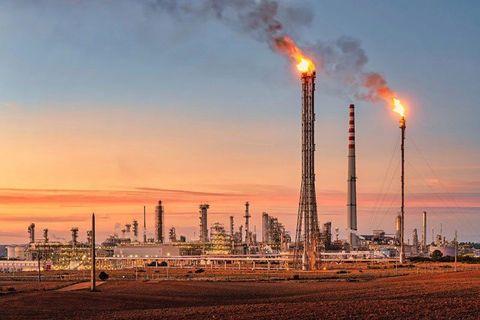
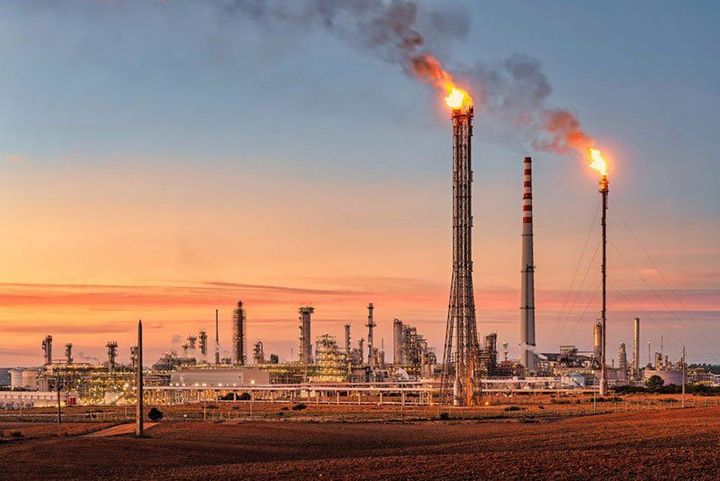
Elevated flares: Burn gas at the top of a tall stack, helping separate the flame from nearby equipment and occupied areas.
Ground flares: Use burners near ground level, often within an enclosure or a designated combustion area.
Steam-assisted flares: Introduce steam to improve mixing and reduce visible smoke under suitable operating conditions.
Air-assisted flares: Use forced air to improve mixing and combustion for particular gas streams.
Pressure-assisted flares: Use gas pressure to support mixing and combustion without relying on the same assistance methods used by conventional designs.
Enclosed flares: Burn gas inside a combustion enclosure, which can help manage visibility and exposure to the flame.
Each design has limitations. Selection requires consideration of gas heating value, peak flow, flame stability, radiation, noise, emissions, maintenance access, and nearby structures.
Combustion Engineering and Key Design Factors
Combustion engineering determines how a flare handles changing gas conditions while maintaining safe and reliable operation. Engineers evaluate normal operating flows as well as high-flow events that may occur during equipment failures or emergency shutdowns.
Important design factors include:
Gas composition: Hydrogen, methane, heavier hydrocarbons, and inert gases behave differently during combustion.
Heating value: The energy available in the gas influences flame stability and combustion performance.
Flow rate: The flare must accommodate the release scenarios established by the process safety assessment.
Flare-tip velocity: Excessive gas velocity can affect flame stability and may increase the risk of flame lift-off.
Radiant heat: Flame radiation must be assessed to protect workers, equipment, and surrounding areas.
Wind conditions: Wind can affect flame shape, combustion, and heat exposure.
Liquid carryover: Appropriate separation equipment helps prevent liquid droplets from reaching the flare tip.
Material selection: Piping, supports, and equipment must withstand relevant temperatures, pressures, corrosion, and environmental exposure.
Engineers also consider simultaneous release scenarios, backpressure, purge requirements, ignition reliability, and the consequences of losing supporting utilities. Detailed calculations and documented design reviews help establish whether the system is suitable for the facility.
Process Safety and Risk Assessment
Flare safety depends on more than the stack and burner. The connected process equipment, valves, piping, instruments, and operating procedures all contribute to system reliability.
A process hazard analysis can identify risks such as blocked flare headers, failed pilot burners, excessive liquid accumulation, unexpected gas releases, and inadequate capacity during combined relief events.
Common risk-control measures include:
Routine inspection of piping, supports, valves, and liquid-separation equipment.
Functional testing of pilot ignition and flame-monitoring equipment.
Verification of pressure-relief device settings and discharge arrangements.
Monitoring of flare-header pressure and other relevant operating parameters.
Written procedures for startup, shutdown, maintenance, and emergency response.
Management of change whenever new process connections or equipment modifications affect the flare system.
Training for operators and maintenance personnel on abnormal conditions and escalation procedures.
Preventive maintenance should follow the equipment manufacturer's requirements, engineering assessments, and applicable regulations. Inspection intervals depend on equipment design, operating history, corrosion exposure, and the consequences of failure.
Emission Monitoring and Environmental Performance
Flare performance depends on the gas being burned and the conditions at the flare tip. A visible flame does not, by itself, prove that combustion is complete or that emissions comply with regulatory limits.
Facilities may monitor flare-gas flow, gas composition, heating value, combustion conditions, pilot status, and visible emissions. Depending on the applicable rules, monitoring may also involve instrument-based measurements and documented performance evaluations.
Three important environmental considerations are:
Methane: Incomplete combustion can allow methane to escape, contributing to greenhouse gas emissions.
Volatile organic compounds: Effective combustion can reduce certain organic pollutants, although actual performance varies.
Smoke and particulate matter: Poor mixing or unsuitable operating conditions can produce visible smoke and other combustion-related emissions.
Flare gas recovery systems can sometimes return suitable gases to a process or fuel network. However, recovery arrangements must be assessed against pressure-relief requirements and the possibility of abnormal operating conditions. Emergency disposal capacity must remain available as required by the approved design.
Recent Updates: Industrial Flare Technology in 2025–2026
Recent developments in industrial flare management have placed greater attention on emissions measurement, combustion performance, methane reduction, and operational records. The specific requirements vary by country and industry.
Digital monitoring and process automation
Industrial facilities increasingly use digital instruments and control systems to monitor flare-gas flow, pilot flames, pressure, and operating conditions. Integrating this information into plant monitoring systems can help operators identify unusual events and investigate recurring problems.
Digital monitoring supports decision-making, but its effectiveness depends on instrument calibration, data quality, maintenance, and appropriate alarm procedures.
Changes in emissions regulations
In April 2026, the United States Environmental Protection Agency finalized technical changes to certain oil and natural gas emissions requirements. These included provisions relating to temporary associated-gas flaring and continuous monitoring of the heating value of gases sent to flares. The changes were specific to the relevant federal rules rather than a universal standard for all industrial flare systems.
Improved flare management
Modern engineering practices increasingly emphasize identifying the causes of repeated flaring events, documenting abnormal releases, and evaluating opportunities to prevent unnecessary gas disposal. Flare management plans and operational records can help facilities understand performance over time.
Methane measurement and emissions reduction
Methane detection and emissions measurement remain important topics in oil and gas operations. Facilities may combine fixed sensors, portable instruments, and other approved monitoring methods to investigate potential emissions. Monitoring approaches must match the facility's regulatory obligations and technical needs.
These developments show why flare-system design now involves both combustion engineering and ongoing environmental performance management.
Laws and Policies Affecting Industrial Flare Systems
Industrial flare systems are subject to different legal requirements depending on the country, facility type, process materials, and source of emissions.
In India, relevant frameworks can include the Environment (Protection) Act, 1986, applicable Environment (Protection) Rules, and requirements administered by the Central Pollution Control Board and the relevant State Pollution Control Board. Facilities may need environmental clearances, consent conditions, emissions controls, and operating records, depending on their activities and regulatory classification.
Industrial safety obligations may also arise under applicable occupational safety legislation, factory regulations, petroleum-related rules, and pressure-equipment requirements. The exact provisions depend on the installation and the legal framework currently in force.
In the United States, relevant requirements may include the Clean Air Act, applicable Environmental Protection Agency regulations under 40 CFR Parts 60 and 63, and sector-specific provisions for refineries, chemical manufacturing, and oil and gas operations. These rules can address combustion performance, monitoring, recordkeeping, and corrective action following specified events.
International engineering standards, including relevant API and ISO publications, may provide guidance on flare design, pressure-relief systems, and operational safety. Whether a particular standard is mandatory depends on its adoption in applicable laws, permits, contracts, or engineering requirements.
Facilities should verify current requirements with qualified safety and environmental professionals rather than assuming that one country's rules apply everywhere.
Tools and Resources for Flare-System Planning
Several categories of tools can support industrial flare engineering and management without replacing professional engineering judgment.
Process simulation software: Helps evaluate gas properties, process conditions, and relevant operating scenarios.
Relief-system calculation tools: Support assessment of pressure-relief loads, piping pressure losses, and discharge conditions.
Radiation analysis tools: Help estimate thermal radiation and assess exposure around elevated or ground-level flares.
Computational fluid dynamics: Can assist with analyzing airflow, gas mixing, and combustion-related behavior in suitable applications.
Digital monitoring dashboards: Bring together flow measurements, pressure readings, flame status, and operational alarms.
Inspection checklists: Organize inspections of burners, pilots, piping, valves, supports, and liquid-separation equipment.
Risk assessment templates: Help document hazards, safeguards, failure scenarios, and corrective actions.
Regulatory compliance registers: Track permit conditions, inspection schedules, monitoring obligations, and reporting deadlines.
When selecting tools, engineers should verify that calculation methods, assumptions, and input data are appropriate for the specific installation.
Frequently Asked Questions
What is the main purpose of an industrial flare system?
Its primary purpose is to safely burn designated combustible gases released from industrial processes during specified operating conditions, including certain pressure-relief events, startups, and shutdowns.
What is the difference between a flare stack and a flare tip?
A flare stack is the supporting structure and gas-delivery assembly. The flare tip is the component at the discharge point where gas is released and combustion occurs.
How do industrial flares help reduce environmental impacts?
Under suitable operating conditions, combustion converts many combustible gases into less harmful combustion products, including carbon dioxide and water. Performance varies, and incomplete combustion can still release methane, carbon monoxide, and other pollutants.
Which factors determine flare-system design?
Key factors include gas composition, heating value, expected release rates, pressure, flare-tip velocity, radiant heat, wind conditions, liquid separation, materials, and applicable safety and environmental requirements.
How often should industrial flare systems be inspected?
There is no single inspection interval appropriate for every system. Inspection and testing schedules depend on applicable regulations, equipment specifications, risk assessments, operating conditions, and maintenance history.
Conclusion
Industrial flare systems are essential components of process safety in many facilities that handle combustible gases. Their effectiveness depends on sound combustion engineering, suitable equipment selection, reliable ignition, appropriate monitoring, and well-planned maintenance.