Industrial Plasma Nitriding Systems: Processes and Engineering Basics
Industrial plasma nitriding is a surface-hardening process used to improve the performance of selected metal components. It changes the outer region of a metal without requiring the entire component to undergo the same treatment. The process is particularly relevant to steel parts exposed to friction, repeated loading, and demanding operating conditions.
Plasma nitriding is also known as ion nitriding or glow-discharge nitriding. It uses an electrically generated plasma in a controlled atmosphere containing nitrogen and, in many applications, hydrogen. The plasma supports the transfer of nitrogen to the component surface, where nitrogen diffuses into the metal.
Unlike conventional gas nitriding, plasma nitriding uses an electrical discharge to activate the treatment atmosphere. This allows engineers to control important process variables, including temperature, gas composition, pressure, voltage, and treatment duration.
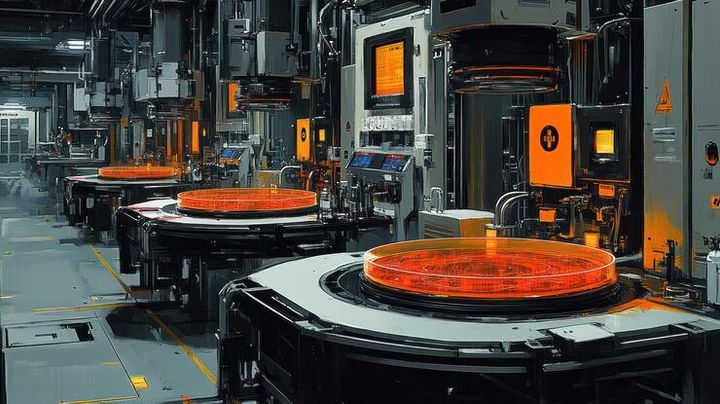
Industrial plasma nitriding systems generally contain several main components:
A sealed treatment chamber that maintains the required atmosphere.
A vacuum system that removes air and helps establish the working pressure.
A power supply that generates the electrical discharge.
Gas-flow controls for regulating the treatment atmosphere.
Heating and temperature-monitoring equipment.
Process controls, sensors, and safety interlocks.
The metal component is usually connected as the cathode, while the chamber or another electrode arrangement provides the electrical return path. The exact design depends on the equipment configuration.
During treatment, nitrogen enters the surface and diffuses inward. This can increase surface hardness, improve resistance to wear, and support fatigue performance when the process is correctly selected and controlled. The results depend on the metal grade, prior heat treatment, component geometry, and process parameters.
Importance: Why Plasma Nitriding Matters in Manufacturing
Industrial components often operate under conditions that gradually damage their surfaces. Sliding contact, repeated mechanical stress, and abrasive particles can cause wear, surface deformation, or premature failure.
Plasma nitriding addresses these challenges by modifying the surface while generally preserving the shape and dimensions of the underlying component more effectively than many processes involving thick coatings.
Improved Surface Hardness and Wear Resistance
A nitrided surface can resist indentation and certain forms of mechanical wear. This is useful for components that experience repeated contact, such as gears, shafts, dies, spindles, and selected machine-tool components.
The process creates a hardened region rather than simply depositing a separate layer. However, the improvement depends on material composition and treatment conditions.
Better Fatigue Performance
Fatigue damage can develop when a component experiences repeated loading over time. Properly controlled nitriding can create beneficial compressive residual stresses near the surface, helping resist the initiation and growth of certain fatigue cracks.
This result is not guaranteed for every part. Excessive compound-layer formation, unsuitable processing, or poor material selection can reduce performance.
Dimensional Stability
Plasma nitriding often operates at lower temperatures than some conventional hardening treatments. This can help limit distortion in precision components, particularly when the starting material has been appropriately heat-treated.
Nevertheless, dimensional changes can still occur. Engineers should assess component tolerances, residual stresses, and the complete manufacturing sequence before selecting a treatment.
Applications Across Industrial Sectors
Plasma nitriding is used in several manufacturing fields.
Automotive engineering: Selected gears, crankshaft-related components, transmission parts, and precision shafts.
Aerospace manufacturing: Qualified steel components that require controlled surface properties.
Toolmaking: Dies, molds, and selected forming tools exposed to friction.
Industrial machinery: Spindles, machine components, and wear-exposed shafts.
Energy equipment: Selected components that operate under repeated mechanical loads.
Precision manufacturing: Parts that require a hardened surface while retaining a tough core.
The treatment is not suitable for every metal or application. Aluminum alloys, copper alloys, and many other materials require different surface-engineering approaches or specialized processes.
Recent Updates: Technology Trends in Plasma Nitriding
Developments during 2025 and 2026 have continued to emphasize process monitoring, automation, energy management, and repeatable manufacturing quality. Specific improvements vary by equipment manufacturer and facility, so individual capabilities should be verified rather than assumed.
Digital Process Monitoring
Modern industrial heat-treatment equipment increasingly uses digital controllers to record operating conditions. Parameters such as temperature, chamber pressure, voltage, current, and gas flow can be tracked throughout a treatment cycle.
Recorded data can help engineers investigate inconsistent results, compare batches, and identify deviations from approved process specifications.
Automation and Recipe Management
Automated systems can store treatment recipes for different component families. Controlled sequencing can reduce manual adjustments and improve consistency between production batches.
A recipe still requires technical validation. Identical machine settings may produce different results when component geometry, surface condition, material chemistry, or loading arrangements change.
Energy and Gas Management
Manufacturers are paying greater attention to efficient heating, chamber utilization, and controlled gas consumption. Appropriate loading patterns and well-maintained vacuum equipment can support more consistent operation.
Energy performance should be assessed using actual operating data. No single configuration guarantees a particular reduction in energy use.
Advanced Process Control
Pulse power supplies, improved temperature measurement, and more detailed process records can support greater control over plasma conditions. Engineers may use these capabilities to manage edge effects, reduce unwanted arcing, and achieve more uniform treatment.
Important clarification: These are established development directions, not a claim that every industrial plasma nitriding system introduced in 2025 or 2026 includes all these features. Equipment specifications and documented performance should guide technical decisions.
Laws or Policies: Standards, Safety, and Environmental Responsibilities
Industrial plasma nitriding is affected by workplace safety requirements, electrical regulations, environmental rules, and quality-management practices. The applicable requirements depend on the country, facility, industry, and type of component being processed.
Workplace and Equipment Safety
Plasma nitriding systems combine high voltage, vacuum equipment, heated surfaces, and controlled process gases. Facilities need suitable risk assessments, operating procedures, maintenance practices, and emergency arrangements.
Important safety measures include:
Electrical isolation before maintenance.
Interlocks that prevent unsafe chamber access.
Appropriate ventilation and gas-handling arrangements.
Inspection of vacuum chambers, seals, and electrical connections.
Training for operators and maintenance personnel.
Documented procedures for abnormal pressure, temperature, or electrical conditions.
Hydrogen-containing atmospheres require particular care because hydrogen can form flammable mixtures with air. Gas-system design, leak detection where appropriate, and controlled purging procedures are important safety considerations.
Indian Regulatory Considerations
In India, applicable occupational safety and factory requirements depend on the establishment, activity, and relevant legal provisions in force. The Occupational Safety, Health and Working Conditions Code, 2020, and applicable state-level requirements may be relevant, subject to commencement, implementation, and other applicable rules.
Facilities should confirm current requirements with qualified safety personnel and the relevant authorities rather than assuming that one general rule covers every installation.
Environmental obligations may also apply to exhaust handling, waste management, and facility operations. Requirements depend on the process configuration and the applicable central and state environmental framework.
International Standards and Quality Management
Several standards may be relevant to industrial heat treatment and manufacturing quality.
| Standard or framework | General relevance |
|---|---|
| ISO 9001 | Quality-management systems and process consistency |
| ISO 45001 | Occupational health and safety management |
| ISO 14001 | Environmental management systems |
| Applicable electrical safety standards | Electrical installation, equipment protection, and safe operation |
| Customer-specific heat-treatment specifications | Required process parameters, testing, and acceptance criteria |
These frameworks do not automatically certify a component or prove that a nitriding cycle is suitable. Product-specific requirements, material specifications, testing methods, and customer acceptance criteria must also be considered.
Tools and Resources for Plasma Nitriding Engineering
Engineers use measurement instruments, technical documentation, process-planning tools, and inspection methods to evaluate plasma nitriding. These resources help connect machine settings with the final properties of the treated component.
Process Monitoring and Measurement Tools
Common tools include:
Temperature sensors: Monitor chamber and component temperatures where suitable measurement methods are available.
Vacuum gauges: Measure chamber pressure during evacuation and treatment.
Gas-flow controllers: Regulate the flow of nitrogen, hydrogen, and other approved process gases.
Electrical monitoring instruments: Track voltage, current, and power-supply performance.
Hardness testers: Measure surface hardness using an appropriate test method and load.
Metallographic microscopes: Examine cross-sections to assess the nitrided layer and compound-layer structure.
Dimensional inspection instruments: Check whether treated components remain within specified tolerances.
Engineering Calculators and Planning Resources
General engineering tools can help estimate process requirements and interpret inspection results.
| Tool or resource | Main purpose |
|---|---|
| Heat-treatment planning worksheet | Record material grades, temperatures, and treatment duration |
| Diffusion calculation tool | Explore how temperature and time influence diffusion |
| Hardness conversion reference | Interpret hardness results where conversion is appropriate |
| Statistical process-control spreadsheet | Identify variation across production batches |
| Maintenance checklist | Track inspections, vacuum-system condition, and safety checks |
| Technical material database | Review alloy composition and material properties |
Diffusion calculations provide estimates rather than guaranteed treatment results. Actual nitriding depth depends on material chemistry, temperature, time, surface conditions, and the atmosphere used.
Engineers should also maintain a process record containing the component identification, material specification, treatment recipe, operating data, inspection results, and any deviations. This record supports traceability and helps investigate manufacturing problems.
Frequently Asked Questions
What is an industrial plasma nitriding system?
An industrial plasma nitriding system is equipment that uses an electrical discharge in a controlled gas atmosphere to introduce nitrogen into the surface of suitable metal components. The treatment can improve surface hardness, wear resistance, and certain fatigue-related properties.
Which materials are suitable for plasma nitriding?
Selected alloy steels, tool steels, and stainless steels can be suitable. Results depend on the material's chemical composition, prior heat treatment, and intended application. Material compatibility should be confirmed before processing.
How does plasma nitriding differ from gas nitriding?
Plasma nitriding uses an electrical discharge to activate the treatment atmosphere, while gas nitriding relies on a reactive gas atmosphere without the same plasma-based mechanism. Both introduce nitrogen into the metal surface, but process control, equipment, and surface results can differ.
Does plasma nitriding change component dimensions?
It can cause small dimensional changes, although the process is often selected for applications requiring relatively good dimensional stability. Precision components still need appropriate tolerance planning and post-treatment inspection.
Which factors determine nitriding depth?
The main factors include treatment temperature, duration, material composition, surface condition, and gas-atmosphere characteristics. The required depth should be established through engineering specifications and verified using appropriate inspection methods.
Conclusion
Industrial plasma nitriding systems are important tools in modern surface engineering. By introducing nitrogen into suitable metal surfaces, they can improve hardness, wear resistance, and selected fatigue properties while helping preserve the component's underlying structure.