Industrial Gearbox Guide: Designs, Gear Types, Working Principles, Uses and Selection Factors
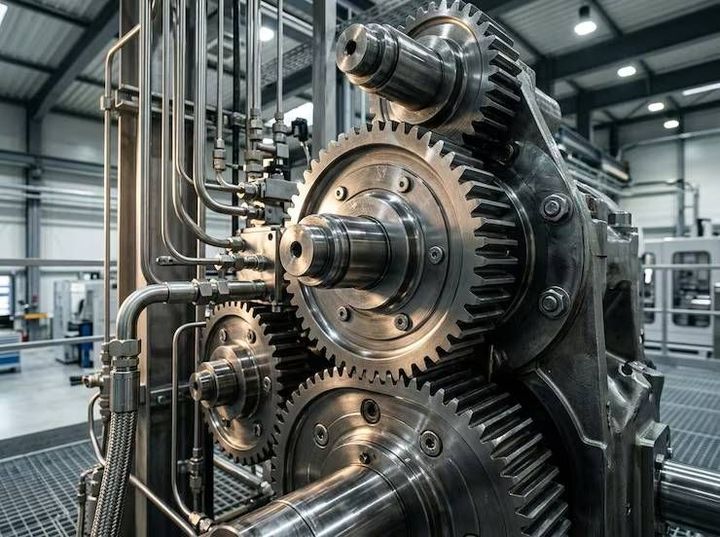
An industrial gearbox is a mechanical transmission unit used to change the speed, torque, or direction of rotary motion between a driving machine and a driven machine. It normally contains gears, shafts, bearings, seals, a housing, and a lubricant. Gearboxes are found in equipment such as conveyors, mixers, pumps, cranes, machine tools, compressors, material-handling systems, and production machinery.
Context
An industrial gearbox is a mechanical transmission unit used to change the speed, torque, or direction of rotary motion between a driving machine and a driven machine. It normally contains gears, shafts, bearings, seals, a housing, and a lubricant. Gearboxes are found in equipment such as conveyors, mixers, pumps, cranes, machine tools, compressors, material-handling systems, and production machinery.
The basic idea behind a gearbox is based on different gear sizes and tooth arrangements. When two gears with different numbers of teeth mesh, their rotational speeds and torque levels change. This allows a motor or engine to operate at a suitable speed while the connected machine receives the motion characteristics required for its task.
Industrial gearbox designs have developed from relatively simple mechanical arrangements into systems intended for different loads, speeds, operating environments, and space limitations. The choice of gear type and gearbox arrangement depends on factors such as output torque, input speed, duty cycle, mounting position, noise, temperature, and available space.
Basic role of an industrial gearbox
A gearbox can perform several mechanical functions within one transmission system:
- Speed reduction or increase through selected gear ratios
- Torque multiplication at the output shaft
- Change of rotational direction
- Transfer of rotary motion between shafts
- Adaptation of motor speed to machine requirements
The relationship between speed and torque is important because a motor may rotate much faster than the machine it drives. A suitable gear ratio can reduce rotational speed while increasing available output torque, subject to mechanical losses.
Importance
Industrial gearboxes matter because many machines cannot operate directly at the speed produced by their motors. A conveyor, for example, may need slow and controlled movement, while a motor may rotate at a much higher speed. The gearbox provides the mechanical connection between these different operating requirements.
Gearbox selection also affects machine operation, noise, heat generation, vibration, and mechanical loading. An unsuitable ratio or load rating can create excessive stress on gears, shafts, bearings, or couplings.
Where industrial gearboxes are used
Common applications include:
- Conveyor and material-handling systems
- Cranes and lifting equipment
- Industrial mixers and agitators
- Pumps and fans
- Packaging machinery
- Machine tools
- Mining and bulk-material equipment
- Food-processing machinery
- Cement and chemical processing equipment
- Renewable-energy transmission systems
The operating environment also matters. Equipment exposed to dust, moisture, high temperatures, repeated starting, or heavy shock loads may require a gearbox design suited to those conditions.
Main gear types
Different gear arrangements provide different motion characteristics.
Spur gears have straight teeth and are relatively simple to understand. They can transfer motion efficiently between parallel shafts but may generate noticeable tooth engagement noise at higher speeds.
Helical gears have angled teeth that engage progressively. This can provide smoother transmission and greater contact between mating teeth, although the angled teeth also create an axial force that the gearbox structure must accommodate.
Bevel gears are used when shafts intersect, commonly at an angle such as 90 degrees. They can redirect rotary motion while also changing speed and torque.
Worm gears use a screw-like worm working with a toothed wheel. They can provide substantial speed reduction in a compact arrangement and are used in applications where the shaft arrangement and reduction ratio suit this design.
Planetary gears use a central sun gear, planet gears, and a surrounding ring gear. Their arrangement can provide high torque transmission in a relatively compact package and is used in various industrial and mobile applications.
Recent Updates
From 2024 through 2026, industrial transmission development has continued to focus on efficiency, condition monitoring, compact mechanical layouts, and integration with digital manufacturing systems. These developments are not limited to one gearbox design; instead, they reflect wider changes in industrial machinery.
Efficiency and monitoring trends
Energy efficiency has become an important consideration for industrial equipment. In India, the Bureau of Energy Efficiency continues to operate industrial energy-efficiency programs, including the Perform, Achieve and Trade framework for energy-intensive industries. Its current information shows substantial industrial energy coverage under the program.
Gearbox systems are increasingly considered together with motors, variable-speed drives, sensors, and machine controls rather than as isolated mechanical components. Monitoring vibration, temperature, speed, and other operating conditions can help identify changes in equipment behavior before a mechanical problem becomes more serious.
Digital condition monitoring
Modern industrial systems may use sensors and connected monitoring platforms to collect operating information. Temperature sensors can identify unusual heat patterns, while vibration measurements can indicate possible changes involving gears, shafts, bearings, alignment, or mounting.
Another trend is the use of digital records for maintenance planning. Historical operating information can help technicians compare current behavior with previous measurements and identify patterns that require inspection.
Laws or Policies
In India, industrial machinery is influenced by occupational safety requirements, applicable state rules, and relevant technical standards. The Occupational Safety, Health and Working Conditions Code, 2020 provides a national framework concerning occupational safety, health, and working conditions, with implementation depending on applicable government notifications and rules. The Ministry of Labour and Employment has also published draft central rules connected with the Code.
For machinery operating in factories, workplace safety provisions can include requirements related to guarding, safe operation, working conditions, and protection from mechanical hazards. The Ministry of Labour and Employment also identifies industrial safety and health regulations within its regulatory framework.
Technical standards are another consideration. The Bureau of Indian Standards provides a searchable database through which Indian Standards can be identified by standard number or keyword. Its standards work also considers international ISO and IEC references where appropriate.
For a particular industrial gearbox installation, the applicable requirements can depend on the machinery, industry, location, operating conditions, and type of equipment. This article provides general information and does not replace technical, legal, or engineering assessment.
Tools and Resources
Several resources can help readers understand gearbox selection and operation without relying only on basic descriptions.
Gear ratio calculations
A basic gear ratio calculation compares the number of teeth on the driving and driven gears. For a simple gear pair:
Gear ratio = Number of teeth on driven gear ÷ Number of teeth on driving gear
For example, if a driving gear has 20 teeth and the driven gear has 60 teeth, the ratio is 3:1. In a simplified system, the output rotates at roughly one-third of the input speed, while available torque increases in proportion to the ratio before accounting for transmission losses.
Selection information
A gearbox selection sheet can record:
| Selection factor | Information to record |
|---|---|
| Input speed | Motor or engine rotational speed |
| Output speed | Required machine speed |
| Gear ratio | Required speed relationship |
| Output torque | Required rotational force |
| Duty cycle | Operating time and load pattern |
| Mounting position | Horizontal, vertical, or other arrangement |
| Ambient conditions | Temperature, dust, moisture, and exposure |
| Shaft arrangement | Parallel, intersecting, or perpendicular |
| Lubrication | Lubricant type and operating requirements |
BIS's Know Your Standard platform can be used to search Indian Standards by product name or standard number and to view related standard information.
The Bureau of Energy Efficiency is another useful reference for understanding industrial energy-efficiency policies and programs in India.
Understanding working principles
A simple way to study gearbox operation is to trace the movement from the input shaft to the output shaft. The motor turns the input shaft, the first gear set transfers motion, additional gear stages change the ratio when present, and the output shaft delivers the resulting rotational speed and torque to the driven machine.
Lubrication, alignment, bearing condition, gear tooth condition, and housing integrity all influence how the transmission operates. Regular inspection practices depend on the gearbox design and the equipment manufacturer's technical documentation.
FAQs
What is an industrial gearbox?
An industrial gearbox is a mechanical transmission assembly that changes rotational speed and torque between a driving source and a machine. It uses gears, shafts, bearings, lubrication, and a housing to transfer rotary motion.
What are the main industrial gearbox types?
Common types include spur, helical, bevel, worm, and planetary gearboxes. Each design has different characteristics involving shaft arrangement, speed reduction, torque transmission, space requirements, and operating conditions.
How does an industrial gearbox work?
An industrial gearbox works by transferring rotary motion through one or more gear pairs. Different gear sizes create a ratio between input and output speed, while the available output torque changes according to the ratio and transmission efficiency.
What factors affect industrial gearbox selection?
Important factors include input speed, required output speed, torque, duty cycle, shock loading, mounting position, shaft arrangement, ambient temperature, dust or moisture exposure, lubrication requirements, and available installation space.
Why is gearbox condition monitoring used?
Condition monitoring can track characteristics such as vibration, temperature, speed, and noise. Changes in these measurements can provide information about possible wear, alignment changes, lubrication issues, or other mechanical conditions.
Conclusion
Industrial gearboxes provide a controlled way to transfer rotary motion while changing speed, torque, or direction. Spur, helical, bevel, worm, and planetary designs are used for different mechanical arrangements and operating conditions. Current industrial trends increasingly connect gearbox systems with energy-efficiency programs, sensors, and digital condition monitoring. In India, machinery safety requirements, technical standards, and applicable industrial rules form part of the broader framework surrounding gearbox use.