Industrial Manufacturing Tools Explained: Types, Functions, Applications, Benefits and Selection Factors
Industrial manufacturing tools are devices, machines, instruments, and accessories used to transform raw materials into finished products or components. An Industrial Manufacturing Tools Explained guide covers their types, functions, applications, benefits, and selection factors. These tools are used in industries such as automotive production, electronics, construction materials, metalworking, aerospace, food processing, and industrial equipment manufacturing.
Context
Industrial manufacturing tools are devices, machines, instruments, and accessories used to transform raw materials into finished products or components. An Industrial Manufacturing Tools Explained guide covers their types, functions, applications, benefits, and selection factors. These tools are used in industries such as automotive production, electronics, construction materials, metalworking, aerospace, food processing, and industrial equipment manufacturing.
Manufacturing tools developed alongside early handcrafting methods, mechanical workshops, and the Industrial Revolution. As factories adopted powered machinery and automated production lines, tools became more specialized and precise. Modern manufacturing combines manual equipment, computer-controlled machines, measuring instruments, and automated systems to support different production requirements.
Industrial manufacturing tools can perform operations such as cutting, drilling, shaping, fastening, measuring, lifting, and finishing. Some are operated manually, while others use electric motors, compressed air, hydraulic pressure, or computer-controlled movements. Selecting suitable tools depends on the material, product design, production volume, required accuracy, workplace conditions, and operator skills.
Main Categories of Manufacturing Tools
Industrial tools can be grouped according to their purpose and operating method.
Cutting tools: Drills, milling cutters, saw blades, and turning tools remove material to create a required shape.
Forming tools: Presses, dies, molds, and bending equipment change the shape of materials.
Assembly tools: Torque wrenches, pneumatic drivers, riveters, and fastening equipment connect components.
Measuring tools: Calipers, micrometers, gauges, and coordinate measuring systems check dimensions and tolerances.
Finishing tools: Grinders, polishers, deburring tools, and surface-treatment equipment improve surface condition.
Material-handling tools: Hoists, lifting fixtures, conveyors, and industrial carts move materials between work areas.
Each category addresses a different manufacturing requirement. A production facility may use several categories together to complete a single product.
Manual, Powered, and Automated Tools
Manual tools rely primarily on human force and judgment. Examples include hand files, screwdrivers, clamps, and measuring tapes, which are useful for assembly, adjustment, maintenance, and smaller production tasks.
Powered tools use electricity, compressed air, or hydraulic systems to perform work. Automated equipment follows programmed instructions or predefined operating sequences, reducing the need for continuous manual control during certain operations. Computer numerical control (CNC) machines, robotic arms, and automated inspection systems are examples of technologies used in modern production environments.
Importance
Industrial manufacturing tools influence product accuracy, production consistency, workplace safety, and material usage. Appropriate equipment helps manufacturers produce components that meet design specifications and reduces avoidable variation between production batches. Tool selection also affects workflow, maintenance requirements, operator training, and the amount of material wasted during manufacturing.
These factors matter to factory operators, engineers, maintenance teams, quality inspectors, and businesses that depend on manufactured components. For example, an incorrectly selected cutting tool may create rough edges, dimensional errors, or excessive heat. A poorly calibrated measuring instrument may allow defective components to pass inspection.
Functions and Industrial Applications
Different manufacturing tools support specific stages of production.
Metalworking: Lathes, milling machines, drills, grinders, and cutting systems shape metal components used in machinery and vehicles.
Plastic manufacturing: Injection molding equipment, molds, trimming tools, and temperature-control instruments support the production of plastic parts.
Electronics: Precision drivers, soldering equipment, microscopes, and inspection instruments support circuit-board assembly and component handling.
Automotive production: Torque tools, robotic welders, lifting fixtures, and alignment instruments assist vehicle assembly.
Construction materials: Cutting machines, presses, mixers, and testing instruments help manufacture metal sections, tiles, concrete products, and other materials.
Food processing: Filling equipment, cutting systems, conveyors, and packaging machinery support processing and packaging operations.
The equipment used in one industry may not be appropriate for another. Material properties, hygiene requirements, environmental conditions, and production tolerances influence the choice of tools and machinery.
Benefits and Operational Considerations
Suitable industrial tools can improve repeatability, reduce manual effort, and support consistent product dimensions. Automated and powered equipment may also increase production capacity when properly integrated into the manufacturing process.
However, equipment introduces responsibilities involving inspection, maintenance, energy consumption, training, and safe operation. The benefits of a tool depend on how well it matches the production task and how effectively it is maintained.
Recent Updates
Industrial manufacturing has continued to incorporate digital monitoring, automation, and data-based production management. Trends during 2024–2026 include wider attention to connected equipment, predictive maintenance, machine vision, collaborative robotics, and digital representations of manufacturing processes. Adoption varies according to industry, facility size, production requirements, and available technical expertise.
Smart Tools and Connected Equipment
Some modern industrial tools contain sensors that monitor operating conditions such as temperature, vibration, pressure, speed, or tool wear. The collected information can help maintenance teams identify unusual operating patterns and investigate possible equipment problems.
Connected tools may also record usage, calibration status, and maintenance history. When this information is integrated with factory management software, it can help organizations plan inspections and understand equipment performance. Sensor readings still require appropriate interpretation, and they do not eliminate the need for physical inspections.
Automation and Computer-Controlled Manufacturing
CNC equipment follows programmed instructions to control movements during machining operations. Industrial robots can perform repetitive activities such as welding, material handling, painting, and assembly, depending on their configuration and safety arrangements.
Machine vision systems use cameras and image-processing software to examine products, identify certain defects, or verify component positions. Artificial intelligence is also being explored for quality inspection, process optimization, and maintenance analysis. These technologies require suitable data, system integration, validation, and human oversight.
Energy Efficiency and Tool Monitoring
Manufacturers increasingly consider energy consumption, equipment durability, and material waste when evaluating production equipment. Variable-speed drives, efficient motors, improved cutting processes, and condition-monitoring systems may help facilities manage resource use, depending on the application.
Tool-life monitoring is another area of development. Tracking wear can help maintenance teams schedule replacements before tool condition significantly affects product quality. Actual results depend on material characteristics, operating conditions, monitoring accuracy, and maintenance practices.
Laws or Policies
Industrial manufacturing tools are subject to workplace safety requirements, machinery standards, environmental rules, and applicable product regulations. In India, the relevant requirements depend on the type of factory, equipment, industry, and state or local jurisdiction.
Workplace Safety and Machinery Requirements in India
The Occupational Safety, Health and Working Conditions Code, 2020, forms part of India's framework for occupational safety and working conditions. Its application depends on the provisions in force, applicable rules, and the circumstances of the establishment. Factory operators must verify the current requirements that apply to their activities.
Machinery safety practices commonly include guarding moving parts, providing emergency stops where appropriate, controlling hazardous energy during maintenance, and training operators in safe procedures. Electrical equipment, pressure systems, lifting equipment, and specialized machinery may be subject to additional technical or inspection requirements.
Quality, Standards, and Environmental Compliance
The Bureau of Indian Standards (BIS) develops Indian Standards covering a wide range of products, materials, and technical practices. Whether a particular industrial tool must comply with a specific standard or certification requirement depends on the applicable product category and regulations.
Environmental requirements may also affect manufacturing operations, particularly where equipment generates dust, fumes, noise, wastewater, or hazardous waste. Applicable pollution-control permissions and handling rules depend on the process and location. Manufacturers should consult the relevant authorities and current official requirements rather than assuming that one rule applies to every facility.
Tools and Resources
Industrial manufacturing tools can be evaluated using technical documentation, maintenance records, measurement systems, and production-planning resources. These materials help users understand equipment capabilities and compare suitability for a specific task.
Equipment Selection and Measurement Resources
Manufacturer datasheets and operating manuals provide information about machine capacity, compatible materials, operating limits, accuracy, power requirements, and maintenance schedules. Technical drawings and tolerance specifications help determine whether a tool can produce a component within the required dimensions.
Common measurement resources include:
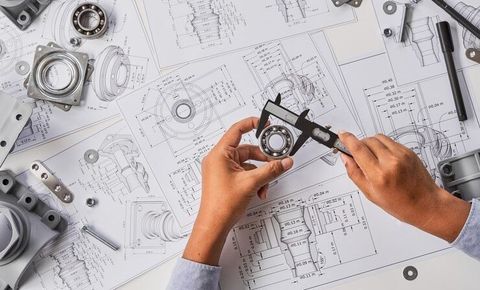
Digital calipers: Measure external dimensions, internal dimensions, and depths within the instrument's capacity.
Micrometers: Measure small dimensions with greater resolution than many general-purpose measuring tools.
Dial indicators: Detect small changes in position, alignment, or surface variation.
Torque testers: Check whether fastening tools apply the required rotational force.
Calibration records: Document instrument checks and the relationship between measurements and recognized references.
The appropriate instrument depends on the required accuracy, measurement range, working environment, and applicable inspection procedure.
Maintenance and Production Planning Tools
Computerized maintenance management systems (CMMS) help organizations schedule inspections, record equipment faults, manage maintenance histories, and track spare parts. Manufacturing execution systems (MES) can help monitor production activities, equipment status, and product traceability.
A basic equipment selection checklist may include the following factors:
Material type, dimensions, and hardness.
Required accuracy and surface finish.
Production volume and operating frequency.
Equipment capacity, power requirements, and available workspace.
Operator training and protective equipment.
Maintenance needs, spare-part availability, and expected operating life.
Applicable safety standards and environmental requirements.
Comparing these factors helps connect equipment capabilities with actual production needs rather than relying on machine size or specifications alone.
FAQs
What are industrial manufacturing tools?
Industrial manufacturing tools are manual devices, powered equipment, machines, and measuring instruments used to make, assemble, inspect, or finish industrial products. Examples include drills, CNC machines, torque wrenches, grinders, and precision gauges.
What are the main types of industrial manufacturing tools?
The main categories include cutting, forming, assembly, measuring, finishing, and material-handling tools. Factories may also use automated machines and digital monitoring equipment to support production and inspection.
How are industrial manufacturing tools used in different industries?
Metalworking facilities use cutting and machining equipment, electronics factories use precision assembly tools, and automotive plants use fastening, welding, and robotic equipment. Tool selection depends on the product, material, accuracy requirements, and production process.
What factors affect industrial manufacturing tool selection?
Important factors include material compatibility, required accuracy, production volume, machine capacity, operator safety, maintenance needs, energy requirements, and applicable standards. The selected equipment should meet the technical requirements of the intended task.
How does automation affect industrial manufacturing tools?
Automation allows machines and robotic systems to perform programmed or repetitive operations with reduced continuous manual intervention. It can improve process consistency, but successful use requires appropriate programming, maintenance, safety controls, and quality checks.
Conclusion
Industrial manufacturing tools support material processing, assembly, measurement, finishing, and movement across many industries. Their functions range from simple manual operations to computer-controlled machining and automated inspection. Recent developments emphasize connected equipment, predictive maintenance, and greater use of production data. Understanding technical requirements, workplace safety, maintenance needs, and applicable standards provides a clear foundation for evaluating industrial manufacturing tools.

You May Also Like