Industrial Milling Machines Explained: Types, Components, Applications and Selection Factors
Industrial milling machines are machine tools used to remove material from a workpiece and create specific shapes, dimensions, slots, holes, and surface finishes. They are widely used in manufacturing industries that produce automotive components, aerospace parts, machinery, metal tools, and industrial equipment. Industrial milling machines explained through their types, components, applications, and selection factors provide a useful introduction to modern machining processes.
Context
Industrial milling machines are machine tools used to remove material from a workpiece and create specific shapes, dimensions, slots, holes, and surface finishes. They are widely used in manufacturing industries that produce automotive components, aerospace parts, machinery, metal tools, and industrial equipment. Industrial milling machines explained through their types, components, applications, and selection factors provide a useful introduction to modern machining processes.
Milling developed alongside advances in machine tools and industrial manufacturing. Early milling machines used mechanical systems to move cutting tools and workpieces, while modern versions may incorporate computer numerical control (CNC), automated tool changing, digital measurement, and programmable movement. These developments allow manufacturers to produce complex components with consistent dimensions.
What Is an Industrial Milling Machine?
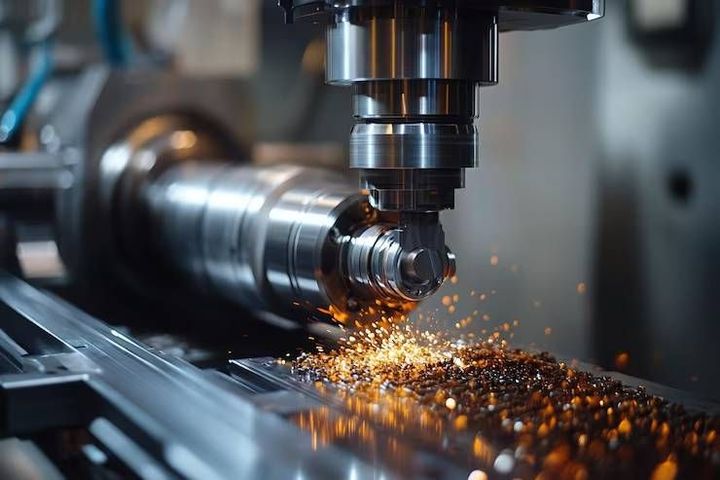
An industrial milling machine uses a rotating cutting tool to remove material from a workpiece. The workpiece is held on a table or fixture, while the machine controls the relative movement between the tool and the material. Depending on the design, the machine can cut metals, plastics, composites, and other materials suitable for machining.
Milling differs from turning because milling generally uses a rotating cutter, whereas turning typically rotates the workpiece against a cutting tool. Both processes can be combined in manufacturing facilities to produce components with different shapes and surface features.
Common Milling Operations
Industrial milling machines perform several operations according to the cutter, machine configuration, and workpiece.
Face milling: Produces flat surfaces using the cutting edges of a milling cutter.
End milling: Creates slots, pockets, contours, and detailed features.
Slot milling: Cuts narrow channels or grooves into a workpiece.
Profile milling: Follows a specified outline to produce curved or irregular shapes.
Drilling and boring: Some milling machines can create or enlarge holes using suitable tools and programmed movements.
The selected operation depends on the component design, material properties, dimensional requirements, and desired surface finish.
Importance
Industrial milling machines are important because many manufactured products require accurate dimensions, shaped surfaces, and repeatable machining operations. Automotive engine components, industrial gears, machine frames, molds, and aircraft structures may contain features that are difficult to produce using basic cutting methods alone.
These machines also support production flexibility. A workshop may use a milling machine for individual replacement parts, prototypes, small production batches, or repeated manufacturing tasks. The machine configuration and production process determine how efficiently it can handle each type of work.
Main Components of an Industrial Milling Machine
Although designs differ, most industrial milling machines contain several basic components.
Base and column: Support the machine structure and help maintain stability during cutting.
Spindle: Holds and rotates the cutting tool, directly or through a tool holder.
Worktable: Supports the workpiece or fixture and provides controlled movement along one or more axes.
Cutting tool: Removes material through sharp cutting edges designed for particular operations.
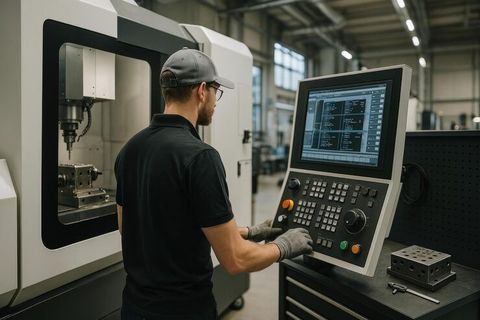
Control system: Allows the operator to set movement, spindle speed, feed rate, and other machining parameters.
Coolant system: Supplies suitable fluid when required to manage heat and remove chips.
Tool holder and tool changer: Secure cutting tools, with automatic changing available on some machines.
Enclosure and safety equipment: Help contain chips and coolant and reduce exposure to moving components.
The rigidity, alignment, condition, and maintenance of these components influence machining accuracy and operating performance.
Types of Industrial Milling Machines
Different milling machine types are designed for particular component sizes, machining directions, and production requirements.
| Machine type | Main characteristics | Common applications |
|---|---|---|
| Vertical milling machine | Spindle is oriented vertically | Pockets, slots, profiles, and flat surfaces |
| Horizontal milling machine | Spindle is oriented horizontally | Grooves, heavy cutting, and suitable production tasks |
| CNC milling machine | Uses programmed numerical control | Repeatable parts and complex geometries |
| Universal milling machine | Supports different cutting arrangements and setups | Workshops and varied machining operations |
| Bed-type milling machine | Worktable and structure support larger workpieces | Heavy components and industrial parts |
| Gantry milling machine | Uses a bridge-like structure over the work area | Large frames, panels, and structural components |
| Five-axis milling machine | Controls movement across linear and rotational axes | Complex parts with multiple angled surfaces |
These categories can overlap. For example, a CNC machine may use a vertical spindle, a horizontal spindle, or a five-axis configuration.
Recent Updates
Industrial milling technology continues to develop through automation, digital monitoring, improved cutting tools, and closer integration with manufacturing software. Across 2024–2026, these areas have remained important trends as manufacturers seek better process control, repeatable production, and reduced unplanned machine downtime. The features available vary according to machine design, manufacturer, and production environment.
CNC Automation and Smart Manufacturing
CNC milling machines follow programmed instructions to control tool movement and machining operations. Modern systems may include automatic tool changers, workpiece probing, tool measurement, and connections to manufacturing execution systems. These capabilities can reduce manual intervention for suitable production tasks, although setup, programming, inspection, and supervision remain important.
Connected machines may collect information about spindle load, vibration, temperature, tool condition, and cycle time. Manufacturing teams can analyze these measurements to identify unusual operating conditions and schedule maintenance. However, sensor data requires appropriate interpretation and does not independently establish that a machine or component is free from defects.
Advanced Cutting Tools and Digital Simulation
Cutting tool development includes carbide tools, specialized coatings, and geometries designed for particular materials and machining conditions. Selecting a suitable tool can affect cutting speed, tool wear, heat generation, and surface quality. Actual results depend on the machine, workpiece material, cutting parameters, and tool condition.
Computer-aided manufacturing (CAM) software helps engineers generate toolpaths from digital component designs. Simulation tools can identify certain collisions, machining limitations, or programming errors before production begins. Simulation does not replace physical inspection or the validation of machining conditions.
Laws or Policies
Industrial milling machines are affected by workplace safety requirements, machinery regulations, electrical standards, environmental rules, and applicable industry specifications. Requirements depend on the country, machine type, installation, and intended use. In India, manufacturers and machine operators must consider relevant national and state requirements.
Industrial Machine Safety in India
The Occupational Safety, Health and Working Conditions Code, 2020, forms part of India's workplace safety framework, alongside applicable rules and implementation requirements. The provisions and commencement status relevant to a particular workplace should be checked against current official government information.
Industrial milling operations require appropriate safeguards against rotating tools, moving tables, flying chips, noise, and exposure to cutting fluids. Common protective measures include machine guards, emergency stops, suitable eye protection, training, safe workholding, and procedures for maintenance or tool changes. Operators should follow the machine manufacturer's instructions and workplace risk controls.
Electrical, Environmental, and Quality Requirements
Industrial milling equipment may also need to comply with applicable electrical safety, installation, and machinery standards. Standards from the Bureau of Indian Standards (BIS) and relevant international organizations may help define technical requirements, depending on their applicability and adoption.
Cutting fluids, metal chips, lubricants, and other machining waste must be handled according to relevant environmental and waste-management requirements. Facilities should assess whether used fluids require controlled collection or treatment and prevent inappropriate discharge. Manufacturers supplying components to regulated sectors may also need to follow specified quality systems, material traceability procedures, and inspection requirements.
Tools and Resources
Several technical resources help manufacturers understand industrial milling machines, plan operations, and compare machine configurations. Their usefulness depends on the materials being machined, component geometry, production volume, and available equipment.
CNC and Manufacturing Software
Computer-aided design (CAD) software is used to create component models and technical drawings. CAM software converts suitable designs into machining toolpaths and machine instructions. Examples include Autodesk Fusion, Mastercam, and Siemens NX, which support different design and manufacturing workflows.
Machine simulation and toolpath verification tools can help assess programmed movements before machining. Users should confirm that the selected software supports the machine configuration, controller, cutting tools, and required manufacturing operations.
Machining Calculators and Technical References
Machining calculators can help estimate spindle speed, feed rate, material removal rate, and cutting time. For a rotating cutter, spindle speed can be estimated using the formula:
Spindle speed (RPM) = (Cutting speed × 1,000) ÷ (π × Cutter diameter)
When cutting speed is expressed in metres per minute and cutter diameter in millimetres, the result is revolutions per minute. Appropriate values depend on the tool material, workpiece material, cutter diameter, and operating conditions.
Tool manufacturers' technical catalogs, machine manuals, engineering handbooks, and standards publications provide information about cutting parameters, tool selection, workholding, and safety. Calculations are starting points and should be checked against the machine's limits and the applicable tooling guidance.
Industrial Milling Machine Selection Factors
Selecting a milling machine involves matching its capabilities to the intended manufacturing tasks.
Workpiece size: The table dimensions, travel range, and available working envelope must accommodate the component.
Material type: Metals, plastics, and composites have different cutting requirements.
Accuracy requirements: Tolerances, repeatability, and surface finish influence machine specifications.
Production volume: One-off parts and repeated batches may require different levels of automation.
Axis configuration: Additional axes can support complex shapes and reduce the need for multiple setups.
Spindle capability: Speed, power, torque, and tool-holder compatibility affect the machining operations available.
Maintenance and operator skills: Equipment requires inspection, correct setup, programming knowledge, and planned maintenance.
A complete assessment considers the entire machining process rather than spindle specifications alone.
FAQs
What are the main types of industrial milling machines?
Common types include vertical, horizontal, CNC, universal, bed-type, gantry, and five-axis milling machines. Each configuration supports different workpiece sizes, cutting directions, and machining requirements.
What are the main components of an industrial milling machine?
Major components include the base, column, spindle, worktable, cutting tool, control system, and workholding equipment. Some machines also include automatic tool changers, coolant systems, probing equipment, and enclosed work areas.
What are industrial milling machines used for?
Industrial milling machines produce flat surfaces, slots, pockets, contours, and complex component features. Applications include automotive manufacturing, aerospace, industrial machinery, mold production, and general metalworking.
How does CNC milling differ from conventional milling?
CNC milling uses programmed instructions to control machine movements and cutting operations. Conventional milling generally relies more heavily on direct operator control, although the exact level of automation varies by machine.
Which factors matter when selecting an industrial milling machine?
Important factors include workpiece dimensions, material, required accuracy, spindle capability, axis configuration, production volume, safety features, and maintenance needs. The machine must also suit the available tooling and operator capabilities.
Conclusion
Industrial milling machines remove material through rotating cutting tools to produce components with defined shapes and dimensions. Their configurations range from conventional vertical and horizontal machines to automated CNC and five-axis systems. Machine selection depends on workpiece requirements, material properties, accuracy, production needs, safety, and available technical resources. Automation and digital monitoring continue to influence how milling operations are planned, controlled, and maintained.