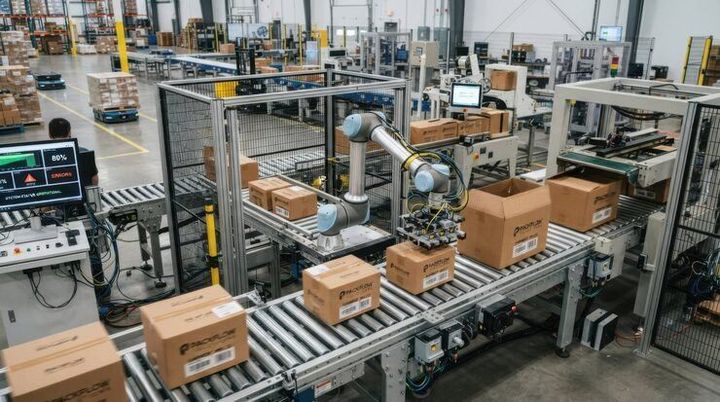
Industrial Packaging Lines Guide: Equipment, Automation, Processes, Applications and Key Features
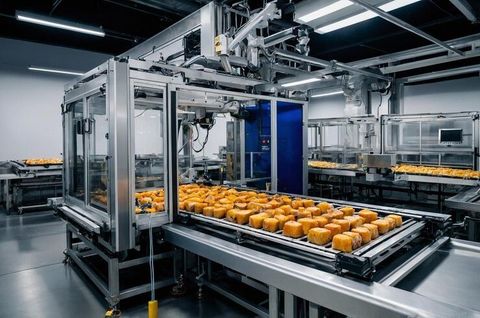
Industrial packaging lines are connected groups of machines that prepare products for filling, wrapping, sealing, labeling, coding, inspection, and final packing. An industrial packaging line can handle items such as food, beverages, chemicals, medicines, household goods, and manufactured parts, depending on its design. These systems developed from individual manual packaging steps into coordinated production lines that can move containers and packages through several stages with limited manual handling.
The main purpose of an industrial packaging line is to create a consistent sequence for preparing products for storage, transport, and distribution. A line may be simple, with a filler and sealer, or more complex, with conveyors, robotic handling, inspection equipment, case packing, palletizing, and data systems. The exact arrangement depends on the product, package type, production volume, hygiene requirements, and applicable rules.
Context
How Industrial Packaging Lines Developed
Packaging originally depended heavily on manual measuring, wrapping, closing, and labeling. As manufacturing volumes increased, individual machines were introduced to perform repeated tasks. Conveyors and automatic controls later allowed these machines to work together as one coordinated process.
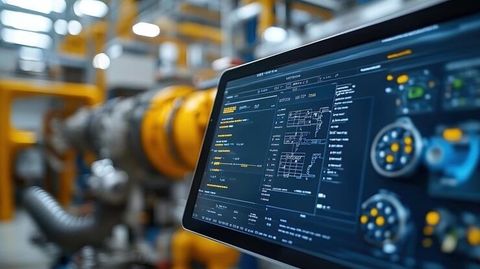
Today, an industrial packaging line may combine mechanical equipment, sensors, programmable logic controllers, vision systems, robotics, and software. Automation does not remove the need for people; operators are still involved in setup, monitoring, quality checks, material changes, cleaning, and maintenance.
Main Stages in a Packaging Process
A typical line can include several stages:
- Product preparation: The product is positioned or prepared for packaging.
- Filling or dosing: A measured quantity is placed into a container, pouch, carton, or other package.
- Closing and sealing: Lids, caps, heat seals, adhesive closures, or other methods secure the package.
- Labeling and coding: Labels, batch information, dates, barcodes, or other required information are applied.
- Inspection: Sensors or cameras check selected characteristics such as presence, position, seal condition, or printed information.
- Secondary packing: Individual units may be placed into cartons, cases, trays, or other grouped packages.
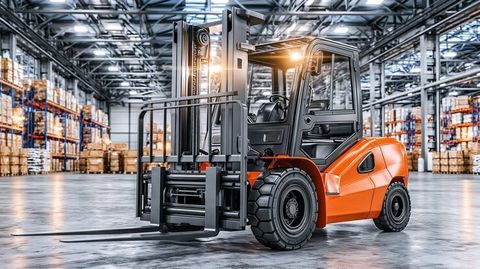
- Palletizing: Finished cases can be arranged on pallets for handling and transportation.
Not every packaging line contains every stage. Equipment is selected according to the product and packaging format.
Importance
Industrial packaging lines matter because packaging affects product protection, handling, identification, storage, and transportation. A package must often withstand movement through warehouses and distribution systems while keeping its contents contained and identifiable.
For manufacturers, packaging equipment also affects how materials and products move through a facility. A poorly coordinated line can create interruptions between filling, sealing, labeling, and packing stages. A coordinated line can reduce unnecessary handling and make process monitoring easier.
Packaging automation also has a wider effect on workers. Repetitive tasks can be performed by machines while people focus on equipment monitoring, quality checks, material preparation, and process control. The level of automation varies widely, so some facilities continue to use manual or semi-automatic stations.
Key Equipment Used
| Equipment | Main Function | Common Applications |
|---|---|---|
| Conveyor | Moves products or packages | Bottles, cartons, cases |
| Filler | Measures and places product | Liquids, powders, granules |
| Capping machine | Applies closures | Bottles and containers |
| Sealing machine | Closes package openings | Pouches, bags, trays |
| Labeling machine | Applies labels | Bottles, cartons, containers |
| Coding system | Prints identification data | Batch and date information |
| Checkweigher | Checks package weight | Packaged products |
| Vision system | Inspects selected features | Labels, seals, codes |
| Case packer | Groups units into cases | Consumer and industrial goods |
| Palletizer | Arranges cases on pallets | Warehousing and distribution |
Common Challenges
Industrial packaging lines can face problems such as material jams, inaccurate filling, damaged packages, misaligned labels, coding errors, conveyor interruptions, and unplanned equipment downtime. Package changes can also require adjustments to machine settings, tooling, guides, sensors, and software.
Product characteristics create additional challenges. Liquids, powders, fragile goods, irregular parts, and temperature-sensitive products can require different handling methods. Packaging materials can also behave differently depending on thickness, stiffness, moisture, and sealing characteristics.
Recent Updates
From 2024 through 2026, packaging operations have continued moving toward greater automation, digital monitoring, machine vision, robotics, and data-based process control. These developments are especially relevant where manufacturers need to monitor multiple stages of a line rather than relying only on manual checks.
Machine vision is increasingly used for tasks such as checking labels, package position, printed codes, closures, and selected visible defects. Sensors and connected controls can also provide operating information that helps production teams identify interruptions and investigate recurring process problems.
Another current trend is flexible automation. Packaging equipment is increasingly designed around changeovers between different package sizes, formats, and products. This can involve adjustable guides, recipe-based machine settings, modular equipment, and programmable controls.
Sustainability is another area of attention. Packaging operations are examining material use, lightweight structures, recyclable formats, and systems that can handle different packaging materials. The suitability of a material depends on the product, packaging requirements, local rules, and the available recovery or recycling system.
In India, regulatory activity has also continued. The Department of Consumer Affairs lists amendments to the Legal Metrology (Packaged Commodities) Rules in 2025 and 2026, while FSSAI lists a 2025 amendment to its Packaging Regulations and a 2026 packaging amendment concerning specified materials for pan masala. These developments show why packaging lines and labeling processes may need periodic review when rules change.
Laws or Policies
Packaging Rules in India
For packaged commodities in India, the Legal Metrology Act and the Legal Metrology (Packaged Commodities) Rules, 2011 provide an important regulatory framework. Requirements can relate to declarations and measurement information appearing on packages. The Department of Consumer Affairs maintains the rules and subsequent amendments, including changes recorded for 2025 and 2026.
Packaging lines therefore need to be considered alongside the information that must appear on a package. Depending on the product and packaging format, this can affect printing, labeling, coding, weighing, and inspection stages.
Food Packaging Requirements
Food packaging is subject to additional requirements. FSSAI maintains the Food Safety and Standards (Packaging) Regulations, 2018, which address packaging materials and their suitability for food contact. The framework includes concepts such as food-grade materials and limits related to migration from packaging materials into food.
FSSAI continues to publish packaging-related amendments and notifications. Its current regulatory pages list a 2025 amendment to the Packaging Regulations and a 2026 amendment concerning specified packaging materials. Food manufacturers therefore need to consider both packaging equipment and the regulatory requirements applying to the particular food product.
Other sectors can have additional requirements based on the product, material, transport conditions, environmental rules, or destination market. The applicable rules should be checked for the specific product and packaging format.
Tools and Resources
Several resources can help readers understand industrial packaging lines and related requirements.
- Department of Consumer Affairs: The Legal Metrology section provides access to the Legal Metrology Act, Packaged Commodities Rules, amendments, and related documents.
- FSSAI: Its food-law pages provide packaging regulations, amendments, notifications, and related food safety documents.
- Packaging line layout drawings: Process diagrams can map the sequence from product infeed through filling, closing, inspection, secondary packing, and palletizing.
- Equipment specification sheets: Technical documents can be used to compare machine functions, package formats, operating ranges, utilities, and control features.
- Production data logs: Records of throughput, rejects, interruptions, changeovers, and equipment status can help teams understand line performance.
- Packaging checklists: A checklist can cover package dimensions, closure type, labeling information, coding, inspection points, and material requirements.
FAQs
What Is an Industrial Packaging Line?
An industrial packaging line is a connected sequence of machines and workstations used to prepare products for packaging. It can include filling, sealing, labeling, inspection, case packing, and palletizing equipment.
What Equipment Is Used in an Industrial Packaging Line?
Common equipment includes conveyors, fillers, capping machines, sealers, labeling machines, coding systems, checkweighers, vision systems, case packers, and palletizers. The combination depends on the product and package format.
How Does Packaging Line Automation Work?
Packaging line automation uses sensors, programmable controls, motors, robotics, and software to coordinate equipment. The controls can manage timing, movement, machine settings, and selected inspection functions.
What Are Recent Industrial Packaging Line Trends?
Recent trends include machine vision, connected equipment, flexible changeovers, robotics, digital monitoring, and attention to packaging material use. The level of adoption varies by industry and facility.
Which Indian Rules Affect Packaged Products?
The Legal Metrology (Packaged Commodities) Rules, 2011 apply to many packaged commodities, while food products can also be subject to FSSAI packaging requirements. Specific obligations depend on the product and packaging type.
Conclusion
Industrial packaging lines combine equipment and controls to move products through filling, closing, labeling, inspection, and secondary packing stages. Their design depends on product characteristics, package format, production requirements, and applicable regulations. Current developments include automation, machine vision, connected monitoring, flexible equipment, and greater attention to packaging materials. In India, packaging operations also need to account for Legal Metrology requirements and, where applicable, FSSAI food-packaging regulations.