Smart Factory Automation Equipment: A Complete Guide to Industry 4.0 Technology
Smart factory automation equipment refers to connected machines, control systems, sensors, robotics, and software that help manufacturing facilities monitor and manage production activities. These technologies combine physical equipment with digital information to support faster decision-making and more consistent operations.
In traditional factories, machines often operate independently, and employees collect production information through manual inspections or separate systems. Smart manufacturing connects these activities so that equipment can share information and respond to changing operating conditions.
For example, a sensor installed on an industrial motor can measure vibration and temperature. When the readings move outside an expected range, a monitoring system can alert maintenance personnel to investigate the issue.
Smart factory automation is closely linked to Industry 4.0, which describes the integration of connected devices, data analytics, artificial intelligence, and automation into industrial production.
How Smart Factory Automation Works
A smart manufacturing system generally combines several interconnected technologies.
Production equipment: Machines perform cutting, forming, assembly, packaging, and other manufacturing tasks.
Sensors: Devices measure temperature, pressure, vibration, position, and operating speed.
Industrial controllers: Programmable logic controllers coordinate machine operations according to programmed instructions.
Communication networks: Industrial networks transfer information between machines and control systems.
Manufacturing software: Digital systems organize production schedules, machine status, and quality records.
Data analytics: Analytical tools help identify equipment problems, production patterns, and opportunities for process improvement.
These technologies can work together in a fully integrated production environment or be introduced gradually into an existing factory.
Types of Smart Factory Automation Equipment
Industrial Robots and Collaborative Robots
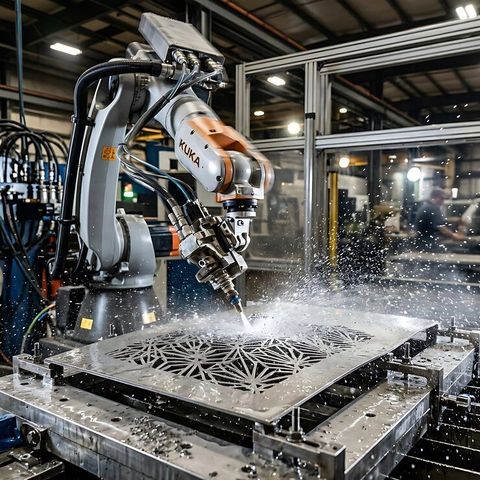
Industrial robots perform repetitive or precision-based operations, including welding, assembly, painting, machine loading, and material handling.
Collaborative robots, commonly called cobots, are designed for certain applications in which people and robots may share a workspace. Appropriate risk assessments and protective measures remain essential because safe operation depends on the specific robot, task, tooling, and workplace conditions.
Common applications include:
Automated component assembly
Robotic welding and material handling
Machine tending and inspection
Packaging and palletizing
Repetitive positioning tasks
Programmable Logic Controllers and Control Systems
Programmable logic controllers (PLCs) are industrial computers that control machines through programmed instructions and sensor inputs. They are commonly used in conveyor systems, filling equipment, industrial presses, and automated packaging lines.
Supervisory Control and Data Acquisition (SCADA) systems help operators monitor industrial processes from a central location. Human-machine interfaces (HMIs) display equipment conditions, alarms, and operating controls.
Together, these systems help coordinate machinery and provide useful information about production activities.
Industrial Internet of Things Sensors
The Industrial Internet of Things (IIoT) connects industrial equipment, sensors, and monitoring systems through communication networks.
Common measurements include:
Motor temperature and vibration
Hydraulic and pneumatic pressure
Production speed and machine cycle time
Electricity consumption
Product dimensions and process conditions
This information can help manufacturers detect abnormal operating patterns. Accurate monitoring requires suitable sensor placement, calibration, secure communication, and regular data review.
Automated Material Handling Equipment
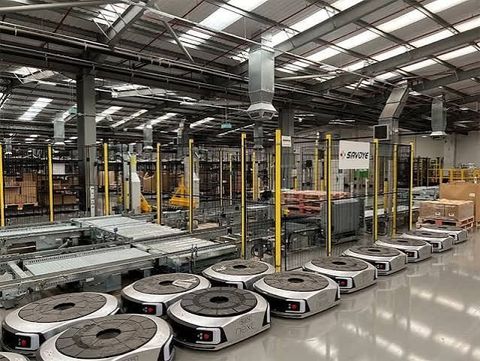
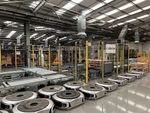
Automated guided vehicles (AGVs), autonomous mobile robots (AMRs), conveyors, and robotic palletizers move materials between production areas.
These technologies can support organized material movement, reduce unnecessary handling, and improve production flow. Their effectiveness depends on factory layout, traffic management, safety systems, and integration with production planning.
Machine Vision and Automated Inspection
Machine vision systems use cameras, lighting, and image-processing software to examine products during manufacturing.
Depending on the application, these systems can identify visible surface defects, check component positions, verify labels, and measure product dimensions.
Automated inspection supports consistent quality checks, but results depend on image quality, lighting, product variation, and the accuracy of the inspection system.
Importance of Smart Factory Automation in Modern Manufacturing
Reducing Unplanned Equipment Downtime
Unexpected machine failures can interrupt production schedules and affect product quality. Smart monitoring systems provide information about equipment condition, allowing maintenance teams to investigate potential problems earlier.
For example, increasing vibration in a motor may indicate bearing wear, imbalance, or misalignment. Maintenance personnel can examine the equipment and determine the appropriate action.
Predictive maintenance uses measurements and operating history to estimate when intervention may be needed. It can support maintenance planning, but it cannot guarantee that equipment failures will be prevented.
Improving Manufacturing Quality
Automated controls and inspection systems help identify process variations before they affect large quantities of products.
A temperature sensor may detect an abnormal heating condition, while a machine vision system may identify a missing component. Depending on the system design, an alert can prompt an operator to inspect the process or initiate a predefined response.
Supporting Energy Efficiency
Connected equipment can measure electricity consumption, compressed-air usage, and machine operating time. Manufacturers can compare energy use with production output to identify inefficient processes.
However, automation equipment also consumes energy. Its overall environmental performance should be assessed using actual measurements rather than assumptions.
Industry 4.0 Technologies at a Glance
Technology | Main function | Industrial application |
|---|---|---|
Industrial robotics | Automated physical operations | Welding and assembly |
PLC and HMI systems | Machine control | Automated production lines |
IIoT sensors | Equipment monitoring | Condition tracking |
SCADA systems | Process supervision | Plant monitoring |
Machine vision | Product inspection | Defect detection |
Digital twins | Virtual process modeling | Production planning |
AI analytics | Pattern identification | Maintenance analysis |
AGVs and AMRs | Material movement | Factory logistics |
Recent Developments in Smart Factory Automation
Artificial Intelligence in Industrial Operations
During 2025 and 2026, artificial intelligence continued to attract attention in industrial automation. Applications include visual quality inspection, production planning, equipment monitoring, and analysis of manufacturing data.
AI systems can identify patterns that may be difficult to recognize through manual observation. However, their usefulness depends on reliable data, appropriate testing, human oversight, and clearly defined operating limits.
Manufacturers should evaluate whether an AI application addresses a specific operational problem before integrating it into production.
Growth of Digital Twins
Digital twins are virtual representations of physical equipment, processes, or production systems. They can use operational data to help engineers examine performance and test possible changes.
For example, a digital model of a production line may help evaluate machine placement or identify potential bottlenecks before physical modifications are made.
The accuracy of a digital twin depends on its underlying model, assumptions, and data quality. Simulation results should be validated against real operating conditions.
Industrial Cybersecurity and Connected Equipment
As factories connect more machines to digital networks, cybersecurity becomes increasingly important.
Manufacturers are paying greater attention to network segmentation, user access controls, secure remote connections, software updates, and recovery planning.
These practices help protect production systems from unauthorized access and reduce the risk that a digital incident will interrupt physical operations.
Laws, Policies, and Safety Standards
Machinery Safety Requirements in India
Smart factory equipment must comply with applicable machinery safety, electrical safety, and workplace requirements. Relevant provisions may address machine guarding, emergency stops, safe maintenance, operator training, and risk assessment.
India's Machinery and Electrical Equipment Safety (Omnibus Technical Regulation) Order, 2024 underwent amendments during 2025 and was subsequently withdrawn on January 16, 2026. Manufacturers should check current notifications and product-specific requirements instead of assuming the original order remains applicable.
The Bureau of Indian Standards (BIS) publishes standards relevant to industrial machinery, electrical equipment, and safety practices.
Workplace and Environmental Compliance
Depending on the facility, industry, and location, manufacturers may need to consider:
Applicable factory and occupational safety legislation
Electrical installation and equipment requirements
Fire prevention and emergency response procedures
Industrial waste management and pollution controls
Risk assessments for robots and automated machinery
Maintenance records and employee training
Requirements vary according to the equipment and its intended use. Facilities should verify their obligations with the appropriate authorities.
Data Protection and Cybersecurity Policies
Connected manufacturing systems may process employee information, access records, and other personal data.
India's Digital Personal Data Protection Rules, 2025 were notified on November 14, 2025, to support implementation of the Digital Personal Data Protection Act, 2023. Their application depends on the data involved and the relevant commencement provisions.
Manufacturers should also establish suitable cybersecurity procedures, including restricted access, secure configurations, tested backups, and incident-response plans.
Tools and Resources for Smart Factory Planning
Useful Industrial Automation Tools
General-purpose tools can help manufacturing teams evaluate equipment performance and plan improvements.
Production dashboards: Monitor machine status, output, downtime, and production trends.
Predictive maintenance software: Analyze equipment measurements and operating history.
Energy monitoring systems: Track electricity use across machinery and production areas.
Simulation tools: Model production layouts, equipment movements, and process sequences.
Maintenance templates: Record inspections, repairs, lubrication, and component replacement.
Safety assessment checklists: Document hazards, risk levels, protective measures, and verification activities.
Cybersecurity assessment frameworks: Review access permissions, network security, backup procedures, and incident response.
Establishing a Useful Performance Baseline
Before introducing new automation equipment, manufacturers should record existing operating conditions.
Useful measurements include:
Machine downtime per production period
Defect rates and rework frequency
Output per shift
Energy consumption per unit of production
Maintenance frequency
Production cycle time
These measurements help determine whether an automation project delivers meaningful improvements.
Frequently Asked Questions
What Is the Main Purpose of Smart Factory Automation Equipment?
Its main purpose is to connect machines, sensors, control systems, and production software so manufacturers can automate tasks, monitor equipment, and make informed production decisions.
What Is the Difference Between Industry 4.0 and Traditional Automation?
Traditional automation mainly controls individual machines or processes. Industry 4.0 adds connected data, analytics, and communication between equipment and digital systems to provide a broader view of manufacturing operations.
Can Small and Medium-Sized Factories Use Smart Automation?
Yes. Factories can begin with specific applications, such as machine-condition monitoring, automated inspection, or energy tracking. The appropriate starting point depends on operational needs, technical readiness, and available resources.
How Does Predictive Maintenance Work?
Predictive maintenance analyzes equipment measurements and operating history to identify patterns that may indicate deterioration. Maintenance teams investigate the results and decide whether intervention is necessary.
Is Smart Factory Automation Safe?
Smart automation can support safer production when equipment is properly designed, installed, and maintained. However, industrial robots, conveyors, and automated machines introduce hazards that require suitable safeguards, risk assessments, employee training, and regular inspections.
Conclusion
Smart factory automation equipment is an important part of Industry 4.0. Industrial robotics, PLCs, IIoT sensors, machine vision, automated material handling, and data analytics help manufacturers monitor production and manage industrial processes.