Industrial Solar Power Inverters: Insights Into Utility-Scale Solar Technology
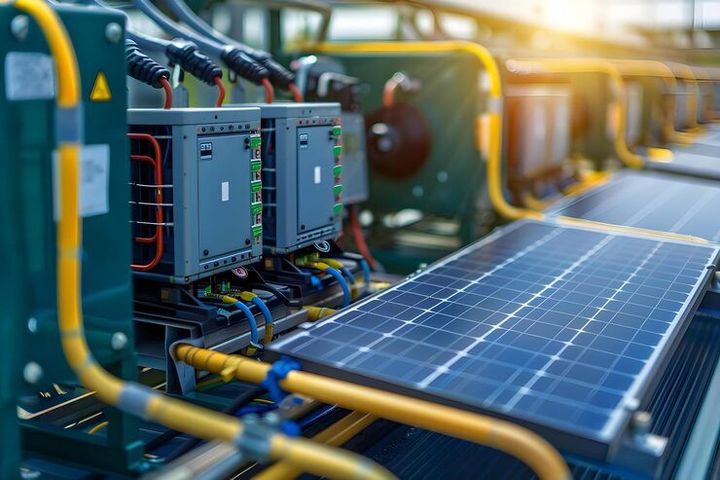
Industrial solar power inverters are essential components in utility-scale photovoltaic power plants. Solar panels generate electricity as direct current (DC), while transmission networks and most electrical equipment operate using alternating current (AC). The inverter performs the conversion between these two electrical forms.
n a large solar power plant, the inverter is more than a basic DC-to-AC converter. Modern utility-scale systems can manage power quality, voltage, frequency response, reactive power, grid protection, monitoring, and communication.
A typical utility-scale solar plant can include thousands of photovoltaic modules connected to strings, combiner equipment, DC collection systems, inverters, transformers, switchgear, and grid-connection equipment.
Industrial solar power inverters are generally designed for demanding operating environments. Their design must account for temperature, humidity, dust, electrical loading, grid conditions, and long operating periods.
Common inverter configurations include:
- Central inverters
- String inverters
- Distributed inverter architectures
- Grid-connected photovoltaic inverters
- Hybrid systems incorporating battery energy storage
- Advanced grid-support and grid-forming inverter systems
Central inverters have traditionally been widely used in large solar installations because several photovoltaic arrays can be connected to a high-capacity conversion unit. String inverter architectures divide conversion across multiple units, which can provide greater flexibility in plant design and fault isolation.
The choice depends on plant size, electrical architecture, environmental conditions, grid requirements, maintenance strategy, and energy-management objectives.
Importance
Utility-scale solar power is becoming an increasingly important part of electricity generation. As the proportion of variable renewable generation increases, photovoltaic plants need to interact with the electricity grid in increasingly sophisticated ways.
Industrial solar power inverters help address several technical challenges.
DC-to-AC conversion
The primary function is converting electricity generated by photovoltaic modules from DC into AC suitable for connection to the plant's electrical network.
Maximum power extraction
Solar irradiance and module operating conditions change throughout the day. Maximum Power Point Tracking (MPPT) allows the inverter to adjust operating conditions so that the photovoltaic array can operate near its available power point.
Grid support
Modern inverters can provide functions such as reactive-power control, voltage regulation, frequency-related responses, and controlled power-factor operation, depending on their design and applicable grid requirements.
Protection and electrical safety
Utility-connected photovoltaic systems need protection against abnormal electrical conditions. Anti-islanding functions are particularly important because an inverter should not continue energizing an isolated section of the grid after an appropriate grid disconnection condition.
Monitoring and diagnostics
Digital monitoring allows operators to examine inverter output, temperatures, alarms, voltage, current, energy production, and other operating parameters. These functions help identify abnormal behavior and support plant-level performance analysis.
The following simplified view shows the energy path:
| Stage | Main Function |
|---|---|
| Solar PV modules | Generate DC electricity |
| DC collection | Combines photovoltaic outputs |
| Solar inverter | Converts DC to AC |
| Transformer | Adjusts voltage |
| Switchgear | Provides switching and protection |
| Grid connection | Transfers electricity to the network |
Recent Updates
Solar inverter technology has continued to develop during 2025 and 2026, particularly around grid integration, testing, digital monitoring, and higher-capacity systems.
One important trend is the development of advanced inverter controls. As solar and battery-based generation increases, grid operators increasingly require renewable generators to behave as controllable grid resources rather than simply injecting available electricity.
Grid-forming technology is receiving attention because it can potentially help provide voltage and frequency characteristics in power systems with increasing levels of inverter-based generation. Grid-following technology remains widely used, but grid requirements can influence which control approach is appropriate.
Another development is greater attention to inverter-level data. In India, the Ministry of New and Renewable Energy published an August 17, 2026 notice concerning compliance with guidelines for inverter-level generation data and storage of inverter-level data for rooftop solar systems.
Testing and standards are also evolving. India's Bureau of Indian Standards lists standards relevant to photovoltaic power converters and utility-interconnected photovoltaic inverters, including requirements associated with inverter safety and islanding-prevention testing.
BIS laboratory information also shows activity around testing requirements for maximum-power-point-tracking efficiency and islanding prevention during 2025 and 2026.
A simplified technology trend can be represented as follows:
| Earlier Focus | Increasing Focus |
|---|---|
| DC-to-AC conversion | Grid-support functions |
| Basic monitoring | Detailed digital diagnostics |
| Fixed operating controls | Adaptive control systems |
| Conventional grid following | Advanced grid-forming research |
| Individual inverter monitoring | Plant-level energy management |
These developments matter because large solar plants increasingly operate as part of complex electricity networks that include conventional generation, renewable generation, battery storage, and flexible loads.
Laws or Policies
Regulatory requirements vary by country. For an India-focused utility-scale project, inverter selection and grid integration can be affected by national standards, electricity regulations, testing requirements, and grid-connection provisions.
The Bureau of Indian Standards identifies IS 16221 (Part 2) for particular safety requirements for photovoltaic-system inverters and IS 16169 for testing islanding-prevention measures for utility-interconnected photovoltaic inverters.
India has also introduced the Solar Systems, Devices and Components Goods Order, 2025. MNRE's current information includes implementation provisions for SPV inverters above 200 kW, with the implementation timeline having been extended to December 31, 2026, or until further orders, based on the applicable notification.
In June 2025, MNRE also circulated draft guidelines concerning series approval of solar PV inverters for testing laboratories under the 2025 goods order framework.
Grid connectivity is another important area. The Central Electricity Authority published draft Technical Standards for Connectivity to the Grid Regulations, 2026 for public comments in August 2026. The draft is relevant to how generating systems interact technically with the electricity grid, although a draft should not be treated as a final regulation.
For project planning, regulatory requirements should therefore be checked according to the project's location, capacity, connection voltage, commissioning timeline, and applicable authority.
Tools and Resources
Several general-purpose resources can help engineers, researchers, students, and project planners understand industrial solar inverter technology.
PV system sizing calculators
These can estimate DC array capacity, inverter loading ratios, expected energy production, and basic system characteristics.
Solar irradiance tools
Irradiance datasets help estimate how sunlight availability varies by location and season.
Inverter efficiency calculators
These tools can compare conversion efficiency across different operating loads and help explain why inverter efficiency is not necessarily constant throughout the day.
Electrical power calculators
Basic calculators for voltage, current, power factor, apparent power, and three-phase power are useful when examining inverter and transformer ratings.
Grid-analysis software
Power-system analysis tools can model voltage, frequency, reactive power, fault conditions, and grid interaction.
Performance monitoring dashboards
Digital dashboards can track inverter output, alarms, temperature, DC input, AC output, availability, and historical generation.
Standards databases
For India, the BIS "Know Your Standard" platform allows users to search Indian Standards by standard number or keyword and access related documentation and laboratory information.
FAQs
What does an industrial solar power inverter do?
An industrial solar power inverter converts DC electricity from photovoltaic modules into AC electricity suitable for electrical networks. Advanced models can also provide monitoring, protection, reactive-power management, and other grid-support functions.
What is the difference between a central and string inverter?
A central inverter generally handles a large collection of photovoltaic arrays through a centralized conversion unit. String inverters distribute conversion across multiple smaller units. The appropriate architecture depends on plant design, environmental conditions, electrical configuration, and grid requirements.
Why is MPPT important in solar inverters?
Maximum Power Point Tracking helps the inverter operate the photovoltaic array near its available maximum-power point as sunlight and module conditions change. This supports effective utilization of the available solar resource.
What is anti-islanding protection?
Anti-islanding protection helps prevent a grid-connected photovoltaic inverter from continuing to energize an isolated portion of the electrical network when grid conditions require disconnection. India has a specific testing standard, IS 16169:2019, addressing islanding-prevention measures for utility-interconnected photovoltaic inverters.
Are utility-scale solar inverters affected by grid regulations?
Yes. Large photovoltaic plants must meet applicable electrical, safety, testing, and grid-connection requirements. The exact requirements depend on the country, grid operator, project capacity, connection point, and applicable regulations.
Conclusion
Industrial solar power inverters are central to modern utility-scale photovoltaic technology. Their role extends beyond converting DC electricity into AC power. They also support power-quality management, grid interaction, protection, monitoring, and plant-level control.