Industrial Systems Automation Tools Guide: Technologies, Functions, Components and Uses
Industrial systems automation tools are technologies used to control, monitor, and coordinate machines, equipment, and production processes with limited manual intervention. These tools combine hardware and software to help factories, warehouses, processing plants, and other industrial facilities manage repetitive tasks, collect operating information, and maintain consistent procedures.
Context
Industrial systems automation tools are technologies used to control, monitor, and coordinate machines, equipment, and production processes with limited manual intervention. These tools combine hardware and software to help factories, warehouses, processing plants, and other industrial facilities manage repetitive tasks, collect operating information, and maintain consistent procedures. Industrial automation developed from early mechanical controls and electrical switching systems into computer-based technologies that can coordinate complex industrial operations.
Today, industrial systems automation tools include programmable logic controllers, sensors, industrial robots, human-machine interfaces, supervisory control systems, and industrial software platforms. These technologies may operate independently or work together as part of an integrated production system. Their purpose varies by application, from controlling a conveyor belt to monitoring an entire manufacturing facility.
Main Types of Industrial Automation Tools
Industrial automation involves several categories of equipment and software. Each category performs a particular role within the wider control system.
Programmable logic controllers (PLCs): Industrial computers that execute programmed instructions to control equipment such as motors, valves, conveyors, and assembly machines.
Sensors and transmitters: Devices that measure conditions such as temperature, pressure, speed, position, and liquid level.
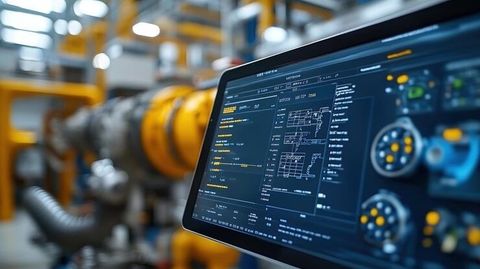
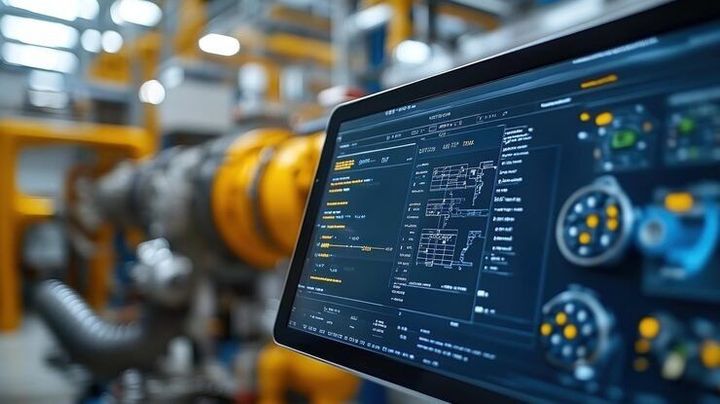
Human-machine interfaces (HMIs): Screens or panels that allow operators to view operating conditions, adjust permitted settings, and respond to alarms.
Supervisory control and data acquisition (SCADA): Systems used to monitor equipment and collect operating data across industrial processes, sometimes across geographically separated sites.
Industrial robots: Programmable machines used for activities such as welding, material handling, packaging, and assembly.
Industrial automation software: Programs used for system configuration, production monitoring, data analysis, equipment diagnostics, and process planning.
The appropriate combination depends on the process, operating environment, required precision, and level of control needed.
Importance
Industrial systems automation tools matter because many industrial processes require repeatable actions, accurate measurements, coordinated machinery, and continuous monitoring. Manual control alone may be difficult when a facility operates multiple machines or handles processes that require close monitoring. Automation can help organize these activities and provide operators with information about equipment performance.
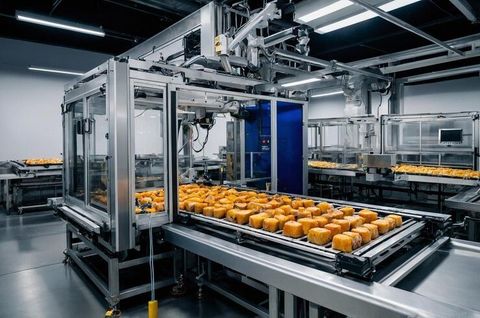
These systems affect manufacturers, maintenance teams, production planners, warehouse operators, and workers responsible for safety and quality. In food processing, for example, sensors can monitor temperatures, while control systems regulate equipment according to programmed limits. In manufacturing, automated inspection and machine coordination can help identify production variations.
Functions and Practical Benefits
Industrial automation tools perform several connected functions. Their specific capabilities depend on the equipment, software configuration, and operating procedures.
Process control: Adjusting equipment operation in response to measured conditions or programmed instructions.
Monitoring: Displaying equipment status, production measurements, and operating conditions.
Data collection: Recording information that can help teams examine output, interruptions, and process changes.
Fault detection: Identifying abnormal readings or equipment conditions that may require investigation.
Material handling: Coordinating conveyors, robotic arms, storage systems, and other movement equipment.
Quality control: Supporting inspections, measurement checks, and consistent production procedures.
Energy management: Tracking energy use and identifying operating patterns that may warrant further analysis.
Automation does not eliminate the need for human oversight. Operators and maintenance personnel remain important for handling unusual conditions, validating measurements, maintaining equipment, and deciding when a process should stop.
Comparing Common Automation Technologies
| Technology | Main function | Typical application |
|---|---|---|
| PLC | Executes control instructions | Assembly lines and machine control |
| Sensor | Measures physical conditions | Temperature and pressure monitoring |
| HMI | Displays information and controls | Operator panels |
| SCADA | Supervises processes and collects data | Utilities and large industrial sites |
| Industrial robot | Performs programmed movements | Welding and packaging |
| Manufacturing execution system (MES) | Coordinates production information | Production tracking and scheduling |
| Industrial IoT platform | Connects equipment data for analysis | Remote monitoring and performance analysis |
These technologies are not interchangeable. A PLC may directly control a machine, while an MES manages production information and a SCADA system supervises operations across multiple pieces of equipment.
Recent Updates
Industrial automation continues to develop through wider use of connected equipment, data analysis, artificial intelligence, and more flexible control architectures. Developments from 2024 through 2026 reflect growing interest in using operational data to understand production conditions, detect unusual patterns, and coordinate equipment across industrial facilities. Actual adoption varies according to industry, infrastructure, technical requirements, and investment priorities.
Artificial Intelligence and Predictive Maintenance
Some industrial systems now incorporate artificial intelligence and machine-learning techniques to examine equipment data. These tools can help identify patterns associated with vibration changes, temperature variations, unusual energy use, or other conditions that may indicate developing equipment problems.
Predictive maintenance uses measurements and historical information to estimate when equipment may need attention. Such estimates are not certain, and their reliability depends on data quality, operating conditions, and the analytical method. Physical inspections and established maintenance procedures remain important.
Industrial Internet of Things and Digital Twins
The Industrial Internet of Things (IIoT) connects sensors, machines, and software platforms so that operating data can be collected and shared. This connectivity can support remote monitoring, production analysis, and coordination between different parts of a facility.
Digital twins are digital representations of physical assets, processes, or systems. Depending on their design, they may use operating data and simulation models to examine performance under different conditions. Their accuracy depends on how well the model reflects the real equipment and how regularly it is updated.
Edge Computing and Flexible Automation
Edge computing processes data close to the equipment that generates it, rather than sending every measurement to a distant computing system. This approach can support applications that need timely local responses or continued operation when external connectivity is limited.
Manufacturers are also exploring modular automation systems that can be adapted to changing production requirements. However, integrating equipment from different suppliers can create compatibility, communication, maintenance, and cybersecurity challenges.
Laws or Policies
Industrial systems automation tools are influenced by workplace safety legislation, electrical requirements, machinery standards, environmental rules, and cybersecurity practices. The exact obligations depend on the equipment, industrial activity, location, and risks associated with the process. Technical standards can support safe system design, but their legal status varies by jurisdiction.
Industrial Safety and Standards in India
In India, industrial facilities must consider applicable occupational safety, factory, electrical, environmental, and machinery-related requirements. The Occupational Safety, Health and Working Conditions Code, 2020, is part of India's labour-law framework; its application depends on commencement notifications and relevant implementing provisions. Factories may also be subject to applicable state rules and other legislation governing their activities.
The Bureau of Indian Standards (BIS) publishes Indian Standards covering various engineering and safety subjects. International standards, including IEC 60204-1 for electrical equipment of machinery and IEC 61508 for functional safety, may also be relevant to industrial automation design. Whether a particular standard is mandatory depends on applicable regulations, contracts, and industry requirements.
Cybersecurity and Equipment Protection
Connected industrial equipment can introduce risks such as unauthorized access, operational disruption, data exposure, and unsafe changes to control settings. Facilities may use network separation, controlled remote access, account permissions, software updates, backups, and continuous monitoring to reduce these risks.
India's Information Technology Act, 2000, and applicable cybersecurity directions and rules may be relevant to certain digital systems and organizations. The National Critical Information Infrastructure Protection Centre also has a role in protecting designated critical information infrastructure. The requirements applicable to a facility depend on its classification and circumstances.
Automation systems should be evaluated for both physical and digital risks. Changes to control software, communication networks, or safety-related functions need appropriate testing and authorization.
Tools and Resources
Industrial automation tools can be selected and evaluated using technical documentation, engineering software, simulation environments, and maintenance records. The appropriate resource depends on whether the task involves system design, programming, troubleshooting, process monitoring, or safety assessment.
Engineering Software and Documentation
PLC programming environments help engineers configure controllers, develop logic, test programs, and diagnose control problems. HMI and SCADA development platforms support the creation of operator displays, alarms, process diagrams, and data records.
Simulation software can model selected equipment or processes before changes are applied to a physical system. Vendor documentation is important because controller instructions, communication protocols, wiring requirements, and supported functions vary between equipment families.
Monitoring and Maintenance Resources
Industrial monitoring platforms collect operating measurements and present them through dashboards, reports, or alerts. Maintenance management systems can record inspections, repair history, equipment identifiers, and planned maintenance activities.
Useful reference resources include:
Bureau of Indian Standards: Information about relevant Indian Standards and technical requirements.
International Electrotechnical Commission (IEC): International electrotechnical standards and technical publications.
International Society of Automation (ISA): Guidance and standards relating to automation, instrumentation, and industrial control.
National Critical Information Infrastructure Protection Centre (NCIIPC): Information related to critical information infrastructure protection in India.
Equipment manuals and technical data sheets: Instructions covering installation, operating limits, maintenance, and supported communication methods.
A basic automation assessment may record equipment type, control function, sensor measurements, alarm limits, maintenance history, communication connections, and safety requirements. These records help teams understand how individual components fit into the wider system.
FAQs
What are industrial systems automation tools?
Industrial systems automation tools are hardware and software used to control, monitor, and coordinate industrial equipment. Examples include PLCs, sensors, HMIs, SCADA systems, industrial robots, and production monitoring software.
How do industrial automation tools work together?
Sensors measure operating conditions, controllers process those measurements according to programmed instructions, and connected equipment responds to the controller's commands. HMIs and SCADA systems can display operating information so that personnel can monitor the process.
What is the difference between PLC and SCADA systems?
A PLC typically performs direct machine or process control, while SCADA provides supervisory monitoring and data collection across equipment or industrial sites. They often work together within a larger automation system.
How is artificial intelligence used in industrial automation?
Artificial intelligence can analyze operating data, identify unusual patterns, support visual inspection, and assist predictive maintenance. Results depend on data quality and model performance, so human review and established safety procedures remain important.
Which standards apply to industrial systems automation tools in India?
Relevant requirements may include applicable Indian laws, BIS standards, electrical safety rules, and international standards such as IEC 60204-1 or IEC 61508. Applicability depends on the equipment, industry, and governing regulations.
Conclusion
Industrial systems automation tools combine controllers, sensors, operator interfaces, robots, and software to coordinate industrial processes. Newer developments include connected equipment, artificial intelligence, digital twins, and edge computing, although their suitability varies by application. In India, automation planning must account for applicable safety, electrical, environmental, and cybersecurity requirements. Understanding each technology's function, limitations, and integration needs helps explain how industrial automation systems operate.