Industrial Testing Equipment Explained: Types, Methods, Applications, Benefits and Key Considerations
Industrial testing equipment is used to examine materials, components, machines, and finished products under controlled conditions. Industrial testing equipment can measure properties such as strength, hardness, temperature response, vibration, electrical behavior, pressure, dimensions, and surface condition. These tools exist because manufacturers, engineers, laboratories, inspectors, and other organizations need repeatable ways to understand how an item behaves before it is used in demanding environments.
What Industrial Testing Equipment Means
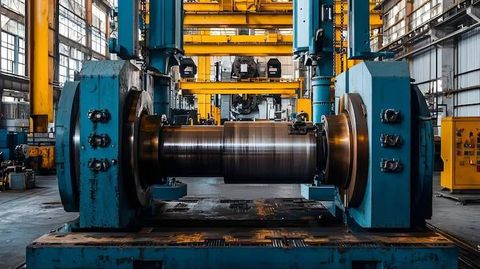
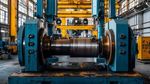
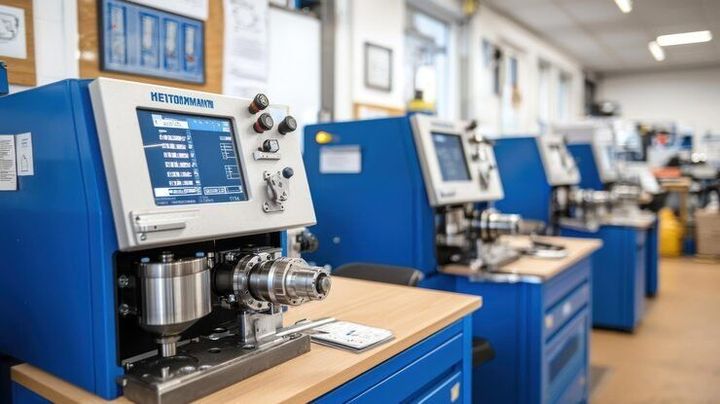
Industrial testing equipment includes instruments and systems designed to measure or evaluate physical, mechanical, electrical, chemical, thermal, or environmental characteristics. The equipment may range from a small hardness tester to a large universal testing machine or an environmental chamber.
Testing can take place during material selection, production, assembly, maintenance planning, laboratory research, and quality checks. The purpose is generally to produce measurable evidence rather than relying only on visual inspection or assumptions.
How Industrial Testing Developed
Early industrial testing relied heavily on manual measurements and basic mechanical instruments. As manufacturing became more precise, testing methods developed around standardized procedures, calibrated instruments, and controlled test conditions.
Today, digital sensors, automated data collection, software analysis, and computer-controlled test systems are common. These developments allow larger amounts of test information to be recorded and reviewed while reducing dependence on manual readings.
Importance
Why Testing Matters
Industrial testing helps identify differences between expected and measured performance. A material may look acceptable while having a weakness that becomes visible only under pressure, heat, repeated loading, electrical stress, or vibration.
Testing is relevant to many industries, including:
- Automotive and transportation manufacturing
- Construction and structural materials
- Aerospace and defense manufacturing
- Electrical and electronic equipment
- Metalworking and fabrication
- Plastics and rubber production
- Energy and power equipment
- Chemical and process industries
- Packaging and consumer products
For everyday users, testing can influence the reliability and safety characteristics of products used in buildings, vehicles, appliances, electrical systems, and infrastructure.
Problems Testing Can Address
Different tests answer different questions. Mechanical testing can examine whether a material withstands a defined load. Thermal testing can show how an item responds to temperature changes. Vibration testing can examine behavior under repeated movement, while electrical testing can assess insulation, resistance, voltage response, or other characteristics.
A useful test plan normally defines the sample, measurement method, test conditions, equipment requirements, acceptance criteria, and method for recording results. Clear procedures help make results easier to compare.
Common Industrial Testing Equipment
| Equipment type | Typical measurement or evaluation | Common applications |
|---|---|---|
| Universal testing machine | Tensile, compression, and related mechanical properties | Metals, plastics, composites |
| Hardness tester | Resistance to indentation or penetration | Metals, polymers, manufactured parts |
| Impact tester | Behavior under sudden loading | Metals, plastics, components |
| Vibration test system | Response to controlled vibration | Electronics, vehicles, machinery |
| Environmental chamber | Temperature and humidity response | Electronics, materials, components |
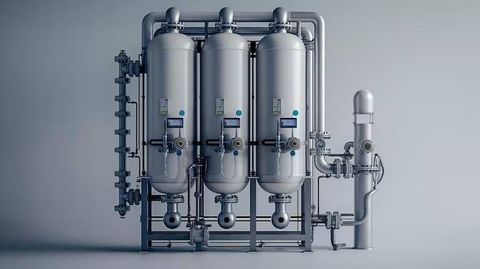
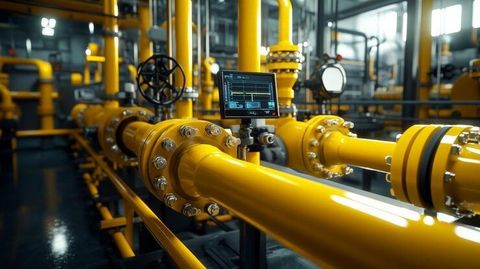
| Pressure test equipment | Pressure behavior and leakage | Pipes, tanks, valves |
| Electrical safety tester | Electrical characteristics and safety parameters | Electrical and electronic equipment |
| Coordinate measuring machine | Dimensional and geometric accuracy | Precision components |
| Surface roughness tester | Surface texture measurements | Machined and finished parts |
| Thermal testing equipment | Heat flow or temperature response | Materials, electronics, insulation |
Recent Updates
Digital Measurement and Data Handling
From 2024 through 2026, industrial testing has continued moving toward digital measurement, automated data collection, and connected laboratory workflows. Modern systems may combine sensors, controllers, software, and databases so that test conditions and results can be recorded in a structured format.
Another trend is greater use of automated analysis. Software can help organize repeated measurements, identify deviations, create reports, and maintain records. Human review remains important because test results depend on sample preparation, calibration, test settings, and interpretation.
Changing Standards and Laboratory Coverage
Standards and laboratory scopes continue to change as new materials, products, and manufacturing methods appear. In India, the Bureau of Indian Standards provides a searchable standards platform and laboratory information system. Its current systems show ongoing additions and revisions to standards and test scopes, including standards introduced or revised during 2024–2026.
BIS also publishes laboratory test facilities and related information, helping users identify which laboratories have testing capability for particular Indian Standards.
More Flexible Testing Arrangements
A notable development in India concerns laboratory arrangements for manufacturers operating under BIS product certification. A BIS circular issued in December 2025 stated that, for many covered products, manufacturers are no longer required to maintain an in-house laboratory and may use shared facilities, cluster-based facilities, or qualifying external laboratories, subject to specified exceptions.
This change illustrates a broader movement toward structured testing networks and documented laboratory capabilities rather than relying on a single testing location.
Laws or Policies
Standards in India
In India, industrial testing can be connected with Indian Standards issued by the Bureau of Indian Standards. Whether a particular test is required depends on the product, material, sector, applicable standard, certification arrangement, and other regulations.
The BIS “Know Your Standard” platform provides access to standard documents, amendments, notifications, testing information, and laboratory details.
Laboratory Competence
Laboratory competence is also important. ISO/IEC 17025 is widely used as a framework for the competence, impartiality, and consistent operation of testing and calibration laboratories. In the BIS framework, qualifying laboratories may be used for certain testing arrangements, and BIS maintains information on recognized laboratories and their scopes.
Specific regulatory requirements can differ substantially by product. Electrical equipment, construction materials, pressure-related equipment, environmental measurements, and other industrial categories may fall under different standards or regulatory authorities. Therefore, the applicable Indian Standard or regulation should be checked for the particular product being tested.
Tools and Resources
Standards and Laboratory Search Tools
The BIS standards portal can be used to search Indian Standards by number or keyword. It also provides information about new, revised, and reviewed standards.
The BIS Laboratory Information Management System provides searchable information about recognized laboratories and their testing scopes. Users can examine laboratory details and identify relevant Indian Standards associated with testing capabilities.
Test Planning Resources
A basic test-planning worksheet can include:
- Sample identification and material description
- Applicable standard or test method
- Required test conditions
- Measurement range and accuracy
- Equipment identification
- Calibration status
- Number of samples
- Recorded observations and results
- Acceptance criteria
- Report and record details
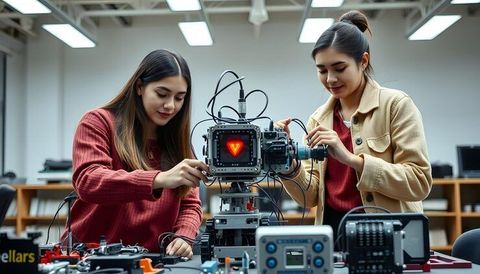
Digital data-acquisition systems, calibration records, environmental monitors, measurement software, and laboratory information systems can also support organized testing workflows.
FAQs
What is industrial testing equipment used for?
Industrial testing equipment is used to measure or evaluate materials, components, products, and machines under defined conditions. Common areas include mechanical, electrical, thermal, pressure, dimensional, vibration, and environmental testing.
What are the main types of industrial testing equipment?
Common types include universal testing machines, hardness testers, impact testers, vibration systems, environmental chambers, pressure test equipment, electrical testers, coordinate measuring machines, and surface measurement instruments.
Why is industrial testing equipment important?
Industrial testing equipment provides measurable information about how an item behaves under specific conditions. It can help identify material differences, dimensional variation, mechanical weakness, electrical issues, and environmental response.
How are industrial testing equipment standards determined in India?
Requirements depend on the product, applicable Indian Standard, certification arrangement, and other relevant regulations. The BIS standards portal can be used to search standards and related information.
What should be considered when selecting industrial testing equipment?
Important considerations include the required measurement range, accuracy, test method, sample size, environmental conditions, calibration requirements, data-recording needs, applicable standards, and laboratory capabilities.
Conclusion
Industrial testing equipment provides structured ways to examine materials, components, and products under controlled conditions. Mechanical, electrical, thermal, dimensional, pressure, vibration, and environmental tests address different measurement needs. From 2024–2026, digital data handling, laboratory connectivity, and changing standards have remained important developments in industrial testing. In India, BIS standards and laboratory information provide useful references for understanding applicable testing requirements.