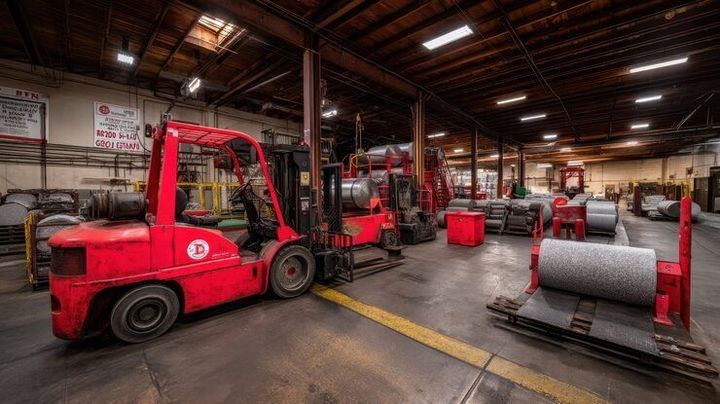
Material Handling Equipment Learn: Industrial Systems, Technologies, Functions and Applications
Material handling equipment refers to machines, systems, and devices used to move, lift, position, store, or control materials within industrial, commercial, construction, warehouse, and distribution environments. Material handling equipment can range from simple hand-operated devices to electrically powered machines, automated conveyors, cranes, automated guided vehicles, storage systems, and robotic technologies.
The basic idea developed from the need to move materials more safely and efficiently than manual handling alone could allow. As factories became larger and production processes became more complex, industries introduced mechanical lifting and transportation systems to move raw materials, components, finished goods, and bulk materials between different stages of an operation.
Today, material handling equipment is closely connected with manufacturing, warehousing, logistics, construction, ports, mining, agriculture, and recycling. The equipment selected for a particular application depends on factors such as material weight, dimensions, travel distance, lifting height, movement frequency, workplace layout, and environmental conditions.
Main Categories of Material Handling Equipment
Material handling equipment can generally be divided according to its function and method of operation. Common categories include:
- Conveyors for continuous movement of materials between locations.
- Forklifts for lifting and transporting palletized or packaged materials.
- Cranes and hoists for vertical lifting and horizontal movement of heavy loads.
- Pallet trucks and stackers for moving and positioning pallet loads.
- Automated guided vehicles and autonomous mobile robots for controlled movement through facilities.
- Storage and retrieval systems for organizing materials within designated storage areas.
- Bulk handling equipment for materials such as minerals, grains, powders, and aggregates.
Each category has different operating principles and safety requirements. A conveyor, for example, is designed around continuous or controlled movement, while a crane is primarily intended to lift and position suspended loads.
How Material Handling Systems Developed
Early industrial facilities depended heavily on manual labor, carts, ropes, pulleys, and simple lifting mechanisms. Industrial expansion gradually introduced powered cranes, elevators, conveyors, and mechanical lifting equipment.
The development of electric motors, hydraulic systems, electronic controls, sensors, and computer-based automation later changed how material movement was organized. Modern systems may combine mechanical equipment with software, sensors, warehouse management systems, machine vision, and automated control systems.
Importance
Material handling affects how materials move through factories, warehouses, construction sites, ports, and other workplaces. Without suitable handling systems, workers may need to manually move heavy, bulky, unstable, or repetitive loads over considerable distances.
Material handling equipment can address several practical challenges, including moving heavy loads, maintaining organized storage, positioning materials accurately, and reducing unnecessary movement between different work areas. Equipment also helps create defined movement paths and controlled lifting procedures.
Who Uses Material Handling Equipment?
Different industries use different combinations of equipment. Manufacturing facilities may use conveyors, cranes, forklifts, hoists, and automated transport systems. Warehouses may use pallet trucks, stackers, conveyors, storage systems, and automated vehicles.
Construction sites can use cranes, hoists, lifting accessories, and material transport equipment. Ports and bulk-material facilities may use ship loaders, reclaimers, stackers, conveyors, and other specialized systems.
Important Factors in Material Movement
The operating environment has a major effect on equipment selection. Important factors include:
- Load weight and dimensions.
- Required lifting height.
- Horizontal travel distance.
- Frequency of movement.
- Floor condition and available space.
- Indoor or outdoor operation.
- Temperature, dust, moisture, or chemical exposure.
- Required level of manual or automated control.
- Interaction between equipment, workers, vehicles, and storage areas.
Safe working loads are particularly important for lifting equipment. India's Factories Act provisions historically required lifting machines, chains, ropes, and lifting tackles to have adequate strength, proper maintenance, examination by a competent person, and clearly identified safe working loads.
Recent Updates
From 2024 through 2026, material handling has continued moving toward automation, digital monitoring, improved machine safety, and greater integration between physical equipment and software systems.
Automation and Intelligent Technologies
Automated guided vehicles, autonomous mobile robots, machine vision, sensors, programmable controls, and warehouse software are increasingly being incorporated into material movement systems. These technologies can allow equipment to follow predefined routes, detect objects, collect operational information, and coordinate movement with other systems.
Artificial intelligence is also becoming part of industrial safety and monitoring discussions. India's Directorate General Factory Advice Service and Labour Institutes listed training programs during 2025 and 2026 covering artificial intelligence in occupational safety and health, machine safety, and virtual reality.
Updated Indian Standards
The Bureau of Indian Standards continues to review and update standards covering cranes, hoists, conveyors, and bulk handling equipment. For example, IS 14418:2025 covers the design, manufacture, and erection of rail-mounted ship loaders for bulk handling, while IS 3177:2020 for electric overhead travelling and gantry cranes was reviewed in 2025.
Other standards relating to lifting equipment have also received recent reviews. IS 6547:2015 for electric chain hoists was reviewed in 2026, while IS 807:2006 covering the design, erection, and testing of structural portions of cranes and hoists was also reviewed in 2026.
Technology and Safety Integration
Modern material handling systems increasingly combine physical equipment with sensors, control systems, data collection, and safety devices. This can include load monitoring, obstacle detection, access controls, emergency stopping systems, condition monitoring, and automated movement controls.
The direction of development is therefore not limited to mechanical capacity. Equipment design is increasingly connected with workplace safety, digital control, energy management, and operational visibility.
Laws or Policies
In India, material handling activities are affected by occupational safety legislation, technical standards, state-level rules, and requirements applicable to particular industries and workplaces.
Occupational Safety Framework
The Occupational Safety, Health and Working Conditions Code, 2020 came into force on November 21, 2025, according to a Ministry of Labour and Employment notification. The government has stated that the four Labour Codes rationalized 29 existing central labour laws and introduced a consolidated framework covering workplace safety and working conditions.
The practical requirements applicable to a particular workplace can depend on the type of establishment, industry, equipment, state rules, and other applicable regulations. Businesses therefore need to identify the provisions relevant to their specific operations.
Lifting Equipment Requirements
Lifting machinery has particular safety considerations because equipment failure, unstable loads, incorrect loading, or uncontrolled movement can create serious hazards. The previous Factories Act framework included requirements concerning examination, maintenance, safe working loads, and registers for lifting machines and lifting tackles.
The Directorate General Factory Advice Service and Labour Institutes continues to conduct technical training relating to testing and examination of lifting machinery, lifting tackles, chains, ropes, and related equipment.
Indian Standards
The Bureau of Indian Standards provides a searchable system for identifying applicable Indian Standards. Its Know Your Standard platform allows searches by Indian Standard number or keyword and provides information about standards, amendments, testing laboratories, and related documentation.
Specific standards may apply to particular types of cranes, hoists, conveyors, machinery, electrical systems, or other components. The applicable standard should therefore be identified according to the equipment and application rather than assuming that one standard covers every material handling system.
Tools and Resources
Several resources can help readers understand material handling equipment, safety requirements, and applicable technical standards.
Standards and Safety Resources
The Bureau of Indian Standards provides the Know Your Standard platform for searching Indian Standards by number or keyword. It can be used to identify documents associated with cranes, hoists, conveyors, machinery, and other technical subjects.
The Directorate General Factory Advice Service and Labour Institutes provides occupational safety information, technical training, safety resources, and information concerning lifting machinery and industrial hazards.
The Ministry of Labour and Employment provides information concerning India's occupational safety legislation and the Occupational Safety, Health and Working Conditions Code.
Useful Planning Tools
Material handling planning may also involve practical calculation and documentation tools such as:
- Load-capacity worksheets.
- Floor-load calculation sheets.
- Crane load charts.
- Conveyor capacity calculations.
- Travel-distance measurements.
- Storage-space planning templates.
- Equipment inspection checklists.
- Risk-assessment worksheets.
- Preventive maintenance records.
- Warehouse layout diagrams.
The appropriate calculation method depends on the equipment type and operating conditions. For lifting systems, manufacturer documentation, applicable Indian Standards, engineering calculations, and competent technical assessment may all be relevant.
Basic Equipment Comparison
| Equipment | Primary Function | Typical Material | Movement Type |
|---|---|---|---|
| Conveyor | Continuous material movement | Boxes, packages, bulk materials | Horizontal or inclined |
| Forklift | Load lifting and transport | Pallets, containers | Horizontal and vertical |
| Crane | Heavy-load lifting and positioning | Machinery, steel, components | Vertical and horizontal |
| Hoist | Controlled lifting | Heavy components and loads | Mainly vertical |
| Pallet Truck | Pallet movement | Palletized goods | Mainly horizontal |
| Stacker | Lifting and positioning pallets | Palletized materials | Horizontal and vertical |
| AGV/AMR | Automated material movement | Containers, parts, packages | Automated route movement |
FAQs
What is material handling equipment?
Material handling equipment includes machines and systems used to move, lift, position, store, or control materials. Examples include conveyors, forklifts, cranes, hoists, pallet trucks, stackers, automated guided vehicles, and storage systems.
What are the main types of material handling equipment?
The main types include transportation equipment, lifting equipment, storage equipment, positioning equipment, and automated material handling systems. The appropriate category depends on the material, movement pattern, workplace layout, and operating requirements.
How does material handling equipment improve industrial systems?
Material handling equipment helps organize the movement of materials between production, storage, loading, and other work areas. Mechanical and automated systems can also reduce the need for repeated manual movement of heavy or bulky materials.
What technologies are used in modern material handling systems?
Modern systems may use electric drives, hydraulic mechanisms, sensors, machine vision, programmable controllers, warehouse software, automated guided vehicles, autonomous mobile robots, and data-monitoring systems. Artificial intelligence and digital technologies are also being explored for safety and operational applications.
What safety rules apply to material handling equipment in India?
Requirements depend on the workplace and equipment involved. India's occupational safety framework includes the Occupational Safety, Health and Working Conditions Code, while Indian Standards and applicable rules provide additional technical and safety requirements. Lifting equipment may require examination, safe working-load identification, maintenance, and other controls depending on the applicable legal framework.
Conclusion
Material handling equipment covers a broad range of machines and systems used to move, lift, position, and store materials. Its applications extend across manufacturing, warehousing, construction, ports, mining, and other industrial environments. Recent developments have increased the use of automation, sensors, digital controls, robotics, and integrated safety technologies. In India, the regulatory environment includes the Occupational Safety, Health and Working Conditions Code, applicable technical standards, and industry-specific requirements that help define how material handling systems are operated and assessed.