Mining Excavators Guide: Designs, Working Principles, Digging Methods, Uses and Considerations
Mining excavators are heavy earthmoving machines designed to remove, load, and move large quantities of rock, ore, soil, and overburden. They developed from simpler digging machines used in construction and gradually became larger, stronger, and more specialized as surface mining expanded. Modern mining excavators can work with hydraulic, electric, or diesel-electric systems, depending on machine design and site conditions.
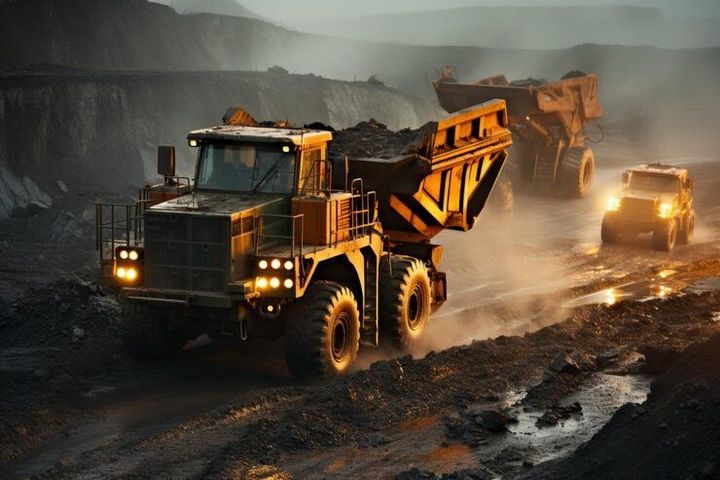
The basic idea is simple: a machine uses a boom, arm, and bucket or another attachment to break into material, lift it, and place it into a haul truck, crusher feed area, stockpile, or another designated location. Mining excavators are used in coal, iron ore, copper, limestone, aggregates, and other surface-mining operations.
Main excavator designs
Common designs include hydraulic mining excavators, electric rope shovels, and large hydraulic shovels. Hydraulic models use hydraulic cylinders and pumps to move the boom, arm, and bucket. Electric rope shovels use electric motors, cables, and mechanical systems to control digging and loading.
The design affects digging depth, bucket capacity, reach, cycle pattern, mobility, and the type of ground that can be handled. A machine selected for loose overburden may have different characteristics from one used in hard rock.
Importance
Mining excavators matter because surface mining requires controlled removal of large volumes of material. The excavator is often one part of a wider loading and hauling system, working together with haul trucks, conveyors, crushers, drills, dozers, and other equipment.
For communities and workers, machine design also matters because mining equipment operates around people, benches, roads, slopes, electrical systems, and changing ground conditions. Visibility, exclusion zones, traffic control, operator training, machine inspection, and communication are therefore important parts of safe operation.
What problems do they address?
Mining excavators can address several practical needs:
- Digging and loading material from prepared mine benches.
- Removing overburden to expose mineral-bearing layers.
- Handling fragmented rock after blasting.
- Loading material into haulage equipment.
- Preparing or reshaping working areas.
- Supporting selective excavation where different materials need to be separated.
Excavator productivity is influenced by bucket size, material density, digging resistance, swing angle, loading height, haul-truck position, operator technique, and ground conditions. A larger machine is not automatically suitable for every site because access, bench geometry, power supply, and material characteristics also affect its operation.
Key components
A typical hydraulic mining excavator contains a crawler undercarriage, upper structure, boom, arm, bucket, hydraulic pumps, cylinders, controls, and a power system. Tracks distribute machine weight across the ground and allow movement on prepared surfaces.
The working attachment determines how material is engaged. Bucket teeth or cutting edges penetrate the material, while the boom and arm position the bucket. The upper structure can rotate to place the bucket over a truck or other receiving area.
Recent Updates
From 2024 through 2026, mining equipment development has increasingly focused on automation, electrification, digital monitoring, and machine safety. Industry developments have included electric-drive equipment, connected machine systems, operator-assistance functions, and autonomy platforms designed to work with wider mine-management systems.
Automation can help machines follow defined operating patterns, monitor machine conditions, and support consistent movement. These systems do not remove the need for site procedures, trained personnel, appropriate supervision, and controls for interaction between machines and people.
Electrification is another continuing area of development. Electric-drive excavators can reduce dependence on diesel engines in suitable applications, but the practical choice depends on power infrastructure, mine layout, machine size, duty cycle, and operating conditions. Industry discussions also point to infrastructure and skills requirements as important considerations during the transition.
Digital monitoring and safety
Modern excavators may use cameras, sensors, machine data, onboard displays, payload information, and positioning technologies. These tools can help operators understand machine status and surroundings and can support maintenance planning and production measurement.
Mining safety authorities have also continued to emphasize controls around heavy earthmoving machinery. Recent Indian safety communications have highlighted exclusion zones, visibility, cameras, alarms, and communication around excavators and other mobile equipment.
Laws or Policies
In India, mining operations are governed by national and state rules covering mineral development, mining permissions, environmental protection, and workplace safety. The Mines and Minerals (Development and Regulation) Act, 1957 provides the main legal framework for mineral concessions and mining operations, while detailed requirements are set through associated rules and regulations.
For mine machinery, the Directorate General of Mines Safety, or DGMS, issues safety requirements, circulars, alerts, and technical guidance. Requirements can cover machine design features, inspection, operating procedures, training, traffic management, and safe distances around equipment. The exact requirements depend on the type of mine, mineral, machinery, and operating conditions.
Recent DGMS material has specifically addressed safety features for heavy earthmoving machinery and auxiliary equipment in opencast coal and metalliferous mines. Safety alerts have also emphasized maintaining exclusion zones around excavators and ensuring clear visibility before movement.
Mining projects may also be subject to environmental approvals and conditions concerning land use, air emissions, water, noise, waste, and mine closure. Requirements can vary according to the project and applicable central or state rules, so this article should not be treated as a substitute for the regulations governing a particular mine.
Tools and Resources
Readers researching mining excavators can use several types of resources to understand machine design and operating requirements.
- Manufacturer equipment manuals can explain machine components, operating limits, attachment types, and technical terminology.
- DGMS publications provide Indian mine-safety circulars, alerts, and examination-related information.
- India Code provides access to central legislation, including the Mines and Minerals (Development and Regulation) Act.
- Mine-planning software can model benches, excavation areas, haul routes, and equipment movement.
- Payload and production calculators can estimate loading cycles and material movement when appropriate input data are available.
- Fleet-management and machine-monitoring platforms can organize information about equipment location, operating hours, payload, fuel or energy use, and machine conditions.
- Engineering drawings and equipment specifications can help readers compare dimensions such as digging depth, reach, bucket capacity, and operating mass.
A useful comparison should consider the complete work system rather than one specification. Excavator capacity, truck capacity, bench dimensions, material characteristics, and site layout need to work together.
FAQs
What is a mining excavator?
A mining excavator is heavy equipment used to dig, load, and handle rock, ore, soil, or overburden in mining operations. It commonly uses a boom, arm, and bucket mounted on a tracked or specialized undercarriage.
How does a mining excavator work?
The operator positions the machine, lowers the attachment into the material, curls or fills the bucket, lifts it, and swings the upper structure toward the receiving area. The bucket then releases the material before the cycle begins again.
What are the main mining excavator digging methods?
Common methods include digging directly into loose or moderately fractured material, loading blasted rock, bench excavation, and selective excavation. The method depends on material strength, bench geometry, bucket design, and the overall mine plan.
What is the difference between hydraulic excavators and electric rope shovels?
Hydraulic excavators use hydraulic systems to move the boom, arm, and bucket. Electric rope shovels use electric motors and mechanical rope-and-drum systems. Their digging motion, operating characteristics, and suitable applications differ.
What should be considered when selecting a mining excavator?
Important considerations include material type, required digging depth, bucket capacity, bench height, machine dimensions, ground conditions, power arrangement, haul-truck compatibility, visibility, safety controls, and applicable regulations. The complete mining system should be considered rather than a single machine specification.
Conclusion
Mining excavators combine powerful digging equipment with controlled loading and movement systems for surface-mining work. Their designs vary according to material, mine layout, digging method, and power arrangement. Recent developments have placed greater attention on electrification, automation, digital monitoring, and machine safety. In India, mining and machinery use are shaped by mineral laws, environmental requirements, and DGMS safety rules.

You May Also Like