Packaging Machines Guide: Types, Working, Applications, Features and Industry Benefits
Packaging machines are used to prepare products for storage, transportation, distribution, and everyday use. They can perform tasks such as filling containers, sealing packages, wrapping products, labeling containers, and placing items into cartons. As production volumes and packaging requirements have increased, different types of packaging machines have been developed for food, beverages, pharmaceuticals, cosmetics, chemicals, electronics, agriculture, and other industries.
Modern packaging equipment can range from simple semi-automatic machines to integrated production systems with sensors, programmable controls, conveyors, and inspection equipment. Understanding the types, working principles, applications, and features of packaging machines helps explain how products move from production areas into prepared packages.
Understanding Packaging Machines
What are packaging machines?
Packaging machines are mechanical or automated systems designed to perform one or more packaging operations. Depending on the equipment, a machine may handle filling, weighing, sealing, wrapping, labeling, coding, carton formation, or pallet preparation.
Packaging machines can be configured for different product shapes and materials. Liquid products may require filling systems, while powders, granules, solid products, and irregular items may need different handling mechanisms.
The level of automation also varies. Manual systems require operators to perform several steps, while semi-automatic equipment combines operator input with mechanical operations. Fully automated systems can connect multiple packaging stages into a continuous process.
How packaging machines developed
Early packaging operations depended heavily on manual labor and basic mechanical tools. As manufacturing expanded, machines were introduced to perform repetitive tasks with more consistent movement and timing.
Electrical controls, pneumatic components, sensors, and programmable systems later changed packaging equipment significantly. More recent developments have introduced digital monitoring, machine vision, data collection, and connected control systems.
Why Packaging Machines Matter
Packaging is not simply about placing a product inside a container. The package can protect the contents, provide information, support transportation, and help maintain product condition during handling.
Packaging machines are important because they can organize repetitive packaging activities into defined production steps. This is particularly useful where products need consistent filling, sealing, wrapping, or labeling.
Common packaging challenges
Different industries face different packaging requirements. Common challenges include:
- Maintaining consistent fill quantities
- Handling different package sizes
- Protecting products during transportation
- Creating secure seals
- Applying labels in the correct position
- Managing high production volumes
- Reducing product exposure during packaging
- Handling fragile or irregular products
- Recording production information
The appropriate equipment depends on the product, package material, production environment, required output, and level of automation.
Role in different industries
Packaging machines are used across many sectors. Food processing may use filling, sealing, vacuum packaging, and tray packaging equipment. Beverage production can involve bottle filling, capping, labeling, and case packing.
Other applications include pharmaceutical packaging, personal care products, household chemicals, agricultural products, electronic components, industrial parts, and consumer goods.
Types of Packaging Machines
Packaging equipment can be classified according to the task it performs and the type of product or package it handles.
Filling machines
Filling machines place a specified quantity of liquid, powder, granules, or solid products into containers. Different mechanisms are used depending on product characteristics.
Liquid fillers may use pumps, gravity systems, or other controlled filling methods. Powder and granular products may use augers, volumetric systems, or weighing mechanisms.
Form-fill-seal machines
Form-fill-seal machines can create a package from flexible packaging material, fill the package, and seal it within one process. They are commonly associated with pouches, sachets, and other flexible packages.
Vertical and horizontal configurations are used for different product types and package designs.
Sealing machines
Sealing machines close packages after filling or positioning the product. Heat sealing, induction sealing, ultrasonic sealing, and other methods may be used depending on the packaging material.
A suitable sealing method needs to match the package structure and the conditions under which the package will be stored and transported.
Wrapping machines
Wrapping machines surround products with flexible film or other wrapping material. Stretch wrapping and shrink wrapping are used in different packaging situations.
Some wrapping systems focus on individual products, while others prepare groups of products or pallet loads for movement through warehouses and distribution areas.
Labeling machines
Labeling machines apply labels to bottles, cartons, containers, boxes, and other packages. Some systems apply pressure-sensitive labels, while others use different labeling methods based on the package material.
Labeling equipment can also be integrated with printing or inspection systems to manage product identification information.
Cartoning and case packing machines
Cartoning machines place products into cartons and may close the cartons afterward. Case packing machines arrange products into larger shipping cases.
These machines are commonly used when individual packaged products need to be grouped for storage or transportation.
How Packaging Machines Work
Although packaging machines differ considerably, many follow a sequence of controlled mechanical operations.
Basic operating sequence
A typical packaging process may involve:
- Product feeding
- Product measurement or positioning
- Container or packaging material preparation
- Filling or product placement
- Sealing or closing
- Labeling or coding
- Inspection
- Package discharge
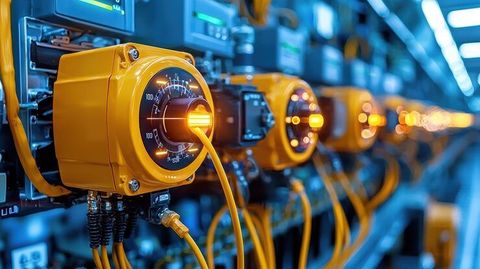
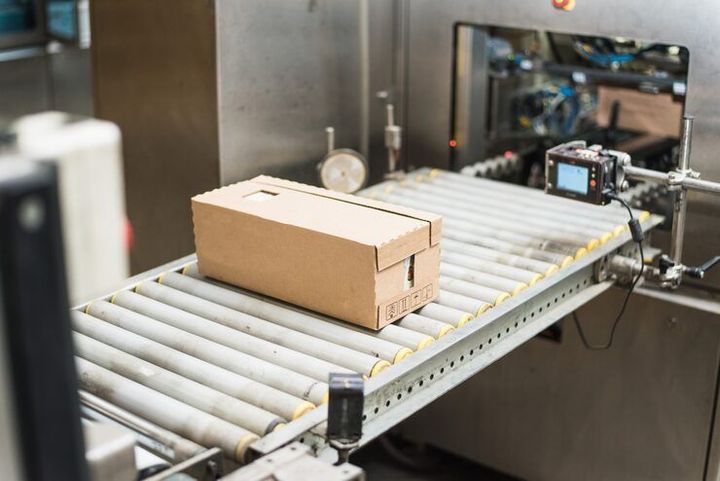
Sensors can detect product position, container presence, package dimensions, or other operating conditions. Controllers then coordinate motors, valves, cylinders, heaters, conveyors, and other components.
Automation and control systems
Modern packaging machines often use programmable logic controllers and electronic interfaces to coordinate operations. Operators can adjust selected parameters according to the packaging format and production requirements.
Sensors and control systems can also detect certain operating problems. For example, a machine may stop when a container is missing or when packaging material is not positioned correctly.
Features of Packaging Machines
Packaging equipment can include mechanical, electrical, pneumatic, electronic, and software-based components.
Important features may include:
- Adjustable operating parameters
- Conveyor integration
- Product sensors
- Temperature controls
- Programmable controllers
- Touchscreen interfaces
- Automatic counting
- Safety guarding
- Format-change mechanisms
- Printing or coding integration
- Inspection systems
- Data monitoring
The importance of each feature depends on the packaging process. A small production operation may need a relatively simple machine, while a continuous production line may require coordinated equipment across several packaging stages.
Packaging Machine Applications
Packaging machines are used for products with very different physical characteristics and packaging requirements.
| Industry | Common packaging applications | Typical equipment |
|---|---|---|
| Food | Snacks, sauces, grains, prepared foods | Fillers, sealers, wrappers |
| Beverages | Bottles, cans, containers | Fillers, cappers, labelers |
| Pharmaceuticals | Tablets, containers, medical products | Blister, bottle, cartoning equipment |
| Cosmetics | Creams, liquids, containers | Fillers, cappers, labelers |
| Agriculture | Seeds, grains, produce | Weighing, filling, bagging equipment |
| Chemicals | Powders, liquids, industrial containers | Fillers, sealers, labeling systems |
| Electronics | Components and devices | Wrapping, labeling, packing equipment |
| Industrial goods | Parts, tools, components | Wrapping, carton, case packing equipment |
Food and beverage packaging
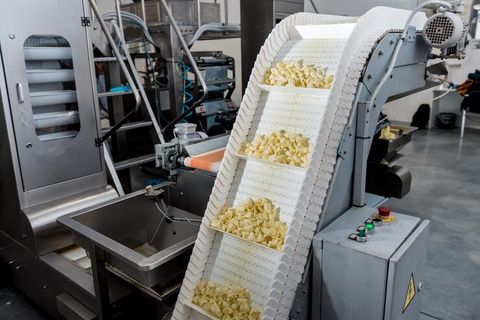
Food and beverage production often requires equipment that can handle different package formats and production conditions. Filling, sealing, capping, wrapping, labeling, and coding can be combined into connected processes.
Packaging materials may include flexible films, glass, metal, paperboard, and plastic-based containers, depending on the product and packaging requirements.
Pharmaceutical and healthcare packaging
Pharmaceutical packaging requires controlled handling and accurate identification. Packaging systems may be used for bottles, blister packs, cartons, containers, and other formats.
Traceability information, batch identification, packaging integrity, and inspection can be important parts of these operations.
Industrial and agricultural packaging
Industrial products may require protection against dust, moisture, movement, or physical handling. Agricultural products such as seeds, grains, and processed produce can require weighing, bagging, sealing, and labeling equipment.
The machine configuration depends heavily on product characteristics and the required package format.
Recent Developments in Packaging Machines
Between 2024 and 2026, packaging equipment has continued moving toward automation, digital monitoring, flexible production, and improved material efficiency.
Greater use of smart controls
Packaging lines increasingly incorporate sensors, digital interfaces, machine monitoring, and connected control systems. These technologies can provide information about machine status, production activity, and operating conditions.
Data can also help production teams identify recurring interruptions and understand equipment performance.
Machine vision and inspection
Machine vision systems are increasingly used for tasks such as checking labels, package positioning, seals, codes, and visible product characteristics.
Automated inspection can operate alongside packaging equipment, allowing certain packaging problems to be identified during production rather than only after packages leave the line.
Flexible packaging formats
Manufacturers increasingly need equipment that can handle multiple package sizes and formats. This has encouraged the development of machines with adjustable components and faster format-change mechanisms.
Packaging flexibility can be particularly relevant when production involves different product variants or container dimensions.
Material efficiency
Packaging equipment development is also influenced by efforts to reduce unnecessary packaging material and accommodate changing packaging structures. Machine settings may need to be adjusted when thinner films, recyclable materials, paper-based structures, or alternative packaging formats are introduced.
The machine must remain compatible with the physical characteristics of the selected material.
Laws and Policies Affecting Packaging Machines
Packaging operations are influenced by regulations concerning machinery safety, worker protection, product information, packaging materials, environmental requirements, and industry-specific standards.
Machinery safety
Machinery regulations generally address areas such as protective guards, emergency stopping systems, electrical safety, moving components, and operator protection.
Requirements vary by country and application. Businesses should refer to the relevant national workplace safety authorities and machinery regulations.
Packaging and labeling requirements
Many jurisdictions have rules concerning information displayed on product packages. Depending on the product, requirements may relate to ingredients, quantities, identification codes, warnings, handling information, or other details.
Packaging equipment may therefore need to integrate printing, coding, weighing, or labeling functions into the production process.
Environmental considerations
Packaging regulations in many regions increasingly address material use, recycling, waste management, and producer responsibilities. These rules can influence the materials used and the design of packaging systems.
Because environmental requirements differ between jurisdictions, businesses need to follow the rules applicable to their products and operating locations.
Tools and Resources for Packaging Operations
Several resources can help businesses and students understand packaging machinery and plan packaging processes.
Machine specification sheets
A machine specification sheet can record details such as:
- Product type
- Package dimensions
- Material type
- Operating speed
- Power requirements
- Machine dimensions
- Automation level
- Filling range
- Sealing method
- Environmental requirements
This information helps establish whether a machine configuration matches a particular packaging process.
Packaging material calculators
Material calculators can help estimate film, labels, cartons, or other packaging requirements based on package dimensions and production quantities. Results are estimates and should be checked against actual packaging specifications.
Production line diagrams
Process diagrams can show how filling, sealing, labeling, inspection, conveying, and case packing equipment connect within a packaging line. They are useful for understanding material flow and identifying where different machines operate.
Industry standards and government resources
Government regulatory websites, machinery safety authorities, packaging associations, and recognized standards organizations can provide information about applicable safety and packaging requirements.
FAQs
What are packaging machines used for?
Packaging machines are used for tasks such as filling, wrapping, sealing, labeling, coding, cartoning, case packing, and pallet preparation. The equipment selected depends on the product and package format.
What are the main types of packaging machines?
Common types include filling machines, form-fill-seal machines, sealing machines, wrapping machines, labeling machines, cartoning machines, and case packing machines. Some production lines combine several machine types.
How do packaging machines work?
Packaging machines use coordinated mechanical and electronic components to move products and packaging materials through defined steps. Sensors, controllers, motors, conveyors, and other components can coordinate filling, sealing, labeling, inspection, and discharge.
What industries use packaging machines?
Packaging machines are used in food and beverage production, pharmaceuticals, cosmetics, agriculture, chemicals, electronics, industrial manufacturing, and many other sectors.
What features should packaging machines have?
Relevant features can include adjustable settings, sensors, programmable controls, safety systems, conveyors, inspection equipment, coding systems, and format-change mechanisms. The required features depend on the product and packaging process.
Conclusion
Packaging machines perform a wide range of tasks, from filling and sealing to labeling, wrapping, cartoning, and case packing. Their designs vary according to product characteristics, packaging materials, production requirements, and automation levels. Recent developments have increased the use of digital controls, machine vision, flexible formats, and material-efficient packaging approaches. Safety rules, labeling requirements, environmental regulations, and industry standards also influence how packaging equipment is designed and operated.