PCB Drilling Machines Guide: Working Principles, Drill Types, Features and Applications
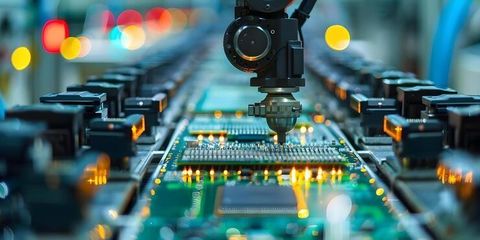
PCB drilling machines are used to create precise holes in printed circuit boards (PCBs). These holes can connect different circuit layers, provide positions for component leads, or create openings needed for board assembly. A PCB drilling machine may use mechanical drills or lasers, depending on the board material, hole size, and production method.
Context
PCB drilling machines are used to create precise holes in printed circuit boards (PCBs). These holes can connect different circuit layers, provide positions for component leads, or create openings needed for board assembly. A PCB drilling machine may use mechanical drills or lasers, depending on the board material, hole size, and production method.
Printed circuit boards became an important part of electronic equipment as circuits moved from hand-wired assemblies toward compact boards with repeatable layouts. As boards gained more layers and smaller features, controlled drilling became important for producing consistent hole locations. Modern equipment can combine computer numerical control (CNC), automatic tool changes, cameras, and software that follows digital board data.
Why PCB drilling is needed
A PCB contains copper traces and insulating layers arranged in a planned pattern. Drilling creates pathways through selected layers so electrical connections can be made. The hole pattern must match the board design because even a small position error can affect later manufacturing steps.
Common drilling work includes through-holes, blind holes, and holes used for component mounting. Some advanced boards also use microvias, which are very small connections between adjacent layers. The drilling method is selected according to the structure of the board and the required hole geometry.
Importance
PCB drilling machines matter because hole placement and hole quality influence several later stages of PCB production. A poorly formed hole can create problems with plating, electrical continuity, component placement, or board reliability.
The topic affects electronics manufacturing across computers, communication equipment, industrial controls, vehicles, household devices, medical electronics, and other products that contain circuit boards. For general readers, understanding the drilling stage helps explain how a digital circuit design becomes a physical board.
Problems addressed by controlled drilling
Manual drilling is difficult to apply consistently when a board contains many holes or very small features. CNC and laser systems can follow programmed coordinates, maintain repeatable movement, and manage different drilling parameters.
Important considerations include:
- Hole diameter and depth
- Position accuracy
- Board thickness and layer structure
- Drill speed and feed settings
- Tool condition
- Dust and chip removal
- Heat management
- Registration between board layers
Mechanical drilling and laser drilling
Mechanical PCB drilling uses rotating drill bits that physically remove material. It is widely used for conventional through-holes and other openings that can be produced with suitable cutting tools.
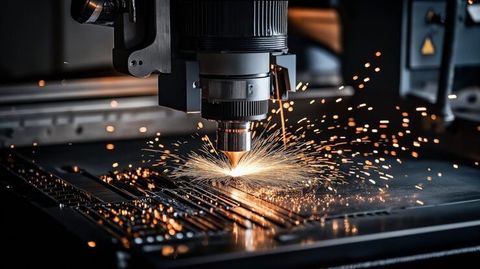
Laser drilling removes material with a focused light beam. It is useful for small features such as microvias and for some flexible or high-density board structures. The selection depends on the material stack, required feature size, production volume, and board design.
Recent Updates
From 2024 through 2026, PCB manufacturing has continued moving toward finer features, higher layer density, and more automated inspection and process control. Equipment development has included greater use of laser drilling for HDI and advanced substrate applications, along with motion control, vision systems, and software-based process monitoring. Industry equipment announcements during this period have also highlighted CO₂ and UV laser platforms for PCB and flexible-circuit drilling.
The wider electronics industry is also increasing attention to high-density interconnect (HDI), advanced packaging, and flexible circuits. These designs can require smaller vias and tighter positional control than conventional boards. As a result, PCB drilling machines are increasingly discussed as part of an integrated production flow rather than as an isolated machine.
Automation and digital control
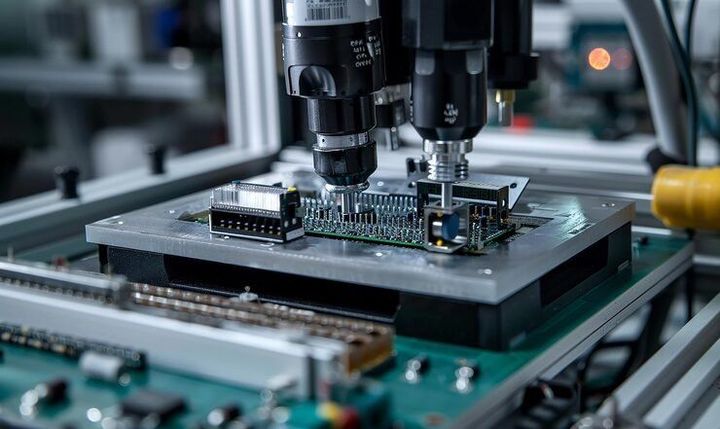
Modern CNC drilling machines can read digital manufacturing data and use programmed coordinates to position a board accurately. Automatic tool changing can reduce interruptions when several hole sizes are needed, while cameras can help with board alignment and registration.
Laser systems are also becoming more digitally controlled. Operators can adjust beam parameters, movement, and drilling patterns through software. These developments support repeatable processing while making process records easier to review.
Material and design changes
PCB materials continue to expand beyond traditional rigid laminates. Flexible circuits, high-frequency materials, and multilayer structures can require different drilling conditions. Heat, resin behavior, copper thickness, and layer construction can all influence the drilling approach.
Laws or Policies
In India, PCB drilling machines used in industrial workplaces are mainly affected by general occupational safety requirements rather than by a single law written specifically for PCB drilling. The Occupational Safety, Health and Working Conditions Code, 2020 provides the central framework for occupational safety and working conditions, and the Occupational Safety, Health and Working Conditions (Central) Rules, 2025 provide related rules at the central level. State-level requirements can also apply.
For machinery, practical safety measures include guarding moving parts, controlling access to hazardous areas, providing emergency controls, maintaining electrical safety, and giving workers suitable instruction. The current central framework is intended to address safe working conditions in covered establishments, while detailed requirements can depend on the workplace and applicable state rules.
PCB production can also generate electronic and production waste. India's E-Waste (Management) Rules, 2022 apply to specified electrical and electronic equipment and related activities, with later amendments listed by the Ministry of Environment, Forest and Climate Change. Whether a particular PCB production activity falls within a specific provision depends on the equipment, organization, and waste stream involved.
Because workplace and environmental requirements can change, manufacturers should refer to the applicable central and state authorities, machine documentation, and current statutory requirements when establishing operating procedures.
Tools and Resources
Several resources help readers understand PCB drilling machines and the wider PCB production process. A digital PCB design or electronic design automation (EDA) platform can show the hole locations and board layers before manufacturing begins. Manufacturing data files, such as Gerber files and drill files, are commonly used to communicate board geometry and drilling information.
Useful resources include:
- PCB design software for viewing layers, pads, vias, and drill locations
- Drill-file viewers for checking hole coordinates and sizes
- CNC controller documentation for machine settings and operating sequences
- Manufacturer manuals for drill selection, spindle operation, alignment, and maintenance
- IPC technical standards for PCB design, fabrication, and inspection terminology
- Government labour and environmental portals for current Indian workplace and waste requirements
A basic drill chart can also help explain how hole size relates to common applications. Actual values vary by board design and production method.
| Drilling feature | Common purpose | Typical method |
|---|---|---|
| Through-hole | Connects or passes through board layers | Mechanical drill |
| Blind via | Connects an outer layer to an internal layer | Laser or controlled mechanical drilling |
| Microvia | Small interlayer connection | Laser drilling |
| Mounting hole | Mechanical attachment or alignment | Mechanical drill |
| Tooling hole | Manufacturing alignment | Mechanical drill |
Choosing drilling parameters
Drilling parameters should be matched to the board material, hole diameter, thickness, and drill type. Important settings can include spindle speed, feed rate, pecking sequence, and depth control.
The drill bit itself also matters. Different diameters and tool geometries are used for different hole sizes and materials. Worn tools can affect hole shape, wall quality, and positional accuracy, so tool condition is normally monitored as part of production control.
FAQs
What is a PCB drilling machine?
A PCB drilling machine is equipment used to create holes or vias in a printed circuit board. It may use mechanical drill bits or a laser, depending on the board structure and required feature size.
How does a PCB drilling machine work?
A CNC PCB drilling machine receives programmed hole coordinates, aligns the board, positions the spindle or drilling head, and creates each programmed hole. Mechanical systems remove material with a rotating tool, while laser systems use a focused beam.
What are the main PCB drill types?
Common PCB drill types include mechanical drills for through-holes and larger openings, and laser drilling systems for small vias and dense board structures. The suitable type depends on the board design, material, and hole requirements.
What features should a PCB drilling machine have?
Common features include CNC positioning, automatic tool changing, board alignment, spindle control, dust or chip extraction, depth control, and software for handling drilling data. Advanced systems may include cameras and process monitoring.
Where are PCB drilling machines used?
PCB drilling machines are used in printed circuit board manufacturing for electronics used in computing, communications, industrial equipment, vehicles, consumer devices, and other electronic systems. Different drilling methods are selected for rigid, flexible, multilayer, and high-density boards.
Conclusion
PCB drilling machines create the holes and vias needed to connect and assemble printed circuit boards. Mechanical drilling remains useful for many conventional openings, while laser drilling supports smaller features used in dense and advanced board structures. Current equipment increasingly combines CNC control, alignment systems, automation, and digital process monitoring. In India, workplace safety and waste management requirements can apply according to the establishment, equipment, and activities involved.