Pharmaceutical Manufacturing Machines: Process and Equipment Guide
Pharmaceutical manufacturing machines are specialized equipment used to transform raw materials into finished medicines such as tablets, capsules, liquids, creams, sterile products, and other dosage forms. These machines support different stages of pharmaceutical production, from material preparation and mixing to filling, inspection, and packaging.
The equipment used depends on the type of medicine and the manufacturing process. A tablet production line, for example, may include milling, blending, granulation, drying, compression, coating, inspection, and packaging equipment. Liquid medicines require different systems for mixing, filtration, holding, filling, and sealing.
The main purpose of pharmaceutical equipment is not simply to automate production. Equipment must also support controlled and repeatable processes. Pharmaceutical manufacturing follows strict quality principles because the final product must meet defined requirements for identity, strength, purity, and quality.
Good Manufacturing Practice, commonly called GMP, places strong emphasis on suitable premises, equipment, documented procedures, validation, cleaning, and process control. WHO describes GMP as a quality-management approach intended to reduce risks such as contamination, mix-ups, and incorrect labelling.
Why Pharmaceutical Manufacturing Equipment Matters
Pharmaceutical manufacturing equipment affects several important areas of medicine production. Poorly designed or poorly maintained equipment can increase the risk of contamination, inconsistent processing, inaccurate measurements, or product mix-ups.
Modern pharmaceutical production therefore considers equipment selection as part of the overall quality system.
Important benefits of suitable equipment include:
- Consistent processing conditions
- Controlled mixing and material handling
- Accurate weighing and measurement
- Reduced contamination risks
- Repeatable production processes
- Easier cleaning and inspection
- Better process monitoring
- Improved documentation and traceability
- Support for validation and qualification activities
Pharmaceutical equipment also needs to match the characteristics of the material being processed. Powders, liquids, granules, biological materials, and sterile products can require very different processing environments.
Common Types of Pharmaceutical Manufacturing Machines
| Equipment | Main Application |
|---|---|
| Pulverizers and mills | Particle-size reduction |
| Sifters | Particle classification |
| Blenders and mixers | Uniform material mixing |
| Granulators | Granule formation |
| Fluid-bed dryers | Controlled drying |
| Tablet presses | Tablet compression |
| Tablet coating machines | Protective or functional coating |
| Capsule filling machines | Capsule production |
| Liquid manufacturing tanks | Liquid preparation |
| Filtration systems | Removal of unwanted particles |
| Filling machines | Filling containers |
| Sterilization equipment | Microbial control |
| Inspection systems | Product and packaging inspection |
| Blister packaging machines | Unit-dose packaging |
The actual equipment configuration varies according to the formulation, dosage form, production scale, and applicable regulatory requirements.
Tablet and Capsule Manufacturing
Tablet manufacturing commonly begins with weighing and preparation of raw materials. Materials may then undergo milling, sieving, blending, granulation, and drying before compression.
A typical process may include:
Raw material handling → Milling → Sieving → Blending → Granulation → Drying → Final blending → Compression → Coating → Inspection → Packaging
Capsule manufacturing can involve powder preparation, blending, capsule filling, polishing, inspection, and packaging.
Each stage has specific process parameters. For example, excessive variation during blending can affect uniformity, while inappropriate compression conditions can influence tablet hardness, thickness, or disintegration.
Liquid and Semi-Solid Manufacturing
Liquid pharmaceutical production can involve purified water systems, mixing vessels, agitators, filtration equipment, holding tanks, and filling machines.
Creams, gels, ointments, and other semi-solid products may require specialized mixers and homogenizers to achieve the required consistency.
Temperature, mixing speed, processing time, viscosity, and material compatibility can all influence the finished formulation.
Sterile Pharmaceutical Equipment
Sterile manufacturing requires particularly controlled environments and processes. Equipment may include sterilizers, cleanroom systems, sterile filtration equipment, filling systems, isolators, and environmental monitoring instruments.
The equipment layout should support controlled material and personnel movement while reducing contamination risks. Equipment used for pharmaceutical production also needs appropriate cleaning, maintenance, and qualification procedures.
Recent Updates and Industry Trends
Pharmaceutical manufacturing continues to move toward greater process control, automation, continuous production, and data-based monitoring.
One notable development is increased attention to continuous manufacturing. In June 2026, WHO published updated technical material that included points to consider for continuous manufacturing of pharmaceutical products. This reflects growing international attention to manufacturing approaches that integrate processing steps more continuously rather than relying only on traditional batch operations.
Digital monitoring is another important trend. Modern production systems can collect information from sensors and control systems covering temperature, pressure, humidity, flow, mixing conditions, and other process variables.
Other developments include:
- Automated material handling
- Electronic batch documentation
- Process analytical technology
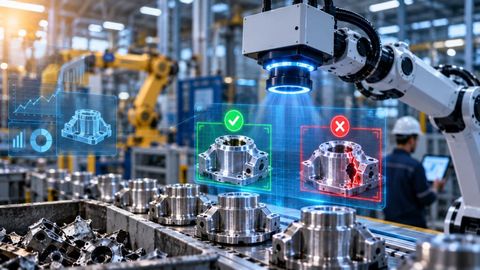
- Automated visual inspection
- Real-time process monitoring
- Improved equipment data collection
- Closed processing systems
- More efficient cleaning procedures
- Greater use of risk-based validation
- Advanced containment for potent compounds
In April 2025, WHO published updated good manufacturing practice material covering areas including excipients and prevention and control of nitrosamines in pharmaceutical products. These developments reinforce the importance of controlling materials and potential contamination risks throughout the manufacturing process.
WHO's 2026 Technical Report Series also included updated recommendations concerning pharmaceutical quality assurance, regulatory systems, inspections, and manufacturing practices.
Automation and Smart Manufacturing
Automation can help monitor repeatable production parameters and reduce dependence on manual adjustments. However, automation itself does not guarantee pharmaceutical quality.
Automated equipment still needs appropriate qualification, calibration, maintenance, cleaning, data controls, and documented procedures.
The growing use of digital systems also increases attention to data integrity. Manufacturing records should remain accurate, complete, traceable, and protected from inappropriate changes.
Laws, GMP, and Regulatory Policies
Pharmaceutical manufacturing machines operate within a broader regulatory framework. The exact requirements depend on the country, product category, manufacturing process, and intended market.
WHO GMP principles emphasize suitable premises, equipment, materials, personnel, documentation, validation, and quality controls. GMP is intended to reduce risks that cannot be completely eliminated through final-product testing alone.
In the United States, pharmaceutical manufacturers are subject to FDA Current Good Manufacturing Practice requirements. FDA states that CGMP regulations establish minimum requirements for methods, facilities, and controls used in manufacturing, processing, and packing drug products.
Equipment is an important part of these requirements. FDA guidance explains that equipment should be appropriately designed for its intended use and suitable for cleaning and maintenance. Product-contact surfaces should not adversely affect the quality or purity of the drug.
Equipment qualification can involve several stages:
- Design Qualification (DQ): confirms that the proposed design meets the intended purpose.
- Installation Qualification (IQ): verifies correct installation.
- Operational Qualification (OQ): checks operation across specified ranges.
- Performance Qualification (PQ): demonstrates consistent performance under intended conditions.
FDA's guidance also emphasizes cleaning, maintenance, calibration, and documentation for appropriate pharmaceutical equipment.
For global manufacturers, applicable national regulations should always be checked alongside international GMP guidance.
Tools and Resources for Pharmaceutical Manufacturing
Several general resources can help teams understand pharmaceutical manufacturing processes and equipment requirements.
Useful resources and tools include:
- GMP compliance checklists
- Equipment qualification templates
- Preventive maintenance schedules
- Cleaning validation worksheets
- Calibration records
- Process flow diagrams
- Batch manufacturing records
- Equipment logbooks
- Risk assessment templates
- Change-control forms
- Environmental monitoring records
- Process parameter calculators
- Equipment capacity calculators
- Material balance worksheets
- Temperature and humidity monitoring tools
- Technical training materials
- Pharmacopoeial reference documents
A basic equipment evaluation checklist can consider:
| Evaluation Area | Key Question |
|---|---|
| Material compatibility | Is the equipment suitable for the product? |
| Capacity | Is the working capacity appropriate? |
| Cleaning | Can contact surfaces be cleaned effectively? |
| Maintenance | Can routine maintenance be performed safely? |
| Calibration | Which measuring instruments require calibration? |
| Validation | What qualification activities are required? |
| Containment | Are additional controls required for hazardous materials? |
| Documentation | Are equipment records complete and traceable? |
These checks can help organize equipment assessment before installation and during the equipment lifecycle.
Frequently Asked Questions
What are pharmaceutical manufacturing machines?
Pharmaceutical manufacturing machines are equipment used to process raw materials into medicines and pharmaceutical dosage forms. They can include mixers, granulators, tablet presses, capsule fillers, liquid processing systems, sterilizers, inspection systems, and packaging equipment.
Why is equipment qualification important?
Equipment qualification provides documented evidence that equipment has been appropriately designed, installed, operated, and tested for its intended purpose. It helps demonstrate that the equipment can consistently support the required manufacturing process.
What is the difference between GMP and equipment validation?
GMP is a broader quality system covering manufacturing practices, facilities, equipment, personnel, documentation, controls, and other areas. Equipment validation or qualification focuses specifically on demonstrating that equipment and related systems perform as intended.
How often should pharmaceutical equipment be calibrated?
Calibration frequency depends on the instrument, its criticality, manufacturer information, historical performance, risk assessment, and applicable procedures. Critical measuring and monitoring equipment should be controlled according to an established calibration program.
Can one machine be used for different pharmaceutical products?
In some circumstances, equipment can be used for multiple products. However, the manufacturer must evaluate contamination and carryover risks and establish appropriate cleaning, verification, validation, and operational controls. FDA guidance specifically highlights the importance of cleaning and contamination control for shared equipment.
Conclusion
Pharmaceutical manufacturing machines form an important part of modern medicine production. From powder preparation and tablet compression to liquid filling, sterilization, inspection, and packaging, each equipment stage contributes to process control and product quality.