Plasma Cutting Machines Guide: Technology, Components, Key Features and Material Applications
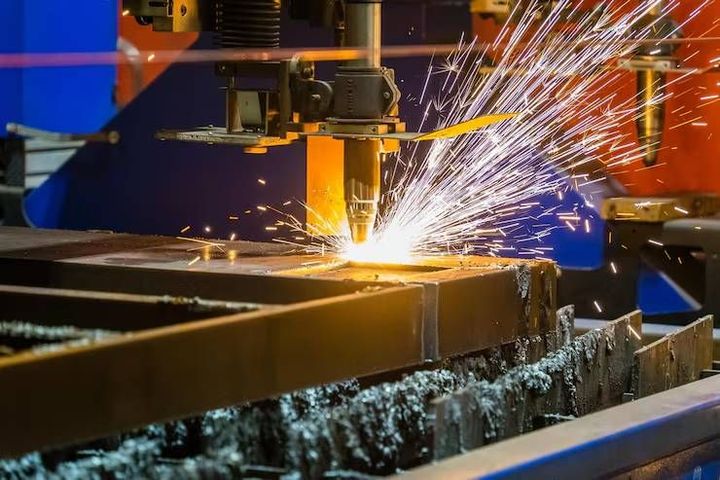
Plasma cutting machines are thermal cutting systems used to cut electrically conductive materials. They use an electric arc and a high-velocity gas stream to create plasma, which reaches a temperature high enough to melt metal and carry molten material away from the cut. The process is widely used in fabrication, manufacturing, construction, repair work, and metal processing.
Context
The basic concept developed from plasma arc technology used in welding and related processes. As power supplies, torch designs, motion systems, and computer controls developed, plasma cutting became suitable for both handheld equipment and automated cutting tables.
A modern plasma cutting machine can range from a compact manual unit to a large computer-controlled system. A complete system may include a power supply, torch, consumables, gas delivery system, work lead, motion system, cutting table, and computer numerical control (CNC) equipment.
How plasma cutting works
A plasma system sends electrical energy through a gas. The energy ionizes the gas and creates a conductive plasma arc between the electrode and the workpiece. The concentrated arc melts the metal while the gas flow pushes molten material through the cut.
The process differs from mechanical cutting because the material is separated mainly through heat rather than a physical blade. It also differs from laser cutting, which uses a focused light beam rather than a plasma arc.
Importance
Plasma cutting machines matter because many manufacturing processes require metal to be divided into specific shapes and dimensions. The technology can be used for straight cuts, profiles, holes, slots, and other shapes when paired with suitable motion control.
The process is commonly associated with electrically conductive metals such as mild steel, stainless steel, and aluminium. The usable thickness range depends on the power supply, material, gas, torch, consumables, cutting speed, and machine configuration.
For general users, understanding these factors is useful because a plasma cutter is not defined by power alone. The complete cutting system determines how consistently it can process a particular material.
Key components
A plasma cutting machine contains several interconnected components.
- Power supply: Converts incoming electrical power into the current and voltage needed to establish and maintain the plasma arc.
- Plasma torch: Directs the plasma arc and gas toward the workpiece.
- Electrode and nozzle: These consumable parts help create and control the plasma arc and gradually wear during operation.
- Gas system: Supplies compressed air or another suitable plasma gas. Gas selection can affect arc characteristics and cut quality.
- Work lead and ground connection: Completes the electrical circuit between the power supply and workpiece.
- Motion system: On mechanized equipment, motors and drive components move the torch along programmed paths.
- CNC controller: Interprets digital cutting instructions and coordinates torch movement and cutting parameters.
- Cutting table: Supports the material and may incorporate systems for managing heat, smoke, and molten particles.
Key features to understand
When comparing plasma cutting machines, specifications should be considered together rather than individually.
One important factor is rated cutting capacity. Manufacturers may distinguish between recommended cutting thickness, maximum cutting thickness, and separation capability. These terms can describe different operating conditions, so they should not be treated as interchangeable.
Duty cycle is another relevant specification. It indicates how long a system can operate within a defined period under specified conditions. Electrical load, ambient conditions, and machine configuration can affect the practical operating pattern.
Arc-starting technology also affects operation. Some systems use high-frequency starting methods, while others use alternative approaches designed to reduce electromagnetic interference or simplify starting.
Torch design is equally important. Consumable configuration, cooling, shielding, torch geometry, and access to the workpiece can influence cutting behavior.
Technology and control
Modern plasma cutting machines increasingly combine power electronics with digital controls. Automated systems can use CNC software to convert a digital drawing into a toolpath.
Nesting software can arrange multiple parts within a sheet to make efficient use of available material. Height-control systems can also monitor the distance between the torch and workpiece, helping maintain an appropriate torch position during cutting.
These functions do not eliminate the need for correct setup. Material thickness, consumable condition, gas pressure, cutting speed, amperage, and torch height still need to correspond with the application.
Material Applications
Plasma cutting is mainly used with electrically conductive materials. Common examples include mild steel, stainless steel, aluminium, and various other conductive metals.
| Material | Main considerations |
|---|---|
| Mild steel | Commonly used for fabricated and structural components |
| Stainless steel | Requires appropriate settings and gas arrangements |
| Aluminium | Heat transfer and material properties affect cutting |
| Copper alloys | Electrical and thermal properties require suitable parameters |
| Other conductive metals | Compatibility depends on thickness and machine specifications |
Material condition also matters. Paint, coatings, rust, surface contamination, and poor electrical contact can affect the cutting process.
Plasma cutting machines can be used for brackets, frames, panels, machine components, structural pieces, agricultural equipment parts, vehicle components, and other fabricated metal shapes. The exact application depends on thickness, dimensional requirements, production volume, and machine capabilities.
Recent Updates
From 2024 through 2026, development in plasma cutting has continued to focus on automation, digital control, consumable management, cutting speed, and integration with computer-aided manufacturing systems.
Manufacturers have introduced new air-plasma systems and control technologies aimed at combining portability with higher cutting capability. In 2026, Hypertherm Associates announced the Powermax33 XP, an air-plasma system with different consumable configurations for various cutting applications. The company also announced HySpeed technology for compatible mechanized plasma systems, combining optimized nesting, torch motion, gas management, and cutting parameters. These are manufacturer announcements and should not be treated as evidence that every plasma system provides the same results.
Another continuing trend is integration between plasma cutting hardware and digital production workflows. CNC controls, automated torch-height systems, CAD/CAM software, and nesting tools can connect design data with machine movement.
Current development also places greater attention on process monitoring and consumable identification. These features can help operators recognize conditions that may affect cut quality, although they do not replace appropriate setup and maintenance.
Laws or Policies
Plasma cutting is subject to workplace safety requirements because the process involves electrical energy, high temperatures, ultraviolet radiation, fumes, noise, compressed gases, and molten metal.
The exact legal requirements depend on the country, workplace, machine configuration, and industry. In many jurisdictions, workplace rules address hazard assessment, protective equipment, equipment maintenance, ventilation, fire prevention, and operator training.
International standards also provide technical references. ISO 17916:2016 addresses safety requirements for thermal cutting machines, including machinery using plasma arc processes. It covers areas such as machine design, construction, installation, operation, maintenance, and decommissioning. ISO states that this edition remains current after its latest review.
ISO 9013:2017 provides classifications and geometrical quality tolerances for thermal cuts, including plasma cutting. It provides a framework for describing thermal-cut quality rather than defining the performance of a particular machine.
Workplace rules may also address electrical grounding, arc radiation, fire prevention, ventilation, and operator training. For example, OSHA requirements for applicable arc welding and cutting workplaces include grounding provisions and protective shielding.
Tools and Resources
Several resources can help readers understand plasma cutting machines and interpret technical information.
Machine manuals and parameter charts
Manufacturer manuals contain operating parameters, consumable information, electrical requirements, gas specifications, maintenance procedures, and safety instructions. These documents should be used for the specific machine because settings vary between systems.
Cutting parameter charts can help relate amperage, material thickness, gas type, torch height, and cutting speed. Such charts should be treated as machine-specific references rather than universal values.
CAD, CAM and nesting software
CNC and CAD/CAM software can be used to prepare part drawings and cutting paths. Nesting tools can arrange multiple shapes on a sheet according to defined parameters.
These tools are particularly relevant to mechanized plasma cutting because the digital drawing must be translated into machine movement and cutting instructions.
Standards and technical references
Standards databases are useful when technical specifications or safety requirements need to be understood. ISO publications such as ISO 17916 and ISO 9013 provide references for thermal cutting machinery and cut-quality classification.
A maintenance record can also track consumable changes, torch inspections, cleaning, electrical checks, and unusual cutting results. Consistent records can help identify recurring operating issues.
FAQs
What are plasma cutting machines used for?
Plasma cutting machines are used to cut electrically conductive metals such as mild steel, stainless steel, and aluminium. Applications include fabricated components, structural parts, panels, brackets, and other shaped metal pieces.
How do plasma cutting machines work?
A plasma cutter uses an electric arc to ionize gas and create plasma. The concentrated plasma melts the metal while the gas stream removes molten material from the cut.
Which materials can a plasma cutting machine cut?
Plasma cutting machines can process many electrically conductive metals. The practical material range depends on electrical conductivity, thickness, machine capacity, gas selection, torch configuration, and operating parameters.
What are the main components of a plasma cutting machine?
The main components include a power supply, plasma torch, electrode, nozzle, gas system, work lead, ground connection, and, on automated equipment, a motion system and CNC controller.
What factors affect plasma cutting quality?
Material type and thickness, amperage, cutting speed, gas pressure, torch height, consumable condition, electrical connection, and machine settings can all affect the resulting cut.
Conclusion
Plasma cutting machines use an electrically generated plasma arc to cut conductive metals through controlled thermal energy. Their operation depends on the interaction of the power supply, torch, consumables, gas system, motion controls, and material parameters. Recent development has emphasized digital control, automation, CNC integration, and process management, while international standards continue to address machine safety and cut-quality classification. Understanding these elements provides a foundation for interpreting plasma cutting technology, components, key features, and material applications.