PVC Pipe Belling Machines Basics With Features, Applications, and Production Benefits
PVC pipe belling machines are industrial machines used to form an enlarged socket, commonly called a bell or socket, at one end of a PVC pipe. This formed end allows another pipe section to fit into it, creating a joint that can be assembled using an appropriate sealing or joining method.
Belling is an important stage in the production of many PVC piping systems used for water movement, drainage, irrigation, electrical protection, and other infrastructure applications.
PVC, or polyvinyl chloride, is a thermoplastic material that can be heated and shaped under controlled conditions. During pipe manufacturing, a straight pipe section normally has a relatively uniform diameter. A belling machine selectively heats one end and forms it into a specified socket geometry without reshaping the entire pipe.
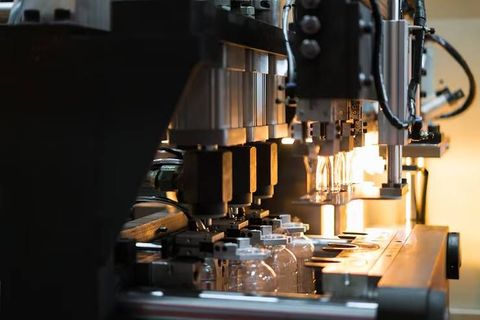
The process generally involves pipe positioning, controlled heating, forming, cooling, and discharge. Depending on the machine configuration, heating can use infrared elements, hot air, contact heating, or other controlled thermal methods. Forming tools then create the required socket dimensions.
Automation has become an important part of modern PVC pipe belling machines. Sensors, programmable controllers, temperature monitoring systems, servo drives, and automated handling mechanisms can coordinate the different stages of the process.
How PVC Pipe Belling Machines Work
A typical production sequence begins when a cut PVC pipe enters the belling station. A positioning system holds the pipe at the required location so that the correct section is heated.
The pipe end is heated to a suitable forming condition. Temperature control is important because insufficient heating can make forming difficult, while excessive or uneven heating can affect pipe geometry or material characteristics.
Once the heated section reaches the required condition, a forming mandrel or tooling system enters the pipe end. The material is shaped around the tool to create the socket. After forming, the pipe is cooled while the geometry is stabilized.
The finished pipe is then discharged for inspection or transfer to another production stage. Automated systems can repeat these steps according to programmed process parameters.
Main Features of Belling Machines
PVC pipe belling machines can contain several features designed around pipe dimensions and production requirements:
Controlled heating zones
Temperature sensors
Forming mandrels and socket tooling
Pipe clamping mechanisms
Automated cooling systems
Programmable logic controllers
Touchscreen operator interfaces
Servo or pneumatic positioning systems
Automatic pipe feeding
Finished-pipe discharge mechanisms
Safety guards and interlocks
Tooling must correspond to the pipe diameter, wall characteristics, socket design, and applicable dimensional requirements. A machine used for several pipe sizes may require interchangeable forming tools and adjustable process settings.
Importance
PVC pipe belling machines are important because socketed pipes can simplify the assembly of piping systems. Instead of manufacturing every pipe section with identical straight ends, one end can be formed into a socket that accommodates the end of another pipe.
This manufacturing approach is widely associated with piping systems where repeated pipe connections are required. It can also support organized production by integrating socket formation into the pipe manufacturing line.
Applications of PVC Pipe Belling Machines
PVC pipe belling equipment is used for various pipe categories and applications. These can include:
Water distribution pipes
Drainage pipes
Sewerage pipes
Irrigation pipes
Agricultural piping
Electrical conduit
Industrial fluid-handling pipes
Underground infrastructure piping
The exact application depends on pipe material formulation, dimensions, pressure requirements, joint design, and applicable product standards.
Production Benefits
The production benefits of automated pipe belling relate mainly to process consistency, repeatability, handling, and integration with extrusion lines.
An automated machine can coordinate heating and forming sequences according to defined parameters. This reduces dependence on manually repeating each individual forming step.
Automation can also reduce unnecessary handling between pipe extrusion, cutting, belling, cooling, and inspection. When the equipment is integrated with upstream and downstream machinery, pipe movement can become part of a continuous production sequence.
Dimensional Control
Socket geometry is important because the formed end needs to interact correctly with the corresponding pipe and joining components. Important dimensions can include socket diameter, depth, wall geometry, and transition shape.
Measurement equipment can be used to inspect these characteristics during production. Depending on the application, inspection may involve dimensional gauges, calipers, optical measurement systems, or automated vision equipment.
Process control and dimensional inspection work together. Monitoring the heating and forming conditions can help operators understand changes in the finished geometry.
Recent Updates
From 2024 through 2026, PVC pipe manufacturing equipment has continued moving toward greater automation, digital process monitoring, energy management, and flexible production. These developments are part of a broader industrial trend toward connected machinery and data-based production control.
Automated Temperature Management
Heating remains one of the most important parts of PVC pipe belling. Modern systems can use multiple temperature sensors and independently controlled heating zones to monitor the pipe end.
Programmable controllers can coordinate heating duration, temperature settings, forming timing, and cooling sequences. Some equipment can record process information for production monitoring.
Temperature uniformity is particularly important because the pipe end must be sufficiently conditioned for forming while maintaining the required material characteristics.
Servo-Based Positioning
Servo motors and electronic positioning systems can provide controlled movement of pipe-handling mechanisms and forming tools. Compared with basic mechanical arrangements, electronically controlled positioning can allow more programmable adjustment.
Servo systems can also communicate operating information to the main machine controller. This can support automated sequencing and fault monitoring.
Flexible Production
Pipe manufacturers may produce multiple diameters or socket configurations. Modern belling equipment can therefore be designed with adjustable settings and interchangeable tooling.
Recipe-based control can allow operators to select predefined parameters for different pipe configurations. Physical tooling changes may still be required when pipe dimensions change significantly.
Digital Monitoring
Industrial control systems increasingly collect information about temperature, cycle time, machine status, alarms, production counts, and other operating conditions.
This information can be displayed through a human-machine interface or transferred to broader production monitoring platforms. Data can also support maintenance planning and process analysis.
Energy Management
Heating systems represent an important part of the energy demand of a belling machine. Equipment designers may use improved insulation, controlled heating zones, automated temperature regulation, and power monitoring to manage energy use.
The actual energy requirement depends on pipe dimensions, production rate, heating technology, ambient conditions, and machine configuration.
Laws or Policies
PVC pipe belling machines are influenced by machinery safety rules, electrical requirements, occupational protection measures, and product standards applicable to PVC pipes. The exact requirements vary by country, industry, and intended pipe application.
Machinery Safety
Belling machines contain heated components, moving mechanisms, forming tools, conveyors, electrical equipment, and automated controls. Safety measures may include protective guards, interlocked access panels, emergency-stop controls, warning systems, and controlled operating modes.
Maintenance activities can expose workers to electrical, mechanical, pneumatic, or thermal hazards. Appropriate isolation procedures are therefore important when personnel need to access equipment.
Pipe Product Standards
PVC pipes can be manufactured according to standards covering dimensions, pressure classification, joint geometry, material characteristics, testing, and performance. The applicable standard depends on the intended application and market.
Belling tooling must produce a socket compatible with the relevant pipe and joint specifications. Dimensional inspection can therefore form part of quality-control procedures.
Environmental Considerations
PVC pipe manufacturing involves heating, material handling, electricity use, and production waste. Environmental requirements may address emissions, waste handling, energy use, and recycling depending on the facility and jurisdiction.
Manufacturing scrap can sometimes be managed through controlled material-recovery processes where appropriate for the production system and material specification.
Tools and Resources
Planning and operating PVC pipe belling machines involves several technical resources. Pipe dimensional charts can help define the required socket dimensions, while tooling specifications identify the forming components suitable for particular pipe sizes.
Production engineers can use temperature-monitoring systems, dimensional gauges, process-control software, and equipment manuals to monitor the belling process.
Useful resources include:
Pipe dimension tables
Socket measurement gauges
Temperature monitoring equipment
Machine specification sheets
Forming-tool drawings
Production planning worksheets
Preventive maintenance schedules
PLC programming documentation
Equipment inspection checklists
Energy monitoring systems
Digital production dashboards
A simplified overview of machine features and their functions is shown below:
| Machine Feature | Primary Function | Main Planning Consideration |
|---|---|---|
| Heating System | Conditions pipe end | Temperature control |
| Forming Mandrel | Creates socket shape | Pipe dimensions |
| Cooling System | Stabilizes formed geometry | Cooling time |
| Pipe Clamp | Holds pipe during forming | Pipe diameter |
| Temperature Sensor | Measures heating conditions | Sensor position |
| PLC | Controls process sequence | Automation architecture |
| HMI | Displays operating information | Operator interaction |
| Servo System | Controls movement | Position accuracy |
| Safety Interlock | Controls access | Machine safety |
| Inspection System | Checks finished geometry | Required dimensions |
Computer-aided design software can also help engineers develop forming tools and evaluate pipe geometry. Digital manufacturing records can connect machine settings with production batches and inspection information.
FAQs
What are PVC pipe belling machines?
PVC pipe belling machines are industrial machines that heat and form one end of a PVC pipe into a socket or bell shape. The socket allows another pipe section to fit into the formed end using the appropriate joining method.
How do PVC pipe belling machines work?
The machine positions a pipe, heats one end to a controlled forming condition, shapes the heated section around a forming tool, and cools the socket to stabilize its geometry. Automated systems coordinate these stages through programmed controls.
What are the main features of PVC pipe belling machines?
Common features include controlled heating zones, temperature sensors, forming mandrels, pipe clamps, cooling systems, programmable controllers, operator interfaces, automatic handling, and safety systems.
Where are PVC pipe belling machines used?
They are used in PVC pipe manufacturing for applications such as water distribution, drainage, sewerage, irrigation, agricultural piping, electrical conduit, and selected industrial piping systems.
What factors affect PVC pipe belling machine selection?
Important factors include pipe diameter, wall dimensions, socket design, production volume, heating method, tooling requirements, automation level, cooling arrangement, inspection requirements, facility space, and applicable product standards.
Conclusion
PVC pipe belling machines form socketed ends on PVC pipes through controlled heating, forming, and cooling processes. Their main features can include automated handling, temperature monitoring, forming tooling, programmable controls, and dimensional inspection systems. Recent equipment developments include digital monitoring, servo positioning, flexible production settings, and improved heating control. The appropriate machine configuration depends on pipe dimensions, socket requirements, production conditions, safety considerations, and applicable manufacturing standards.

You May Also Like