Resin 3D Printers Guide: Technologies, Resin Types, Printing Process and Common Applications
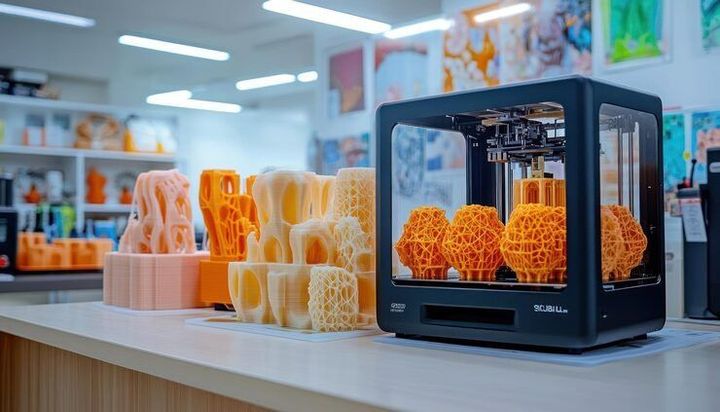
Resin 3D printers are additive manufacturing machines that create three-dimensional objects from liquid photosensitive resin. Instead of shaping a solid block or melting plastic filament, these printers use controlled light to harden selected areas of liquid resin layer by layer. The process is commonly associated with technologies such as stereolithography (SLA), digital light processing (DLP), and masked stereolithography (MSLA).
The foundation of resin 3D printing dates back to the development of stereolithography in the 1980s. The basic concept was to use light to cure a liquid polymer into a solid form. Over time, improvements in light sources, screens, software, motion systems, and resin chemistry expanded the range of objects that could be produced.
Today, resin 3D printing is used for prototypes, models, small components, educational projects, dental applications, jewelry patterns, engineering development, and other specialized applications. Its ability to reproduce small features makes it different from filament-based 3D printing, which uses thermoplastic material supplied on a spool.
A typical resin 3D printing system contains several important components: a resin vat, build platform, light source, motion mechanism, control electronics, and software. The software converts a digital 3D model into layers and determines how each layer should be exposed to light.
How Resin 3D Printing Works
The process begins with a digital 3D model created using computer-aided design software or another modeling platform. Slicing software divides the model into many thin horizontal layers.
During printing, the machine selectively exposes liquid resin to light. The exposed resin undergoes photopolymerization, changing from a liquid state into a solid polymer. The build platform then moves to allow another layer to form.
After printing, the object usually requires post-processing. This can include removing supports, washing away uncured resin, drying the model, and applying additional light exposure to complete curing.
Importance
Resin 3D printers matter because they can reproduce small details, curved surfaces, textures, and complex shapes using a layer-by-layer process. This makes them useful when the physical appearance or fine geometry of a model is important.
For general users, the technology provides a way to create physical models from digital designs without requiring traditional machining equipment. Designers can use printed models to examine dimensions, shapes, assembly relationships, and surface details before moving toward another manufacturing method.
Resin printing also addresses certain challenges associated with small-batch model production. Traditional manufacturing processes may require dedicated tooling or multiple production stages, while additive manufacturing creates an object directly from a digital model.
However, resin printing also introduces specific considerations. Liquid resin needs careful handling, printed parts generally require washing and post-curing, and some resin formulations have particular storage and disposal requirements. Users therefore need to understand the complete workflow rather than considering printing as only the layer-forming stage.
Main Areas of Use
Common applications include:
- Product development and prototype models
- Miniature figures and detailed scale models
- Dental models and selected dental manufacturing workflows
- Jewelry pattern development
- Architectural presentation models
- Engineering demonstration parts
- Educational models
- Artistic and design projects
- Mold and casting pattern development
- Small detailed components
The appropriate application depends on the resin formulation, printer technology, dimensional requirements, post-processing method, and intended environment of the finished object.
Resin Printing Compared With Filament Printing
Resin and filament 3D printers use different materials and printing processes. Filament printers generally melt thermoplastic filament through a heated nozzle, while resin printers use light to cure liquid photopolymer material.
Resin systems can reproduce very small surface features, while filament systems are often used for larger objects, functional prototypes, fixtures, and applications where thermoplastic materials are appropriate. The choice depends on the design and material requirements rather than one technology being suitable for every project.
Recent Updates
Between 2024 and 2026, developments in resin 3D printing have continued to focus on light-based printing systems, material development, process control, and application-specific resins. Research has also explored new photopolymer formulations, including materials designed with different mechanical, thermal, optical, and environmental characteristics.
Modern light-based printing research covers several approaches, including SLA, DLP, LCD or MSLA systems, and other photopolymerization methods. Research literature has also examined improvements in material compatibility, printing precision, curing control, and post-processing requirements.
Another area of development is the investigation of bio-based resin formulations. Recent research has examined resin systems made partly from bio-based chemical components and studied how resin composition and post-curing conditions influence the resulting material properties.
Software and hardware integration is also becoming more important. Printing systems increasingly depend on automated exposure settings, calibration procedures, model preparation tools, and process monitoring to help users manage the relationship between digital models, resin characteristics, and printing conditions.
Current Material Trends
Resin materials are becoming more application-specific. Instead of relying on one general-purpose formulation, users can encounter categories designed around characteristics such as:
- General model production
- Greater flexibility
- Increased rigidity
- Heat resistance
- Impact resistance
- Castable patterns
- Dental applications
- Engineering prototypes
- Transparent or optical models
- Specialized biological or research applications
Material specifications should always be checked against the printer manufacturer's instructions and the intended use of the finished part.
Laws or Policies
In India, resin 3D printing exists within a wider framework covering manufacturing, environmental management, plastics, workplace practices, and sector-specific requirements. There is not one single regulation that governs every resin 3D printer or every printed object.
India's National Strategy on Additive Manufacturing established a broader policy framework for developing additive manufacturing capabilities, including materials, machines, processes, software, research, and skills. The strategy identified additive manufacturing as an area relevant to sectors such as engineering, electronics, medical devices, and industrial production.
Environmental requirements can also become relevant because resin printing creates material waste, used cleaning liquids, supports, failed prints, and other residues. India's Plastic Waste Management framework has been amended over time, including amendments issued in 2024. Waste handling requirements can depend on the material involved and the circumstances in which waste is generated.
For workplaces, laboratories, educational facilities, and industrial environments, additional occupational safety or environmental requirements may apply. Resin manufacturers' safety documentation, including handling instructions and safety data information, should be followed when working with uncured materials.
Medical, dental, food-contact, electrical, automotive, aerospace, or other regulated applications may involve additional standards or approval requirements. A printed component should not automatically be considered suitable for a regulated application simply because it can be physically produced.
Tools and Resources
Several types of digital and physical resources support the resin 3D printing workflow. Their usefulness depends on the printer, resin, model, and intended application.
3D Modeling Software
Computer-aided design and 3D modeling programs are used to create or modify digital models. Some platforms are designed for engineering geometry, while others focus on artistic modeling or character design.
Slicing Software
A slicer converts a 3D model into printable layers. Important settings can include layer height, exposure parameters, support placement, lift movement, and model orientation. The appropriate settings vary according to the printer and resin combination.
Resin Manufacturer Documentation
Technical data sheets and safety documentation provide information about material characteristics, recommended exposure ranges, curing procedures, storage, and handling. These documents are important when a resin has specialized characteristics.
Calibration and Measurement Tools
Digital calipers, exposure-test models, leveling procedures, and dimensional test objects can help users evaluate printer performance. Measurement tools are particularly useful when dimensional accuracy matters.
Post-Processing Equipment
Typical post-processing resources include washing containers, appropriate cleaning materials, drying equipment, support-removal tools, and UV curing equipment. The exact process depends on the resin manufacturer's instructions.
Reference Platforms
Educational documentation, manufacturer manuals, research publications, 3D modeling communities, and additive manufacturing organizations can provide information about printer technologies, material behavior, model preparation, and process development.
Resin 3D Printer Technology Comparison
| Technology | Light Method | General Characteristics | Common Uses |
|---|---|---|---|
| SLA | Laser | Point-by-point curing | Prototypes, models, engineering |
| DLP | Projected light | Cures an image area | Detailed models and prototypes |
| MSLA/LCD | Masked UV light | Uses a screen to expose layers | Models, miniatures, prototypes |
| Specialized photopolymerization | Various light methods | Application-specific processing | Research and advanced applications |
FAQs
What is a resin 3D printer?
A resin 3D printer creates objects from liquid photosensitive resin by exposing selected areas to light. The resin hardens layer by layer until the digital model becomes a physical object.
What are the main resin 3D printing technologies?
The main resin 3D printing technologies include SLA, DLP, and MSLA or LCD-based systems. They use different methods for delivering light to the resin, but all rely on photopolymerization to create solid layers.
What types of resin are used in resin 3D printers?
Common resin categories include general-purpose, flexible, tough, rigid, high-temperature, castable, transparent, dental, and engineering formulations. Each type has different material characteristics and intended applications.
What is the resin 3D printing process?
The resin 3D printing process generally involves preparing a digital model, slicing it into layers, positioning the build platform, exposing resin layer by layer, removing the printed object, washing it, removing supports, drying it, and completing post-curing when required.
What are common resin 3D printer applications?
Common applications include detailed prototypes, miniatures, architectural models, jewelry patterns, dental models, educational objects, engineering models, and specialized research components. Suitability depends on the resin and the requirements of the finished object.
Conclusion
Resin 3D printers use light-based photopolymerization to transform liquid resin into detailed three-dimensional objects. SLA, DLP, and MSLA technologies use different approaches to control light exposure, while resin formulations are developed for different physical characteristics and applications. The complete workflow includes digital modeling, slicing, printing, washing, support removal, and post-curing when required. Understanding the printer technology, resin type, processing requirements, safety information, and applicable regulations helps explain how resin 3D printing fits into modern additive manufacturing.