Robotic Gluing Systems Guide With Industrial Adhesive Application and Robotics Insights
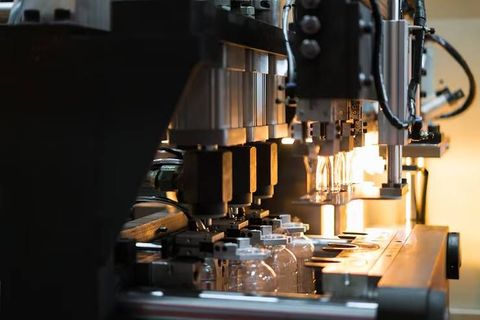
Robotic gluing systems are automated production systems designed to apply industrial adhesives to products, components, panels, packages, assemblies, and other manufactured items.
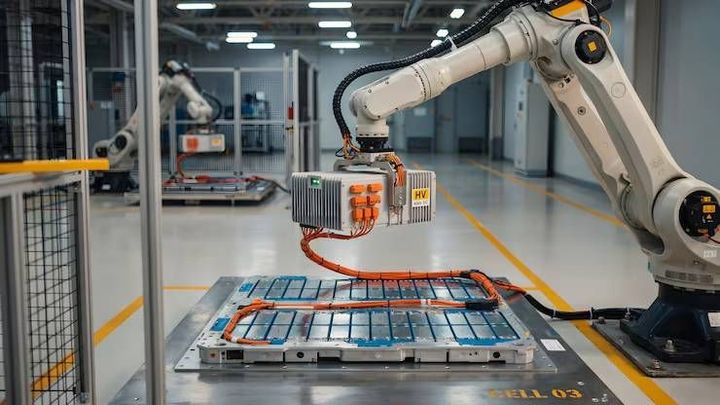
These systems combine robotic arms or automated positioning equipment with adhesive dispensing equipment, controllers, sensors, pumps, and application nozzles. The main purpose is to place a controlled quantity of adhesive along a programmed path or at defined points.
Industrial adhesive application has developed alongside modern manufacturing processes that require repeatable joining, sealing, bonding, or assembly. Manual adhesive application can involve brushes, rollers, hand-operated dispensers, or other tools. As production processes became more automated, robotic equipment became increasingly useful for applications involving repeated patterns, complex surfaces, or large production volumes.
A robotic gluing system generally receives a component through a conveyor, fixture, or loading station. The robot positions an adhesive applicator according to a programmed path while the dispensing equipment controls material flow. After application, the component moves to another assembly or curing stage.
The adhesive itself can vary considerably. Water-based adhesives, hot-melt adhesives, reactive systems, and other industrial formulations have different handling and curing characteristics. Equipment selection therefore depends on adhesive properties, application pattern, substrate material, temperature, curing method, and production requirements.
Main Components of Robotic Gluing Systems
A complete robotic gluing system can contain several interconnected elements:
Robotic arm or positioning mechanism for controlled movement
Adhesive reservoir or supply unit
Pumps for moving adhesive through the system
Hoses and heated lines where required
Dispensing valves and application nozzles
Sensors for detecting components and process conditions
Fixtures for holding workpieces
Programmable controllers for sequence management
Human-machine interfaces for operator interaction
Safety equipment for controlling access to moving machinery
The dispensing head is particularly important because the nozzle determines how adhesive reaches the workpiece. Bead, spray, dot, ribbon, and other application patterns can be used depending on the process.
How Robotic Adhesive Application Works
The process normally begins with component positioning. A fixture or conveyor places the workpiece in a known location so that the robot can follow its programmed path.
The robot then moves the dispensing head across the specified area. At the same time, the adhesive system regulates flow according to the programmed application sequence.
After application, the component may be joined with another part immediately or transferred to a curing area. Some adhesives cure through cooling, while others depend on chemical reactions, moisture, heat, light, or another defined process.
Importance
Robotic gluing systems are important because adhesive application can be a repetitive and precise stage of manufacturing. The amount, position, width, and continuity of an adhesive bead can influence how components are joined.
Automation can coordinate robot movement and adhesive flow so that repeated components follow a programmed process. This can also reduce variations associated with manual movement, although the actual result depends on equipment configuration, adhesive properties, component tolerances, and process control.
Industrial Applications
Robotic adhesive application is used across many manufacturing environments. Applications can include automotive components, furniture, packaging, electronics assemblies, construction materials, appliances, insulation products, and general industrial assemblies.
Examples of adhesive applications include:
Panel bonding
Component assembly
Sealing
Lamination
Packaging closure
Trim attachment
Insulation assembly
Surface bonding
Structural adhesive application
Product assembly
Different applications require different dispensing patterns. A narrow bead may be appropriate for one component, while a wider pattern or multiple adhesive points may be required for another.
Process Consistency
A robotic system can follow a defined movement path repeatedly. Sensors and control software can coordinate component detection, robot positioning, and adhesive dispensing.
Process consistency depends on several variables. Adhesive viscosity, temperature, pressure, nozzle condition, pump performance, robot speed, substrate cleanliness, and component position can all affect the application.
For this reason, robotic gluing should be treated as an integrated process rather than simply adding an adhesive dispenser to a robot.
Production Integration
Robotic gluing systems can connect with conveyors, part-positioning equipment, vision systems, curing stations, inspection equipment, and other automated machinery.
A typical process can involve:
Component arrival
Part detection
Position verification
Adhesive preparation
Robotic dispensing
Component joining
Curing or setting
Inspection
Product transfer
Integration can allow production information to move between different stages. The overall arrangement depends on the product and manufacturing process.
Recent Updates
From 2024 through 2026, industrial robotic gluing has continued moving toward greater process monitoring, flexible automation, machine vision, digital controls, and improved adhesive-dispensing equipment. These developments are part of the broader transition toward connected manufacturing environments.
Advanced Dispensing Control
Modern dispensing equipment can regulate adhesive flow according to programmed process parameters. Systems may coordinate pump speed, valve timing, pressure, temperature, and robot movement.
For heated adhesives, temperature monitoring is particularly important because viscosity can change as material temperature changes. Automated temperature controls can help maintain defined operating conditions.
Machine Vision
Machine vision can be integrated with robotic gluing systems to identify component position, orientation, edges, holes, surfaces, or other visual characteristics.
A vision system can provide location information to the robot when components do not always arrive in exactly the same position. This can be useful for assemblies with multiple configurations or variable presentation.
Flexible Robotics
Robotic gluing systems can be configured for different products by changing programs, fixtures, dispensing heads, or application parameters. Multi-product production environments can therefore use programmable systems for several defined applications.
Robot simulation software can also be used during planning. Digital simulation can help examine reach, movement paths, cycle sequences, and possible interference before physical installation.
Digital Process Monitoring
Connected adhesive systems can collect information about production cycles, adhesive usage, temperature, pressure, alarms, and equipment status.
Manufacturing software can combine this information with production records. Maintenance teams may also use operating data to identify recurring alarms or changes in equipment behavior.
New Dispensing Approaches
Adhesive dispensing technology continues to develop around more controlled application patterns and material efficiency. Metering systems can regulate the quantity of adhesive delivered during a cycle, while specialized nozzles can create different bead shapes.
Some applications use two-component adhesives that require controlled mixing shortly before application. Such systems require accurate proportioning, mixing, dispensing, and cleaning procedures.
Laws or Policies
Robotic gluing systems are influenced by machinery safety, workplace protection, chemical handling, electrical safety, environmental requirements, and industrial automation standards. Exact requirements vary according to the country, adhesive formulation, equipment configuration, and manufacturing environment.
Machinery Safety
Robotic cells contain moving arms, conveyors, dispensing equipment, and other mechanical components. Safety measures can include physical guarding, interlocked access doors, emergency stops, safety scanners, light curtains, and controlled operating modes.
Risk assessment is an important part of system integration. Potential hazards can include unexpected robot movement, moving fixtures, heated equipment, pressurized adhesive lines, and access during maintenance.
Adhesive Handling
Industrial adhesives can have different chemical and physical characteristics. Some formulations may require ventilation, temperature controls, protective equipment, specific storage conditions, or controlled handling procedures.
Safety information supplied for the adhesive should be reviewed when establishing workplace procedures. Material safety documentation can provide information about handling, storage, exposure controls, and emergency measures.
Electrical and Energy Isolation
Robotic gluing cells can contain electrical drives, controllers, pumps, heaters, pneumatic equipment, and pressurized systems. Maintenance procedures may therefore require isolation of multiple energy sources.
Energy-isolation procedures help prevent unexpected equipment movement or activation while maintenance work is taking place.
Environmental Considerations
Some adhesive processes can generate waste material, used containers, contaminated components, or emissions depending on the formulation and application method. Applicable environmental requirements may address waste handling, ventilation, emissions, and disposal.
The specific requirements depend on the materials and activities involved.
Tools and Resources
Planning a robotic gluing system requires information about the adhesive, workpiece, application pattern, production sequence, robot movement, and facility layout. Adhesive technical data sheets can provide information about viscosity, curing behavior, temperature requirements, and substrate compatibility.
Robot simulation software can help visualize the robot's movement and determine whether the selected arm can reach all application areas. Dispensing calculations can also help estimate flow rates and application quantities.
Useful resources include:
Robot specification sheets
Adhesive technical data sheets
Safety data sheets
Dispensing nozzle specifications
Flow-rate calculations
Robot simulation software
Fixture design drawings
Process-flow diagrams
Preventive maintenance schedules
Adhesive usage records
Inspection checklists
Manufacturing execution platforms
A simplified comparison of common robotic gluing approaches is shown below:
| Application Method | Typical Use | Main Planning Factor |
|---|---|---|
| Bead Dispensing | Continuous bonding or sealing | Bead width and flow |
| Dot Dispensing | Point-based bonding | Dot quantity and spacing |
| Spray Application | Wider surface coverage | Spray pattern and ventilation |
| Ribbon Application | Broad continuous adhesive layer | Material flow |
| Two-Component Dispensing | Reactive adhesives | Mixing ratio and curing |
| Heated Dispensing | Temperature-sensitive adhesives | Temperature control |
Facility layout also needs to provide sufficient space for the robot's movement envelope, adhesive equipment, material storage, component fixtures, operator access, maintenance activities, and safety systems.
Digital production dashboards can provide information about cycle counts, alarms, adhesive consumption, and machine status. Such information can support production records and equipment monitoring.
FAQs
What are robotic gluing systems?
Robotic gluing systems are automated equipment arrangements that use robotic movement and adhesive dispensing technology to apply industrial adhesives to components or products. They can be programmed for specific paths, patterns, and application quantities.
How does robotic adhesive application work?
A component is positioned using a fixture or conveyor, and the robot moves an adhesive dispensing head along a programmed path. The dispensing equipment controls adhesive flow while the robot controls position and movement.
What industries use industrial robotic gluing systems?
Industrial robotic gluing systems are used in automotive manufacturing, furniture production, packaging, electronics, appliances, construction materials, insulation, and various assembly processes.
What adhesives can robotic gluing systems apply?
Depending on equipment configuration, robotic systems can apply water-based adhesives, hot-melt adhesives, reactive adhesives, and other industrial formulations. The dispensing equipment must be compatible with the adhesive's physical and curing characteristics.
What factors affect robotic gluing system design?
Important factors include adhesive viscosity, curing method, substrate material, application pattern, component dimensions, robot reach, dispensing flow rate, production sequence, fixture design, safety requirements, ventilation, and maintenance access.
Conclusion
Robotic gluing systems combine industrial robots, dispensing equipment, sensors, controllers, fixtures, and adhesive-management components to automate repeated bonding and sealing processes. Recent developments include machine vision, programmable dispensing, digital monitoring, flexible robotic cells, and more controlled adhesive-flow systems. Safe operation requires attention to machine movement, adhesive handling, energy isolation, ventilation, and applicable workplace requirements. The final system configuration depends on the adhesive, components, application pattern, production process, and required level of automation.