Robotics in Construction Industry Explained: Types, Applications, Benefits and Key Challenges
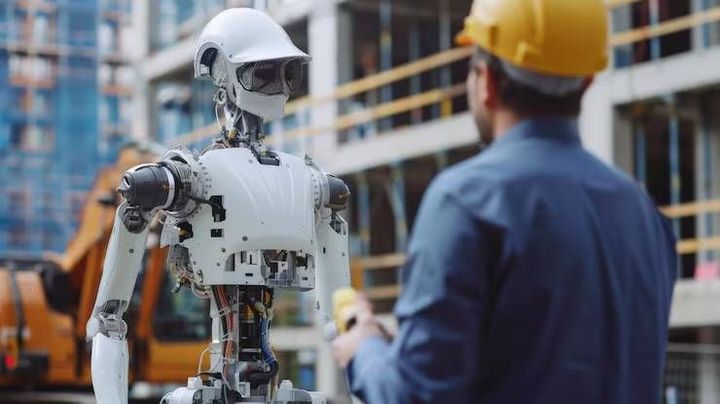
Robotics in the construction industry refers to the use of automated machines, robotic equipment, sensors, and computer-controlled systems to perform tasks involved in building, renovation, and infrastructure development. Construction robotics combines mechanical engineering, software, sensors, and digital design to help carry out activities such as bricklaying, concrete placement, welding, demolition, surveying, and material handling.
Context
Robotics in the construction industry refers to the use of automated machines, robotic equipment, sensors, and computer-controlled systems to perform tasks involved in building, renovation, and infrastructure development. Construction robotics combines mechanical engineering, software, sensors, and digital design to help carry out activities such as bricklaying, concrete placement, welding, demolition, surveying, and material handling.
The idea developed from industrial automation, where machines were introduced to perform repetitive and physically demanding tasks. As computing, machine vision, positioning systems, and artificial intelligence advanced, robotic technology began to support work in less controlled environments, including construction sites. Unlike factory robots that often operate in fixed workspaces, construction robots may need to handle changing ground conditions, different building layouts, weather exposure, and nearby workers.
Today, robotics in construction includes machines that operate independently, equipment controlled remotely by an operator, and robotic attachments fitted to conventional construction machinery. Their level of automation varies, and many systems still require human supervision, planning, and adjustment.
Main Types of Construction Robotics
Construction robots can be grouped according to their design and intended tasks.
Bricklaying robots: Place bricks or blocks according to a programmed layout, often using positioning equipment and material-feeding mechanisms.
Concrete printing robots: Deposit concrete mixtures in planned layers to create selected building components or structures.
Demolition robots: Use hydraulic breakers, crushers, or other attachments to remove concrete and masonry in controlled areas.
Surveying robots: Use positioning sensors, cameras, and laser-based equipment to collect measurements and map construction sites.
Autonomous mobile robots: Transport tools, components, or materials around designated work areas, subject to navigation and safety controls.
Robotic arms: Perform repetitive tasks such as welding, drilling, fastening, or handling components.
Robotic inspection systems: Use cameras and sensors to examine structures, confined spaces, and areas that are difficult for people to access.
These categories sometimes overlap. A mobile robot, for example, may carry a robotic arm, camera, or inspection instrument to perform several related activities.
Importance
Construction projects involve physically demanding activities, tight schedules, variable working conditions, and coordination among many teams. Robotics can help address certain difficulties by performing repetitive movements, collecting precise measurements, or allowing operators to control machinery from a safer position.
The technology is relevant to residential buildings, commercial properties, factories, roads, bridges, tunnels, and infrastructure maintenance. Its practical value depends on the task, project scale, site conditions, workforce skills, and the ability to integrate robotic equipment with existing construction methods.
Benefits of Robotics in Construction
Robotic systems can provide several operational advantages when properly selected and managed.
Repetitive task execution: Automated equipment can repeat programmed movements, helping maintain consistency in suitable applications.
Worker safety: Remotely operated demolition or inspection equipment can reduce the need for direct exposure to some hazardous areas.
Measurement accuracy: Sensors and positioning systems can support accurate surveying, layout, and dimensional checks.
Material handling: Mobile robots and automated equipment can move selected materials and reduce some manual handling activities.
Project monitoring: Cameras, scanners, and robotic inspection tools can collect information about progress and structural conditions.
Work planning: Digital models and automated systems can help coordinate selected construction activities and identify layout conflicts.
These benefits are not automatic. Equipment performance depends on maintenance, operator training, site preparation, and the suitability of the task for automation. Robotic equipment also requires safety procedures and monitoring.
Challenges and Limitations
Construction sites differ from controlled manufacturing environments. Uneven surfaces, dust, vibration, changing weather, obstacles, and incomplete structures can affect robotic movement and sensor performance.
Other challenges include:
Initial investment: Equipment acquisition, setup, integration, and staff training require financial planning.
Technical limitations: Robots may struggle with irregular materials, unexpected obstacles, or tasks that require complex judgment.
Workforce training: Operators and site managers need appropriate technical and safety knowledge.
Project integration: Robotic systems must fit existing schedules, machinery, building designs, and work practices.
Maintenance requirements: Sensors, mechanical parts, software, and power systems need regular inspection.
Safety coordination: Workers must understand robot operating zones, emergency stops, restricted areas, and communication procedures.
Robotics may be appropriate for one stage of a project but unsuitable for another. Human judgment remains important for changing site conditions, unusual construction details, and decisions involving safety or structural integrity.
Comparing Construction Robot Types
| Robot type | Common application | Important consideration |
|---|---|---|
| Bricklaying robot | Placing masonry units | Wall layout and material consistency |
| Concrete printing robot | Layered concrete construction | Mix properties and structural design |
| Demolition robot | Removing concrete or masonry | Debris control and operator visibility |
| Surveying robot | Mapping and site measurement | Calibration and positioning accuracy |
| Mobile robot | Moving materials and equipment | Navigation and pedestrian safety |
| Robotic arm | Welding, drilling, and fastening | Reach, payload, and task programming |
| Inspection robot | Examining structures and confined areas | Sensor capability and access conditions |
Recent Updates
Between 2024 and 2026, construction robotics has continued to develop alongside artificial intelligence, digital construction models, advanced sensors, and automated machinery. Adoption differs across countries and project types, and not every emerging technology has reached widespread commercial use.
Artificial Intelligence and Machine Vision
Machine vision allows robotic systems to interpret information from cameras and other sensors. In construction, these capabilities can support object recognition, site mapping, material identification, progress monitoring, and navigation around obstacles.
Artificial intelligence can also help process construction images, compare site conditions with digital plans, and identify possible discrepancies. However, results depend on data quality, sensor conditions, and the reliability of the underlying system. Human review remains important when decisions affect structural safety or compliance.
3D Printing and Automated Construction
Robotic 3D printing deposits construction materials in successive layers according to a digital design. It is being explored for selected building components, walls, and other structures, with potential applications in controlled production environments and some on-site projects.
The method requires suitable materials, structural engineering, quality checks, and compliance with building requirements. Printed structures may need conventional reinforcement, additional components, or other construction processes. Its suitability depends on the design and the applicable technical standards.
Connected Equipment and Digital Models
Building information modeling (BIM) creates digital representations of building geometry and related project information. Robotic equipment can use compatible digital models to support layout, fabrication, measurement, and progress checks.
Some construction operations also combine sensors, remote monitoring, and machine-control systems to provide information about equipment status and site activity. Compatibility between software platforms and physical equipment remains an important practical consideration.
Laws or Policies
Construction robotics is subject to existing construction, machinery, workplace safety, electrical safety, and building regulations. The exact requirements depend on the country, the type of equipment, the construction activity, and the location of the project. Using a robot does not remove the legal responsibilities of employers, contractors, equipment operators, or project owners.
Construction Robotics Regulations in India
In India, construction activities are shaped by applicable central and state laws, building regulations, occupational safety requirements, and local authority rules. The National Building Code of India provides technical guidance for building planning, construction, and safety, while local authorities determine how relevant building requirements apply through their regulations and approval processes.
India's Occupational Safety, Health and Working Conditions Code, 2020, forms part of the country's occupational safety and labour-law framework. Its practical application depends on commencement notifications, applicable rules, and other relevant legal provisions in force. Construction projects must establish the requirements that apply to their particular operations rather than assuming a single rule covers every robotic system.
Machinery Safety and Building Compliance
Robotic equipment may need risk assessments, guarding, emergency stops, maintenance procedures, operator training, and controls that prevent unintended movement. Electrical systems, lifting equipment, pressure systems, and other specialized machinery may be subject to additional requirements.
Buildings constructed using robotic techniques must still meet applicable structural, fire, accessibility, environmental, and local approval requirements. Automated construction methods do not automatically establish that a structure is safe or compliant. Engineers, contractors, and authorities retain their respective responsibilities under applicable rules.
Tools and Resources
Several digital tools and technical resources help construction teams understand, plan, and evaluate robotic systems. Their suitability depends on the project's design, equipment, technical requirements, and workforce capabilities.
Design and Construction Planning Tools
Building information modeling platforms such as Autodesk Revit and Autodesk Construction Cloud support digital design coordination and construction information management. Depending on the workflow, digital models may provide geometry and project information that can be used alongside compatible robotic equipment.
Computer-aided design tools help create technical drawings and machine-ready geometries. Surveying and scanning systems can collect site measurements, while project management platforms can organize schedules, task assignments, and progress records.
Robotics Simulation and Technical Resources
Robotics simulation tools allow engineers to test robot movements, reach, and task sequences in a virtual environment before physical deployment. Examples include RoboDK and compatible robot-manufacturer simulation platforms. Actual capabilities vary by equipment model and software integration.
Technical documentation from manufacturers can provide information about payload limits, operating environments, maintenance intervals, and safety requirements. In India, the Bureau of Indian Standards publishes relevant standards, while the Central Public Works Department provides construction-related specifications and guidance for applicable public works.
Evaluating a Construction Robotics Project
Before introducing robotic equipment, a project team can assess:
The task's repetition, physical demands, and level of variation.
Site access, surface conditions, available power, and environmental exposure.
Equipment compatibility with existing designs and construction methods.
Operator training, maintenance arrangements, and emergency procedures.
Applicable building codes, machinery standards, and workplace safety rules.
Performance measures such as task completion time, material waste, accuracy, and equipment downtime.
A structured assessment helps distinguish tasks that are technically suitable for automation from those that still require substantial manual work.
FAQs
What is robotics in the construction industry?
Robotics in construction involves using automated or remotely controlled machines to perform tasks such as masonry, surveying, demolition, inspection, material handling, and concrete printing. Systems vary in their autonomy and typically require planning and safety controls.
What are the main types of construction robots?
Common types include bricklaying robots, concrete printing systems, demolition robots, surveying robots, mobile material-handling robots, robotic arms, and inspection robots. Each is designed for particular tasks and operating conditions.
How does construction robotics improve worker safety?
Robots can reduce direct exposure to selected hazards by handling demolition, inspection, or repetitive physical tasks remotely. They do not eliminate risk, so safe operating zones, training, maintenance, and human supervision remain necessary.
What are the main challenges of robotics in construction?
Challenges include equipment investment, difficult site conditions, technical limitations, integration with existing workflows, maintenance, and workforce training. The level of difficulty depends on the equipment and project requirements.
What rules apply to construction robotics in India?
Applicable requirements may include building regulations, occupational safety provisions, machinery standards, electrical safety rules, and local approvals. The relevant obligations depend on the project and the legal provisions currently in force.
Conclusion
Robotics in the construction industry includes machines for masonry, concrete printing, demolition, surveying, inspection, and material handling. These technologies can support repetitive work, measurement, and selected safety improvements, but they also present technical, financial, and operational challenges. Artificial intelligence, digital models, and connected equipment are expanding possible applications, although adoption varies across projects. Construction robotics remains subject to applicable building regulations, machinery requirements, and workplace safety responsibilities.

You May Also Like