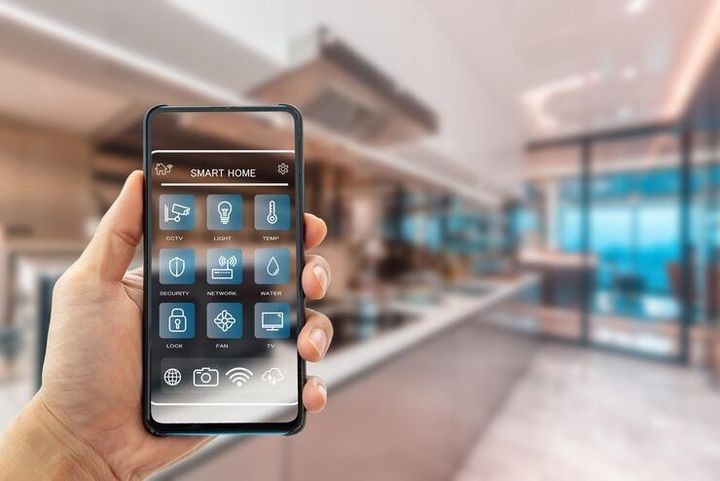
Smart Building Automation Guide: Technologies, Components, Functions and Integration Methods
Smart building automation connects lighting, heating and cooling, security, access, sensors, and other building functions through digital controls. The idea developed from traditional building management systems into connected networks that can monitor conditions and adjust equipment according to schedules, occupancy, and environmental readings. Today, smart building automation can combine sensors, controllers, software, communication networks, and connected devices into one coordinated environment.
The main purpose is to make building functions easier to monitor and coordinate. In homes, offices, hospitals, schools, hotels, factories, and public buildings, automation can help manage indoor conditions, lighting, access, and equipment operation without requiring every adjustment to be made manually.
Context
How smart building automation developed
Early building controls generally operated individual systems separately. Timers, thermostats, lighting controls, and access systems handled specific tasks, while building operators monitored equipment through separate panels or physical controls.
As digital controllers and computer networks became more common, these functions could communicate through building management systems. Later, wireless sensors, cloud computing, mobile interfaces, and Internet of Things technology expanded the range of connected equipment.
A modern smart building automation system may include:
- Sensors that detect temperature, humidity, movement, light levels, air quality, or equipment conditions.
- Controllers that process sensor readings and determine whether an action is required.
- Actuators that operate devices such as valves, dampers, lights, locks, and motors.
- Communication networks that allow devices and software to exchange information.
- Management software that displays conditions, schedules equipment, records events, and supports system configuration.
Where the technology is used
Smart building automation is used across many building types. Office buildings may coordinate lighting, ventilation, room temperature, and access. Hospitals and laboratories may use automation to monitor environmental conditions and equipment status.
Residential buildings can use connected thermostats, lighting controls, door systems, water monitoring, and indoor air sensors. Schools and public facilities may use centralized controls to coordinate large numbers of rooms and equipment.
Importance
Managing everyday building functions
Buildings contain many systems that operate at different times and under different conditions. Manual control can become difficult when a facility has hundreds of rooms, multiple floors, or equipment that must respond to changing occupancy.
Automation can connect these functions so that one system can use information from another. For example, an occupancy sensor can indicate that a room is empty, allowing programmed controls to adjust lighting or ventilation according to the building's configuration.
Energy and resource awareness
Heating, cooling, ventilation, and lighting can represent significant parts of building operation. Smart controls can provide information about when equipment operates and how conditions change throughout a building.
Automation does not automatically guarantee lower energy use. Results depend on equipment condition, system design, settings, climate, occupancy, maintenance, and how the controls are managed.
Comfort, safety, and accessibility
Temperature, lighting, indoor air conditions, and access controls can affect how people experience a building. Automated systems can help maintain configured conditions and provide alerts when measured values move outside selected ranges.
Security-related automation may combine access readers, door sensors, cameras, alarms, and event records. These functions require careful configuration because connected systems can also create privacy and cybersecurity concerns.
Recent Updates
Connected sensors and data platforms
Recent development has focused on larger networks of connected sensors and software platforms. Building operators increasingly use data from temperature sensors, occupancy detectors, air-quality monitors, meters, and equipment controllers to understand building conditions.
Edge computing is also becoming more relevant. Instead of sending every measurement to a distant platform, some processing can take place on local controllers or gateways. This can reduce communication delays and allow selected functions to continue when external connectivity is interrupted.
Artificial intelligence and analytics
Artificial intelligence is being applied to building data for pattern recognition, anomaly detection, forecasting, and equipment analysis. These systems can examine historical measurements and identify unusual changes that may require human review.
AI-based controls still depend on accurate data and appropriate configuration. Poor sensor readings, incomplete data, or unsuitable control rules can produce incorrect results, so automated decisions generally require oversight.
Interoperability and cybersecurity
Modern projects increasingly consider interoperability, meaning that equipment from different manufacturers can exchange information through recognized protocols or integration methods. Common technologies include BACnet, Modbus, KNX, MQTT, and selected Internet Protocol-based systems.
Cybersecurity has also become a central design consideration. Connected building equipment can create additional digital access points, making network separation, authentication, software updates, access controls, logging, and secure configuration important parts of system planning.
Laws or Policies
Indian building and energy framework
In India, smart building automation is influenced by building regulations, electrical requirements, energy-efficiency programs, data protection rules, and cybersecurity practices. The Energy Conservation Building Code framework provides guidance for energy-efficient building design and systems, while state and local authorities can apply their own building requirements.
The Bureau of Energy Efficiency has developed building energy-efficiency programs and related guidance. Depending on the project type and location, designers and building owners may also need to consider electrical safety requirements, fire safety rules, accessibility provisions, and local development regulations.
Data and digital security
Connected buildings may collect information about occupancy, access events, device activity, and environmental conditions. When personal information is involved, organizations should consider applicable Indian data protection requirements and establish appropriate controls for collection, access, storage, and use.
Specific obligations can vary according to the building, organization, technology, and type of information involved. Professional legal, electrical, fire-safety, or engineering guidance may be appropriate when a project requires formal compliance assessment.
Tools and Resources
Planning and monitoring tools
Several types of tools can help people understand and manage smart building automation projects. Building management platforms can provide dashboards for equipment status, alarms, schedules, sensor readings, and historical information.
Energy-monitoring tools can display electricity or other utility measurements over time. Indoor environmental sensors can track conditions such as temperature, humidity, carbon dioxide, and particulate levels, depending on the device.
Useful resources include:
- Building management software documentation for system configuration and monitoring.
- Equipment manuals for controllers, sensors, meters, and communication gateways.
- BACnet, Modbus, KNX, and MQTT documentation for understanding communication methods.
- Building energy codes and guidance from Indian government agencies.
- Network diagrams and equipment schedules for documenting system connections.
- Maintenance records and sensor histories for reviewing equipment behavior.
A simple planning table
| Component | Main function | Common example |
|---|---|---|
| Sensor | Measures a condition | Temperature sensor |
| Controller | Processes inputs and control rules | Building controller |
| Actuator | Changes equipment operation | Motorized valve |
| Gateway | Connects different networks | Protocol gateway |
| Management platform | Displays and manages system data | Building dashboard |
| Network | Transfers information | Ethernet or wireless network |
FAQs
What is smart building automation?
Smart building automation is a coordinated system that uses sensors, controllers, networks, and software to monitor and control building functions. It can manage areas such as lighting, temperature, ventilation, access, and equipment operation.
What are the main components of building automation?
The main components include sensors, controllers, actuators, communication networks, gateways, and management software. Their exact combination depends on the building and the functions being automated.
How does smart building automation use sensors?
Sensors collect measurements such as temperature, humidity, occupancy, light levels, or air-quality indicators. Controllers can use these readings with programmed rules to adjust connected equipment.
Is smart building automation the same as a building management system?
The terms overlap, but they can describe different scopes. A building management system commonly focuses on centralized monitoring and control, while smart building automation may include broader connected devices, analytics, wireless networks, and data-driven functions.
What should be considered when integrating building automation systems?
Integration can involve communication protocols, network design, cybersecurity, equipment compatibility, data requirements, electrical considerations, and future expansion. The building's existing infrastructure also affects the integration approach.
Conclusion
Smart building automation brings sensors, controllers, networks, software, and building equipment into a coordinated system. Its applications range from temperature and lighting control to access management, environmental monitoring, and equipment analysis. Recent development has emphasized connected sensors, data analytics, interoperability, edge computing, artificial intelligence, and cybersecurity. In India, projects also need to consider applicable building, energy, electrical, fire-safety, and data protection requirements.