Smart Warehouse Automation: Automated Storage and Retrieval Technology
Smart warehouse automation uses machines, digital systems, and connected equipment to manage inventory, store products, retrieve items, and move materials within a warehouse. It combines physical automation with software that helps coordinate warehouse activities.
A traditional warehouse may rely heavily on employees to locate items, transport pallets, update inventory records, and prepare orders. A smart warehouse can use automated storage systems, conveyors, mobile robots, barcode scanners, and warehouse management software to coordinate these activities.
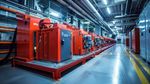
One important technology is the Automated Storage and Retrieval System (AS/RS). These systems place goods into designated storage locations and retrieve them when required. Depending on the design, they can handle individual containers, cartons, trays, or full pallets.
Smart warehouse automation is increasingly relevant to manufacturing plants, distribution centers, pharmaceutical facilities, food warehouses, and e-commerce operations. Its purpose is to improve inventory visibility, organize available space, and support consistent material flow.
How an Automated Warehouse Works
A smart warehouse typically connects several technologies to coordinate storage and movement.
Warehouse management system (WMS): Maintains inventory records, storage locations, and task information.
Automated storage and retrieval equipment: Places and retrieves materials from assigned locations.
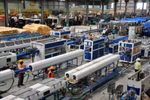
Conveyors and sortation systems: Move cartons, totes, and packages between warehouse areas.
Mobile robots: Transport materials between storage zones, workstations, and picking areas.
Identification technologies: Barcode scanners, RFID readers, and sensors identify items and track movement.
Warehouse control system (WCS): Coordinates the operation of compatible automation equipment.
Monitoring dashboards: Display equipment status, inventory activity, alarms, and operational performance.
For example, when a warehouse receives a pallet, the system records its identity and assigns a suitable storage location. Automated equipment then moves the pallet to that location. When the material is needed, the system coordinates retrieval and directs it to the next stage.
The exact workflow depends on the facility's layout, inventory characteristics, software configuration, and automation design.
Types of Automated Storage and Retrieval Technology
Unit-Load Automated Storage and Retrieval Systems
Unit-load AS/RS equipment handles large loads, usually stored on pallets. Automated cranes move vertically and horizontally through storage aisles to place or retrieve pallets.
These systems are commonly used in manufacturing warehouses, distribution centers, and facilities that handle heavy inventory. Their design depends on pallet dimensions, load weight, storage height, and the required movement rate.
Mini-Load and Tote-Based Systems
Mini-load systems handle smaller containers, trays, and cartons. They are useful for warehouses with many different product types and frequent inventory movements.
The system retrieves a container from storage and delivers it to a designated workstation. This arrangement can reduce the distance employees walk when collecting individual items.
Vertical Lift Modules and Vertical Carousels
Vertical lift modules store trays inside an enclosed vertical structure. A retrieval mechanism brings the required tray to an access opening.
Vertical carousels use rotating shelves or carriers to present stored items to an operator. Both technologies use vertical space, making them useful where floor area is limited.
Autonomous Mobile Robots
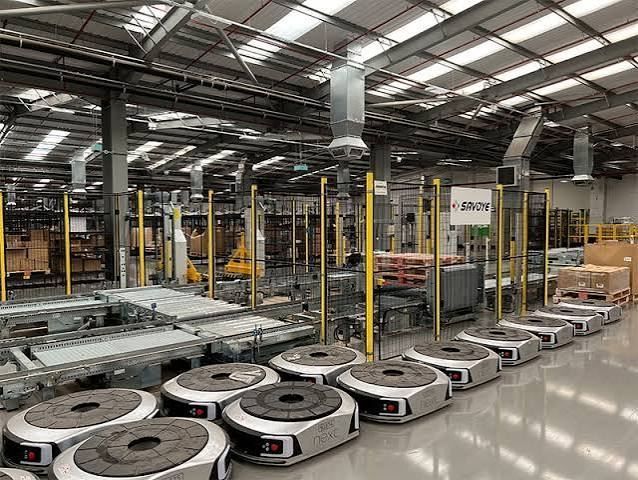
Autonomous mobile robots navigate warehouse environments using sensors, maps, and onboard software. They can transport containers, move inventory between workstations, and support goods-to-person picking.
Unlike fixed conveyors, mobile robots can sometimes be redirected when warehouse layouts or workflows change. However, safe navigation requires suitable routes, obstacle detection, traffic management, and clear operating procedures.
Benefits and Challenges of Warehouse Automation
Smart warehouse automation can improve inventory control and material movement, but its performance depends on careful planning.
Main Benefits
Better space utilization: High-density storage systems can make better use of vertical space.
Improved inventory visibility: Digital records help track item locations and stock movements.
Consistent material handling: Automated equipment follows defined movement instructions.
Fewer unnecessary journeys: Goods-to-person systems can reduce repeated walking during picking.
More organized workflows: Warehouse software coordinates storage, retrieval, and replenishment tasks.
Useful operational data: Monitoring systems help identify congestion, equipment interruptions, and inventory discrepancies.
Common Implementation Challenges
Automation also introduces technical and operational considerations.
Existing buildings may require changes to flooring, racks, electrical systems, or fire protection.
Software integration can be difficult when older systems use incompatible data formats.
Equipment downtime can interrupt material flow if backup procedures are inadequate.
Poor inventory records can create errors even when the physical equipment works correctly.
Employees need training to operate, monitor, and maintain automated systems safely.
Automation should therefore be evaluated as a complete warehouse process rather than as a collection of independent machines.
Recent Developments in Smart Warehouse Automation
Artificial Intelligence and Warehouse Robotics in 2026
On September 16, 2026, Gartner identified four AI trends affecting warehouse operations, including optimization-focused AI and operationally oriented generative AI. The analysis highlighted growing interest in applying AI to practical warehouse decisions and workflows.
Greater Focus on Connected Automation
A major direction in warehouse technology is the integration of AS/RS equipment, mobile robots, warehouse management systems, and warehouse control systems.
When these systems exchange information reliably, warehouses can coordinate inventory movement more effectively. Poor integration, however, may lead to delays, conflicting instructions, and incomplete inventory records.
Continued Development of Robotics Research
A research review published in Annual Review of Control, Robotics, and Autonomous Systems in 2026 examined robotics for warehouses and logistics, including technologies, operational challenges, and future directions.
The broader direction is toward more flexible robotic handling and improved coordination between machines. Complex objects, changing packaging, unpredictable obstacles, and unusual handling tasks remain important technical challenges.
Laws and Policies Affecting Warehouse Automation in India
National Logistics Policy
India's National Logistics Policy, launched on September 17, 2022, promotes a more integrated logistics ecosystem through digitization, improved processes, technology adoption, and better coordination across transport and warehousing. It complements the PM GatiShakti National Master Plan.
Machinery Safety and Workplace Requirements
Automated storage systems contain moving machinery, heavy loads, electrical equipment, and potential crushing or collision hazards. Facilities should assess the rules that apply to their equipment, location, and industry.
Relevant safety considerations include:
Guarding around moving machinery and restricted access areas
Emergency stops and safe shutdown procedures
Rack stability and appropriate load limits
Safe pedestrian routes around mobile robots and forklifts
Electrical isolation during maintenance
Worker training, inspections, and emergency planning
India's Machinery and Electrical Equipment Safety (Omnibus Technical Regulation) Amendment Order, 2025 specified an implementation date of September 1, 2026, for equipment covered by its first schedule. Applicability should be checked against subsequent government notifications and the specific equipment category.
Warehouses must also consider applicable fire safety, building, electrical, environmental, and occupational safety requirements. Requirements can differ by state and facility type.
Tools and Resources for Warehouse Planning
The following general tools can help evaluate warehouse automation and monitor performance.
Warehouse space-planning software: Models storage layouts, aisle widths, rack arrangements, and travel distances.
Inventory management systems: Track stock quantities, item locations, receipts, and dispatches.
Warehouse simulation tools: Test workflows and identify potential congestion before physical changes.
Equipment monitoring dashboards: Display robot status, retrieval activity, alarms, and downtime.
Barcode and RFID tools: Support item identification and inventory verification.
Maintenance checklists: Record inspections, faults, repairs, and scheduled equipment checks.
Warehouse performance calculators: Estimate storage capacity, throughput, picking rates, and space utilization.
Useful baseline measurements include inventory accuracy, retrieval time, order-processing time, equipment availability, and the number of interrupted tasks. Comparing these measurements before and after implementation helps determine whether the system is meeting its intended objectives.
Frequently Asked Questions
What Is an Automated Storage and Retrieval System?
An AS/RS is a warehouse technology that uses automated equipment to place items into storage and retrieve them when required. Depending on its design, it can handle pallets, cartons, trays, or containers.
What Is the Difference Between AS/RS and a Warehouse Management System?
AS/RS is the physical storage and retrieval equipment. A warehouse management system is software that manages inventory records, storage locations, and warehouse tasks. The two can work together through suitable control and communication systems.
Which Industries Use Smart Warehouse Automation?
Manufacturing, automotive, electronics, pharmaceuticals, food distribution, retail, and e-commerce operations use warehouse automation where their inventory and handling requirements justify it.
Can Warehouse Automation Work in an Existing Building?
Yes, in some cases. Feasibility depends on ceiling height, floor capacity, aisle dimensions, rack configuration, fire protection, electrical infrastructure, and compatibility with existing software. A site assessment is important before choosing a system.
How Does Warehouse Automation Improve Inventory Accuracy?
Barcode scanning, RFID identification, automated location tracking, and inventory software help record stock movements. Accuracy still depends on correct initial data, reliable identification, system integration, and procedures for handling exceptions.
Conclusion
Smart warehouse automation combines automated storage and retrieval systems, robotics, sensors, and warehouse software to improve inventory visibility and organize material movement. Different technologies suit different needs, from pallet storage and high-density vertical systems to mobile robots and automated picking.