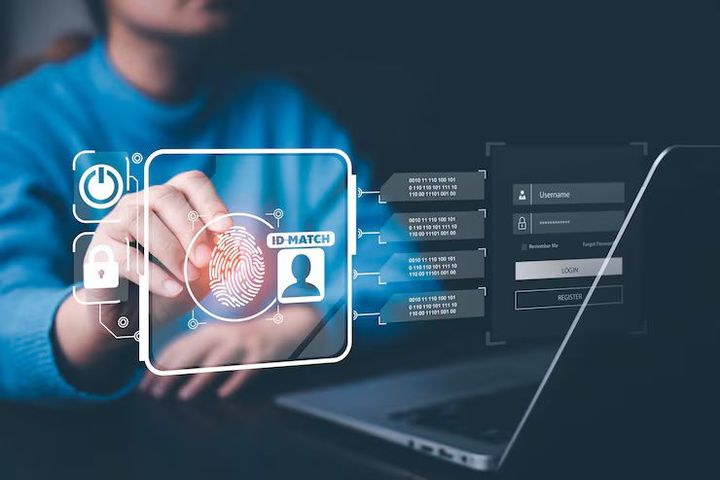
Workforce Identity Access Management Platforms: Explore Security Features
Workforce Identity Access Management platforms have become a central part of enterprise security as employees, contractors, partners, and administrators access applications across increasingly distributed environments.
The traditional model of securing users mainly through a corporate network is no longer sufficient when work can take place from offices, homes, mobile devices, and cloud environments.
Modern organizations must determine who can access specific resources, under what conditions, and for how long. That requires coordinated identity controls that extend across cloud applications, internal systems, privileged accounts, endpoints, and remote access environments.
Understanding the security features within Workforce Identity Access Management platforms helps organizations evaluate how identity policies are implemented, how access risks are reduced, and how authentication, authorization, monitoring, and governance work together.
Why Workforce Identity Has Become a Core Security Layer
Identity has become closely connected to access security because compromised credentials can provide an attacker with legitimate-looking access to business systems. Password theft, phishing, session hijacking, and excessive permissions can create opportunities for unauthorized activity without immediately triggering traditional perimeter defenses.
A workforce identity platform creates a centralized framework for managing digital identities and access decisions. Instead of treating every application independently, organizations can establish consistent policies across multiple environments.
This becomes particularly valuable when employees need access to dozens of applications. Centralized identity management can simplify authentication while allowing security teams to maintain stronger control over who can reach sensitive resources.
Authentication Goes Beyond the Password
Strong authentication is one of the foundational capabilities of Workforce Identity Access Management platforms. Passwords alone provide limited protection because they can be guessed, reused, stolen, or exposed through phishing attacks.
Modern identity architectures commonly support multi-factor authentication, which requires an additional verification method alongside a password or other primary credential. Depending on the environment, this can include authenticator applications, hardware security keys, biometrics, or other identity verification mechanisms.
Adaptive authentication adds another layer of context. A login from a recognized device and familiar location may receive different treatment from an unusual attempt involving a new device, unfamiliar geography, or suspicious behavioral signals.
This contextual approach allows organizations to apply stronger verification when risk conditions change.
Authorization Determines What Users Can Reach
Authentication confirms identity, but authorization determines what that identity is permitted to access.
Workforce Identity Access Management platforms typically use roles, groups, policies, and attributes to determine access permissions. This allows organizations to align access with job responsibilities without manually configuring every application for every employee.
Role-based access control is commonly used to assign permissions according to established organizational roles. Attribute-based approaches can incorporate additional context, such as department, location, device status, or resource sensitivity.
The principle of least privilege is particularly important here. Users should receive the minimum level of access required to perform their responsibilities, reducing the potential impact of compromised accounts.
Single Sign-On Reduces Identity Friction
Single Sign-On, commonly referred to as SSO, allows users to authenticate through a centralized identity provider and then access multiple connected applications without repeatedly entering credentials.
From a security perspective, SSO can reduce password reuse and provide administrators with greater control over authentication policies. It can also simplify account lifecycle management because application access can be linked to a central identity.
SSO does not automatically make an environment secure. Its effectiveness depends on strong authentication, appropriate session controls, accurate access policies, and proper integration with connected applications.
Privileged Access Requires Greater Control
Not every workforce identity represents the same level of risk. Administrative and privileged accounts can make significant changes to infrastructure, security controls, databases, and production systems.
Identity platforms may therefore integrate with privileged access management capabilities that apply stronger controls to elevated accounts. These can include additional authentication requirements, temporary access, approval workflows, session monitoring, and detailed activity records.
Just-in-time access is another useful approach. Instead of maintaining permanent administrative privileges, users can receive elevated access for a defined period when a legitimate administrative task requires it.
Reducing standing privileges limits the amount of time a compromised privileged account can remain useful to an attacker.
Identity Lifecycle Management Keeps Access Current
Employees change roles, join new departments, take extended leave, or leave organizations entirely. Access permissions must change accordingly.
Identity lifecycle management automates many of these processes by connecting identity records with access policies and organizational systems. When a person joins an organization, appropriate accounts and permissions can be established. When responsibilities change, access can be adjusted. When employment ends, accounts can be disabled promptly.
This process is commonly described through joiner, mover, and leaver workflows.
Automating identity lifecycle events helps reduce orphaned accounts, excessive permissions, and delays in removing access that is no longer justified.
Monitoring and Identity Threat Detection
Modern Workforce Identity Access Management platforms increasingly include analytics and monitoring capabilities that help security teams identify unusual behavior.
Identity telemetry can reveal events such as repeated authentication failures, unusual login locations, abnormal access patterns, impossible travel indicators, suspicious privilege changes, or unexpected application activity.
Security teams can correlate these identity signals with endpoint, network, and cloud telemetry to establish broader context around a potential incident.
Behavioral analytics can be particularly useful because attackers may successfully authenticate using valid credentials. In those situations, detecting deviations in normal user behavior can provide an additional layer of defense.
Zero Trust Connects Identity With Every Access Decision
Workforce identity is closely associated with Zero Trust security principles. Rather than assuming that users or devices are trusted because they are inside a corporate network, Zero Trust architectures continuously evaluate access based on identity, device posture, resource sensitivity, and other contextual signals.
Identity platforms can therefore become an important policy enforcement layer within a broader Zero Trust strategy.
A user may be authenticated successfully but still receive restricted access when their device does not meet required security conditions or when the requested resource demands stronger verification.
This approach changes access from a one-time decision into a more contextual security process.
Governance, Auditing, and Compliance Visibility
Identity access is also an important governance concern. Organizations need to understand which users have access to sensitive applications and whether those permissions remain appropriate.
Identity platforms can support access reviews, approval workflows, audit trails, and reporting. These capabilities help organizations identify excessive permissions and document changes to access policies.
Detailed records can also assist security investigations by showing when accounts were created, which permissions were assigned, and how authentication or access events occurred.
Regular access certification is especially useful for sensitive systems where permissions should be reviewed periodically rather than remaining unchanged indefinitely.
Integration Matters as Much as Features
A Workforce Identity Access Management platform operates within a wider technology environment. Its effectiveness depends heavily on how well it integrates with directories, cloud applications, enterprise systems, security tools, and infrastructure.
Common integration technologies and standards include SAML, OAuth, OpenID Connect, SCIM, LDAP, and RADIUS. These protocols help identity systems communicate with applications and infrastructure using established methods.
Organizations should also consider how identity signals connect with Security Information and Event Management platforms, endpoint security tools, and security orchestration workflows. Strong integration can turn identity information into actionable security context across the broader environment.
Key Questions When Evaluating Identity Security
Organizations assessing workforce identity capabilities should focus on how features work together rather than evaluating them in isolation.
Important areas include:
- Authentication strength and adaptive policies
- Role and attribute-based authorization
- Privileged access controls
- Identity lifecycle automation
- Access certification and governance
- Identity analytics and anomaly detection
- Application and infrastructure integration
- Auditability and security reporting
The objective is not simply to centralize identities. It is to create consistent, measurable control over access throughout the workforce environment.
Frequently Asked Questions
What is Workforce Identity Access Management?
Workforce Identity Access Management is a set of technologies and processes used to manage employee and other workforce identities, authenticate users, control permissions, and govern access to organizational resources.
How does multi-factor authentication improve workforce security?
Multi-factor authentication requires users to provide more than one form of verification. This makes an account harder to compromise when a password is exposed or stolen.
What is the difference between authentication and authorization?
Authentication verifies who a user is. Authorization determines which applications, data, systems, or functions that authenticated user is permitted to access.
Why is least privilege important?
Least privilege limits users and administrators to the permissions necessary for their responsibilities. This reduces the potential impact of compromised accounts and inappropriate access.
How does identity management support Zero Trust?
Identity management provides information used to evaluate access decisions. Zero Trust can combine identity with device, resource, behavioral, and contextual signals before granting or maintaining access.
Conclusion
Workforce Identity Access Management platforms have evolved into a critical security layer for organizations operating across cloud applications, remote environments, connected devices, and distributed workforces. Their capabilities extend beyond basic login management to include authentication, authorization, privileged access, lifecycle automation, monitoring, governance, and contextual policy enforcement.
A mature identity strategy treats access as an ongoing security decision rather than a one-time login event. By combining strong authentication, least-privilege controls, continuous monitoring, reliable lifecycle processes, and broad system integration, organizations can create a more controlled and transparent identity environment that supports modern workforce security.