3D Printing Machine Guide: Technologies, Machine Types, Materials, Production Processes and Applications
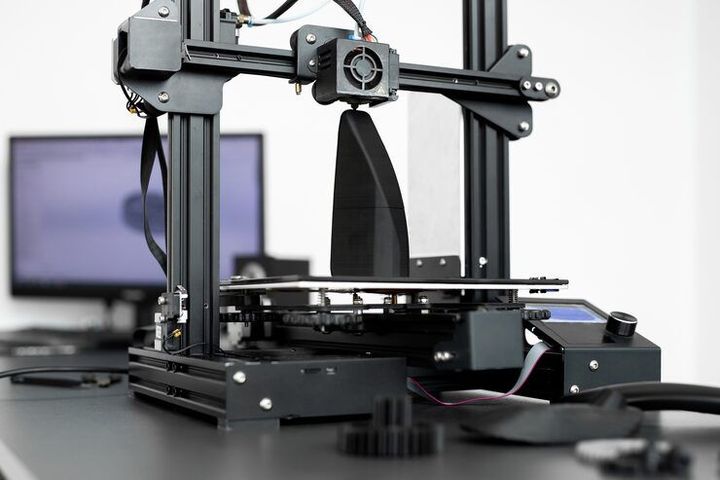
A 3D printing machine is a manufacturing system that creates physical objects from digital designs by adding material layer by layer. Unlike traditional manufacturing methods that often remove material through cutting, drilling, or machining, 3D printing builds an object according to a digital model.
The technology is commonly known as additive manufacturing because material is added during production. Its development began with early additive manufacturing research in the late 20th century, followed by technologies that could turn computer-generated designs into physical prototypes and components.
Today, a 3D printing machine can work with plastics, resins, metals, ceramics, and other specialized materials. Different machines use different methods to place, cure, melt, or fuse these materials.
How 3D printing works
Most 3D printing workflows begin with a digital 3D model. The model is prepared using slicing software, which divides the object into thin layers and creates instructions for the machine.
The general process involves:
- Creating or obtaining a digital 3D model.
- Preparing the model in slicing software.
- Selecting the appropriate material and machine settings.
- Producing the object layer by layer.
- Removing supports or excess material when necessary.
- Inspecting and finishing the printed component.
The exact sequence varies according to the 3D printing technology, material, machine design, and intended application.
Main 3D printing technologies
Several additive manufacturing technologies are used for different production requirements.
| Technology | Basic principle | Common materials | Typical applications |
|---|---|---|---|
| FDM/FFF | Melts and deposits filament | Thermoplastics | Prototypes, models, fixtures |
| SLA | Cures liquid resin with light | Photopolymer resin | Detailed models, dental applications |
| DLP | Uses projected light to cure resin | Photopolymer resin | Detailed components |
| SLS | Fuses powdered material | Polymer powders | Functional prototypes, components |
| SLM/DMLS | Melts or fuses metal powder | Metal powders | Engineering components |
| Binder Jetting | Deposits binder into powder | Metals, ceramics, composites | Industrial parts and models |
| Material Jetting | Deposits droplets of material | Photopolymers and waxes | Detailed models and prototypes |
Importance
3D printing matters because it changes how certain products, prototypes, tools, and components can be developed. A digital design can be converted into a physical part without creating a dedicated mold or using a long sequence of conventional machining operations.
The technology is used by designers, engineers, manufacturers, researchers, educators, healthcare organizations, architects, and hobbyists. Applications range from small educational models to industrial components.
Design and prototyping
One important use is rapid prototyping. Designers can produce physical versions of a concept and examine its shape, dimensions, assembly, and functional characteristics before moving toward another production method.
This can help identify design issues earlier in a development process. It is particularly useful when a component has a complex shape that would be difficult to represent through drawings alone.
Customized production
Additive manufacturing can create objects directly from digital models, making it suitable for certain customized or low-volume applications. Each component can potentially have a different geometry without requiring a separate mold for every variation.
Applications can include:
- Custom fixtures and tooling
- Architectural models
- Educational models
- Product prototypes
- Replacement components
- Customized industrial parts
- Research specimens
Geometric complexity
A major characteristic of 3D printing is its ability to produce internal channels, lattice structures, curved surfaces, and other geometries that can be difficult to create using conventional manufacturing processes.
However, complex geometry does not automatically make 3D printing appropriate. Material properties, production volume, dimensional requirements, surface finish, post-processing, and equipment capabilities still need to be considered.
Recent Updates
From 2024 through 2026, the 3D printing industry has continued moving from prototype-focused applications toward broader industrial production. Developments have included larger production systems, increased automation, improved process monitoring, expanded material portfolios, and greater use of software for design and production management.
Metal additive manufacturing has continued to receive attention in aerospace, automotive, energy, tooling, and industrial engineering. Improvements in laser systems, powder handling, build monitoring, and production workflows are aimed at improving repeatability and process control.
Automation and process monitoring
Modern industrial systems increasingly incorporate sensors and software that monitor factors such as temperature, build conditions, material behavior, and machine operation. Monitoring can help identify deviations during production and provide data for quality analysis.
Automation is also being applied to tasks surrounding printing, including material handling, build-plate movement, support removal, inspection, and production scheduling.
New materials
Material development remains an important part of 3D printing research. Alongside conventional thermoplastics and photopolymer resins, manufacturers and research organizations continue developing metal alloys, engineering polymers, composites, ceramics, and materials designed for particular thermal or mechanical requirements.
Recycled and bio-based materials have also received attention in some polymer printing applications. Their suitability depends on factors such as consistency, processing behavior, mechanical properties, and the requirements of the final component.
Software and digital manufacturing
Software has become increasingly important in additive manufacturing. Modern workflows can include CAD modeling, automated support generation, topology optimization, simulation, slicing, machine monitoring, and digital production records.
These developments connect 3D printing with broader digital manufacturing systems, where design and production information can move through several software stages before a physical component is produced.
Laws or Policies
3D printing is regulated through several areas rather than through one universal set of rules. Requirements depend on the machine, material, application, workplace, and country where production takes place.
Machine manufacturers may need to comply with applicable product-safety, electrical, electromagnetic compatibility, machinery, and environmental requirements. Industrial workplaces can also have rules covering worker exposure to powders, chemicals, fumes, heat, lasers, and other production hazards.
Material handling can be particularly important for industrial systems. Metal powders and some resin systems require controlled handling procedures, suitable ventilation, personal protective equipment, storage practices, and waste-management procedures according to applicable workplace requirements.
Industry standards
International standards help establish common terminology, testing procedures, safety practices, and quality-management approaches. ISO/ASTM 52900, for example, provides terminology and definitions used in additive manufacturing.
For applications involving regulated products, additional requirements may apply. Medical, aerospace, automotive, construction, and food-related applications can have specific standards or certification requirements depending on the component and jurisdiction.
Intellectual property law can also be relevant because 3D printing relies heavily on digital design files. Copyright, patents, trademarks, and design rights may affect whether a particular digital model can legally be reproduced.
Tools and Resources
A range of software and reference resources support different stages of the 3D printing process.
CAD and modeling software
Computer-aided design software is commonly used to create digital models. The appropriate software depends on whether the user is creating mechanical components, artistic objects, architectural structures, or educational models.
Common modeling functions include:
- Solid modeling
- Surface modeling
- Parametric design
- Assembly development
- Mesh editing
- Generative or topology-based design
Slicing software
Slicing software converts a 3D model into instructions that a particular machine can interpret. Settings can include layer height, printing speed, infill pattern, support structures, temperature, exposure parameters, and material-specific conditions.
The available settings vary considerably between FDM, resin, powder-bed, and metal systems.
Measurement and inspection tools
Printed components can be examined using conventional measurement equipment such as calipers and gauges. Industrial production may also use coordinate-measuring machines, optical scanners, computed tomography, or other inspection technologies.
Inspection becomes particularly important when components have tight dimensional requirements or are intended for regulated applications.
Material data
Material technical documentation can provide information about mechanical properties, thermal behavior, processing requirements, and environmental limitations. Such information helps explain why the same machine technology can produce substantially different results with different materials.
FAQs
What is a 3D printing machine?
A 3D printing machine is an additive manufacturing system that creates physical objects from digital models by adding material in successive layers. Different machines use different materials and production technologies.
What are the main types of 3D printing machines?
Common 3D printing machine types include FDM or FFF, SLA, DLP, SLS, metal powder-bed systems, binder jetting systems, and material jetting machines. Their differences mainly involve the material and method used to create each layer.
What materials can a 3D printing machine use?
Depending on the machine, materials can include thermoplastic filaments, photopolymer resins, polymer powders, metal powders, ceramics, composites, and specialty materials. A material must be compatible with the particular printing process.
How does the 3D printing production process work?
The process generally starts with a digital model. Slicing or preparation software generates machine instructions, the printer creates the component layer by layer, and post-processing may then remove supports, excess material, or surface imperfections.
What are 3D printing machines used for?
Applications include prototypes, architectural models, educational objects, tooling, fixtures, customized components, research parts, dental models, aerospace components, automotive development, and other industrial applications. The appropriate application depends on the machine, material, required properties, and production conditions.
Conclusion
A 3D printing machine uses additive manufacturing principles to transform digital models into physical objects through successive layers of material. FDM, SLA, SLS, metal powder-bed processes, binder jetting, and other technologies differ in their materials, operating principles, capabilities, and applications. Recent developments have emphasized industrial production, process monitoring, automation, software integration, and expanded material choices. Machine selection and production requirements are closely connected to factors such as geometry, material properties, dimensional requirements, production volume, and applicable standards.