3D Printing Services Guide: Production Methods, Materials, Design Options and Industrial Uses
A 3D Printing Services Guide explains how three-dimensional printing works, which materials and production methods are available, and how printed components are used in manufacturing and other industries. Also known as additive manufacturing, 3D printing creates physical objects from digital designs by building material in successive layers.
Context
A 3D Printing Services Guide explains how three-dimensional printing works, which materials and production methods are available, and how printed components are used in manufacturing and other industries. Also known as additive manufacturing, 3D printing creates physical objects from digital designs by building material in successive layers. The technology developed from early rapid-prototyping systems and has expanded into applications involving engineering components, medical models, consumer products, and industrial equipment.
Traditional manufacturing often removes material from a larger piece or forms products inside a mold. Additive manufacturing follows a different approach by depositing, solidifying, or binding material according to a computer-generated design. Depending on the technology, the material may be plastic, metal, resin, ceramic, or a specialized composite.
How 3D Printing Works
The production process usually begins with a three-dimensional computer-aided design (CAD) model. The model is converted into a compatible digital file, checked for printing requirements, and divided into layers by software that prepares instructions for the printer.
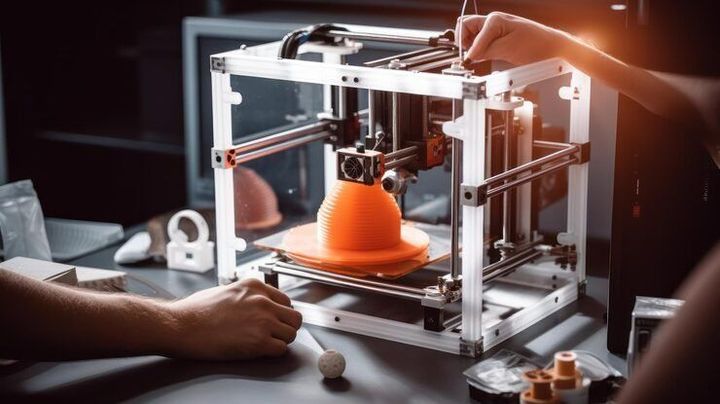
A printer then creates the object using its selected material and production method. After printing, the component may require support removal, cleaning, heat treatment, surface finishing, or dimensional inspection. These steps depend on the material, intended application, and required physical properties.
Importance
3D printing matters because it allows designers and manufacturers to create complex shapes, test product designs, and produce components without always needing dedicated molds or cutting tools. It can be useful when conventional production methods are difficult to adapt to a particular shape or when a small quantity of customized parts is required.
The technology affects engineers, product designers, manufacturers, researchers, educators, and healthcare professionals. For example, an engineer may print a prototype to check how parts fit together, while a factory may produce a replacement fixture to support a particular assembly task.
Main Industrial Applications
3D printing has several practical uses across different sectors:
Product development: Physical prototypes help designers examine shape, fit, and assembly before larger production runs.
Automotive and aerospace: Specialized printing methods can create selected lightweight components, prototypes, tooling, and complex internal structures.
Healthcare: Printed anatomical models can help explain body structures or support surgical planning. Certain medical devices and implants require additional regulatory oversight.
Industrial machinery: Manufacturers can produce jigs, fixtures, equipment covers, and selected replacement components.
Architecture and construction: Printed models help represent buildings and other structures, while specialized systems can deposit construction materials.
Education and research: Students and researchers can create physical models to explore engineering, geometry, and product design.
Not every component is suitable for 3D printing. Production volume, strength requirements, surface finish, material availability, safety considerations, and inspection requirements all influence whether additive manufacturing is appropriate.
Comparing Production Methods
Different printing technologies work with different materials and produce different results. The table below summarizes common methods.
| Method | Main material | Common applications |
|---|---|---|
| Fused deposition modeling (FDM) | Thermoplastic filament | Prototypes, housings, fixtures |
| Stereolithography (SLA) | Liquid photosensitive resin | Detailed models, design prototypes |
| Selective laser sintering (SLS) | Polymer powder | Functional parts, complex geometries |
| Selective laser melting or laser powder bed fusion | Metal powder | Specialized metal components |
| Material jetting | Droplets of photopolymer or other suitable materials | Detailed models and selected multi-material parts |
| Binder jetting | Powder joined with a binding agent | Selected metal, ceramic, and sand-based applications |
The capabilities of each method depend on the specific machine, material, and production settings. A process that produces detailed visual models may not be suitable for a component exposed to high temperatures or repeated mechanical loads.
Recent Updates
From 2024 through 2026, additive manufacturing has continued to develop through improvements in production monitoring, software, material development, and industrial integration. Current activity includes efforts to improve repeatability, reduce manual preparation, and make printed components more suitable for demanding manufacturing environments. Progress varies by technology and application, and not every development is available across all machines.
Automation and Digital Production
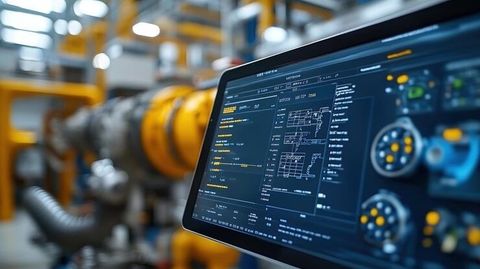
Modern printing workflows increasingly connect design software, production planning, machine monitoring, and inspection records. These systems can help operators track printing conditions, identify interruptions, and maintain documentation for individual parts.
Artificial intelligence and automated software tools are also being explored for design optimization, defect detection, and production planning. Generative design tools can suggest alternative shapes based on specified constraints, but engineers must still assess whether the resulting geometry can be manufactured and safely used.
Material Development and Production Quality
Material development remains an important area of research. Manufacturers and research organizations are investigating metal alloys, engineering polymers, ceramic materials, and composites for specific temperature, strength, weight, and chemical-resistance requirements.
Industrial users are also paying attention to repeatability and part qualification. Printed parts may contain internal voids, surface irregularities, or variations caused by machine settings and material conditions. Inspection and process validation are therefore important when components must meet precise engineering or safety requirements.
Laws or Policies
In India, 3D printing is affected by general manufacturing rules, workplace safety requirements, environmental regulations, intellectual property law, and product-specific standards. The applicable requirements depend on what is being produced, which materials are used, the intended application, and where manufacturing takes place.
Manufacturing Standards and Product Safety
The Bureau of Indian Standards (BIS) develops and publishes Indian Standards for a range of products, materials, and industrial processes. Whether a particular printed component must meet a specific standard or certification requirement depends on the product category and applicable regulations.
Manufacturers producing components for regulated sectors may need to follow additional technical, testing, traceability, or quality-control requirements. Medical devices, aerospace components, electrical products, and safety-critical machinery can be subject to requirements beyond those applicable to ordinary prototypes.
Workplaces using industrial printers must also consider equipment operation, ventilation, material handling, fire precautions, and exposure to particles or chemical vapors. Appropriate controls depend on the printer type and the materials involved.
Intellectual Property and Environmental Considerations
Digital design files can be protected by intellectual property laws, including copyright, patents, and design-related protections where applicable. Reproducing a protected component without the necessary authorization may create legal issues, depending on the circumstances and the rights involved.
Environmental rules may apply to chemical handling, waste disposal, emissions, and industrial operations. Resin residues, metal powders, solvents, and other printing materials may require specific handling procedures. The relevant requirements depend on the substance, process, and applicable local regulations.
Tools and Resources
Several software platforms and technical resources help users prepare, print, and evaluate three-dimensional models. Their capabilities vary by printer type, file format, licensing terms, and production requirements.
Design and Printing Software
Computer-aided design software helps create or modify three-dimensional models. Examples include Autodesk Fusion, FreeCAD, and SOLIDWORKS. These programs support different design workflows, from basic mechanical parts to complex engineering assemblies.
Slicing software converts a digital model into instructions that a compatible printer can follow. Examples include Ultimaker Cura, PrusaSlicer, and manufacturer-specific preparation tools. Settings may include layer height, print orientation, support structures, infill, and printing temperature.
Model Libraries and Technical Resources
Platforms such as Printables and Thingiverse contain digital models that users can explore under the applicable licensing terms. A model's availability does not automatically mean that it can be reproduced commercially or modified without restrictions.
Technical datasheets and manufacturer documentation help explain material properties, machine limitations, recommended settings, and post-processing requirements. For industrial applications, engineering drawings, dimensional inspection records, and material specifications are also important.
Factors to Review Before Production
Before a component is printed, users generally need to consider:
Purpose: Whether the object is a prototype, decorative model, tool, or functional component.
Material: Whether the selected material suits the required strength, temperature, flexibility, or chemical exposure.
Design: Whether wall thickness, holes, overhangs, and internal features are suitable for the selected process.
Precision: Whether the printer can meet the required dimensional tolerances and surface quality.
Finishing: Whether cleaning, machining, polishing, curing, or heat treatment will be necessary.
Inspection: Whether the finished component requires dimensional, mechanical, or other technical testing.
These factors influence production planning and help clarify the limitations of the final part.
FAQs
What is 3D printing and how does it work?
3D printing is an additive manufacturing process that creates physical objects from digital models. A compatible machine builds the object in layers using materials such as plastic, resin, metal powder, or ceramic feedstock.
Which materials are used in industrial 3D printing?
Common materials include thermoplastics, photosensitive resins, metal alloys, ceramics, and selected composites. The suitable material depends on the component's intended use, mechanical requirements, temperature exposure, and manufacturing process.
What are the main 3D printing production methods?
Common methods include fused deposition modeling, stereolithography, selective laser sintering, metal powder bed fusion, material jetting, and binder jetting. Each method has different material requirements, dimensional capabilities, and finishing needs.
How is 3D printing used in industrial manufacturing?
Industrial applications include prototyping, assembly fixtures, tooling, selected replacement components, product development, and specialized production parts. Suitability depends on performance requirements, production volume, and quality controls.
Which software is used to prepare 3D printing designs?
CAD software such as FreeCAD, Autodesk Fusion, and SOLIDWORKS helps create models. Slicing tools such as Cura and PrusaSlicer prepare compatible models for printing by generating machine instructions.
Conclusion
3D printing creates physical objects from digital designs through a range of additive manufacturing methods and materials. Its applications extend from prototypes and educational models to selected industrial, healthcare, and engineering components. Production results depend on design quality, material selection, machine capabilities, finishing processes, and inspection. Applicable safety, environmental, intellectual property, and product regulations also influence how printed components are developed and used.