Aerospace Industry Explained: Aircraft Types, Technologies, Applications, Benefits and Challenges
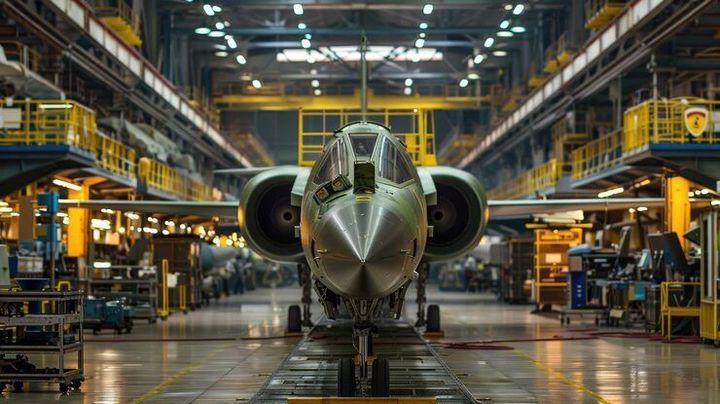
The aerospace industry is a broad industrial sector concerned with the design, development, manufacturing, testing, maintenance, and operation of aircraft and spacecraft. It includes commercial airplanes, military aircraft, helicopters, unmanned aerial vehicles (UAVs), satellites, launch vehicles, and various aviation components.
Context
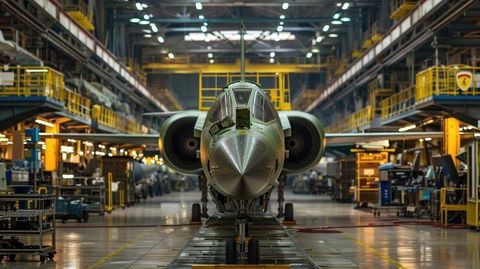
The aerospace industry is a broad industrial sector concerned with the design, development, manufacturing, testing, maintenance, and operation of aircraft and spacecraft. It includes commercial airplanes, military aircraft, helicopters, unmanned aerial vehicles (UAVs), satellites, launch vehicles, and various aviation components. The industry combines engineering, electronics, materials science, computer technology, and advanced manufacturing to develop systems that operate in the atmosphere and outer space.
The development of aerospace technology began with early experiments in human flight. The introduction of powered aircraft in the early twentieth century created new possibilities for transportation, communication, and military operations. Over time, improvements in aircraft engines, navigation systems, aerodynamics, and structural materials transformed aviation into an international industry.
Today, the aerospace industry includes several interconnected activities, such as aircraft manufacturing, aerospace engineering, aviation electronics, propulsion systems, satellite development, and aircraft maintenance. Companies, research institutions, government organizations, and engineering facilities contribute to different stages of development.
In India, the aerospace sector has developed through organizations such as Hindustan Aeronautics Limited (HAL), private engineering manufacturers, research institutions, and international manufacturing partnerships. Initiatives supporting domestic production and technological development have increased attention toward aircraft components, defence aviation, and aerospace research.
Importance
The aerospace industry plays an important role in transportation, national security, scientific research, international communication, and economic development. Commercial aircraft connect cities and countries, while military aircraft support national defence and surveillance activities. Satellites contribute to telecommunications, weather forecasting, navigation, and environmental monitoring.
Aerospace technologies also address practical challenges involving transportation time, geographical distance, emergency response, and access to information. Aircraft allow passengers and essential goods to travel across long distances, while helicopters can reach locations where conventional airplanes cannot operate easily.
Several industries depend on aerospace manufacturing and technological development, including electronics, metallurgy, software engineering, telecommunications, and advanced materials.
Major Applications of the Aerospace Industry
The industry supports different applications across civil, commercial, scientific, and defence-related activities.
Commercial Aviation: Passenger airplanes transport people between domestic and international destinations. Cargo aircraft move packages, industrial components, medicines, and other goods.
Defence and Military Aviation: Fighter aircraft, transport planes, surveillance aircraft, and military helicopters support national security and operational planning.
Space Exploration: Spacecraft, satellites, and launch vehicles support scientific experiments, planetary research, and communication networks.
Agriculture and Environmental Monitoring: Aircraft and drones collect information about agricultural conditions, forests, water resources, and environmental changes.
Emergency Response: Helicopters and specialized aircraft support search operations, disaster monitoring, medical transportation, and rescue activities.
Scientific Research: Research aircraft and space-based instruments help scientists study atmospheric conditions, climate patterns, and other scientific subjects.
Main Categories of Aerospace Aircraft
Aerospace aircraft are designed for different operational requirements, flight conditions, and transportation activities.
| Aircraft Type | Primary Application | Main Characteristics |
|---|---|---|
| Commercial Airplanes | Passenger transportation | Fixed-wing design and passenger cabins |
| Cargo Aircraft | Goods transportation | Large storage compartments |
| Fighter Aircraft | Defence operations | High-speed flight and advanced avionics |
| Military Transport Aircraft | Equipment and personnel movement | Large payload capacity |
| Helicopters | Short-distance transportation and rescue | Vertical takeoff and landing |
| Unmanned Aerial Vehicles | Monitoring and data collection | Remote or automated operation |
| Research Aircraft | Scientific investigations | Specialized instruments |
| Business Aircraft | Private and corporate aviation | Smaller passenger capacity |
These categories demonstrate how aircraft design changes according to mission requirements, operating environments, and technical specifications.
Recent Updates
The aerospace industry has experienced several developments between 2024 and 2026. These changes involve aircraft manufacturing, automation, sustainable aviation, advanced materials, satellite technology, and digital engineering. India has also expanded its participation in international aerospace manufacturing and aviation infrastructure.
Advancements in Aircraft Manufacturing
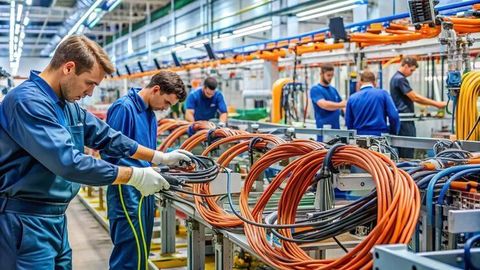
Aircraft manufacturing increasingly uses computer-aided design, precision machining, robotics, and automated inspection systems. These technologies help engineers develop aircraft structures with accurate dimensions and consistent manufacturing processes.
India's C295 aircraft manufacturing programme represents an important development in domestic aerospace production. Airbus and Tata Advanced Systems have worked together on aircraft manufacturing activities, including the production of detailed components and subassemblies in India.
Artificial Intelligence and Digital Engineering
Artificial intelligence (AI) and digital engineering are becoming increasingly relevant to aerospace development. Engineers use computer simulations, data analysis, and predictive systems to study aircraft performance, identify potential technical problems, and monitor equipment conditions.
Digital twins are another developing technology. They create virtual representations of physical aircraft systems, allowing engineers to examine operating conditions and evaluate design changes through computer-based models.
Sustainable Aviation Technology
Environmental considerations have encouraged research into sustainable aviation fuel (SAF), electric propulsion, hybrid-electric aircraft, and improved engine efficiency.
Sustainable aviation fuel is produced from alternative feedstocks and can be used in compatible aircraft engines under approved conditions. India has also examined blending targets for sustainable aviation fuel as part of its wider aviation sustainability planning.
Drone and Unmanned Aircraft Development
Unmanned aerial vehicles are being used in agricultural monitoring, infrastructure inspection, mapping, industrial surveillance, and environmental research.
Developments in sensors, navigation technology, batteries, and automated flight systems have expanded their practical applications. Regulatory requirements continue to shape where and how drones can operate.
Advanced Materials and Space Technology
Carbon-fibre composites, lightweight alloys, ceramic materials, and heat-resistant components are important areas of aerospace research. These materials help engineers address structural strength, temperature resistance, and aircraft performance requirements.
Satellite development is also expanding across communication, navigation, weather observation, and Earth monitoring applications.
Laws or Policies
The aerospace industry in India operates under different laws, regulations, and government frameworks. Requirements vary according to whether an activity involves civil aviation, defence manufacturing, aircraft maintenance, drones, or space-related operations.
Bharatiya Vayuyan Adhiniyam, 2024
The Bharatiya Vayuyan Adhiniyam, 2024 replaced the Aircraft Act, 1934, and came into effect in January 2025. It provides the legislative framework for regulating aircraft design, manufacturing, maintenance, and operations in India.
The legislation also supports the development of aviation regulations aligned with international standards.
Directorate General of Civil Aviation (DGCA)
The Directorate General of Civil Aviation is India's primary civil aviation regulator. It oversees important areas involving aircraft registration, airworthiness, pilot licensing, aviation safety, and operational requirements.
Aircraft operators and manufacturers must follow applicable regulatory procedures before conducting regulated aviation activities.
Aircraft Rules and Aviation Safety
The Aircraft Rules, 1937 continue to provide detailed regulatory requirements under the applicable provisions of the newer legislation. These rules cover aircraft registration, airworthiness, personnel licensing, aircraft operations, and other aviation-related matters.
Drone Rules, 2021
The Drone Rules, 2021 establish requirements for drone registration, certification, operation, and related activities. India's Digital Sky platform provides regulatory information and airspace-related resources for drone operators.
Defence Manufacturing Policies
India's defence manufacturing framework supports domestic production, research, technology development, and private-sector participation. The Defence Acquisition Procedure provides guidelines for defence procurement and encourages domestic industrial participation.
Government initiatives such as Make in India and Atmanirbhar Bharat also support the development of domestic aerospace manufacturing capabilities.
Tools and Resources
Several technical tools and online resources help readers understand aerospace engineering, aircraft development, manufacturing requirements, and aviation regulations.
Aerospace Design and Engineering Software
Computer-aided design (CAD) and computer-aided engineering (CAE) applications are widely used in aircraft development. They help engineers create aircraft models, examine structural behaviour, and simulate aerodynamic conditions.
Examples include CATIA, Siemens NX, and ANSYS. These platforms support different engineering activities, including three-dimensional modelling, structural analysis, and fluid simulations.
Aviation and Regulatory Websites
The following websites provide information about aircraft regulations, aviation developments, and aerospace research.
Directorate General of Civil Aviation: Provides Indian aviation regulations, aircraft certification information, safety requirements, and licensing guidance.
Ministry of Civil Aviation: Publishes government policies, aviation announcements, infrastructure updates, and sector-related reports.
Indian Space Research Organisation (ISRO): Provides information about satellite programmes, launch vehicles, space research, and scientific missions.
European Union Aviation Safety Agency (EASA): Publishes international aviation safety information, technical regulations, and aircraft certification resources.
International Civil Aviation Organization (ICAO): Provides international aviation standards, technical publications, and safety-related information.
Technical Learning Resources
Aerospace engineering textbooks, aircraft maintenance manuals, engineering research papers, and aviation publications help readers understand aircraft structures, propulsion systems, navigation, and manufacturing processes.
Educational materials covering aerodynamics, thermodynamics, materials science, and avionics also provide useful background for understanding the technical foundations of the aerospace industry.
FAQs
What are the main types of aircraft in the aerospace industry?
The main types include commercial airplanes, cargo aircraft, fighter aircraft, military transport planes, helicopters, unmanned aerial vehicles, and research aircraft. Each category has different design characteristics and operational applications.
What technologies are used in aerospace manufacturing?
Aerospace manufacturing uses computer-aided design, precision machining, robotics, composite materials, artificial intelligence, additive manufacturing, and automated inspection. These technologies support aircraft development, component production, and quality assessment.
How is artificial intelligence used in the aerospace industry?
Artificial intelligence supports aircraft data analysis, predictive maintenance, flight planning, manufacturing inspection, and engineering simulations. Its applications depend on system requirements, technical validation, and applicable aviation safety regulations.
What are the major challenges facing the aerospace industry?
Major challenges include complex engineering requirements, strict safety regulations, environmental concerns, supply chain disruptions, skilled workforce requirements, and the development of advanced technologies. Manufacturers must also maintain consistent quality throughout production.
What is the future of the aerospace industry in India?
India's aerospace industry is developing across commercial aviation, defence manufacturing, aircraft components, drone technology, maintenance facilities, and space research. Domestic manufacturing initiatives and international partnerships are important elements of its continued development.
Conclusion
The aerospace industry connects aircraft manufacturing, aviation technology, defence systems, and space exploration through advanced engineering and scientific research. Different aircraft types and aerospace technologies support transportation, national security, environmental monitoring, and communication. Developments in artificial intelligence, automation, sustainable aviation, and advanced materials are influencing the industry's direction. In India, regulatory modernization, domestic manufacturing initiatives, and international partnerships are contributing to the development of aerospace capabilities.