AI in Industrial Manufacturing Explained: Applications, Benefits, Technologies and Challenges
AI in industrial manufacturing refers to the use of artificial intelligence to analyze production data, recognize patterns, support decisions, and improve manufacturing processes. It combines software algorithms, machine learning, sensors, industrial robots, and connected equipment to help factories monitor operations and respond to changing conditions. The technology developed from earlier computer-based control systems and industrial automation, which gradually expanded to include data analysis and predictive capabilities.
Context
AI in industrial manufacturing refers to the use of artificial intelligence to analyze production data, recognize patterns, support decisions, and improve manufacturing processes. It combines software algorithms, machine learning, sensors, industrial robots, and connected equipment to help factories monitor operations and respond to changing conditions. The technology developed from earlier computer-based control systems and industrial automation, which gradually expanded to include data analysis and predictive capabilities.
Traditional manufacturing systems generally follow predefined instructions to operate machines and control production steps. AI-based manufacturing systems can also learn patterns from historical and current data, identify unusual conditions, and estimate possible outcomes. Depending on the system, human operators may use these insights to adjust production schedules, inspect equipment, or investigate quality problems.
Understanding AI Manufacturing Technologies
Artificial intelligence in manufacturing includes several related technologies. Machine learning identifies patterns in data, computer vision analyzes images, and natural language processing helps computers interpret written or spoken information. Robotics and industrial control systems can use AI-generated insights to support physical production activities.
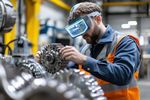
For example, a factory producing metal components may use cameras to inspect finished parts for visible defects. Another facility may analyze vibration and temperature readings from a motor to identify signs of possible wear. These applications illustrate how AI can support manufacturing without replacing every existing machine or production system.
Importance
AI in industrial manufacturing matters because factories must manage equipment reliability, product quality, production schedules, energy consumption, and workplace safety. Manufacturing operations generate large amounts of data through sensors, machine controllers, inspection equipment, and production management systems. AI can help organize this information and identify relationships that may be difficult to detect through manual inspection alone.
The technology affects factory operators, engineers, maintenance teams, quality inspectors, production planners, and industrial managers. Its effects can also extend to customers and supply chains when production delays, inconsistent product quality, or equipment interruptions affect the availability of manufactured goods.
Major Applications of AI in Manufacturing
AI can support different stages of industrial production, from raw material handling to final inspection.
Predictive maintenance: Analyzes equipment readings and operating history to identify patterns associated with possible failures. Maintenance teams can use these findings when planning inspections and repairs.
Quality inspection: Uses computer vision and machine learning to detect surface defects, dimensional differences, missing components, or assembly errors.
Production planning: Analyzes production schedules, machine availability, inventory levels, and demand patterns to support planning decisions.
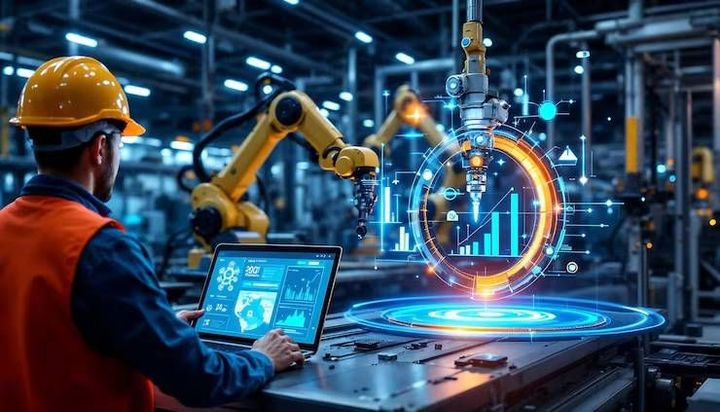
Industrial robotics: Helps robotic systems recognize objects, adjust movements, or perform selected tasks under defined operating conditions.
Energy monitoring: Examines electricity consumption, operating schedules, and equipment performance to identify unusual usage patterns.
Supply chain analysis: Supports demand forecasting, inventory monitoring, and the identification of potential material shortages.
Process optimization: Evaluates production data to identify variations in machine settings, material characteristics, or operating conditions.
The practical results depend on data quality, equipment compatibility, the production environment, and how employees use the system's findings. AI predictions are not equivalent to confirmed diagnoses, and important decisions may still require physical inspection or engineering review.
Benefits and Practical Limitations
AI can help manufacturing facilities identify recurring problems, reduce unnecessary inspections, and improve visibility into production conditions. Automated inspection may also process large numbers of images more consistently than manual review, although its accuracy depends on the defects being examined and the system's design.
However, implementation requires planning. Older machinery may not provide suitable digital data, and different equipment systems may use incompatible formats. Factories must also consider installation, integration, employee training, ongoing monitoring, cybersecurity, and the consequences of incorrect predictions.
Recent Updates
Developments in AI manufacturing from 2024 through 2026 have included wider experimentation with generative AI, vision-based inspection, digital twins, and systems that combine AI with industrial automation. Adoption varies considerably by sector, facility size, regulatory environment, and available technical resources. Many factories use AI for specific tasks rather than introducing it across every production process.
Generative AI and Industrial Knowledge
Generative AI can help employees search technical documents, summarize maintenance records, interpret operating instructions, and organize production reports. When connected to approved factory information, these tools may help technicians locate relevant procedures or investigate recurring equipment issues.
The reliability of these applications depends on the accuracy and completeness of their source information. Generated answers may contain errors or overlook machine-specific restrictions, so technical instructions and safety procedures need appropriate verification before use.
Digital Twins and Smart Factories
A digital twin is a digital representation of a physical asset, production line, or industrial process. When connected to current operational data, it can help engineers examine performance, test possible changes, and study how different operating conditions may affect production.
AI can analyze information from digital twins to identify patterns or compare potential scenarios. These models do not perfectly reproduce every physical condition, so their results depend on model quality, available measurements, and the assumptions used.
Edge AI and Human Oversight
Edge AI processes data close to the machine or sensor rather than sending every reading to a distant computing system. This approach can reduce communication delays and help some industrial applications operate when network connectivity is limited.
Manufacturers are also exploring systems that combine AI recommendations with human approval. In production environments where incorrect actions could damage equipment or endanger workers, defined operating limits, testing, monitoring, and reliable shutdown procedures remain important.
Laws or Policies
AI in industrial manufacturing is influenced by occupational safety rules, machinery requirements, data protection, cybersecurity obligations, and industry-specific regulations. The applicable framework depends on the country, the type of equipment, the information being processed, and whether the AI system affects safety-critical operations.
Manufacturing Regulations in India
In India, manufacturing facilities must comply with applicable central and state laws governing workplace safety, industrial operations, environmental protection, and equipment use. The Occupational Safety, Health and Working Conditions Code, 2020, forms part of India's labour-law framework, while its practical application depends on commencement notifications, applicable rules, and other relevant provisions.
Factories may also need to consider the Factories Act, 1948, where applicable, alongside relevant state rules and other laws governing their operations. Requirements can differ according to the industry, establishment, equipment, and legal framework in force.
AI adoption does not remove existing responsibilities for safe machinery operation, worker protection, equipment maintenance, or environmental compliance. Automated inspection and predictive maintenance systems should be assessed in relation to the specific risks of the process they support.
Data Protection and Industrial Cybersecurity
Industrial AI systems may process employee information, production records, equipment logs, or commercially sensitive data. India's Digital Personal Data Protection Act, 2023, and its associated rules and implementation arrangements are relevant when personal data falls within the applicable legal framework.
Connected manufacturing equipment can also create cybersecurity risks. Unauthorized access, compromised sensors, altered production settings, or disrupted networks may affect operations. Organizations should consider access controls, software updates, network separation, backups, incident response procedures, and relevant industry standards.
India's National Manufacturing Mission, announced in the Union Budget for 2025–26, reflects a broader policy emphasis on strengthening manufacturing capabilities. Government initiatives and incentives may change over time, and eligibility depends on the specific scheme and its current requirements.
Tools and Resources
Several categories of software and technical resources support AI in industrial manufacturing. The appropriate tools depend on whether a facility needs machine monitoring, visual inspection, data analysis, production planning, or robotics integration.
AI and Industrial Data Platforms
Examples include Microsoft Azure Machine Learning, AWS industrial data and machine learning tools, and Siemens industrial automation and digital-twin technologies. These platforms support different combinations of data processing, model development, industrial integration, and operational analysis. Their capabilities and compatibility vary by product and configuration.
Python libraries such as scikit-learn can support machine learning experiments, while OpenCV provides tools for image processing and computer vision. Industrial teams may also use manufacturing execution systems (MES), supervisory control and data acquisition (SCADA) systems, and programmable logic controllers (PLCs) to collect or manage production information.
Standards and Planning Resources
The International Organization for Standardization publishes standards relevant to quality management, industrial automation, and information security. The ISO 9001 quality management framework and ISO/IEC 27001 information security management framework may be relevant to different aspects of manufacturing operations. Applicability depends on the organization's objectives and requirements.
A basic AI implementation assessment can include the following items:
Identify the production problem and define measurable performance indicators.
Check whether historical data is complete, relevant, and reliable.
Assess equipment compatibility and cybersecurity requirements.
Test the system under representative operating conditions.
Establish human review procedures and clear responsibility for decisions.
Monitor errors, performance changes, and maintenance requirements.
These steps help organizations evaluate technical suitability and operational risks before expanding an AI application across a production facility.
FAQs
What is AI in industrial manufacturing?
AI in industrial manufacturing uses machine learning, computer vision, and related technologies to analyze production data, support decisions, inspect products, and monitor equipment. Its role varies according to the application and factory environment.
What are the main applications of AI in manufacturing?
Common applications include predictive maintenance, automated quality inspection, production planning, energy monitoring, industrial robotics, and supply chain analysis. Each application requires suitable data and appropriate integration with existing systems.
How does AI improve industrial manufacturing processes?
AI can identify patterns in equipment readings, detect selected product defects, and help production teams examine operating variations. Actual improvements depend on system accuracy, implementation quality, and how the results are applied.
What are the challenges of AI in industrial manufacturing?
Challenges include poor data quality, integration with older machinery, cybersecurity risks, employee training, implementation requirements, and unreliable predictions. Human oversight is important when decisions affect safety or production quality.
What technologies are used in AI-based manufacturing?
Common technologies include machine learning, computer vision, industrial robots, sensors, edge computing, digital twins, and manufacturing data platforms. These technologies may operate together or be introduced separately for specific tasks.
Conclusion
AI in industrial manufacturing supports equipment monitoring, quality inspection, production planning, robotics, and industrial data analysis. Recent developments in generative AI, edge computing, and digital twins are expanding the range of possible applications. Successful implementation depends on reliable data, compatible equipment, cybersecurity, workforce training, and compliance with applicable regulations. Human oversight remains important when AI outputs influence safety, product quality, or critical operational decisions.