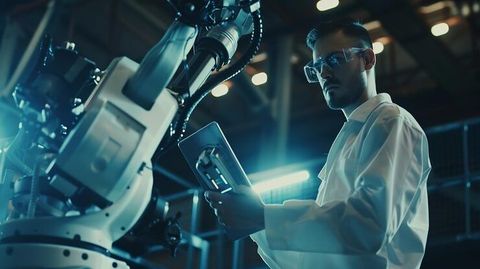
AI in Industry Guide: Technologies, Manufacturing Processes, Industrial Uses and Implementation Factors
Artificial intelligence (AI) in industry refers to the use of computer systems that analyze data, identify patterns, support decisions, and perform selected tasks in manufacturing and other industrial environments. An AI in Industry Guide explains the technologies, manufacturing processes, industrial uses, and implementation factors involved in applying these systems.
Context
Artificial intelligence (AI) in industry refers to the use of computer systems that analyze data, identify patterns, support decisions, and perform selected tasks in manufacturing and other industrial environments. An AI in Industry Guide explains the technologies, manufacturing processes, industrial uses, and implementation factors involved in applying these systems. AI combines data from machines, sensors, production records, images, and other sources to help industrial organizations understand operations and respond to changing conditions.
The development of industrial AI builds on earlier advances in automation, control engineering, statistics, and computer science. Traditional industrial automation follows predefined instructions, such as stopping a machine when a sensor detects a particular condition. AI systems can analyze more complex patterns and, within defined limits, estimate equipment conditions, identify unusual production results, or help adjust operating decisions.
Core Technologies Used in Industrial AI
Industrial AI includes several related technologies, each suited to particular tasks. Their usefulness depends on data quality, equipment compatibility, operating conditions, and the problem being addressed.
Machine learning: Uses historical and current data to identify patterns and estimate outcomes, such as the likelihood of equipment failure.
Computer vision: Analyzes images or video to identify surface defects, missing components, incorrect assembly, or other visible conditions.
Natural language processing: Helps systems interpret written instructions, maintenance notes, technical documents, and operator questions.
Deep learning: Uses layered computational models to analyze complex information, including images, sound, and machine sensor readings.
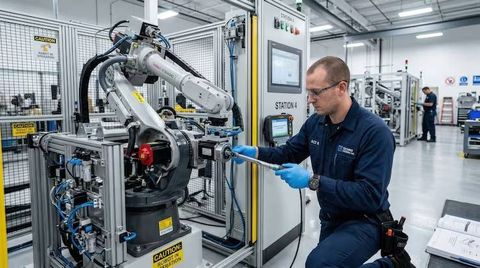
Robotics and intelligent automation: Combines robotic equipment with sensing and decision-making systems to support tasks such as inspection, sorting, and material handling.
Digital twins: Use digital representations of physical assets or processes to examine operating conditions, simulate scenarios, and compare expected behavior with real-world data.
These technologies do not operate independently in every application. An industrial inspection system, for example, may combine cameras, machine learning, production software, and automated equipment to identify a defect and record its location.
How AI Fits into Manufacturing Processes
AI can be integrated into different stages of industrial production. In planning, it can analyze demand patterns and production schedules. During manufacturing, it can monitor machine conditions, examine product quality, and help operators identify process variations.
After production, AI can support inventory planning, energy monitoring, equipment maintenance, and analysis of production records. Its role may range from providing information to recommending an adjustment or controlling a specific process under approved operating limits. Human supervision remains important wherever errors could affect worker safety, product quality, or equipment operation.
Importance
Industrial AI matters because manufacturing environments generate large amounts of information that can be difficult to interpret manually. Equipment may produce continuous sensor readings, while inspection systems generate images and production systems record output, material use, and downtime. AI can help organize these different information sources and identify patterns that might otherwise be difficult to recognize.
Manufacturers, energy facilities, logistics operations, and processing plants may use industrial AI to address recurring operational challenges. These include unexpected equipment interruptions, inconsistent product quality, complex production schedules, material waste, and changing energy requirements. The actual results depend on how well the technology fits the operation and how accurately its performance is measured.
Common Industrial Applications
Industrial AI has applications across several operational areas.
Predictive maintenance: Analyzes vibration, temperature, pressure, and operating history to identify signs of possible equipment deterioration.
Quality inspection: Examines products using cameras and sensors to detect visible defects or deviations from defined specifications.
Production planning: Evaluates orders, machine availability, material supplies, and production schedules to support planning decisions.
Energy management: Studies energy consumption and operating conditions to identify unusual usage patterns or potential efficiency improvements.
Supply chain analysis: Helps estimate material requirements, examine delivery patterns, and identify possible disruptions.
Process optimization: Analyzes operating data to help determine how changes in temperature, speed, pressure, or other variables relate to production outcomes.
For example, a food-processing plant might use computer vision to inspect packaging, while a metalworking facility could analyze machine vibration to identify unusual operating patterns. These applications require different data, equipment, and evaluation methods.
Potential Benefits and Practical Limitations
Industrial AI may help organizations detect problems earlier, reduce manual inspection work, improve production visibility, and make more consistent use of operational data. However, these outcomes are not automatic. Poorly maintained sensors, incomplete records, changing production conditions, and unsuitable models can reduce accuracy.
Other challenges include integration with older machinery, cybersecurity exposure, staff training, and uncertainty about responsibility when an automated recommendation is incorrect. Some industrial processes also have too little reliable historical data to support a useful model. AI should therefore be assessed as part of the wider production system rather than as a replacement for sound engineering and operational controls.
Recent Updates
During 2024–2026, industrial AI development has increasingly focused on combining AI with existing automation, connected equipment, and digital manufacturing systems. Organizations have explored systems that can analyze production information closer to the equipment, interpret technical documents, and assist engineers with troubleshooting. Adoption varies by industry, company size, infrastructure, and the consequences of an incorrect result.
Generative AI and Industrial Knowledge
Generative AI systems can process technical text, summarize maintenance records, explain procedures, and help users search large collections of engineering documents. When connected to approved internal information, these systems may help technicians locate relevant instructions or compare records from earlier equipment incidents.
However, generative AI can produce inaccurate statements or misunderstand technical context. Industrial use therefore requires appropriate access controls, verified documentation, human review, and restrictions on what the system can change. Critical operating decisions should not depend solely on an unverified generated response.
Edge AI and Digital Twins
Edge AI processes data near the machines or sensors that produce it, rather than sending every data point to a distant computing system. This approach can support applications that require quick responses or have limited network connectivity. Data selection, device capacity, and maintenance requirements still affect how well such systems operate.
Digital twins are also being used to examine production scenarios, equipment behavior, and process changes. When connected to reliable operational data, a digital twin can help compare simulated conditions with actual results. A simulation remains a model, however, and does not automatically reproduce every physical condition in a factory.
Industrial Robotics and Connected Systems
AI-enabled robotics combines perception, sensing, and programmed motion to support tasks that involve variable objects or changing environments. Examples include component identification, visual inspection, and certain material-handling activities. Such systems require physical safeguards and careful testing before they are introduced into shared work areas.
Connected industrial systems also increase the importance of cybersecurity. As machines exchange more data with production networks and business software, organizations need to manage user access, software updates, network separation, and incident response. AI adoption and cybersecurity planning are therefore closely related.
Laws or Policies
Industrial AI is influenced by regulations covering workplace safety, product quality, data protection, cybersecurity, and environmental management. The applicable requirements depend on the industry, the type of equipment, the information being processed, and the risks associated with the system. AI does not replace existing obligations relating to safe machinery operation or responsible industrial management.
AI Governance in India
India's AI Governance Guidelines, released in November 2025, establish a principle-based framework for responsible AI development and use. They emphasize safety, accountability, fairness, transparency, and proportionate risk management. The guidelines operate alongside existing laws rather than replacing sector-specific requirements. <Cite refs={["turn485628search3","turn485628search0"]}/>
The Digital Personal Data Protection Act, 2023, is relevant when industrial AI systems process personal data, such as identifiable worker records or visitor information. Applicable obligations depend on the processing activity and the provisions in force. Organizations must also consider the Information Technology Act, 2000, and relevant cybersecurity requirements when applicable. <Cite refs={["turn485628search4","turn485628search25"]}/>
Industrial Safety and Cybersecurity
Factories must follow applicable workplace safety rules, machinery requirements, and sector-specific regulations. AI-controlled equipment should be evaluated for foreseeable failures, emergency stopping procedures, operator access, and safe interaction between people and machines.
Cybersecurity planning includes controlling access to industrial networks, maintaining software updates, monitoring unusual activity, and preparing recovery procedures. Organizations handling critical infrastructure may face additional requirements. The relevant legal framework depends on the facility and the systems it operates.
Tools and Resources
Industrial AI implementation requires a combination of software, data collection systems, evaluation methods, and operational knowledge. The appropriate resources depend on whether the objective is predictive maintenance, visual inspection, production planning, or another industrial application.
AI and Industrial Data Tools
Several categories of tools support industrial AI development:
Data analysis platforms: Python, pandas, and Jupyter support data preparation, statistical analysis, and model experimentation.
Machine learning frameworks: Scikit-learn, PyTorch, and TensorFlow support the development and evaluation of machine learning models.
Industrial monitoring systems: Supervisory Control and Data Acquisition (SCADA) systems and manufacturing execution systems collect or organize information about equipment and production.
Digital twin platforms: These support virtual representations of machines, production lines, or industrial processes.
Visualization tools: Dashboards and reporting applications help operators examine production trends, equipment conditions, and inspection results.
Tool selection depends on technical compatibility, data security, maintenance requirements, staff capabilities, and integration with existing equipment.
Planning an Industrial AI Project
A structured implementation plan helps define the problem before selecting technology. Typical stages include:
Define the objective: Identify a measurable issue, such as unexpected downtime or recurring inspection errors.
Review available data: Examine completeness, accuracy, collection frequency, and access permissions.
Establish a baseline: Record existing performance so that later results can be compared fairly.
Test the model: Evaluate predictions or classifications against known examples and real operating conditions.
Run a controlled pilot: Begin in a limited environment with appropriate human oversight and safety measures.
Monitor performance: Track accuracy, operational effects, unusual errors, and changes in production conditions.
Useful evaluation measures include false alarms, missed defects, prediction errors, downtime, and processing delays. The relevant measures should reflect the purpose of the system rather than relying on a single accuracy figure.
FAQs
What is AI in industry?
AI in industry uses computer systems to analyze operational data, identify patterns, support decisions, and perform selected tasks in manufacturing and industrial environments. Applications include equipment monitoring, quality inspection, and production planning.
How is AI used in manufacturing processes?
AI can examine sensor readings, inspect product images, estimate maintenance needs, analyze production schedules, and monitor energy consumption. Its role depends on the available data and the requirements of the manufacturing process.
What technologies are used in industrial AI?
Common technologies include machine learning, computer vision, deep learning, robotics, natural language processing, and digital twins. These technologies may work together with industrial sensors and existing automation systems.
What are the main challenges of implementing AI in industry?
Challenges include incomplete data, integration with older equipment, cybersecurity risks, staff training, model errors, and ongoing monitoring. Safety requirements are particularly important when AI influences physical machinery or production controls.
What laws affect industrial AI in India?
Relevant requirements may include AI governance guidance, data-protection legislation, information technology law, workplace safety rules, and sector-specific regulations. Applicable obligations depend on the system, industry, data, and operating environment.
Conclusion
AI in industry combines data analysis, machine learning, computer vision, robotics, and connected manufacturing systems to support industrial operations. Applications range from predictive maintenance and quality inspection to production planning and energy monitoring. Successful implementation depends on reliable data, suitable infrastructure, human oversight, cybersecurity, and measurable evaluation. Indian organizations must also consider applicable laws, safety requirements, and responsible AI governance.