Battery Module Assembly Lines Guide: Equipment, Stages, Technologies, Testing and Safety
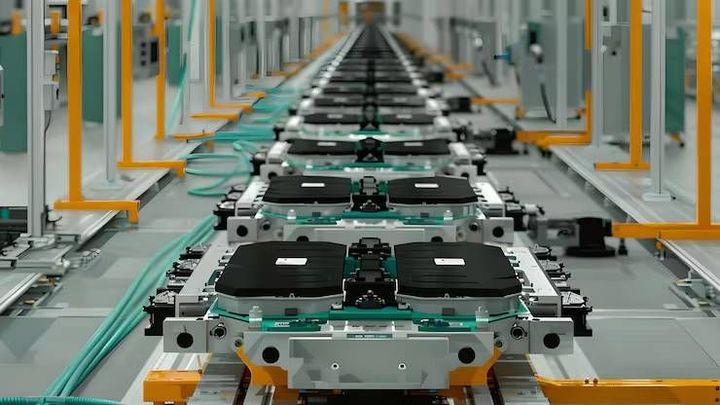
Battery module assembly lines are organized production systems used to combine individual battery cells into modules that can later become part of a larger battery pack. They are used in electric vehicles, energy storage systems, industrial equipment, electronics, and other applications that require rechargeable electrical energy.
A battery module normally contains multiple cells arranged in a defined electrical and physical configuration. Depending on the battery design, cells may be cylindrical, prismatic, or pouch-shaped. The assembly process connects these cells while controlling electrical connections, mechanical positioning, insulation, thermal conditions, and monitoring components.
Battery module assembly lines exist because assembling many individual cells manually can create variations in alignment, electrical connections, and inspection results. Automated and semi-automated equipment can provide controlled production stages, repeatable measurements, traceability, and safety checks.
Basic Module Structure
A typical battery module can contain several major elements:
- Battery cells that store electrical energy
- Busbars or conductive connectors that join cells electrically
- Cell holders or structural components that maintain positioning
- Insulation materials that separate conductive areas
- Temperature sensors for thermal monitoring
- A battery management system connection or monitoring circuit
- Housing, covers, fasteners, and protective materials
The exact arrangement depends on cell chemistry, module voltage, capacity, application, and mechanical design.
Importance
Battery module assembly lines are important because battery systems must combine many cells while maintaining controlled electrical and mechanical conditions. A small assembly variation can affect module performance, durability, thermal behavior, or electrical isolation.
The topic also affects everyday users because batteries are increasingly used in electric transportation, backup power systems, renewable-energy storage, portable electronics, and industrial equipment. Consistent module assembly helps manufacturers monitor production quality and identify problems before completed battery systems enter use.
Main Production Challenges
Battery module production can involve several challenges:
- Maintaining accurate cell positioning
- Controlling electrical connections
- Preventing accidental short circuits
- Managing heat during assembly and operation
- Detecting damaged or unsuitable cells
- Maintaining electrical insulation
- Recording measurements for traceability
- Handling cells without mechanical damage
Battery module assembly lines therefore combine mechanical equipment, electrical measurement systems, software, inspection equipment, and safety controls.
Recent Updates
Battery manufacturing has continued to develop from 2024 through 2026, with greater attention to automation, traceability, testing, domestic production, and advanced battery chemistries.
India's Production Linked Incentive program for Advanced Chemistry Cell battery storage continues to support domestic cell manufacturing. The Ministry of Heavy Industries states that the program is designed around 50 GWh of domestic ACC manufacturing capacity, with requirements related to domestic value addition. In 2025, an additional 10 GWh agreement brought cumulative awarded capacity under the program to 40 GWh.
In 2026, the Ministry of Heavy Industries also published documents connected with selecting manufacturers for an additional 10 GWh of Advanced Chemistry Cell capacity intended for grid-scale stationary storage. This indicates continued development of battery manufacturing infrastructure beyond vehicle applications.
Automation and Digital Monitoring
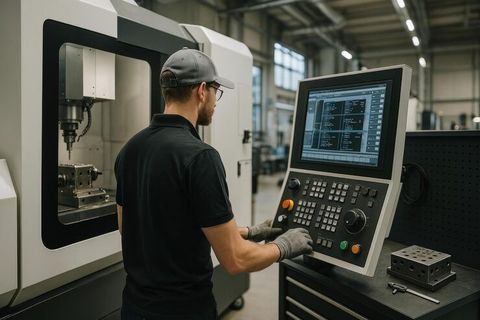
Modern battery module assembly lines increasingly use programmable equipment, machine vision, automated fastening, robotic handling, laser or resistance joining, and digital production records. These technologies can connect measurements from individual production stages with a module's identification record.
Testing systems are also becoming more integrated with production equipment. Instead of relying only on a final inspection, manufacturers can perform electrical, mechanical, dimensional, insulation, and communication checks at different stages.
Cell and Module Testing
Battery testing standards continue to evolve alongside cell and vehicle technologies. BIS materials related to Indian battery-cell standards reference alignment with IEC 62660-3:2022 for safety performance testing of cells used in battery packs and systems.
Laws or Policies
Battery module assembly in India is influenced by environmental rules, product standards, vehicle regulations, workplace requirements, and manufacturing policies. The exact requirements depend on whether the module is intended for an electric vehicle, stationary energy storage, industrial equipment, or another application.
Battery Waste Management Rules
India's Battery Waste Management Rules, 2022 establish an Extended Producer Responsibility framework for waste batteries. The Ministry of Environment, Forest and Climate Change lists amendments made during 2023, 2024, and 2025, showing that the regulatory framework has continued to develop.
The rules address areas such as collection, recycling, refurbishment, producer responsibilities, and recovery of materials from waste batteries. Manufacturers and other organizations involved in battery products need to determine which obligations apply to their specific activities.
Manufacturing Policy
The National Programme on Advanced Chemistry Cell Battery Storage is administered by the Ministry of Heavy Industries. The program is intended to strengthen domestic ACC manufacturing and increase domestic value addition.
Battery manufacturers may also need to consider applicable BIS standards, vehicle-related requirements, electrical safety provisions, environmental regulations, and factory safety rules. Requirements can vary according to the battery chemistry, application, voltage level, and intended market.
Tools and Resources
Several categories of tools help explain, design, monitor, or evaluate battery module assembly lines.
Production Equipment
Common equipment includes cell sorting machines, conveyors, robotic handling systems, cell positioning fixtures, welding or joining equipment, dispensing systems, fastening tools, insulation inspection equipment, and labeling systems.
Testing Equipment
Testing systems can include:
- Cell voltage and resistance measurement instruments
- Insulation resistance testers
- High-voltage withstand testing equipment
- Continuity testers
- Temperature measurement devices
- Dimensional inspection systems
- Leak or pressure testing equipment where applicable
- Battery cyclers for controlled charge and discharge testing
- Communication testing equipment for battery monitoring electronics
Software and Documentation
Manufacturing execution systems and production databases can record cell identification, process measurements, inspection results, test results, and operator or equipment information. Engineering teams may also use electrical design software, thermal analysis tools, production-control software, and maintenance records.
Government websites are useful for checking Indian battery policies and regulatory updates. The Ministry of Heavy Industries provides information about the ACC battery program, while the Ministry of Environment, Forest and Climate Change publishes battery waste rules and amendments.
Typical Assembly Stages
| Assembly stage | Main purpose | Examples of checks |
|---|---|---|
| Cell preparation | Prepare approved cells | Voltage, appearance, identification |
| Cell sorting | Group compatible cells | Capacity or resistance data |
| Cell positioning | Arrange cells correctly | Alignment and spacing |
| Electrical joining | Connect cells | Weld quality and continuity |
| Insulation | Prevent unwanted electrical contact | Insulation inspection |
| Sensor installation | Monitor operating conditions | Sensor position and connection |
| Module enclosure | Provide mechanical protection | Fastener and dimensional checks |
| Electrical testing | Verify module behavior | Voltage, resistance, isolation |
| Final inspection | Confirm completed assembly | Visual, electrical, and traceability checks |
FAQs
What is a battery module assembly line?
A battery module assembly line is a sequence of equipment and production stations used to arrange battery cells and connect them with electrical, mechanical, insulation, and monitoring components. The line may be manual, semi-automated, or highly automated.
What equipment is used in battery module assembly lines?
Common equipment includes cell handling systems, positioning fixtures, conveyors, joining equipment, dispensing systems, fastening tools, inspection cameras, electrical testers, labeling systems, and production-control software.
What are the main stages of battery module assembly?
The main stages generally include cell preparation, sorting, positioning, electrical joining, insulation, sensor installation, enclosure assembly, electrical testing, and final inspection. The exact sequence varies according to module design and battery chemistry.
What testing is performed on battery modules?
Testing can include voltage measurement, resistance measurement, continuity checks, insulation resistance testing, high-voltage withstand testing, dimensional inspection, temperature-sensor verification, communication checks, and controlled charge-discharge testing.
Why is safety important in battery module assembly lines?
Safety is important because battery cells contain stored electrical energy and can be sensitive to mechanical damage, excessive heat, electrical faults, and incorrect connections. Assembly areas therefore use procedures and equipment designed to control electrical, thermal, mechanical, and chemical risks.
Conclusion
Battery module assembly lines bring together cells, electrical connections, insulation, sensors, structural components, and testing systems in a controlled sequence. Their equipment and stages vary according to cell type, chemistry, module design, and application. From 2024 through 2026, battery manufacturing in India has continued to develop through domestic production programs, regulatory updates, automation, and expanded testing practices. Safe module production depends on controlled processes, appropriate testing, traceability, and compliance with applicable technical and environmental requirements.