Building Materials Details: Properties, Grades, Applications and Performance Factors
Building materials are the substances and products used to construct, maintain, and renovate buildings, roads, bridges, and other structures. Building materials details, including properties, grades, applications, and performance factors, help explain how different materials behave under various environmental and structural conditions. Common examples include cement, concrete, steel, bricks, timber, glass, stone, and insulation materials.
Context
Building materials are the substances and products used to construct, maintain, and renovate buildings, roads, bridges, and other structures. Building materials details, including properties, grades, applications, and performance factors, help explain how different materials behave under various environmental and structural conditions. Common examples include cement, concrete, steel, bricks, timber, glass, stone, and insulation materials.
The use of building materials has developed alongside human settlements. Early structures relied on locally available stone, wood, mud, and plant materials. As construction methods advanced, manufactured products such as reinforced concrete, structural steel, engineered timber, and composite materials became more widely used. Modern construction combines traditional materials with engineered products to meet requirements related to strength, durability, energy efficiency, safety, and appearance.
Main Types of Building Materials
Building materials can be grouped according to their composition, purpose, and physical properties.
Concrete and cement: Cement acts as a binding ingredient in concrete, which commonly contains cement, water, sand, and coarse aggregates. Concrete is used in foundations, columns, slabs, and other structural components.
Steel: Structural steel provides tensile strength and is used in frames, reinforcement, roofs, and industrial structures.
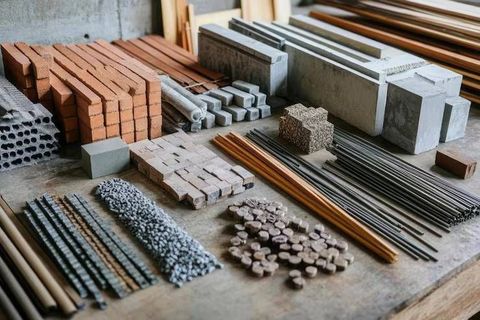
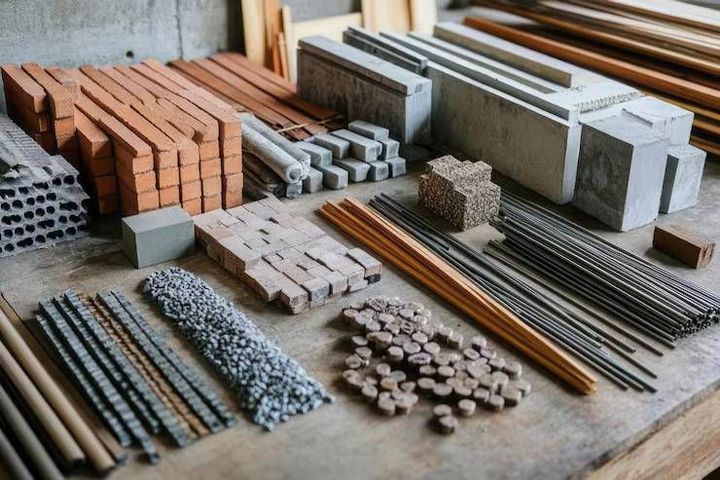
Bricks and blocks: These masonry products are used for walls, partitions, and other building elements. Their properties vary according to the raw materials and manufacturing process.
Timber: Natural wood and engineered wood products are used in roofs, floors, doors, frames, and selected structural systems.
Stone: Natural stone is used in foundations, walls, flooring, paving, and exterior finishes, depending on its properties.
Glass: Glass is used in windows, facades, partitions, and decorative elements. Different types provide varying levels of thermal insulation, transparency, and impact resistance.
Insulation materials: Mineral wool, foam products, and other insulating materials help regulate heat transfer and may contribute to sound control.
Each category contains multiple grades and specifications. Selecting a material depends on the purpose of the component, the expected loads, the surrounding environment, and applicable construction requirements.
Understanding Material Properties and Grades
Material properties describe how a material responds to physical forces and environmental conditions. Common properties include compressive strength, tensile strength, density, hardness, thermal conductivity, moisture absorption, and resistance to corrosion or fire.
Grades classify materials according to defined characteristics or standards. For example, concrete grades commonly relate to specified compressive strength, while steel grades may describe strength, composition, and other mechanical properties. Brick classifications may consider compressive strength, water absorption, and dimensional tolerances. The meaning of a grade depends on the material and the standard being applied.
Importance
Building materials influence structural stability, occupant safety, maintenance requirements, indoor comfort, and the useful life of a building. An unsuitable material may deteriorate under moisture, fail to withstand expected loads, or perform poorly in a hot, cold, coastal, or chemically exposed environment. Understanding material specifications helps construction professionals and property owners recognize these differences.
Material selection also affects energy use and environmental impact. Insulation can reduce unwanted heat transfer, while durable materials may reduce the frequency of replacement. However, the environmental effects of a material depend on its production, transportation, installation, maintenance, and eventual disposal.
Factors Affecting Building Material Performance
Several factors determine how materials perform after installation.
Strength: The ability to withstand compression, tension, bending, or other applied forces.
Durability: Resistance to deterioration caused by weather, wear, chemicals, and repeated use.
Moisture resistance: The ability to limit water absorption or withstand exposure to damp conditions.
Thermal performance: The ability to conduct, resist, or store heat, depending on the material and its intended use.
Fire performance: How a material reacts to fire and how an assembly resists heat or flame spread.
Workability: How easily a material can be transported, shaped, mixed, installed, or joined.
Maintenance needs: The inspection, protection, repair, or replacement required during use.
These factors should be considered together. A material with high strength may not necessarily provide suitable insulation, and a moisture-resistant finish does not automatically make the complete wall waterproof. Performance depends on the material, installation method, design, and surrounding conditions.
Comparing Common Building Materials
The table below provides a general comparison. Actual performance varies with the product specification, manufacturing quality, design, and installation.
| Material | Main properties | Common applications | Important performance factors |
|---|---|---|---|
| Concrete | High compressive strength | Foundations, slabs, columns | Mix quality, curing, cracking |
| Structural steel | High tensile strength and ductility | Frames, beams, industrial buildings | Corrosion protection, fire protection |
| Bricks | Masonry strength and thermal mass | Walls, partitions | Water absorption, mortar quality |
| Timber | Relatively lightweight and workable | Roofs, floors, frames | Moisture, insects, fire protection |
| Natural stone | Variable strength and durability | Walls, flooring, paving | Porosity, weather exposure |
| Glass | Transparency and daylight transmission | Windows, facades, partitions | Glazing type, thermal performance, impact resistance |
| Insulation | Reduced heat transfer | Roofs, walls, floors | Thickness, conductivity, moisture exposure |
Recent Updates
Building material development increasingly focuses on lower environmental impact, improved building performance, resource efficiency, and more consistent quality control. Recent industry trends from 2024 through 2026 include wider investigation of lower-carbon concrete, recycled construction materials, engineered timber, and digital methods for tracking material specifications. Adoption varies by region, building type, regulations, and project requirements.
Low-Carbon and Recycled Materials
Traditional cement production generates substantial carbon dioxide emissions. Researchers and manufacturers are therefore developing concrete mixes that reduce clinker content, use suitable supplementary cementitious materials, or incorporate other approaches to lowering embodied carbon. These alternatives must still meet relevant strength, durability, and exposure requirements.
Recycled steel, reclaimed timber, recycled aggregates, and selected recycled-content products are also used in construction. Their suitability depends on material quality, contamination controls, processing methods, and the intended application. Recycled content alone does not establish that a product is appropriate for every structural purpose.
Engineered Products and Digital Quality Control
Engineered timber products, prefabricated building components, and composite materials allow manufacturers to control dimensions and selected performance characteristics more consistently. Prefabrication can also reduce some on-site cutting and material waste, although transportation, connections, and installation conditions remain important.
Digital building information modelling (BIM) supports coordination between architects, engineers, contractors, and material suppliers. Material schedules and digital product records can help teams review specifications, quantities, and compatibility. However, digital records must be accurate and kept up to date to remain useful.
Laws or Policies
Building materials are governed by construction codes, product standards, safety regulations, environmental rules, and local approval requirements. These requirements differ between countries and may depend on building height, occupancy, structural system, and intended use.
Building Material Standards in India
In India, the Bureau of Indian Standards (BIS) publishes Indian Standards covering many construction materials, testing methods, and engineering practices. Relevant standards address areas such as cement, concrete, reinforcing steel, masonry units, and structural design. The applicable standard and edition depend on the material and project requirements.
The National Building Code of India provides a framework covering important aspects of building planning, structural safety, fire and life safety, building materials, and related systems. Its application is implemented through relevant regulations and local authorities, so project requirements should be checked for the specific location.
Some products are subject to applicable BIS certification or Quality Control Orders. Requirements can change by product category and government notification; not every building material is subject to an identical certification requirement.
Environmental and Construction Requirements
Environmental rules may affect the extraction of raw materials, industrial emissions, waste handling, and the reuse or disposal of construction debris. India's Construction and Demolition Waste Management Rules establish requirements relevant to managing construction and demolition waste, alongside other applicable environmental regulations.
Building projects may also need to comply with local development rules, fire safety provisions, energy-efficiency requirements, and structural design standards. Material selection alone does not establish compliance: the complete building system, design calculations, workmanship, and inspection procedures also matter.
Tools and Resources
Several technical resources help users understand building material details and evaluate specifications. The appropriate resource depends on whether the task involves preliminary planning, product comparison, engineering design, or regulatory compliance.
Material Standards and Technical References
The BIS website provides information about Indian Standards, certification, and related technical resources. The National Building Code and applicable local building regulations provide further context for construction requirements. Product technical data sheets and manufacturers' declarations can explain composition, dimensions, strength classifications, installation conditions, and limitations.
Technical documents should be checked against the exact product model and applicable standard. Similar product names do not necessarily indicate identical properties or certification status.
Calculators and Planning Tools
Material quantity calculators can estimate the quantities of concrete, bricks, tiles, paint, and other products required for a project. Common inputs include dimensions, thickness, area, mix proportions, and expected wastage. These calculations are useful for preliminary planning, but they do not replace detailed drawings or engineering calculations.
Spreadsheets can organize material names, grades, specifications, quantities, test results, delivery records, and inspection dates. BIM applications can connect material specifications with building components and project drawings.
Material Testing and Quality Checks
Material testing helps determine whether a product meets its specified requirements. Depending on the material, tests may examine compressive strength, tensile strength, water absorption, density, dimensional accuracy, or chemical composition.
For example, concrete samples can be tested for compressive strength, while steel samples may undergo tensile testing. Masonry units can be evaluated for strength and water absorption. Test results must be interpreted according to the relevant standard and the requirements of the intended application.
FAQs
What are the main types of building materials?
Common building materials include concrete, cement, steel, bricks, timber, stone, glass, and insulation products. Each has different properties and applications depending on structural, environmental, and architectural requirements.
Why are building material grades important?
Building material grades indicate specified characteristics, such as concrete compressive strength or steel mechanical properties. Correct interpretation helps determine whether a material meets the requirements of a particular application.
Which properties affect building material performance?
Important properties include strength, durability, density, thermal conductivity, moisture resistance, fire performance, and workability. Their relative importance depends on the building component and the conditions it will experience.
Which building material standards apply in India?
Relevant requirements may include Indian Standards published by BIS, the National Building Code of India, and applicable local building regulations. The exact standards depend on the material, application, and project location.
How can building material quality be evaluated?
Quality evaluation may include reviewing technical specifications, checking certification where applicable, inspecting deliveries, and conducting laboratory tests. The required checks depend on the material type and relevant construction standards.
Conclusion
Building materials differ in their properties, grades, applications, and responses to environmental conditions. Understanding these differences helps explain how material selection affects structural safety, durability, comfort, and environmental performance. Indian standards, building regulations, technical documents, and material testing provide important information for evaluating suitability. The performance of a completed structure also depends on design, installation, maintenance, and compliance with applicable requirements.