Concrete Batching Plants Explained: Types, Components, Working Principles, Applications and Benefits
Concrete batching plants are facilities designed to measure, combine, and mix the materials used to produce concrete. A typical concrete mixture contains cement, fine aggregate such as sand, coarse aggregate such as gravel or crushed stone, water, and, when required, chemical or mineral admixtures. The batching plant controls the quantities of these materials before they are mixed into a consistent concrete mixture.
Concrete batching plants developed as construction projects became larger and required more controlled concrete production. Instead of manually measuring materials at every construction location, a batching plant can use storage bins, weighing systems, conveyors, pumps, mixers, and control equipment to prepare concrete according to a specified mix design.
The basic purpose of a batching plant is measurement and controlled mixing. Depending on the plant design, concrete can be mixed at a central location and then transported to a construction site, or some mixing can take place inside a transport vehicle.
Concrete batching plants are commonly associated with ready-mixed concrete production, road construction, bridges, foundations, commercial buildings, industrial facilities, and infrastructure projects. In India, the Bureau of Indian Standards recognizes IS 4926:2003 as the code of practice covering the production and supply of ready-mixed concrete.
Importance
Consistent Concrete Production
Concrete quality depends partly on the proportions of its ingredients. Small differences in the amount of water, cement, aggregate, or admixture can change properties such as workability, strength development, and setting behavior.
A batching plant uses weighing and measurement systems to control these quantities. Automated controls can record the quantities used in individual batches, helping operators maintain a repeatable production process.
Support for Large Construction Projects
Large construction projects may require concrete continuously over extended periods. Examples include:
- Roads and highways
- Bridges and flyovers
- Residential and commercial structures
- Industrial buildings
- Foundations and retaining structures
- Airports and transport infrastructure
- Dams and other civil infrastructure
A centralized concrete production system can coordinate material storage, mixing, and transportation around the construction schedule.
Reduction of Manual Material Handling
Traditional on-site concrete preparation may require separate measurement and handling of cement, aggregates, and water. A batching plant places these activities within a controlled production system.
This can also help construction sites manage space, material movement, dust, and general site organization. Some local construction programs have encouraged ready-mixed concrete as part of measures intended to reduce dust associated with on-site mixing.
Main Benefits
The benefits of concrete batching plants depend on plant design, mix requirements, operating practices, and site conditions. Common benefits include:
- Controlled measurement of raw materials
- Repeatable batching procedures
- Centralized material storage
- Automated monitoring of production
- Reduced manual mixing activities
- Ability to produce different concrete mixes
- Integration with truck mixers and other transport equipment
- Production records for quality monitoring
Types of Concrete Batching Plants
Stationary Batching Plants
Stationary plants are installed at a fixed location and are generally used where concrete production is required over a longer project period. They can have relatively large aggregate storage systems, cement silos, weighing equipment, mixers, and automated control rooms.
These plants are commonly associated with large infrastructure and urban construction projects where a continuous supply of concrete is required.
Mobile Batching Plants
Mobile batching plants are designed to be transported between locations. Their components may be mounted on trailers, frames, or other transportable structures.
They are useful when concrete production needs to move closer to changing construction locations. The layout and production capacity depend on the particular plant configuration.
Wet Mix Batching Plants
In a wet mix plant, the measured ingredients are combined and mixed in a central mixer before the concrete is transferred to a transport vehicle. The central mixer helps control the mixing process before transportation.
Dry Mix Batching Plants
Dry mix plants measure and combine the dry ingredients before water is added during transportation or at a later mixing stage, depending on the system. Truck mixers can complete the mixing process while traveling to the construction location.
Compact Batching Plants
Compact plants use a smaller overall arrangement of storage and processing equipment. They may be considered for projects where available space is limited or where the required production volume is moderate.
Components of a Concrete Batching Plant
Aggregate Bins and Storage
Aggregate bins hold materials such as sand, gravel, and crushed stone. Separate compartments allow different aggregate sizes to be stored independently.
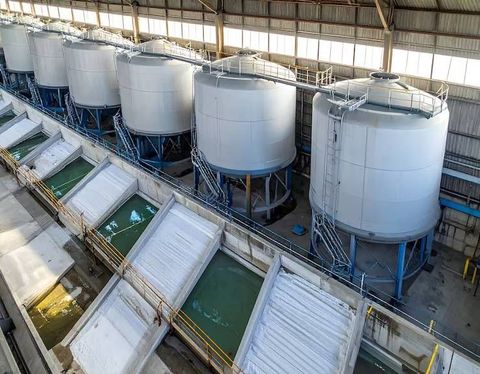
Cement Silos
Cement is commonly stored in enclosed silos. The silo system may include equipment for loading, discharge, level monitoring, and dust control.
Weighing Systems
Weighing systems measure individual materials before mixing. Separate scales may be used for aggregates, cementitious materials, water, and admixtures.
Conveyor and Feeding Equipment
Conveyors, hoppers, feeders, and screw conveyors move materials between storage and mixing areas. Their arrangement depends on whether the plant uses aggregate bins, elevated storage, or other material-handling systems.
Mixer
The mixer combines the measured ingredients. Common mixer designs include twin-shaft, planetary, pan, and drum mixers. Each design uses a different mixing mechanism and may be selected according to production requirements and concrete characteristics.
Water and Admixture Systems
Water is measured and introduced according to the mix design. Admixture systems can accurately dose materials intended to modify properties such as workability, setting behavior, or durability.
Control System
The control system coordinates batching, weighing, mixing, and recording. Modern systems can display production information and identify deviations in material quantities.
| Component | Main Function | Typical Material or Activity |
|---|---|---|
| Aggregate bins | Store and feed aggregates | Sand, gravel, crushed stone |
| Cement silo | Store cementitious material | Cement and similar powders |
| Weighing system | Measure ingredients | Aggregates, cement, water |
| Conveyor | Move materials | Aggregates |
| Mixer | Combine ingredients | Concrete mixture |
| Water system | Measure and add water | Water |
| Admixture system | Dose additives | Chemical or mineral admixtures |
| Control system | Coordinate operations | Batching and production records |
Working Principles of Concrete Batching Plants
Material Storage
The process begins with the storage of aggregates, cementitious materials, water, and other ingredients. Different materials are kept in designated storage areas to reduce mixing between material types.
Measurement and Batching
The control system determines the required quantity of each ingredient according to the selected mix design. Aggregates are weighed, followed by cementitious materials, water, and any required admixtures.
Accurate measurement is important because the final characteristics of concrete depend on the proportions of its ingredients.
Mixing
After measurement, the ingredients enter the mixer. The mixer combines them for a specified period and under controlled operating conditions.
The mixing process continues until the concrete reaches the required degree of uniformity. BIS guidance for ready-mixed concrete includes requirements concerning mixing, mixer condition, and mixing-efficiency checks.
Discharge and Transportation
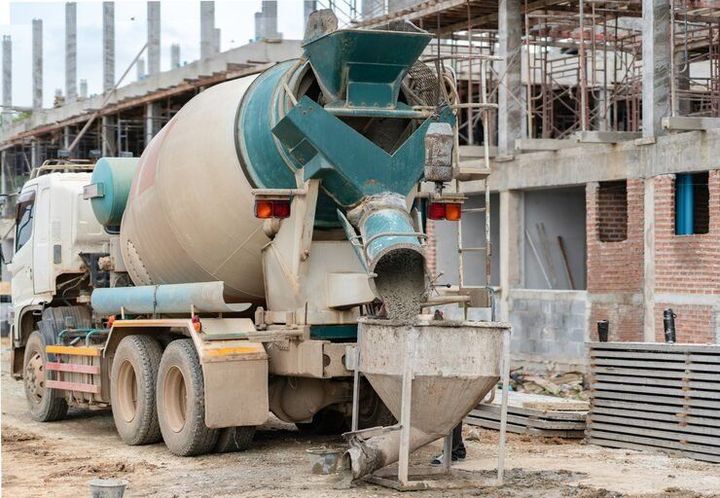
After mixing, concrete is discharged into a truck mixer, concrete pump system, or another suitable transport arrangement. Transportation time and handling methods need to be managed because concrete properties can change during movement and waiting.
Quality Monitoring
Operators may monitor moisture levels, material quantities, mixing time, equipment condition, and concrete test results. Records can help identify variations and support quality-control procedures.
Applications of Concrete Batching Plants
Building Construction
Batching plants are used for foundations, columns, slabs, walls, floors, and other structural elements. Ready-mixed concrete can be transported from a centralized plant to construction locations.
Roads and Bridges
Concrete batching systems are used for pavement, bridge structures, foundations, barriers, drainage structures, and related infrastructure.
Industrial Construction
Factories, warehouses, power-related infrastructure, processing facilities, and other industrial structures can require substantial quantities of concrete for foundations and structural elements.
Infrastructure Projects
Large infrastructure projects may use batching plants to coordinate concrete production with multiple construction activities. The plant configuration can vary according to project size, concrete requirements, transportation distance, and available space.
Recent Updates
From 2024 through 2026, the broader concrete and construction sector has increasingly focused on environmental controls, material efficiency, digital monitoring, and resource management.
India introduced the Environment (Construction and Demolition) Waste Management Rules, 2025, which came into force on April 1, 2026. The rules replaced the earlier 2016 framework and introduced measures concerning construction and demolition waste management, resource utilization, environmental compensation, and online monitoring.
The regulatory environment has also continued to develop around pollution-control consent procedures. The Ministry of Environment, Forest and Climate Change lists 2026 amendments concerning consent under the Air and Water pollution-control frameworks. Applicability to a particular concrete plant depends on its activities, location, category, and the requirements of the relevant authorities.
Digital control systems are another continuing development. Modern plants increasingly use automated batching records, moisture measurement, electronic weighing, equipment monitoring, and centralized production controls. These technologies can improve traceability and help operators identify variations during production.
Environmental management is also receiving greater attention. Cement and aggregate handling can generate dust, while plant and vehicle cleaning can generate wastewater. CPCB material identifies fugitive dust and cleaning-related wastewater as environmental considerations associated with ready-mixed concrete plants.
Laws or Policies
Environmental Protection
Concrete batching activities in India can be affected by environmental laws and pollution-control requirements. The Environment (Protection) Act, 1986 and the Environment (Protection) Rules provide a broad legal framework for environmental protection, including environmental standards and pollution-related requirements.
Depending on the project and location, permissions or consents may involve the relevant State Pollution Control Board or Pollution Control Committee. Requirements can vary according to plant category, capacity, emissions, wastewater, location, and state-level rules.
Construction and Demolition Waste
The Environment (Construction and Demolition) Waste Management Rules, 2025 apply to construction, demolition, remodeling, renovation, and repair activities. They came into force in 2026 and establish requirements related to the management and utilization of construction and demolition waste.
BIS Standards
IS 4926:2003 provides a framework for ready-mixed concrete production and supply. BIS also operates a ready-mixed concrete process certification scheme based on IS 4926. The standard addresses production procedures, quality-related practices, mixing, plant maintenance, and other operational matters.
Environmental approvals and project-related clearances can also be checked through the PARIVESH platform, which provides online facilities for environmental and other relevant clearance processes.
Because requirements can differ by state and project type, the applicable rules should be checked with the relevant government authority before establishing or modifying a plant.
Tools and Resources
Several resources can help readers understand concrete batching plants and concrete production:
- BIS Standards Portal: Useful for searching Indian Standards and related standard information.
- CPCB: Provides environmental information, pollution-control material, and regulatory resources related to industrial and construction activities.
- PARIVESH: Provides online information and application facilities for environmental, forest, wildlife, and related clearances.
- Concrete mix proportion calculators: Useful for understanding approximate quantities of concrete ingredients for educational purposes.
- Moisture-content calculators: Help illustrate how changes in aggregate moisture can affect the amount of mixing water.
- Unit-conversion tools: Useful for converting measurements such as cubic metres, litres, kilograms, and tonnes when studying batching quantities.
Calculators provide general estimates and should not replace an approved mix design, laboratory testing, or project-specific engineering procedures.
FAQs
What is a concrete batching plant?
A concrete batching plant is a facility that measures and combines cementitious materials, aggregates, water, and other ingredients to produce concrete. It may use a central mixer or rely on a transport mixer for part of the mixing process.
What are the main types of concrete batching plants?
Common types include stationary, mobile, wet mix, dry mix, and compact batching plants. The main differences involve plant mobility, mixing location, storage arrangement, and production configuration.
How does a concrete batching plant work?
A batching plant stores materials, measures them according to a mix design, combines them through a controlled mixing process, and transfers the resulting concrete for transportation or placement. Automated controls can monitor material quantities and production information.
What are the main components of a concrete batching plant?
Important components include aggregate bins, cement silos, weighing systems, conveyors, mixers, water systems, admixture systems, and control equipment. Each component performs a specific role in measuring, moving, or combining materials.
What standards apply to ready-mixed concrete in India?
IS 4926:2003 is the Indian Standard covering ready-mixed concrete production and supply. Environmental and pollution-control requirements may also apply depending on the plant, location, activities, and applicable state or central rules.
Conclusion
Concrete batching plants provide a controlled method for measuring, combining, and producing concrete for construction and infrastructure projects. Different plant types and component arrangements are used according to production requirements, mobility, mixing methods, and site conditions. Current developments increasingly involve automated controls, environmental management, material efficiency, and digital production records. In India, concrete production is also influenced by BIS standards and environmental regulations that address quality, pollution control, and construction waste management.