Conveyor Belt System Guide to Belt Types, Key Components, Operating Methods and Food Industry Uses
A conveyor belt system is a mechanical material-handling arrangement designed to move products, ingredients, packages, or other materials from one point to another. It generally consists of a continuous belt or conveying surface supported by rollers or a suitable frame and driven by a motorized mechanism.
Context
The basic idea of conveying materials mechanically developed alongside industrial manufacturing and large-scale material handling. As factories became more organized, equipment that could move materials between processing stages helped reduce unnecessary manual movement and create more consistent production flows.
Today, conveyor belt systems are used across manufacturing, warehousing, agriculture, logistics, mining, packaging, and food processing. Their design varies according to the material being transported, the required movement pattern, environmental conditions, and hygiene requirements.
How a conveyor belt system works
A typical conveyor belt system uses a powered pulley to move a continuous belt around a loop. The belt carries material along its upper surface before returning underneath to begin another cycle.
Several components work together to maintain this movement. The motor supplies rotational power, while pulleys guide the belt and rollers or other support structures help maintain its position.
Common conveyor belt types
Different belt designs are suited to different materials and operating conditions. Common types include:
Flat belt conveyors for general material movement
Cleated belt conveyors for inclined or controlled movement
Modular plastic belt conveyors for applications requiring individual interlocking sections
Incline conveyors for moving materials between different elevations
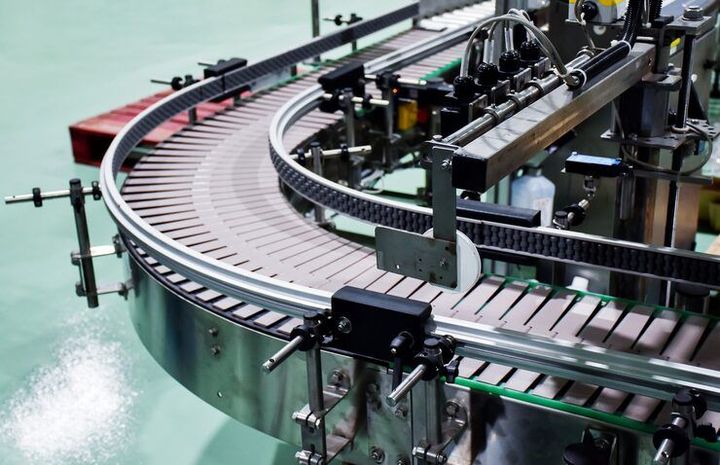
Curved belt conveyors for changes in conveying direction
Troughed belt conveyors for loose bulk materials
Wire mesh belt conveyors for applications involving airflow, drainage, or heating
The choice of belt material and construction depends on factors such as load, temperature, moisture, cleaning requirements, product characteristics, and conveyor speed.
Importance
Conveyor belt systems play an important role in modern production because materials often need to move through several stages before reaching their final destination. A conveyor can connect processes such as preparation, processing, inspection, packaging, and storage.
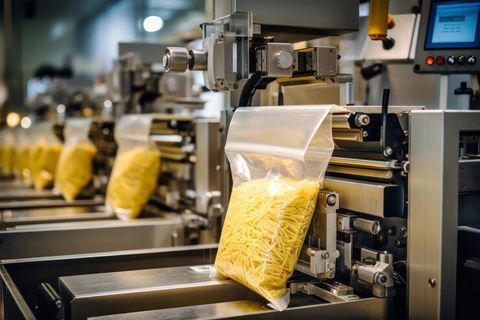
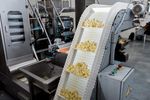
In food production, conveyor equipment can move ingredients and packaged products while helping organize the flow between different processing areas. Similar principles are used in manufacturing plants where components pass through assembly or inspection stages.
Problems conveyor systems address
Material movement can become inefficient when products must be repeatedly transferred manually between work areas. A properly designed conveyor arrangement can create a more predictable route and reduce unnecessary handling.
Conveyor systems can also help maintain a consistent flow between machines. Their operating speed can be coordinated with upstream and downstream equipment, although the appropriate speed depends on the material and process.
Other practical considerations include:
Available floor space
Product dimensions and weight
Required conveying distance
Changes in elevation
Cleaning requirements
Environmental temperature and humidity
Required movement direction
Loading and discharge points
Key conveyor belt components
A conveyor belt system contains several components that perform different functions.
| Component | Main function |
|---|---|
| Conveyor belt | Carries material along the conveying path |
| Drive pulley | Transfers motion to the belt |
| Tail pulley | Supports the return end of the belt |
| Motor | Provides mechanical power |
| Gearbox | Adjusts rotational speed and torque |
| Rollers | Support the belt and transported material |
| Conveyor frame | Provides structural support |
| Belt tensioning system | Maintains appropriate belt tension |
| Scraper or cleaner | Helps remove material from the belt surface |
| Control system | Manages starting, stopping, speed, or other operating functions |
The exact arrangement varies according to conveyor design. Small systems may have relatively few components, while larger installations can include multiple drives, sensors, transfer points, safety controls, and monitoring equipment.
Recent Updates
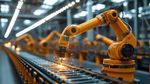
Recent developments in conveyor belt systems have increasingly focused on automation, monitoring, hygiene, energy management, and flexible production layouts. These changes are particularly relevant to facilities where conveyors interact with packaging equipment, robotic systems, inspection equipment, or digital production controls.
Sensors can now be integrated into conveyor systems to monitor conditions such as belt movement, speed, temperature, motor performance, and material position. Data from these sensors can support equipment monitoring and help identify unusual operating conditions.
Automation and intelligent monitoring
Modern conveyor systems may use programmable controllers, sensors, variable-speed drives, barcode systems, machine vision, or robotic equipment. These technologies allow conveyor movement to be coordinated with other production equipment.
Variable-speed drives can adjust motor speed according to process requirements. Sensor-based controls can also detect the presence or position of products and coordinate movement between different stages.
However, automation does not remove the need for suitable mechanical design and routine inspection. Sensors and control systems depend on appropriate installation, configuration, and maintenance.
Food industry developments
Food processing has increased its focus on hygienic conveyor designs, easier cleaning, corrosion-resistant materials, and layouts that reduce areas where food residues can accumulate.
Modular plastic belts and stainless-steel conveyor structures are used in various food-processing environments. Belt selection depends on the food product, processing conditions, temperature, moisture exposure, cleaning method, and applicable hygiene requirements.
Some food conveyors are also designed to integrate with weighing, sorting, metal detection, inspection, filling, sealing, and packaging equipment.
Laws or Policies
Conveyor belt systems can be affected by occupational safety, machinery, electrical, food hygiene, and workplace requirements. The exact rules depend on the country, industry, machine configuration, and intended application.
Workplace safety frameworks commonly address hazards associated with moving belts, rotating pulleys, pinch points, unexpected machine movement, electrical equipment, and access to maintenance areas. Guarding and emergency stopping arrangements may therefore form part of conveyor safety design.
Food-processing conveyors are subject to additional hygiene considerations. Materials that come into contact with food may need to meet applicable requirements concerning chemical composition, contamination, cleanability, and intended food-contact use.
International standards are also used as technical references for machinery safety and conveyor design. Depending on the application, relevant standards can address mechanical safety, electrical equipment, emergency stopping, guarding, and food-processing machinery.
Because requirements vary between jurisdictions and applications, regulatory compliance should be assessed against the current rules applicable to the specific installation.
Tools and Resources
Several resources can help with conveyor belt selection, layout planning, operation, and maintenance.
Conveyor design calculations
Engineering calculators and manufacturer documentation can be used to estimate parameters such as belt speed, conveying capacity, belt length, pulley dimensions, motor requirements, and incline characteristics. Actual system design requires consideration of the complete conveyor arrangement rather than relying on a single calculation.
Belt inspection checklists
A conveyor inspection checklist can record conditions such as:
Belt tracking
Belt tension
Surface wear
Pulley condition
Roller movement
Unusual noise
Material accumulation
Guard condition
Emergency stopping equipment
Motor and gearbox condition
Regular inspection records can help identify changes in equipment condition over time.
Food conveyor documentation
For food-processing applications, technical documentation can provide information about belt materials, temperature ranges, cleaning compatibility, surface characteristics, and intended applications. Food-contact requirements should be checked against the applicable regulations and material documentation.
Conveyor layout tools
Computer-aided design software and conveyor-layout tools can help visualize conveyor routes, transfer points, elevation changes, equipment spacing, and available floor area. These tools are particularly useful when conveyors must connect several production stages.
FAQs
What are the main types of conveyor belt systems?
Common conveyor belt types include flat belt, cleated, modular plastic, incline, curved, troughed, and wire mesh conveyors. Each design has characteristics suited to particular materials, movement patterns, temperatures, and operating environments.
How does a conveyor belt system work?
A motor drives a pulley, which moves the continuous belt around the conveyor frame. The belt transports material along its upper surface before returning underneath to repeat the conveying cycle.
What are the key conveyor belt components?
Important components include the belt, drive pulley, tail pulley, motor, gearbox, rollers, frame, tensioning arrangement, cleaning equipment, and control system. Larger conveyors may also include sensors, multiple drives, guards, and automated controls.
Which conveyor belt types are used in the food industry?
Food-processing facilities use several conveyor designs, including modular plastic belts, flat belts, cleated belts, and wire mesh belts. Selection depends on the product, temperature, moisture, cleaning requirements, belt material, and applicable food-contact requirements.
What factors affect conveyor belt selection?
Important factors include product weight and dimensions, conveying distance, required speed, incline, temperature, moisture, material characteristics, cleaning conditions, available space, and the interaction with other production equipment.