Electric Forklift Automation Guide: Technologies, Operating Methods, Safety Features and Uses
An Electric Forklift Automation Guide explains the technologies, operating methods, safety features, and industrial uses of electric forklifts. These machines are material-handling vehicles designed to lift, carry, stack, and move goods over relatively short distances. They use electric motors powered by rechargeable batteries rather than relying on an internal combustion engine for propulsion.
Context
An Electric Forklift Automation Guide explains the technologies, operating methods, safety features, and industrial uses of electric forklifts. These machines are material-handling vehicles designed to lift, carry, stack, and move goods over relatively short distances. They use electric motors powered by rechargeable batteries rather than relying on an internal combustion engine for propulsion.
Forklifts developed alongside modern warehouses, factories, and distribution centers, where moving heavy materials efficiently became an important part of daily operations. Electric models emerged as an alternative to fuel-powered equipment, particularly in indoor environments where exhaust emissions, noise, and ventilation requirements matter. As electronic controls, sensors, and automation technologies have developed, electric forklifts have also become part of wider warehouse automation systems.
Electric forklift automation ranges from basic electronic driving assistance to fully automated vehicles that transport materials along programmed routes. Some machines are operated by trained drivers, while others use sensors, navigation software, and control systems to move with limited or no direct human operation.
Understanding Electric Forklift Technologies
Electric forklifts combine mechanical lifting systems with electrical power and electronic controls. Their main components work together to support movement, load handling, and operator protection.
Battery system: Supplies electrical energy to the traction motors and lifting equipment. Common battery technologies include lead-acid and lithium-ion, depending on the model.
Electric motors: Drive the wheels and operate lifting or tilting mechanisms.
Hydraulic system: Uses pressurized fluid to raise and lower the forks and, where equipped, tilt the mast.
Electronic controller: Regulates motor operation, acceleration, braking, and other machine functions.
Sensors and cameras: Help detect obstacles, monitor machine conditions, and support automated navigation or driver assistance.
Automation software: Coordinates routes, transport tasks, and communication with warehouse management systems when the equipment supports these functions.
The level of automation varies considerably. An electric forklift with electronic speed control is not necessarily an automated forklift, because a driver may still perform all steering, navigation, and load-handling tasks.
Types of Electric Forklift Automation
Automation can be classified according to how much control the machine performs independently. A conventional electric forklift requires a trained operator, although electronic assistance may simplify certain tasks. A semi-automated model may support specific movements or positioning functions while retaining human control over other activities.
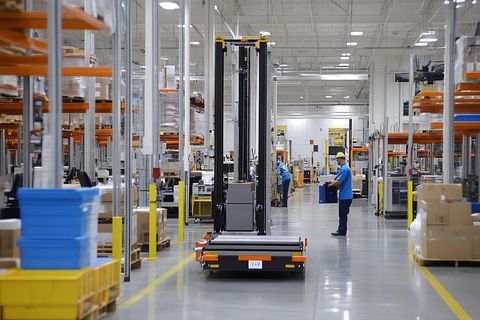
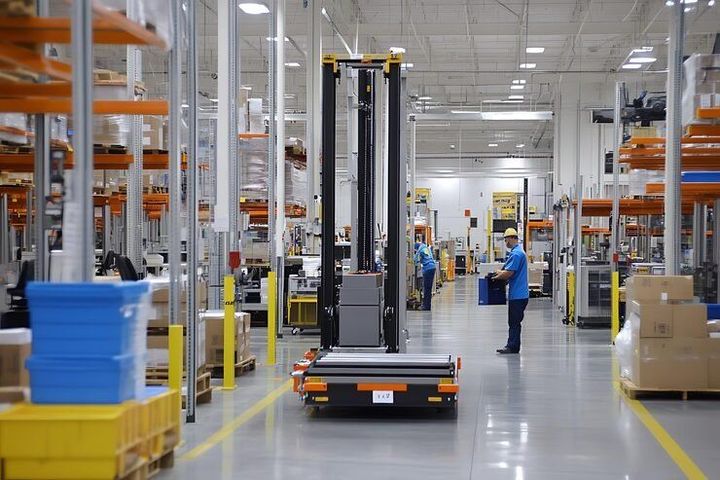
Automated guided vehicles and autonomous mobile robots can transport materials along designated routes or navigate using sensors and mapping systems. Some specialized automated forklifts can also lift and place pallets. Their capabilities depend on the equipment design, software, operating environment, and integration with warehouse systems.
Importance
Electric forklift automation matters because warehouses, manufacturing plants, logistics facilities, and distribution centers must move materials between storage, production, and dispatch areas. Manual material handling can expose workers to physical strain, while vehicle movement introduces collision, falling-load, and crushing hazards. Appropriate mechanization and automation can help organizations manage these tasks more consistently.
Electric forklifts are particularly relevant in indoor facilities where air quality and noise are important considerations. Battery-powered operation avoids tailpipe emissions during use, although electricity generation and battery manufacturing have environmental impacts. Their suitability depends on operating conditions, battery capacity, charging arrangements, load requirements, and maintenance practices.
Operational Benefits and Limitations
Automation can support repeated transport tasks, reduce unnecessary vehicle movement, and coordinate material flow across a facility. However, the results depend on the quality of the system design and the suitability of the working environment.
Important considerations include:
Productivity: Repeated transport tasks may follow consistent routes and schedules.
Space utilization: Automated movement can be coordinated with designated travel lanes and storage locations.
Workplace safety: Detection systems may identify certain obstacles, but they cannot eliminate every hazard.
Labor planning: Staff may shift toward supervision, exception handling, inventory coordination, and equipment maintenance.
Operational continuity: Battery charging, software faults, sensor failures, and network interruptions can affect availability.
Initial planning: Facilities may need route markings, suitable flooring, charging areas, network coverage, and compatible storage arrangements.
Automation also has limitations when loads are irregular, aisles are frequently blocked, floor conditions vary, or workers and vehicles share narrow spaces. These conditions require suitable equipment selection, traffic management, risk assessment, and clear procedures for abnormal situations.
Common Industrial Applications
Electric forklift automation is used or considered in several working environments. In warehouses, machines move pallets between receiving areas, storage racks, and dispatch zones. In manufacturing facilities, they can transfer raw materials, components, and finished goods between production stations.
Distribution centers may use automated transport to coordinate pallet movement across repetitive routes. Food, pharmaceutical, and other controlled indoor environments may use electric equipment where emissions, hygiene procedures, or environmental conditions influence vehicle selection. The actual suitability of a forklift depends on load characteristics, temperature, floor conditions, and the specific requirements of the facility.
Recent Updates
Developments in electric forklift automation during 2024–2026 reflect wider changes in industrial robotics, battery technology, sensor systems, and warehouse software. Adoption varies by region and industry, and no single technology is appropriate for every operation.
Battery and Charging Developments
Lithium-ion batteries are used in some modern electric forklifts because they can support opportunity charging and avoid certain maintenance tasks associated with traditional lead-acid batteries. Lead-acid batteries remain in use in many facilities. Battery selection depends on equipment compatibility, operating shifts, charging infrastructure, temperature, and the manufacturer's requirements.
Battery management systems monitor factors such as charge level, temperature, and battery condition. Some fleets also use charging schedules and monitoring software to coordinate vehicle availability. Charging areas require appropriate electrical protection, ventilation where necessary, and procedures suited to the battery chemistry.
Sensor-Based Navigation and Fleet Coordination
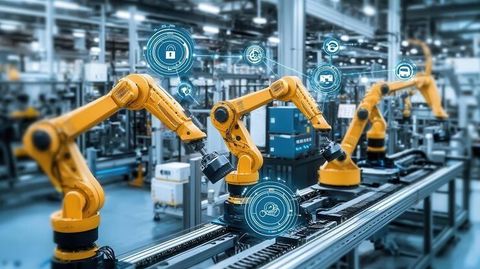
Automated forklifts increasingly use combinations of cameras, laser-based sensors, scanners, mapping software, and onboard computing to understand their surroundings. Depending on the design, navigation may rely on predefined routes, environmental landmarks, or dynamic mapping.
Fleet management systems can coordinate several vehicles, allocate transport tasks, and communicate with warehouse software. Integration may help reduce conflicting routes and provide visibility into equipment activity. However, performance depends on reliable data, suitable infrastructure, well-defined traffic rules, and appropriate responses when obstacles or system errors occur.
Connected Equipment and Predictive Maintenance
Connected forklift systems can collect information about battery status, operating hours, fault codes, and component performance. Maintenance teams may use this information to identify developing problems and plan inspections. Predictive maintenance supports decision-making but does not replace physical inspections or manufacturer-required maintenance.
Laws or Policies
Electric forklift automation must comply with applicable workplace safety, machinery, electrical, battery-handling, and environmental requirements. The relevant rules depend on the country, equipment classification, workplace, and level of automation. Automated vehicles also require risk assessment for interactions with workers, pedestrians, conventional forklifts, and other machinery.
Forklift Safety Requirements in India
In India, relevant legal requirements may arise under the Factories Act, 1948, applicable state factory rules, occupational safety provisions, and other regulations in force for the particular workplace. India's Occupational Safety, Health and Working Conditions Code, 2020, is also part of the country's occupational safety framework; its applicability depends on commencement notifications and implementing provisions in force.
Employers and facility operators need to identify the legal requirements applicable to their operations. These may cover equipment maintenance, safe material handling, worker training, inspection, workplace traffic, and precautions against machinery-related hazards. Specific duties vary with the type of establishment and the rules that apply.
Training, Inspection, and Automated Vehicle Safety
Operators of conventional forklifts need appropriate training and authorization under applicable workplace procedures. Daily or shift-based inspections commonly examine brakes, steering, forks, tires, warning devices, lifting functions, and visible damage. Defective equipment should be taken out of operation according to established safety procedures.
Automated forklifts require additional controls suited to their operating environment. These can include emergency stops, speed limits, restricted operating zones, obstacle detection, warning signals, safe stopping behavior, and procedures for restarting after a fault. Sensors should not be treated as substitutes for proper traffic planning or workplace supervision.
Battery and Electrical Safety
Battery charging and replacement can introduce electrical, chemical, thermal, and manual-handling hazards. Facilities should follow the battery and charger manufacturer's instructions, use compatible equipment, and establish procedures for damaged batteries or abnormal heating. The required precautions differ between lead-acid and lithium-ion systems.
Tools and Resources
Several technical resources help organizations understand electric forklift automation, assess equipment suitability, and plan safe operations.
Equipment Selection and Planning Tools
Forklift specification sheets identify rated capacity, load center, maximum lift height, turning radius, battery type, and other operating limits. These details are important because the permitted lifting capacity can change with the load's dimensions, attachment, and lifting height.
A basic planning spreadsheet can record:
Daily operating hours and shift patterns.
Typical load weights, dimensions, and pallet types.
Travel distances, aisle widths, and floor conditions.
Battery capacity, charging windows, and replacement arrangements.
Maintenance intervals, inspection records, and fault history.
Automation requirements and integration with warehouse software.
The spreadsheet should reflect actual site conditions rather than relying only on general equipment specifications.
Technical and Safety Resources
Manufacturer documentation provides model-specific operating instructions, maintenance schedules, battery requirements, and safety limitations. Organizations can also consult relevant standards from the International Organization for Standardization (ISO), including standards covering industrial trucks and driverless industrial trucks, where applicable.
In India, the Directorate General Factory Advice Service and Labour Institutes (DGFASLI) provides occupational safety information and technical resources. The Bureau of Indian Standards (BIS) provides information about applicable Indian Standards. The exact standard or regulatory provision depends on the equipment and use case.
FAQs
What is electric forklift automation?
Electric forklift automation uses electronic controls, sensors, software, or autonomous navigation to assist or perform material-handling tasks. The level of automation ranges from basic driver assistance to automated pallet transport and placement.
How does an automated electric forklift work?
An automated electric forklift uses battery power for movement and lifting, while controllers coordinate motors and other machine functions. Sensors and navigation software may identify routes, detect obstacles, and communicate with a warehouse management system.
What safety features are used in electric forklift automation?
Depending on the model, safety features may include obstacle detection, emergency stops, warning lights, speed control, load monitoring, and controlled stopping. Their capabilities vary, so workplace risk assessments and operating procedures remain necessary.
Where is electric forklift automation commonly used?
It is used in warehouses, manufacturing plants, distribution centers, and other facilities with repetitive material-handling tasks. Suitability depends on load requirements, floor conditions, aisle layout, and the level of automation required.
What regulations apply to automated forklifts in India?
Applicable requirements may include workplace safety laws, state factory rules, machinery standards, electrical safety provisions, and battery-handling procedures. The exact obligations depend on the workplace, equipment, and regulations in force.
Conclusion
Electric forklift automation combines battery-powered material handling with electronic controls, sensors, navigation software, and fleet coordination. Its applications range from driver-assisted lifting to autonomous movement of pallets in warehouses and manufacturing facilities. Safe operation depends on suitable equipment, trained personnel, maintenance, risk assessment, and compliance with applicable regulations. Battery selection, operating conditions, and integration requirements influence how these systems function in practice.