Explore Industrial Water Treatment Equipment With Filtration Processes and Engineering Insights
Industrial water treatment equipment plays an important role in manufacturing, energy production, food processing, chemical operations, and many other industrial activities. Water is used for cooling, cleaning, heating, product preparation, and transporting materials.
However, water from natural sources or industrial processes may contain suspended particles, dissolved minerals, organic matter, microorganisms, and chemical residues that require treatment before it can be used for a particular purpose.
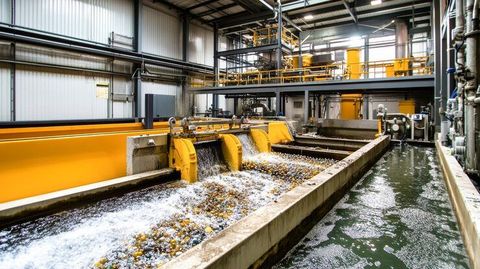
Industrial water treatment systems combine different technologies to improve water quality according to operational requirements. These systems may include filtration units, sedimentation tanks, membrane equipment, chemical dosing systems, softeners, and disinfection devices. Each component addresses particular contaminants or water quality concerns.
The development of industrial water treatment equipment is closely connected to the growth of manufacturing and public awareness of water conservation. As industrial facilities expanded, the need for consistent water quality, equipment protection, and responsible wastewater management became increasingly important. Modern treatment systems therefore combine mechanical processes, chemical methods, and automated monitoring to manage water throughout industrial operations.
What Is Industrial Water Treatment Equipment?
Industrial water treatment equipment refers to machinery and integrated systems designed to remove unwanted substances from water or adjust its properties for specific applications. The equipment selected depends on the source water, the contaminants present, the intended use, and the required water quality.
Common applications include boiler feedwater preparation, cooling tower operation, process water production, wastewater treatment, and water reuse. Some facilities require relatively simple particle removal, while others need several treatment stages to reduce dissolved salts, hardness, and specific chemical compounds.
Main Types of Water Treatment Equipment
Different equipment performs different functions within a treatment plant.
Sand and multimedia filters: Remove suspended particles as water passes through layers of filtration media.
Cartridge filters: Capture smaller particles and protect downstream equipment from contamination.
Activated carbon filters: Reduce certain organic compounds, odors, and chlorine, depending on the carbon type and operating conditions.
Water softeners: Reduce hardness caused mainly by dissolved calcium and magnesium.
Reverse osmosis systems: Use a semipermeable membrane to separate much of the dissolved material from the water.
Ultrafiltration membranes: Separate suspended solids, colloids, and many microorganisms through membrane filtration.
Disinfection equipment: Uses methods such as ultraviolet treatment or controlled chemical dosing to reduce microorganisms.
Sludge dewatering equipment: Removes water from treatment residues to simplify subsequent handling.
A complete industrial water treatment plant may use several of these technologies in sequence rather than relying on one machine.
Importance
Industrial water treatment equipment matters because water quality can affect manufacturing consistency, equipment performance, environmental management, and resource consumption. Untreated or inadequately treated water may cause scale formation, corrosion, blocked pipes, membrane fouling, or unwanted changes in finished products.
For example, mineral-rich water can form deposits inside boilers and heat exchangers. Suspended particles can damage pumps or reduce the effectiveness of downstream filters. In food processing, water quality can also influence sanitation procedures and the suitability of water for particular production stages.
Who Uses Industrial Water Filtration Systems?
Industrial water filtration systems serve a broad range of sectors, including:
Manufacturing: Supports cleaning, cooling, rinsing, and process operations.
Power generation: Helps prepare water for boilers, cooling circuits, and other equipment.
Food and beverage processing: Supports ingredient preparation, equipment cleaning, and sanitation.
Pharmaceutical manufacturing: Helps produce water that meets specific process and quality requirements.
Textile production: Reduces unwanted particles and adjusts water characteristics for dyeing and finishing.
Mining and mineral processing: Supports process water circulation and wastewater management.
Commercial buildings: Provides water conditioning for cooling towers, heating systems, and other building operations.
The treatment requirements differ across these industries. Water appropriate for general equipment washing may not meet the requirements for sensitive manufacturing processes.
Operational and Environmental Benefits
Appropriately designed water treatment systems can help reduce mineral deposits, protect equipment, and improve process consistency. They can also support water recycling by treating selected wastewater streams for reuse in suitable applications.
Water reuse is particularly relevant in facilities that consume large volumes of water. However, reuse depends on contaminant levels, treatment effectiveness, operational controls, and the intended application. Concentrated waste streams, spent filters, and treatment sludge also require appropriate handling.
Recent Updates
Industrial water treatment has increasingly focused on automation, energy efficiency, membrane performance, and resource recovery. Across the 2024–2026 period, these developments reflect wider industrial efforts to improve operational visibility, manage water demand, and reduce unnecessary resource consumption. The pace of adoption varies by industry, location, and available infrastructure.
Digital Monitoring and Automated Controls
Modern treatment plants increasingly use sensors, programmable controllers, and supervisory control systems to monitor operating conditions. Instruments can measure flow, pressure, temperature, conductivity, turbidity, and pH, depending on the treatment process.
Automated controls help operators identify unusual conditions and adjust equipment operation. For example, rising pressure differences across a filter may indicate that accumulated particles are restricting flow. Monitoring systems can also record operating history for maintenance planning and quality checks.
Membrane Filtration Developments
Membrane filtration continues to be an important technology for producing process water and treating selected wastewater streams. Reverse osmosis and ultrafiltration systems are used where conventional filtration alone cannot achieve the required separation.
Current engineering priorities include improving membrane durability, managing fouling, reducing energy consumption, and optimizing cleaning procedures. Membrane selection still depends on feedwater chemistry, pressure requirements, contaminant characteristics, and the quality of the treated water.
Water Reuse and Resource Efficiency
Industrial facilities are giving greater attention to wastewater recovery and internal water reuse. Depending on the process, treated water may be reused for cooling, equipment washing, utilities, or other applications that do not require drinking-water quality.
Some plants combine biological treatment, membrane filtration, and advanced oxidation to address different contaminant groups. These combinations require careful design because removing particles does not necessarily remove dissolved salts, and disinfection alone does not eliminate every chemical contaminant.
Comparing Common Filtration Technologies
The following table summarizes common technologies and their general functions.
Technology | Main function | Typical consideration |
|---|---|---|
Sand filtration | Removes suspended particles | Requires backwashing or media maintenance |
Cartridge filtration | Captures particles | Filter elements need periodic replacement |
Activated carbon | Reduces certain organic compounds and chlorine | Performance depends on contact time and carbon condition |
Ultrafiltration | Separates fine suspended matter and many microorganisms | Membranes require fouling control |
Reverse osmosis | Reduces many dissolved substances | Requires pressure and produces a concentrated reject stream |
Ion exchange | Removes selected dissolved ions | Regeneration produces a waste stream |
Ultraviolet disinfection | Inactivates susceptible microorganisms | Water clarity and lamp condition affect performance |
Laws or Policies
Industrial water treatment is shaped by environmental protection rules, wastewater discharge requirements, water quality standards, and industrial permitting systems. These requirements vary by country and by the type of industrial activity. Facilities may need to meet different standards for water entering a process, water reused internally, and wastewater released into the environment.
Environmental Regulations in India
In India, industrial water pollution is governed by national environmental legislation and associated rules, standards, and regulatory directions. The Water (Prevention and Control of Pollution) Act, 1974, provides a major framework for preventing and controlling water pollution.
The Central Pollution Control Board (CPCB) and State Pollution Control Boards (SPCBs) have important roles in environmental monitoring and implementation. Depending on the facility and its activities, regulatory requirements may include consent to establish or operate, compliance with applicable effluent standards, and monitoring or reporting obligations.
Industrial wastewater discharge limits depend on the relevant industry, receiving environment, and applicable regulatory conditions. A treatment process designed for one facility should not automatically be assumed suitable for another.
Water Quality and Discharge Considerations
Treatment system design generally considers several parameters:
pH: Indicates whether water is acidic or alkaline.
Total suspended solids (TSS): Measures suspended particles.
Chemical oxygen demand (COD): Indicates the amount of oxygen equivalent associated with chemically oxidizable substances.
Biochemical oxygen demand (BOD): Measures oxygen consumed by microorganisms as they break down biodegradable material under specified conditions.
Total dissolved solids (TDS): Represents the concentration of dissolved substances.
Oil and grease: Important in many manufacturing and mechanical processes.
Not every regulation applies the same limits to every parameter. The relevant industry category, discharge destination, permit conditions, and current rules determine the requirements for a particular facility.
Tools and Resources
Industrial water treatment planning uses laboratory testing, engineering calculations, monitoring instruments, and technical documentation. These resources help operators understand water characteristics and determine whether treatment equipment is performing as intended.
Water Quality Testing Tools
Common testing equipment includes pH meters, conductivity meters, turbidity meters, dissolved oxygen meters, and instruments for measuring pressure and flow. Laboratory analysis may be necessary for metals, specific organic contaminants, microbial indicators, and other substances that portable instruments cannot reliably identify.
Testing should cover both incoming water and treated water where relevant. Periodic sampling can also help determine whether changes in source water are affecting treatment performance.
Engineering Calculators and Design Resources
Several calculations support industrial water treatment design and operation.
Flow rate calculation: Determines the volume of water passing through a system over a given period.
Filtration loading rate: Relates the flow rate to the effective filter area.
Recovery rate: Measures the proportion of feedwater converted into the desired treated-water stream.
Pressure differential: Helps identify restrictions or fouling across filters and membranes.
Chemical dosing calculation: Estimates the quantity of a treatment chemical required for a specified water volume and target concentration.
These calculations depend on correct units and reliable input data. Actual system performance also depends on equipment configuration, operating conditions, and water chemistry.
Technical Documentation and Digital Monitoring
Equipment manuals, process flow diagrams, piping and instrumentation diagrams, laboratory reports, and maintenance logs are important engineering resources. They describe how water moves through a treatment plant, where measurements are taken, and how individual components operate.
Digital monitoring platforms can combine sensor readings, alarm records, and historical performance data. Such records help operators investigate changes in flow, pressure, water quality, and equipment performance.
FAQs
What Is Industrial Water Treatment Equipment Used For?
Industrial water treatment equipment removes or reduces unwanted particles, dissolved substances, and other contaminants. It prepares water for manufacturing, cooling, boilers, cleaning, and wastewater management according to specific process requirements.
How Does an Industrial Water Filtration System Work?
An industrial water filtration system passes water through a medium, membrane, or separation device that captures or separates selected contaminants. Some systems use several stages, such as sediment filtration followed by activated carbon or membrane treatment.
What Is the Difference Between Reverse Osmosis and Ultrafiltration?
Reverse osmosis reduces many dissolved salts and other dissolved substances through a semipermeable membrane. Ultrafiltration mainly removes suspended particles, colloids, and many microorganisms, but it generally does not remove dissolved salts to the same extent.
How Is Industrial Water Treatment Equipment Selected?
Selection depends on laboratory water analysis, required treated-water quality, flow demand, contaminant levels, operating conditions, energy requirements, maintenance needs, and applicable regulations. Engineering assessments help determine which combination of treatment processes is appropriate.
Can Industrial Wastewater Be Reused?
Yes, selected industrial wastewater streams can be treated for reuse when the resulting water meets the requirements of its intended application. The necessary treatment may include filtration, biological processes, membrane separation, or disinfection, depending on the contaminants present.
Conclusion
Industrial water treatment equipment combines filtration, separation, conditioning, and disinfection technologies to meet different industrial water requirements. Equipment selection depends on source water quality, intended use, operational conditions, and applicable environmental rules. Automation, membrane technology, and water reuse continue to influence industrial treatment system development. Effective operation depends on suitable system design, reliable monitoring, routine maintenance, and responsible management of treatment residues.

You May Also Like