Explore Plastic Injection Robots With Smart Manufacturing and Production Technology
Plastic Injection Robots are automated systems used alongside plastic injection molding machines to handle repetitive tasks during production. They can remove molded parts from a mold, place components in specific positions, separate runners, perform simple inspection steps, or transfer parts between stages.
Injection molding itself has been used for decades to produce plastic components with consistent shapes and dimensions. As manufacturing systems became more automated, robotic equipment was added to reduce repetitive manual handling and connect different production stages.
A typical system combines an injection molding machine, robotic arm, controller, gripper, sensors, safety equipment, and production software. The robot receives instructions from a control system and performs programmed movements according to the production cycle.
How Injection Automation Works
During an automated molding cycle, plastic material is heated and injected into a mold. After the material has cooled sufficiently, the mold opens and the robot moves into the designated area to retrieve the molded component.
The robot then places the component in a predetermined location. Depending on the production setup, additional equipment may trim excess material, inspect the part, arrange components, or transfer them to another process.
Common robot configurations include:
- Cartesian robots that move along straight axes
- Six-axis robotic arms for more flexible movement
- Servo-driven robots for controlled positioning
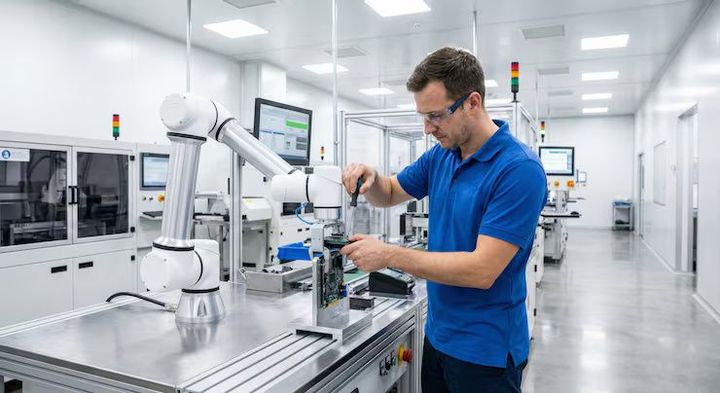
- Collaborative robotic systems for selected human-machine environments
- Special-purpose pick-and-place systems for repetitive operations
The exact configuration depends on the molding machine, component geometry, production cycle, workspace, and required handling method.
Main Components
Plastic Injection Robots generally contain several connected elements. The robot provides movement, while the controller manages programmed sequences. A gripper or end-of-arm tool physically handles the molded component.
Sensors can detect positions, mold conditions, component presence, or other operating states. Safety devices such as guards, interlocks, emergency stops, and monitored access areas help control interaction with moving equipment.
Importance
Why Automated Plastic Handling Matters
Plastic manufacturing often involves repeated cycles that may continue for long periods. Manual removal and placement of molded parts can involve repetitive movements and require consistent timing.
Plastic Injection Robots can automate these repetitive activities and create a more structured production flow. This can help manufacturers coordinate molding, handling, inspection, trimming, and packaging processes within a connected production cell.
The technology is relevant to industries producing components for electronics, automotive systems, household products, medical equipment, packaging, appliances, and industrial products.
Production Challenges Addressed
Several common manufacturing challenges can be addressed through robotic integration.
First, timing becomes more consistent because programmed movements can follow defined sequences. Second, automated handling can reduce unnecessary variation caused by different manual movements.
Third, robotic systems can help maintain organized part flow between machines. Sensors and controllers can also provide production information that can be used for monitoring and process analysis.
However, automation does not remove the need for proper machine design, programming, maintenance, supervision, and safety procedures.
Smart Manufacturing Connection
Smart manufacturing connects machines, sensors, software, and production information. Plastic Injection Robots can become part of this environment when their controllers communicate with molding machines and factory systems.
For example, a connected production cell may collect information about cycle duration, robot movement, machine status, component counts, and fault conditions. This information can support production monitoring and process analysis.
| Technology | Main Function | Typical Application |
|---|---|---|
| Cartesian robot | Straight-axis movement | Part removal and placement |
| Six-axis robot | Multi-directional movement | Complex handling |
| Servo robot | Controlled high-speed movement | Repetitive molding cycles |
| Vision system | Image-based inspection | Component checking |
| Sensors | Detect conditions or positions | Process monitoring |
| Industrial controller | Coordinates equipment | Automated production cells |
| Production software | Collects operating information | Monitoring and analysis |
Effects on the Workforce
Automation changes the type of tasks performed around a production cell. Instead of manually completing every repetitive movement, personnel may focus more on machine setup, programming, quality checks, process monitoring, troubleshooting, and equipment maintenance.
This makes training important. Operators need to understand robot movements, safety systems, production parameters, and emergency procedures.
Recent Updates
Greater Integration With Smart Factories
From 2024 through 2026, industrial automation has continued moving toward connected production systems. Plastic Injection Robots are increasingly considered as components within larger automated cells rather than isolated handling devices.
Modern systems can integrate robotic controllers with injection molding machines, sensors, machine-vision equipment, and manufacturing software. This supports centralized monitoring and more detailed production information.
More Flexible Robotic Systems
Another current trend is greater flexibility. Traditional automation is often designed around a specific production sequence, while newer robotic systems can be reprogrammed for different components and handling requirements.
Six-axis robots are particularly useful when parts require more complex movements. Cartesian robots remain important where predictable linear motion and straightforward part extraction are required.
Vision and Sensor Integration
Machine vision is also becoming more closely connected with robotic handling. A camera can inspect a component and provide information to a controller before the robot performs a subsequent action.
Sensors can similarly identify whether a mold is open, whether a component is present, or whether a robotic movement has reached the expected position. These technologies support closed-loop production monitoring.
Energy and Data Awareness
Manufacturers are also paying greater attention to energy consumption, machine utilization, downtime, and production data. Connected controllers can help collect information that allows production teams to examine how equipment is operating over time.
The broader direction is toward production cells that combine automation, sensing, software connectivity, and data analysis.
Laws or Policies
Indian Machinery Safety Requirements
For an India-focused manufacturing context, machinery used for working rubber and plastics has been addressed through Bureau of Indian Standards certification frameworks. BIS materials identify machinery for working rubber and plastics as a category under Scheme X, with relevant machinery safety standards and conformity requirements.
Injection molding machines are specifically represented within the machinery-for-working-plastics category in BIS documentation. Safety considerations include machine design, risk assessment, guarding, and other measures intended to reduce hazards around moving machinery.
The regulatory position has changed during the 2024–2026 period. The Machinery and Electrical Equipment Safety (Omnibus Technical Regulation) Order issued in 2024 was rescinded in January 2026, so manufacturers and users should check the current BIS framework and applicable notifications rather than relying on older implementation schedules.
Plastic Waste Management
Plastic manufacturing is also influenced by environmental rules. India's Plastic Waste Management framework has undergone amendments, including changes notified during 2024. These rules concern areas such as plastic waste management and related responsibilities rather than the robot itself.
For production facilities, this means robotic automation should be considered alongside broader requirements for machinery safety, plastic processing, waste handling, and environmental management.
Workplace Safety
Workplace safety requirements also address safeguarding machinery and moving parts. The Occupational Safety, Health and Working Conditions framework includes provisions concerning machinery safeguards and safe operation of plant and equipment.
Because requirements can depend on the equipment, facility, application, and current regulatory status, organizations should verify applicable rules before commissioning an automated production cell.
Tools and Resources
Robot Programming Software
Robot programming platforms allow engineers to define movement sequences, timing, positions, and operating conditions. Depending on the robot manufacturer, programming may be performed through a dedicated controller, teach pendant, graphical interface, or industrial programming environment.
Simulation software can also be used to examine robot movements and production-cell layouts before physical installation.
Machine Vision Systems
Vision tools can capture images of molded components and analyze features such as presence, orientation, shape, or selected visual characteristics. These systems can be integrated with robotic controllers for automated handling and inspection.
Production Monitoring Platforms
Manufacturing monitoring platforms can collect information from machines and controllers. Typical information includes cycle time, machine status, production counts, alarms, and downtime events.
Safety Assessment Tools
Risk-assessment templates and machinery-safety standards can help production teams identify hazards associated with robot movement, mold access, gripping systems, electrical equipment, and human-machine interaction.
BIS's “Know Your Standard” platform provides access to Indian Standards and related documentation, making it a useful reference for organizations checking applicable standards.
Digital Production Resources
Other useful resources include:
- Robot simulation software
- Machine-vision configuration tools
- PLC programming environments
- Production monitoring dashboards
- Digital maintenance records
- Machinery risk-assessment templates
- Mold and robot layout software
- Equipment manuals and technical documentation
FAQs
What are Plastic Injection Robots used for?
Plastic Injection Robots are mainly used for automated part removal, placement, sorting, handling, trimming support, and integration with other production equipment around injection molding machines.
How do Plastic Injection Robots support smart manufacturing?
Plastic Injection Robots can connect with controllers, sensors, vision systems, and production software. This allows robotic movements and machine information to become part of a connected manufacturing process.
Which robot types are used with injection molding machines?
Common types include Cartesian robots, servo-driven robots, six-axis robotic arms, and selected collaborative robots. The appropriate design depends on the component, molding machine, cycle requirements, and workspace.
Are Plastic Injection Robots suitable for every molding process?
No. Suitability depends on factors such as component shape, mold design, machine configuration, cycle timing, required movement, gripper design, and safety requirements. Some production cells may require specialized automation.
What safety considerations apply to Plastic Injection Robots?
Important considerations include guarding, emergency stopping, access control, risk assessment, safe robot programming, gripper design, electrical protection, and coordination between the robot and injection molding machine.
Conclusion
Plastic Injection Robots combine robotic handling with injection molding to automate repetitive production activities. Their role is expanding as manufacturing systems become more connected through sensors, controllers, machine vision, and production software. Current developments emphasize flexible automation, data collection, integrated safety, and smarter production cells. In India, machinery and plastic-related operations are also shaped by evolving BIS, workplace-safety, and plastic-waste requirements.