Explore Rail Tunnel Boring Units With Excavation Systems and Engineering Details
Rail tunnel boring units are large mechanical systems used to excavate underground passages for railway infrastructure. A tunnel boring machine, commonly called a TBM, combines excavation, material removal, ground support, steering, and other functions within a coordinated underground system.
Rail tunnel projects use these machines when underground construction is suitable for the geological and engineering conditions.
Tunnel boring technology developed from earlier mechanical excavation methods that used cutting tools to break rock or soil. Modern machines integrate rotating cutterheads, hydraulic systems, conveyors, electrical equipment, guidance systems, and support mechanisms. Some machines are designed for hard rock, while others are configured for soft ground or mixed geological conditions.
The basic excavation process begins at the tunnel face, where a rotating cutterhead interacts with the surrounding ground. Cutting tools mounted on the cutterhead break material into smaller pieces. The excavated material is then transported away from the cutting area while the machine advances through the tunnel.
Rail tunnel boring units must operate within carefully controlled geometric limits because railway tunnels have specific requirements for alignment, clearance, drainage, ventilation, track installation, emergency access, and other infrastructure. The machine is therefore part of a larger engineering system rather than an isolated piece of excavation equipment.
Main Components of a Rail Tunnel Boring Unit
A typical TBM can contain many interconnected systems:
Cutterhead for breaking ground
Cutting tools for different geological conditions
Main drive motors for cutterhead rotation
Thrust cylinders for forward movement
Material removal equipment
Conveyor systems for excavated material
Steering and guidance equipment
Ground-support systems
Segment handling equipment in suitable tunnel designs
Hydraulic and electrical systems
Ventilation and utility connections
Operator and monitoring systems
The exact configuration depends on the ground conditions, tunnel diameter, excavation method, tunnel length, and support requirements.
Types of Tunnel Boring Machines
Earth pressure balance machines are commonly associated with soft ground where excavated material can be conditioned to help maintain pressure at the tunnel face. Slurry shield machines use a pressurized slurry system to support the excavation face and transport excavated material.
Hard-rock TBMs use cutterheads equipped with cutting discs designed to fracture rock. Open-type and shielded configurations can be selected according to geological conditions and ground-support requirements.
Mixed-ground conditions can present particular engineering challenges because the machine may encounter different materials along the same tunnel alignment. Machine selection therefore depends heavily on geological investigation and project design.
Importance
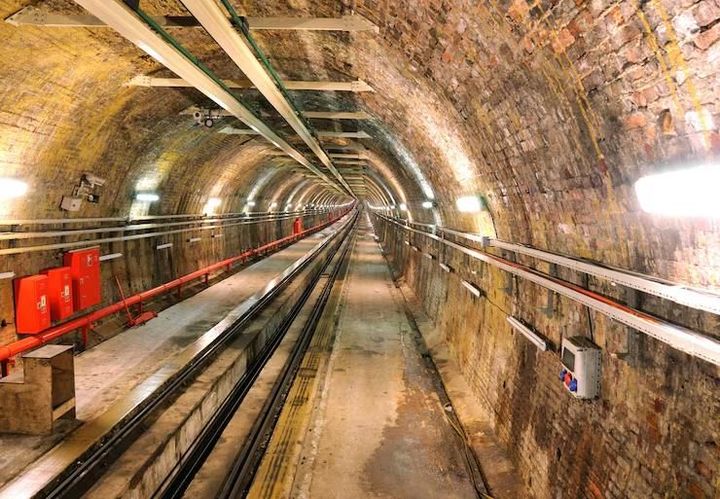
Rail tunnel boring units matter because underground railways can pass through areas where surface construction would create significant physical constraints. Tunnels can allow rail infrastructure to pass beneath mountains, dense urban areas, rivers, roads, and other obstacles.
The technology also affects construction planning, logistics, environmental management, and long-term railway infrastructure. A tunnel project requires coordination between excavation, structural support, track systems, ventilation, drainage, electrical systems, signaling, and emergency arrangements.
Geological Conditions
Ground conditions are among the most important factors influencing tunnel excavation. Engineers investigate rock type, soil composition, groundwater, fractures, pressure, and other geological characteristics before selecting an excavation approach.
A tunnel may pass through several geological formations along its route. This can require changes in operating parameters, cutter arrangements, ground conditioning, support methods, or excavation procedures.
Excavation and Material Removal
After the cutterhead breaks material, the excavated material needs to move continuously away from the tunnel face. Conveyors are commonly used in several TBM configurations, while other machines may use slurry pipelines or alternative transport arrangements.
Continuous material removal helps maintain the excavation cycle. The removed material may then be transferred to surface handling systems for processing, storage, transport, or other designated management activities.
Ground Support
Excavation creates an underground opening that needs appropriate structural support. In many shielded TBM projects, precast concrete segments are installed behind the cutterhead to form a continuous tunnel lining.
Segment erectors position individual lining pieces around the tunnel circumference. Bolts, seals, and connecting systems can join the segments into a structural ring. Other tunnel construction approaches can use different support systems depending on geology and engineering design.
Guidance and Alignment
Rail tunnels require accurate alignment because the completed passage must accommodate track geometry and other infrastructure. TBMs use guidance systems that can include lasers, inertial sensors, surveying equipment, and computerized monitoring.
The steering system uses information about the machine's position and orientation to control hydraulic cylinders or other mechanisms. Continuous measurement helps the excavation team compare the actual machine position with the planned tunnel alignment.
Recent Updates
From 2024 through 2026, tunnel excavation has continued to incorporate automation, digital monitoring, improved guidance, data analysis, and equipment designed for increasingly complex underground environments. The general direction is toward more connected excavation systems that combine mechanical equipment with real-time information.
Digital TBM Monitoring
Modern tunnel boring units can collect large amounts of operating information. Sensors may monitor cutterhead torque, thrust pressure, rotation speed, hydraulic conditions, temperature, vibration, conveyor performance, and other parameters.
Data can be displayed through operator interfaces and integrated into project monitoring systems. Engineers can use historical information to compare excavation conditions along different tunnel sections.
Automated Guidance
Modern guidance systems can combine surveying information with machine sensors to determine the TBM's position and orientation. Automated calculations can support steering decisions and help maintain the planned tunnel path.
Machine guidance is particularly important in long tunnels because small alignment deviations can accumulate if they are not identified and corrected during excavation.
Advanced Cutter Monitoring
Cutter wear is an important consideration in excavation. Hard rock can cause significant mechanical wear on cutting tools, while changing geological conditions can alter the forces acting on the cutterhead.
Monitoring systems can record cutterhead behavior and other operating indicators. Maintenance teams can use these records alongside physical inspections when assessing cutter condition and replacement requirements.
Automation and Remote Monitoring
Some tunnel projects are incorporating greater levels of automation for repetitive activities and equipment monitoring. Automated systems can assist with material handling, segment positioning, equipment diagnostics, and process control.
Remote monitoring can also allow engineers to review machine information without being physically located beside every component. Human oversight remains important because underground conditions can change and automated systems operate within defined parameters.
Environmental Considerations
Modern tunnel projects increasingly consider energy consumption, material handling, water management, spoil transportation, and construction impacts during planning.
Electric drive systems, energy monitoring, optimized ventilation, and improved material-handling arrangements can form part of broader project planning. Environmental requirements depend on the project location and applicable regulations.
Laws or Policies
Rail tunnel projects are shaped by construction regulations, railway standards, workplace safety requirements, environmental rules, building requirements, and transportation policies. The applicable framework depends on the country and the specific railway project.
Railway Infrastructure Requirements
Rail tunnels must meet engineering requirements concerning structural stability, clearance, track geometry, drainage, ventilation, emergency access, fire protection, electrical infrastructure, signaling, and communication systems.
These requirements influence tunnel dimensions and therefore affect TBM selection and excavation planning. A tunnel intended for high-capacity passenger rail may have different infrastructure requirements from a freight railway tunnel.
Construction Safety
TBM operations involve heavy machinery, electrical systems, hydraulic equipment, rotating components, confined underground spaces, and material-handling activities. Safety rules can address machine guarding, worker access, emergency evacuation, electrical protection, lifting operations, ventilation, and equipment isolation.
Underground construction can also involve risks associated with groundwater, unstable ground, dust, noise, heat, and limited access. Project-specific safety planning is therefore a central part of tunnel construction.
Environmental Requirements
Tunnel excavation generates excavated material that must be managed according to applicable environmental requirements. Projects may also need controls for water discharge, noise, vibration, dust, construction traffic, and waste.
Environmental assessments and permits can influence construction methods, material transportation, site arrangements, and spoil management.
Tools and Resources
Rail tunnel engineering relies on a combination of physical equipment, digital systems, surveying technology, and planning software. Geological investigation tools help engineers understand the ground before excavation begins.
Tunnel design software can model tunnel geometry, structural elements, lining arrangements, and associated infrastructure. Three-dimensional modeling can also support coordination between excavation, lining, track, ventilation, drainage, and electrical systems.
Useful resources include:
Geological survey data
Tunnel alignment drawings
TBM specification sheets
Cutterhead configuration records
Tunnel design software
Ground-condition monitoring systems
Surveying and guidance platforms
Digital construction models
Structural analysis software
Excavated-material tracking systems
Equipment maintenance databases
Safety risk assessment templates
A simplified comparison of common TBM categories is shown below:
| TBM Type | Typical Ground Environment | Main Operating Principle |
|---|---|---|
| Hard-Rock TBM | Competent rock | Disc cutters fracture rock |
| Earth Pressure Balance TBM | Soft ground | Controlled face pressure |
| Slurry TBM | Water-bearing or unstable ground | Pressurized slurry supports face |
| Shielded TBM | Variable ground conditions | Shield provides controlled excavation environment |
| Open TBM | Suitable rock conditions | Excavation with support installed separately |
Tunnel Planning and Simulation
Engineering teams can use digital models to coordinate tunnel alignment, machine dimensions, lining geometry, station interfaces, and supporting infrastructure. Simulation can help examine equipment movement and construction sequences before physical work occurs.
Surveying systems are also essential. Accurate surface control points and underground measurements provide reference information for the TBM guidance system.
FAQs
What is a rail tunnel boring unit?
A rail tunnel boring unit is a large excavation machine designed to create underground passages for railway infrastructure. It can combine excavation, material removal, steering, ground support, and monitoring functions.
How does a tunnel boring machine excavate a railway tunnel?
A rotating cutterhead breaks soil or rock at the tunnel face. Excavated material is transported away through conveyors, pipelines, or other systems while hydraulic mechanisms advance the machine.
What types of TBMs are used for rail tunnels?
Common categories include hard-rock TBMs, earth pressure balance machines, slurry machines, shielded TBMs, and open-type machines. Selection depends on geology, groundwater, tunnel dimensions, and support requirements.
How does a rail tunnel boring unit maintain alignment?
Guidance systems can combine surveying equipment, lasers, inertial sensors, and computerized measurements to determine machine position and orientation. Hydraulic steering mechanisms can then adjust the machine's direction.
What factors affect TBM selection?
Important factors include ground conditions, groundwater, tunnel diameter, tunnel length, required lining system, excavation method, material removal, alignment requirements, environmental conditions, and project-specific engineering constraints.
Conclusion
Rail tunnel boring units integrate excavation, material removal, steering, ground support, mechanical systems, and digital monitoring to construct underground railway passages. Machine selection depends heavily on geological conditions, groundwater, tunnel dimensions, lining requirements, and planned railway infrastructure. Recent developments have increased the use of sensors, automated guidance, data monitoring, and digital engineering models. Railway construction also requires careful attention to structural, environmental, workplace, and infrastructure requirements.