Food Mixing Machines Guide: Designs, Mixing Methods, Uses, Components and Key Considerations
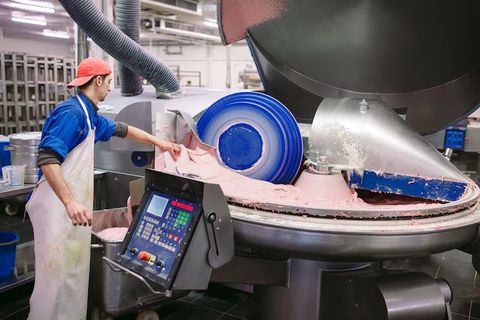
Food mixing machines are mechanical systems used to combine ingredients into a consistent mixture. They are found in bakeries, food processing plants, commercial kitchens, confectionery production, dairy processing, spice preparation, and many other food environments. Their development grew from the need to handle larger ingredient quantities with more consistent movement than manual mixing can provide.
A food mixing machine may use paddles, blades, ribbons, screws, beaters, or other mixing elements. The design depends on whether the ingredients are dry powders, liquids, pastes, doughs, or combinations of different materials. Some machines operate in batches, while others are designed for continuous processing.
The main purpose is controlled movement of ingredients so that components become distributed throughout a mixture. Factors such as ingredient properties, batch size, mixing time, temperature, moisture level, and equipment geometry can affect the final result.
Importance
Food mixing machines matter because mixing is a basic stage in many food preparation processes. Uneven mixing can create differences in texture, flavor distribution, moisture, or ingredient concentration. Controlled equipment can help processors maintain a repeatable process while handling quantities that would be difficult to mix manually.
These machines affect food manufacturers, bakeries, restaurants, institutional kitchens, and other facilities that prepare food in significant quantities. They also have relevance for sanitation because food-contact surfaces need suitable designs that allow cleaning and inspection.
Mixing equipment must match the material being processed. A dough mixer, for example, needs a different movement and mechanical arrangement from a powder blender. Using an unsuitable design can result in poor ingredient distribution, excessive heat, material buildup, or unnecessary mechanical stress.
Common Areas of Use
Food mixing machines can be used in several processing environments, including:
- Bakery dough and batter preparation
- Spice and seasoning blending
- Powdered food mixtures
- Sauces and liquid formulations
- Confectionery mixtures
- Dairy-based preparations
- Granular and semi-solid food products
Recent Updates
From 2024 through 2026, food processing equipment has continued moving toward greater automation, process monitoring, energy awareness, and hygienic design. Modern installations may combine mixing equipment with sensors, programmable controls, temperature monitoring, weighing systems, and automated material handling.
Digital monitoring is another continuing trend. Sensors can track factors such as motor load, temperature, mixing duration, and operating conditions. These measurements can help operators identify changes in a process and document production information.
Hygienic construction remains an important area of development. Equipment used for food production is increasingly designed with smooth food-contact areas, accessible inspection points, suitable seals, and fewer locations where residue can accumulate. The exact design depends on the food product and applicable sanitation requirements.
Energy management is also receiving attention. Mixing can require significant mechanical power, particularly when processing thick doughs or dense materials. Equipment designers may therefore consider motor efficiency, batch size, mixing speed, and operating time when developing a process.
Artificial intelligence and advanced automation are also appearing in food processing environments. In practical applications, these technologies can support monitoring, process control, maintenance planning, and data analysis. Their role varies by facility and does not replace the need for appropriate equipment operation and food-safety procedures.
Laws or Policies
In India, food processing activities are shaped by food-safety requirements administered through the Food Safety and Standards Authority of India, commonly known as FSSAI. Food businesses are expected to follow applicable requirements covering hygiene, sanitation, food handling, and processing conditions.
Food mixing machines that come into contact with ingredients need to be suitable for their intended use. Materials, construction, cleaning arrangements, and operating practices should be considered together with the relevant food-safety requirements. Facilities may also have responsibilities related to worker safety and electrical or machinery safety under applicable Indian rules.
The exact requirements can vary according to the type of food business, product, facility, and equipment. Operators should consult current FSSAI rules, applicable standards, and qualified regulatory professionals when a specific compliance question arises.
Hygiene and Equipment Practices
Food-contact areas generally require appropriate cleaning and inspection procedures. Operators may need to consider:
- Surface condition and accessibility
- Ingredient residue and buildup
- Cleaning procedures
- Equipment inspection
- Separation of different food materials
- Appropriate handling of cleaning materials
Applicable requirements can differ according to the food category and processing environment.
Tools and Resources
Several resources can help readers understand food mixing machines and their operating requirements. FSSAI publications and regulatory resources provide information about food safety and hygiene in India. Equipment manuals can explain operating limits, cleaning procedures, component functions, and maintenance intervals for a particular machine.
A process worksheet can also help organize important information. Typical fields include:
- Ingredient type and quantity
- Batch size
- Mixing method
- Mixing duration
- Mixing speed
- Product temperature
- Cleaning procedure
- Inspection notes
Simple calculations can be useful when comparing batch requirements. For example, a facility can estimate the number of batches needed by dividing the required production quantity by the usable batch capacity. The actual operating plan also needs to account for loading, unloading, cleaning, and other process stages.
Food Mixing Machine Designs and Mixing Methods
Food mixing machines are available in several designs because food materials behave differently during processing. The machine body, drive system, mixing element, and discharge arrangement are selected according to the product.
Ribbon Mixers
Ribbon mixers use long horizontal ribbons to move dry or semi-dry materials through a vessel. They are commonly associated with powders, grains, seasoning blends, and other materials that need thorough movement.
Paddle Mixers
Paddle mixers use paddle-shaped elements to move ingredients through a chamber. Their configuration can be adapted for materials ranging from powders to heavier mixtures.
Planetary Mixers
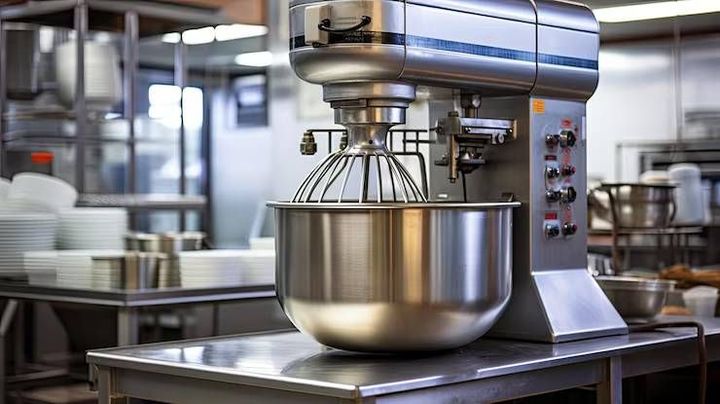
Planetary mixers use a mixing tool that rotates around its own axis while also moving around the bowl. This motion is useful for products such as doughs, batters, creams, and other semi-solid mixtures.
High-Shear Mixers
High-shear mixers create stronger localized movement and are used when a process needs rapid dispersion, emulsification, or particle-size reduction. Their suitability depends on the ingredients and the required product characteristics.
Continuous and Batch Mixing
A continuous mixer receives ingredients and processes them as material moves through the machine. Batch mixers, in contrast, process a defined quantity at a time. The choice depends on production flow, recipe structure, cleaning requirements, and process control needs.
Key Components of Food Mixing Machines
A typical machine contains several components that work together. The mixing vessel holds the ingredients, while the mixing element provides the mechanical movement. A motor and drive assembly transfer power to the mixing element.
Controls regulate functions such as starting, stopping, speed, and operating time. Some systems include sensors for temperature, load, level, or other process conditions. Seals and bearings support moving parts and help protect mechanical areas from the surrounding environment.
Food-contact components require particular attention because they directly interact with ingredients. Surface finish, material selection, accessibility, and cleaning arrangements can influence hygiene and maintenance.
Main Components
The principal parts can include:
- Mixing vessel or bowl
- Mixing shaft
- Paddles, ribbons, blades, or beaters
- Motor
- Drive system
- Bearings and seals
- Control panel
- Sensors
- Discharge mechanism
The exact arrangement depends on the machine design and the material being processed.
Key Considerations
Selecting or evaluating food mixing machines involves several factors. The ingredient characteristics should be considered first. Powder, liquid, dough, paste, and granular materials can require different mixing actions.
Capacity is another important factor. A machine should accommodate the intended batch size without creating unsuitable filling conditions. Mixing speed and time also need to match the process because excessive mechanical action may affect some products.
Cleaning is important in food processing. Operators should consider whether the vessel, mixing element, seals, and other food-contact areas can be inspected and cleaned according to the applicable procedure.
Noise, heat generation, energy use, access for maintenance, and available floor space may also affect equipment selection. The machine should fit the surrounding production process rather than being considered as an isolated component.
Machine Design Comparison
| Machine design | Typical materials | Mixing action | Common applications |
|---|---|---|---|
| Ribbon mixer | Powders, grains, dry blends | Horizontal ribbon movement | Seasonings, dry mixes |
| Paddle mixer | Powders, granules, semi-solid materials | Paddle movement | Food blends, prepared mixtures |
| Planetary mixer | Doughs, batters, creams | Planetary tool movement | Bakery and confectionery |
| High-shear mixer | Liquids, emulsions, dispersions | Intense localized movement | Sauces and formulated mixtures |
| Continuous mixer | Flowing ingredients | Continuous material movement | Large-scale processing |
FAQs
What is a food mixing machine?
A food mixing machine is equipment designed to combine food ingredients through controlled mechanical movement. Different designs are used for powders, liquids, doughs, pastes, and other materials.
What are the main food mixing machine designs?
Common designs include ribbon, paddle, planetary, high-shear, and continuous mixers. Each design creates a different type of ingredient movement and is suited to particular material properties.
How do mixing methods affect food processing?
Mixing methods influence how ingredients move, disperse, and combine. Speed, time, temperature, batch size, and mixer geometry can all affect the process.
What components are found in food mixing machines?
Common components include a mixing vessel, mixing element, motor, drive system, controls, bearings, seals, and sensors. The exact configuration depends on the machine design.
What should be considered when evaluating food mixing machines?
Important considerations include ingredient properties, batch capacity, mixing method, operating speed, cleaning access, food-contact materials, maintenance needs, energy use, and applicable safety requirements.
Conclusion
Food mixing machines provide controlled mechanical movement for combining ingredients in many food-processing environments. Their designs range from ribbon and paddle systems to planetary, high-shear, and continuous mixers, with each approach suited to different materials and processes. Current equipment development is increasingly connected with automation, monitoring, hygienic construction, and process data. Understanding machine design, mixing methods, components, and regulatory requirements helps readers interpret how these systems fit into food preparation and processing.