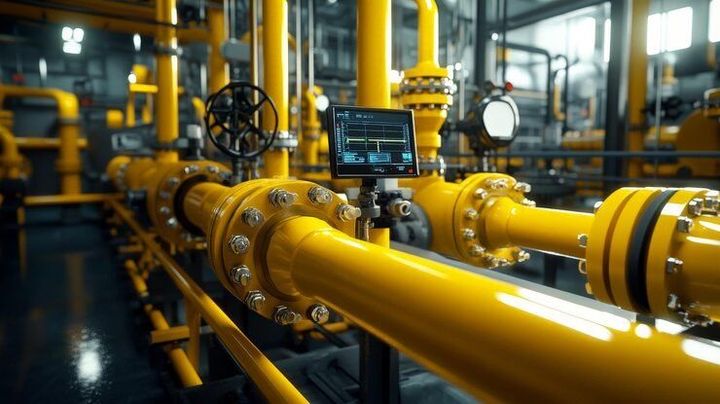
Gas Control Valves Guide: Designs, Operating Principles, Pressure Regulation and Industrial Uses
Gas control valves are important components in industrial systems that manage the movement, pressure, and flow of gases. They are used in manufacturing plants, heating systems, power generation facilities, chemical processing units, and gas distribution networks. Their development followed the wider use of gas for lighting, heating, industrial production, and energy generation, which created a need for reliable methods of controlling gas movement.
Context
Gas control valves are important components in industrial systems that manage the movement, pressure, and flow of gases. They are used in manufacturing plants, heating systems, power generation facilities, chemical processing units, and gas distribution networks. Their development followed the wider use of gas for lighting, heating, industrial production, and energy generation, which created a need for reliable methods of controlling gas movement.
A gas control valve regulates how much gas passes through a pipeline or piece of equipment. Depending on its design, it can adjust flow, maintain a target pressure, isolate a pipeline, or prevent gas from moving under certain conditions. Some valves operate manually, while others use pneumatic, electric, or electronic control systems.
Common Gas Control Valve Designs
Gas control valves are available in different designs according to operating pressure, gas characteristics, flow requirements, and system conditions. Common types include:
Globe valves: Use a movable plug and an internal seat to regulate flow. They are often used where controlled adjustment is important.
Ball valves: Use a rotating ball with a passage through its center. They are commonly used to open or isolate a gas line.
Butterfly valves: Use a rotating disc to regulate or stop flow in suitable pipeline applications.
Pressure regulator valves: Reduce or maintain gas pressure within a specified operating range.
Solenoid valves: Use an electromagnetic mechanism to open or close a gas passage when an electrical signal is received.
Pneumatic control valves: Use compressed air to position the valve according to a control signal.
Not every valve is suitable for every gas or operating condition. Material compatibility, sealing performance, temperature limits, pressure ratings, and the possibility of corrosion must be considered when selecting equipment.
Main Components of a Gas Control Valve
A typical gas control valve contains a body, an internal closure element, a seat, a stem or actuator connection, and sealing components. The body connects the valve to the pipeline, while the closure element changes the opening through which gas can pass.
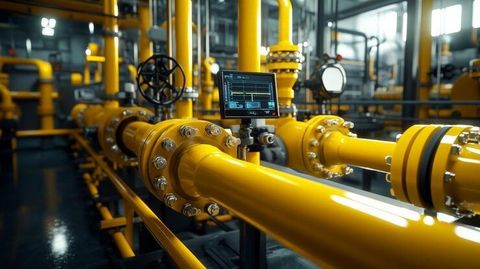
An actuator provides the movement needed to operate the valve. Depending on the design, it may use a handwheel, an electric motor, compressed air, or an electromagnetic mechanism. Some systems also use position sensors and pressure transmitters to communicate operating conditions to a controller.
Importance
Gas control valves help maintain stable operating conditions in industrial and commercial systems. Incorrect gas pressure or excessive flow can interfere with combustion, affect production quality, damage equipment, or create hazardous conditions. Reliable flow control is therefore important in facilities that use natural gas, industrial gases, or other compatible gaseous fuels and materials.
These valves also support process consistency. For example, a furnace may require a controlled gas supply to maintain its operating temperature, while a manufacturing line may need a particular pressure range for a process to function correctly. Gas control equipment helps systems respond to changing operating demands.
Pressure Regulation and Flow Management
Pressure regulation and flow control are related but different functions. Pressure describes the force exerted by gas within a system, while flow refers to the quantity of gas moving through a pipeline over a period of time. A valve designed to regulate one variable does not necessarily maintain the other independently.
A pressure regulator typically reduces a higher inlet pressure to a lower outlet pressure and adjusts its operation as conditions change. A modulating control valve, by comparison, changes its opening in response to a control signal or measured process variable.
Industrial Uses of Gas Control Valves
Gas control valves are used across several industries:
Power generation: Regulate fuel gas supplied to suitable boilers, burners, or gas turbines.
Metal processing: Control gas flow in furnaces, heat-treatment equipment, and certain cutting or heating processes.
Chemical manufacturing: Manage gas flow into reactors and process equipment designed for particular gases.
Food production: Regulate fuel supply in industrial ovens, dryers, and heating systems.
Building heating: Control gas flow to compatible boilers, burners, and heating appliances.
Gas distribution: Support pressure reduction, isolation, and flow management at appropriate points in distribution systems.
The required valve design depends on the application. A valve used for simple isolation may not provide the precise adjustment needed for an automated process, and a general-purpose control valve may not provide the protective functions required in a hazardous gas system.
Comparing Gas Control Valve Types
| Valve type | Main function | Common application |
|---|---|---|
| Globe valve | Modulates flow | Industrial process control |
| Ball valve | Opens or isolates a line | Pipeline isolation |
| Butterfly valve | Controls or stops flow | Suitable large pipeline systems |
| Pressure regulator | Reduces or maintains pressure | Gas supply systems |
| Solenoid valve | Electrically operated opening or closing | Automated gas circuits |
| Pneumatic control valve | Adjusts flow using an actuator | Industrial process automation |
Actual capabilities vary by model, size, pressure rating, and manufacturer specifications. A valve's suitability must be established from its technical documentation and the requirements of the complete system.
Recent Updates
Developments in gas control valves increasingly involve digital monitoring, automated control, improved materials, and integration with industrial safety systems. Across 2024–2026, industrial equipment development has continued to emphasize operational monitoring, energy management, predictive maintenance, and more connected control systems. Specific features depend on the manufacturer, application, and installed control infrastructure.
Smart Monitoring and Industrial Automation
Modern installations may use pressure transmitters, flow meters, temperature sensors, and valve-position feedback to monitor gas systems. These instruments can send information to programmable logic controllers or supervisory control and data acquisition systems, commonly called PLCs and SCADA.
When suitable data is available, monitoring software can identify unusual pressure changes, repeated actuator movements, or operating patterns that may indicate equipment deterioration. Such systems can support maintenance planning, but they do not eliminate the need for inspection, testing, or protective devices.
Materials, Efficiency, and Maintenance
Manufacturers continue to develop valve materials, sealing arrangements, and actuator designs for particular pressure ranges, temperatures, and gas compositions. Material selection is especially important where gases may be corrosive, reactive, or capable of passing through seals more readily than other gases.
Maintenance planning increasingly uses operating records and condition-monitoring data. Nevertheless, inspection intervals must reflect the equipment design, operating environment, manufacturer guidance, and applicable safety requirements. Electronic monitoring should supplement rather than replace required safety checks.
Laws or Policies
Gas control valves are subject to technical standards, installation requirements, and industrial safety rules that vary by country and application. Requirements may differ between domestic gas appliances, commercial heating equipment, industrial pipelines, pressure systems, and hazardous process facilities.
Relevant Regulations in India
In India, gas installations may fall under several regulatory frameworks depending on their purpose and design. The Petroleum and Natural Gas Regulatory Board establishes regulations relevant to specified natural gas pipelines and city gas distribution activities. The applicable requirements depend on the type of installation and its regulatory coverage.
The Oil Industry Safety Directorate publishes safety standards and guidance for relevant petroleum and gas operations. Certain industrial installations may also be subject to the Factories Act, 1948, applicable state rules, occupational safety requirements, and other legislation in force. The exact requirements depend on the facility, the gas involved, and the applicable legal framework.
Technical Standards and Equipment Safety
International standards may provide specifications for valve design, testing, materials, pressure ratings, and performance. Examples include standards published by the International Organization for Standardization (ISO), the American Society of Mechanical Engineers (ASME), and the American Petroleum Institute (API). A particular standard applies only where it is relevant to the equipment and required or adopted by the governing rules, contract, or engineering specification.
Gas systems may also require emergency shutoff arrangements, pressure relief devices, leak detection, ventilation, and other safeguards. A control valve should not automatically be treated as a safety shutoff device unless it is specifically designed and approved for that function.
Installation, adjustment, and maintenance of industrial gas equipment require suitable technical competence. The system must be evaluated as a whole, including its pipeline, actuators, sensors, control logic, and protective equipment.
Tools and Resources
Technical resources help engineers, technicians, maintenance teams, and students understand gas control valves and their operating conditions. Equipment documentation should be matched to the specific valve model and installation.
Valve Sizing and Pressure Calculations
Valve sizing involves determining whether a valve can handle the required gas flow under expected operating conditions. Important inputs may include gas type, inlet pressure, outlet pressure, temperature, flow rate, and the permitted pressure drop.
Manufacturers may provide sizing software, technical calculators, flow coefficients, and application guides. Gas flow calculations can be complex because gases are compressible, and some operating conditions may involve choked flow. General online calculators should not replace an engineering assessment for a safety-critical installation.
Technical Websites and Documentation
Several established organizations publish information relevant to valve selection and industrial gas systems:
International Organization for Standardization (ISO): Publishes international standards covering industrial equipment and related technical practices.
American Society of Mechanical Engineers (ASME): Provides standards relevant to pressure systems and piping.
American Petroleum Institute (API): Publishes technical standards for applicable oil and gas equipment and operations.
Petroleum and Natural Gas Regulatory Board (PNGRB): Provides Indian regulatory information relevant to covered natural gas infrastructure.
Oil Industry Safety Directorate (OISD): Publishes safety standards and technical guidance for applicable petroleum and gas facilities.
Manufacturer manuals, equipment drawings, inspection records, and maintenance histories are also important resources. They help establish pressure limits, compatible gases, actuator requirements, and the inspection procedures specified for a particular installation.
FAQs
What is a gas control valve used for?
A gas control valve regulates, directs, or isolates gas flow in a system. Depending on its design, it may also help maintain a specified pressure or respond to an automated control signal.
How does a gas pressure regulator valve work?
A gas pressure regulator adjusts an internal opening in response to changes in outlet pressure. Its mechanism helps maintain the required downstream pressure within the regulator's specified operating range.
What are the main types of industrial gas control valves?
Common types include globe valves, ball valves, butterfly valves, pressure regulators, solenoid valves, and pneumatic control valves. Their functions differ, so selection depends on the required control method and operating conditions.
How are gas control valves used in industrial automation?
Automated systems can use sensors and controllers to adjust valve positions according to measured pressure, flow, or another process variable. This helps maintain operating conditions and supports monitoring, subject to the system's design and safeguards.
Which factors matter when selecting a gas control valve?
Important factors include gas composition, pressure, temperature, required flow rate, material compatibility, leakage limits, actuator type, and applicable safety standards. The valve must also be compatible with the operating requirements of the complete installation.
Conclusion
Gas control valves regulate gas flow and pressure across manufacturing, heating, energy, and distribution systems. Different designs perform functions such as isolation, pressure reduction, and automated flow adjustment. Digital monitoring and industrial automation are expanding the ways operators observe and manage valve performance, while technical standards and safety rules govern applicable installations. Correct selection depends on operating conditions, material compatibility, equipment specifications, and the protective requirements of the complete gas system.

You May Also Like