Grinding Machines Information With Industrial Machining, Tools, and Equipment Technology
Grinding machines are industrial machining systems used to remove small amounts of material from a workpiece through an abrasive process. Instead of using a conventional cutting edge such as a milling cutter or turning tool, grinding equipment uses a rotating abrasive wheel, belt, disc, or other abrasive surface to shape, finish, sharpen, or dimension materials.
Grinding technology has developed alongside metalworking and manufacturing. Early grinding methods used simple abrasive stones and manually controlled equipment. Industrial development introduced powered spindles, precision tables, coolant systems, automated controls, and specialized grinding wheels. These developments allowed grinding to become an important part of modern machining operations.
Grinding machines can process materials such as steel, cast iron, aluminum alloys, ceramics, carbide, glass, and other engineered materials, depending on the machine and abrasive being used. The process can remove material, improve surface characteristics, sharpen cutting tools, or achieve specific dimensional requirements.
Modern grinding equipment can range from manually operated machines to computer numerical control systems. CNC grinding machines use programmed movements to control the workpiece, grinding wheel, and other machine functions. Sensors and measurement systems can also be incorporated into advanced equipment.
How Grinding Machines Work
A grinding operation normally involves contact between an abrasive tool and a workpiece. The abrasive particles on the wheel or other tool act as many small cutting edges, removing material as the surfaces move relative to each other.
The amount of material removed depends on factors such as wheel speed, feed rate, depth of grinding, abrasive type, workpiece material, and coolant conditions. Operators or control systems adjust these parameters according to the machining process.
Grinding wheels are made using abrasive grains held together by a bonding material. Common abrasive materials include aluminum oxide, silicon carbide, cubic boron nitride, and diamond. Each abrasive has characteristics that make it appropriate for particular materials and applications.
Main Types of Grinding Machines
Grinding machines are available in several configurations. Surface grinding machines are used to produce flat surfaces and controlled dimensions. A grinding wheel moves across the surface of a workpiece while the machine controls the relative movement.
Cylindrical grinding machines process the outside or inside surfaces of round components. The workpiece and grinding wheel rotate in a controlled relationship to produce the required cylindrical geometry.
Centerless grinding does not normally hold the workpiece between centers. Instead, the workpiece moves between a grinding wheel and a regulating wheel, making the process suitable for particular high-volume cylindrical components.
Tool and cutter grinders are designed for sharpening and reshaping cutting tools. Internal grinding machines focus on holes and internal cylindrical surfaces, while specialized machines can process gears, threads, crankshafts, camshafts, and other components.
Importance
Grinding machines are important in industrial machining because many components require controlled dimensions, smooth surfaces, accurate shapes, or carefully prepared edges. Grinding can be used after other machining operations when a component requires additional material removal or surface refinement.
The technology is used across manufacturing sectors, including automotive production, aerospace manufacturing, toolmaking, machinery production, bearing manufacturing, energy equipment, and general metalworking.
Industrial Machining Applications
Grinding equipment can process many types of components. Typical applications include:
Finishing shafts and cylindrical components
Producing flat machine surfaces
Sharpening cutting tools
Preparing precision bearing components
Grinding gears and gear-related components
Processing internal holes
Finishing hardened materials
Removing burrs and unwanted material
Preparing specialized tooling
Producing controlled surface finishes
The machine selected depends on the component geometry and required process. A surface grinder is suited to different work from a cylindrical grinder, while a tool grinder has another set of functions.
Grinding Tools and Abrasives
Grinding tools are not limited to traditional grinding wheels. Industrial machining can use abrasive belts, discs, mounted points, grinding segments, abrasive blocks, and specialized wheels.
Abrasive selection depends on the workpiece material and the desired process. Aluminum oxide is widely associated with ferrous-metal grinding, while silicon carbide is used for selected materials such as cast iron and non-ferrous materials. Diamond and cubic boron nitride are used in applications involving specific hard or difficult-to-machine materials.
Wheel structure also matters. Grain size, hardness, bonding method, and wheel shape influence how an abrasive tool behaves during machining.
Surface Finish and Dimensional Control
Grinding can produce a different surface condition from many rough machining processes. The final result depends on wheel characteristics, machine rigidity, process parameters, coolant, workpiece condition, and measurement methods.
Dimensional inspection may involve micrometers, gauges, coordinate measuring machines, optical systems, or other measurement equipment. Automated grinding cells can integrate measurement systems to monitor components during or after processing.
Recent Updates
From 2024 through 2026, grinding machine technology has continued to move toward CNC control, automation, digital measurement, sensor-based monitoring, and improved integration with manufacturing systems.
CNC Grinding Technology
CNC grinding machines use programmed instructions to control machine movements. Multiple axes can coordinate the position of the workpiece, grinding wheel, dressing equipment, and other components.
Modern CNC systems can store machining programs for repeat production. Digital interfaces can display operating information and allow authorized personnel to adjust defined process parameters.
Multi-axis grinding can also support complex geometries that would be difficult to produce with basic manual equipment. The required number of axes depends on the component and grinding operation.
Automated Handling
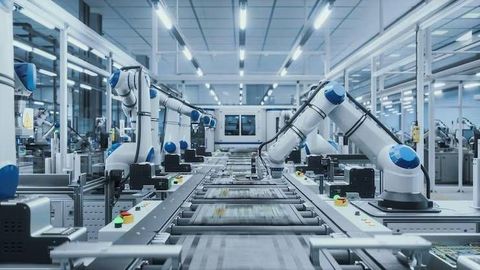
Grinding systems can be integrated with automatic loading and unloading equipment. Robots, gantry systems, conveyors, and part feeders can move components between machining stages.
Automation can also connect grinding with inspection and other processes. A production cell may include machining, washing, measurement, and material handling within a coordinated sequence.
Digital Measurement
Measurement technology is increasingly connected with machining equipment. Sensors and inspection systems can monitor dimensions, surface characteristics, temperature, wheel condition, and other process variables.
In-process measurement can provide information while machining is underway. This can help control dimensional variation within the limits of the equipment and measurement system.
Grinding Wheel Technology
Abrasive technology continues to develop through improvements in grain structures, bonding materials, wheel designs, and superabrasive applications. Cubic boron nitride and diamond abrasives are used in selected applications where conventional abrasives may not provide the required machining characteristics.
Wheel dressing technology has also developed. Dressing restores or modifies the working surface of a grinding wheel, helping maintain its intended geometry and cutting behavior.
Laws or Policies
Grinding machines are affected by machinery safety, electrical protection, workplace exposure, abrasive-wheel requirements, noise controls, and environmental rules. Exact requirements vary according to the country, machine configuration, workplace, and material being processed.
Machine Safety
Grinding machines contain rotating wheels, moving tables, spindles, workholding systems, and electrical components. Protective guards are therefore important because an abrasive wheel can present hazards if it is damaged, incorrectly installed, or operated outside its intended conditions.
Safety arrangements can include wheel guards, emergency-stop systems, interlocks, protective screens, appropriate workholding, and controlled access to moving parts.
Abrasive Wheel Requirements
Abrasive wheels need to be selected, mounted, inspected, and operated according to their intended specifications. Wheel speed ratings are particularly important because exceeding the appropriate operating speed can create serious mechanical hazards.
Wheel inspection, correct mounting, suitable flanges, balancing, dressing procedures, and appropriate guarding are important parts of grinding-machine operation.
Workplace Exposure
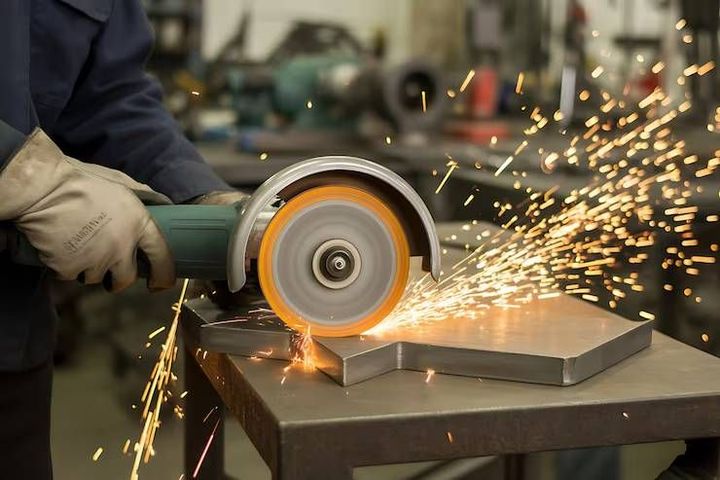
Grinding can generate airborne particles, noise, heat, and sparks depending on the material and process. Ventilation and local extraction may therefore be required in particular environments.
Personal protective equipment can include eye protection, hearing protection, suitable footwear, and other equipment determined by workplace risk assessments. The applicable requirements depend on the specific machining environment.
Tools and Resources
Grinding machine planning and operation involve several technical resources. Machine specification sheets provide information about wheel dimensions, spindle speed, table movement, workpiece capacity, power requirements, and available control functions.
Grinding-wheel selection charts can help explain abrasive type, grain size, bond type, hardness, and wheel structure. Machining calculators can assist with unit conversions and selected process calculations, although actual parameters need to follow equipment and tooling specifications.
Useful resources include:
Grinding-wheel specification charts
Machining parameter calculators
Surface-finish measurement tools
Micrometers and precision gauges
Coordinate measuring systems
Wheel-dressing tools
Machine inspection checklists
CNC programming software
Tool-management systems
Preventive maintenance schedules
Coolant monitoring equipment
Digital production dashboards
A simplified comparison of common grinding machines is shown below:
| Machine Type | Main Application | Typical Workpiece Form |
|---|---|---|
| Surface Grinder | Flat-surface machining | Plates and blocks |
| Cylindrical Grinder | External cylindrical surfaces | Shafts and round components |
| Internal Grinder | Internal surfaces | Holes and bores |
| Centerless Grinder | Continuous cylindrical grinding | Round components |
| Tool and Cutter Grinder | Tool sharpening and shaping | Cutting tools |
| Gear Grinder | Gear surface finishing | Gears |
| CNC Grinder | Programmed precision grinding | Complex or repeat components |
Coolant and Process Control
Coolant can be used in many grinding processes to manage heat, remove particles, and support the machining operation. The appropriate coolant type depends on the material, machine, wheel, and process.
Coolant management can involve filtration, concentration monitoring, temperature control, and contamination management. Poorly maintained coolant can affect machining conditions and equipment cleanliness.
Maintenance and Inspection
Grinding machines require regular inspection of wheels, guards, bearings, lubrication systems, coolant equipment, electrical components, and moving mechanisms.
Maintenance schedules can include checks for unusual vibration, spindle conditions, wheel wear, coolant contamination, table movement, and measurement accuracy. Digital monitoring can supplement physical inspection but does not replace appropriate maintenance procedures.
FAQs
What are grinding machines used for?
Grinding machines are used for material removal, surface finishing, sharpening, dimensional control, and shaping. They can process components made from metals, ceramics, carbide, glass, and other suitable materials.
What types of grinding machines are used in industrial machining?
Common types include surface grinders, cylindrical grinders, internal grinders, centerless grinders, tool and cutter grinders, gear grinders, and CNC grinding machines. Each configuration is designed around particular workpiece shapes and machining requirements.
How are grinding tools selected?
Grinding tools are selected according to workpiece material, required surface characteristics, material removal requirements, wheel speed, machine configuration, and the type of grinding operation. Abrasive type, grain size, bond, and wheel structure are also relevant.
What is CNC grinding technology?
CNC grinding uses computer-controlled instructions to coordinate machine movements. It can control multiple axes and store defined machining programs for repeated production processes.
What safety measures are important for grinding machines?
Important measures include appropriate wheel guarding, correct wheel selection and mounting, speed control, workpiece security, emergency controls, inspection procedures, ventilation where required, and suitable personal protective equipment.
Conclusion
Grinding machines use abrasive tools to remove material, shape components, improve surfaces, and prepare industrial tooling. Surface, cylindrical, centerless, internal, tool, gear, and CNC grinders serve different machining requirements. Recent developments include automated handling, digital measurement, CNC controls, advanced abrasives, and connected monitoring systems. Safe grinding also depends on correct wheel selection, machine guarding, process control, maintenance, and compliance with applicable workplace requirements.