Hydraulic Equipment Production Explained: Processes, Components, Materials and Quality Control
Hydraulic equipment production involves designing, manufacturing, assembling, and testing machines and components that use pressurized liquids to transmit power. Hydraulic systems are widely used in construction equipment, agricultural machinery, industrial production lines, material handling systems, and manufacturing plants. Their ability to produce substantial force through controlled fluid pressure makes them suitable for applications that require lifting, pressing, clamping, or moving heavy loads.
Context
Hydraulic equipment production involves designing, manufacturing, assembling, and testing machines and components that use pressurized liquids to transmit power. Hydraulic systems are widely used in construction equipment, agricultural machinery, industrial production lines, material handling systems, and manufacturing plants. Their ability to produce substantial force through controlled fluid pressure makes them suitable for applications that require lifting, pressing, clamping, or moving heavy loads.
The development of hydraulic technology is connected to the principles of fluid pressure established through scientific research over several centuries. Modern hydraulic equipment combines these principles with precision-machined components, engineered materials, sealing systems, pumps, valves, and electronic controls. Hydraulic equipment production turns these individual parts into systems designed for specific operating conditions.
Main Components of Hydraulic Equipment
A hydraulic system contains several interconnected components, each performing a particular function. Their dimensions, materials, and operating limits depend on the intended application.
Hydraulic pumps: Convert mechanical input into hydraulic fluid flow.
Hydraulic cylinders: Convert fluid pressure into linear movement, such as extending or retracting a piston.
Hydraulic motors: Convert hydraulic energy into rotary movement.
Control valves: Regulate fluid direction, pressure, and flow rate.
Hydraulic hoses and pipes: Carry fluid between system components.
Reservoirs: Store hydraulic fluid and help support cooling and air separation.
Seals and filters: Help limit fluid leakage and remove contaminants.
These components must work together within defined pressure, temperature, and flow limits. A weakness in one part can affect the performance and reliability of the entire hydraulic system.
Importance
Hydraulic equipment production supports industries that depend on controlled force and movement. Construction machinery uses hydraulic systems to operate excavator arms and lifting mechanisms, while agricultural equipment uses them to control implements and steering functions. Manufacturing facilities use hydraulic presses, clamping systems, and material handling equipment in various production processes.
The production process matters because hydraulic equipment often operates under significant mechanical loads and repeated pressure cycles. Incorrect dimensions, unsuitable materials, poor sealing, or contamination can cause leakage, reduced efficiency, unexpected movement, and premature component failure.
Why Manufacturing Accuracy Matters
Precision is important when producing hydraulic components because small dimensional differences can affect clearances, pressure control, and sealing performance. For example, a cylinder bore must be manufactured within its specified dimensional and surface-finish limits so that the piston and seals can operate correctly.
Manufacturers also need to consider operating environments. Equipment used in dusty construction areas may require different protective arrangements from equipment operating in a clean indoor manufacturing facility. Temperature, vibration, moisture, chemical exposure, and operating frequency can influence component selection and production requirements.
Comparing Common Hydraulic Components
| Component | Main function | Important production considerations |
|---|---|---|
| Hydraulic pump | Produces fluid flow | Clearances, wear resistance, pressure rating |
| Hydraulic cylinder | Creates linear movement | Bore accuracy, rod finish, seal compatibility |
| Hydraulic valve | Controls pressure or flow | Internal passages, calibration, leakage |
| Hydraulic motor | Creates rotary movement | Bearing arrangement, internal sealing |
| Hydraulic hose | Transfers fluid | Pressure rating, flexibility, fluid compatibility |
| Reservoir | Stores hydraulic fluid | Capacity, cleanliness, heat management |
Component requirements differ according to system design. A part intended for a low-pressure application may not be suitable for a system that operates at substantially higher pressure.
Recent Updates
Hydraulic equipment production continues to evolve through automation, digital inspection, improved materials, and the integration of electronic controls. Developments across 2024–2026 reflect broader manufacturing trends, although adoption varies by company, application, and region. These changes generally aim to improve process consistency, equipment monitoring, energy use, and production traceability.
Automation and Digital Manufacturing
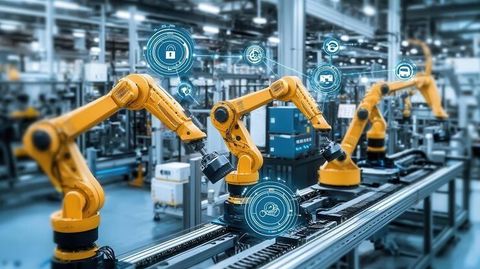
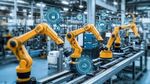
Computer numerical control (CNC) machines are commonly used to manufacture hydraulic components with repeatable dimensions. Automated machining, robotic handling, and digital production monitoring can help manufacturers maintain consistent processes and identify deviations during production.
Digital records can connect component specifications, machining parameters, inspection results, and assembly information. This creates a clearer production history and can help quality teams investigate recurring defects. However, digital monitoring does not replace physical inspection or appropriate engineering validation.
Smart Hydraulics and Energy Efficiency
Some modern hydraulic systems use electronic sensors, proportional valves, variable-speed pump controls, and connected monitoring equipment. These technologies can adjust hydraulic output according to changing operating requirements and provide information about pressure, temperature, fluid condition, and system performance.
Energy-efficient hydraulic designs may reduce unnecessary fluid flow or heat generation in suitable applications. Electrohydraulic systems also combine electronic commands with hydraulic power to support more precise control. Their actual performance depends on the application, system design, operating conditions, and maintenance practices.
Materials and Manufacturing Methods
Manufacturers continue to use improved surface treatments, corrosion-resistant materials, advanced coatings, and refined machining processes where application requirements justify them. Additive manufacturing is also being investigated and applied for selected hydraulic components, including parts with complex internal passages.
Not every production method is appropriate for every component. Pressure-bearing parts must meet relevant mechanical, dimensional, material, and testing requirements regardless of the manufacturing technique used.
Laws or Policies
Hydraulic equipment production is shaped by product safety requirements, industrial regulations, environmental rules, workplace standards, and applicable technical specifications. The exact requirements depend on the equipment type, intended use, operating pressure, destination market, and whether the product is incorporated into a larger machine.
Manufacturing and Equipment Safety in India
In India, manufacturers may need to consider the Factories Act, 1948, and applicable state rules, along with relevant occupational safety requirements and the Occupational Safety, Health and Working Conditions Code, 2020, according to their legal status and implementation arrangements. Applicable obligations depend on the establishment, the equipment, and the provisions currently in force.
Machinery used in industrial settings may also be subject to requirements concerning guarding, pressure hazards, electrical safety, maintenance, and safe operating procedures. Hydraulic equipment can retain pressurized fluid even after its power source has been switched off, so safe isolation and pressure release are important during maintenance.
Technical Standards and Quality Requirements
International and national standards help establish consistent methods for hydraulic system design, testing, cleanliness, and safety. Relevant examples include ISO 4413 for general rules and safety requirements for hydraulic fluid power systems and ISO 4406 for coding the level of particulate contamination in hydraulic fluids.
Depending on the product, manufacturers may also consider applicable Indian Standards, customer specifications, pressure-related requirements, and export-market regulations. A standard's relevance depends on the equipment and its intended application; citing a standard alone does not establish that a product complies with every applicable law.
Environmental and Workplace Considerations
Hydraulic fluid handling requires attention to spills, storage, disposal, and potential environmental contamination. Manufacturers must follow applicable environmental and hazardous-waste rules where relevant, including requirements for managing used oil and contaminated materials.
Production facilities also need suitable procedures for machine guarding, personal protective equipment, material handling, ventilation, and worker training. These measures address risks associated with machining, high-pressure testing, heavy components, and hydraulic fluid exposure.
Tools and Resources
Several engineering tools and technical resources support hydraulic equipment production, from initial design to final quality inspection. Their suitability depends on the component being manufactured and the required level of technical detail.
Design and Engineering Software
Computer-aided design (CAD) software helps engineers create component drawings, assembly layouts, and dimensional specifications. Computer-aided engineering tools can support stress analysis, fluid-flow simulation, and thermal studies, helping identify potential design limitations before physical production.
Hydraulic circuit design software can represent pumps, valves, cylinders, motors, and flow paths. Engineers use these models to examine how a system may respond to different loads and control settings. Simulation results depend on the accuracy of the model and should be validated where necessary.
Manufacturing and Inspection Equipment
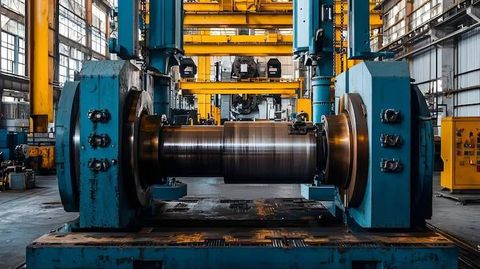
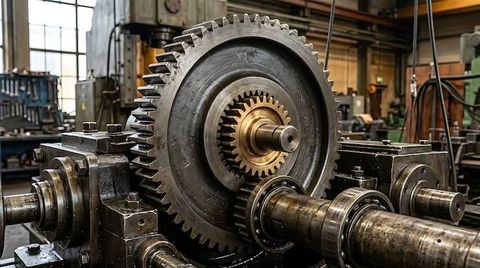
Common production tools include CNC lathes, milling machines, grinding equipment, honing machines, and drilling systems. Hydraulic cylinder production may require honing to obtain a suitable internal surface finish, while precision valve components may require carefully controlled machining and inspection.
Quality control can involve several measurement and testing tools:
Coordinate measuring machines: Check component dimensions and geometric features.
Surface roughness testers: Measure surface texture where specifications require it.
Pressure test rigs: Evaluate components or assemblies under defined test conditions.
Flow meters: Measure fluid flow through a system or component.
Particle contamination analysis tools: Help assess hydraulic fluid cleanliness.
Torque tools: Support controlled tightening during assembly.
Testing procedures must follow appropriate engineering specifications and safety precautions, particularly when pressurized equipment is involved.
Quality Control Across Production
Quality control generally begins with incoming material inspection and continues through machining, assembly, testing, and final documentation. Manufacturers may use inspection plans, process checklists, nonconformance reports, and traceability records to identify problems and verify that components meet their specified requirements.
A typical production sequence includes the following stages:
Review the technical drawings and operating requirements.
Select suitable materials and inspect incoming components.
Machine parts to the specified dimensions and surface finish.
Clean components and assemble them using suitable seals and fittings.
Conduct required pressure, leakage, and functional tests.
Document inspection results and release compliant assemblies.
Inspection frequency and acceptance criteria depend on the product design, applicable standards, and manufacturer requirements. Testing should be carried out using suitable equipment and controlled procedures.
FAQs
What are the main stages of hydraulic equipment production?
Hydraulic equipment production generally includes design, material selection, machining, surface treatment where needed, cleaning, assembly, testing, and documentation. The exact sequence depends on the component and system design.
Which materials are used in hydraulic equipment manufacturing?
Common materials include carbon steel, alloy steel, stainless steel, cast iron, aluminium alloys, and selected engineering polymers. Material selection depends on pressure, strength, corrosion exposure, weight, temperature, and compatibility with hydraulic fluid.
How is hydraulic equipment quality control performed?
Quality control can include dimensional inspection, surface-finish measurement, cleanliness checks, pressure testing, leakage testing, and functional testing. The applicable procedures and acceptance limits depend on the product specifications and relevant standards.
Which standards apply to hydraulic equipment production?
ISO 4413 addresses general safety requirements for hydraulic fluid power systems, while ISO 4406 provides a method for coding particulate contamination levels in hydraulic fluids. Other standards and regulations may apply according to the product and destination market.
How does automation affect hydraulic equipment manufacturing?
Automation can support repeatable machining, consistent assembly, digital inspection records, and production monitoring. Its results depend on process design, equipment calibration, operator oversight, and effective quality management.
Conclusion
Hydraulic equipment production combines engineering design, material selection, precision machining, assembly, and systematic quality control. Advances in automation, digital monitoring, and component design are influencing how manufacturers produce and evaluate hydraulic systems. Applicable safety regulations and technical standards help define requirements for manufacturing, testing, and use. Component accuracy, fluid cleanliness, suitable materials, and controlled testing remain important considerations throughout the production process.