Industrial Cutting Machines Guide: Designs, Working Principles, Uses, Benefits and Considerations
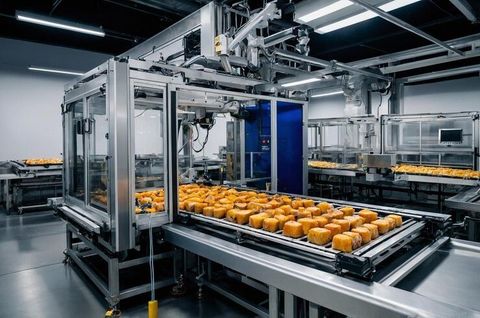
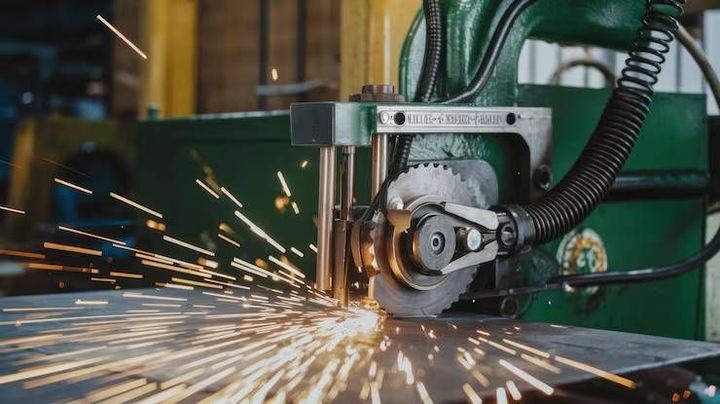
Industrial cutting machines are mechanical, electrical, or computer-controlled systems designed to divide, shape, trim, or remove material according to a required size or pattern. They are used across manufacturing, construction, metalworking, woodworking, packaging, automotive production, and other industrial activities. Depending on the material and application, cutting can be performed with blades, saws, abrasive tools, lasers, plasma, water jets, or other cutting methods.
Context
Industrial cutting machines are mechanical, electrical, or computer-controlled systems designed to divide, shape, trim, or remove material according to a required size or pattern. They are used across manufacturing, construction, metalworking, woodworking, packaging, automotive production, and other industrial activities. Depending on the material and application, cutting can be performed with blades, saws, abrasive tools, lasers, plasma, water jets, or other cutting methods.
The development of industrial cutting machines came from the need to process materials more consistently than manual tools could allow. Early industrial equipment relied heavily on mechanical blades and saws, while later machines introduced hydraulic systems, electrical controls, numerical control, and computer-based automation.
Today, industrial cutting machines range from relatively simple mechanical equipment to computer-controlled systems. A machine may be designed for sheet metal, pipes, wood panels, plastics, stone, composites, or other materials. The design, cutting method, power source, workpiece size, and control system all influence how a particular machine operates.
How Industrial Cutting Machines Work
The basic process involves positioning a material, applying a cutting force or energy source, and separating or shaping the material. Mechanical machines use physical contact, while thermal and non-contact machines can use heat, electrical energy, or pressurized water.
Computer numerical control, commonly known as CNC, allows cutting instructions to be programmed into a machine. The system can then control movement along specific axes and follow a defined cutting path. Sensors and control systems can also monitor operating conditions and help coordinate machine movement.
Importance
Industrial cutting machines are important because accurate material preparation is part of many manufacturing processes. A component may need to be cut to a particular dimension before it is welded, formed, assembled, drilled, or finished. Cutting accuracy can therefore influence the next stages of production.
These machines also address practical challenges associated with different materials. Thick steel may require a different cutting method from thin aluminium, wood, plastic, ceramic, or composite material. Selecting an appropriate cutting process helps match the equipment to the physical characteristics of the material.
Common Industrial Uses
Industrial cutting machines are found in many areas of manufacturing and fabrication. Common applications include:
- Metal sheet and plate cutting
- Pipe and tube preparation
- Automotive component production
- Construction material preparation
- Furniture and woodworking
- Plastic sheet processing
- Stone and ceramic cutting
- Packaging material preparation
- Electrical enclosure production
- General fabrication and machine-component manufacturing
The equipment can also be integrated into larger production systems. Automated loading, positioning, inspection, and material-handling equipment may work alongside cutting machines to create a connected production process.
Main Benefits
Different cutting technologies provide different advantages. Mechanical cutting can be suitable for applications where physical separation is required, while laser and plasma systems can process many metal materials without direct blade contact.
Common advantages include improved dimensional consistency, repeatable cutting paths, reduced manual handling, and the ability to process complex shapes. CNC control can also help reproduce programmed patterns across multiple workpieces.
However, performance depends on machine design, material properties, tooling, operating settings, maintenance, and operator procedures. A cutting machine should therefore be evaluated according to its intended application rather than by a single performance characteristic.
Recent Updates
Industrial cutting technology has increasingly moved toward automation, digital controls, and integrated manufacturing systems during 2024–2026. CNC controls, automated material handling, sensors, machine monitoring, and software-based production planning are becoming more closely connected within modern manufacturing environments.
Laser cutting has also continued to develop through improvements in control systems, beam management, automation, and integration with production equipment. Plasma and water-jet systems remain relevant where material thickness, surface characteristics, or particular cutting requirements make them suitable.
Machine safety has received continued attention through updated standards and certification frameworks. BIS lists specific machine-safety guidance for metal cutting machines under Scheme-X, including technical documentation, marking, and certification requirements.
India has also continued developing machinery-safety standards. BIS references IS 18165:2023 for the safety of thermal cutting machines and standards covering sawing machines, presses, turning machines, electro-discharge machines, and other machine categories.
Another notable development is greater attention to the safety of integrated manufacturing systems. A 2025 draft Indian Standard aligned with ISO 11161:2025 introduced updated considerations for risk assessment, system design, task zones, and risk-reduction measures in integrated manufacturing systems.
Laws or Policies
In India, industrial cutting machines can be affected by machinery-safety requirements, Indian Standards, conformity-assessment rules, workplace safety requirements, and sector-specific regulations. The exact requirements depend on the machine category, application, manufacturing location, and whether the equipment falls within a notified regulatory scope.
The Machinery and Electrical Equipment Safety framework includes metal cutting machines within the machinery categories covered by the relevant technical regulations. BIS provides machine-category-specific certification guidance for metal cutting machines under Scheme-X.
The Bureau of Indian Standards also maintains standards and conformity-assessment information. Its current resources allow users to identify applicable Indian Standards and review related documents, amendments, testing information, and certification details.
Workplace safety is another important area. India's Occupational Safety, Health and Working Conditions framework addresses workplace hazards, protective equipment, dangerous operations, and safety responsibilities in applicable workplaces. Requirements can vary according to the type of establishment and activity.
Because regulations can change, machine operators, manufacturers, and industrial facilities should refer to the applicable government notifications and current Indian Standards for their specific equipment.
Tools and Resources
Several resources can help readers understand industrial cutting machines and their technical requirements. The appropriate resource depends on whether the purpose is equipment selection, machine operation, safety planning, or standards research.
Useful Resources
- BIS Know Your Standard: Allows users to search Indian Standards by standard number or product keyword and review related documents and amendments.
- BIS Scheme-X resources: Provides information related to certification requirements for applicable machinery categories, including metal cutting machines.
- Material thickness charts: Help compare suitable cutting processes for different material types and thickness ranges.
- CNC programming software: Used to create and prepare digital cutting paths for compatible machines.
- Cutting parameter calculators: Can help estimate operating parameters such as feed rate, cutting speed, or material usage, depending on the cutting technology.
- Machine manuals and technical drawings: Provide information about machine dimensions, operating limits, controls, maintenance intervals, and safety procedures.
Comparing Common Cutting Technologies
| Cutting Method | Typical Materials | Main Cutting Principle | Common Applications |
|---|---|---|---|
| Saw cutting | Metal, wood, plastic | Mechanical teeth | Bars, pipes, panels |
| Laser cutting | Metals, selected non-metals | Focused light energy | Sheets, profiles, detailed shapes |
| Plasma cutting | Conductive metals | Ionized gas and heat | Plates, fabrication |
| Water-jet cutting | Metal, stone, glass, composites | High-pressure water stream | Complex profiles and material processing |
| Shearing | Sheet metal | Mechanical blade force | Straight sheet cuts |
| CNC routing | Wood, plastic, composites | Rotating cutting tool | Panels, signs, components |
The table provides a general comparison. Actual suitability depends on material composition, thickness, machine configuration, required geometry, surface requirements, and operating conditions.
Important Considerations
Choosing an industrial cutting machine involves several technical factors. Material type is one of the first considerations because different materials respond differently to heat, pressure, friction, and mechanical force.
Material thickness also matters. A system designed for thin sheet processing may not be appropriate for thick plate or large structural components. Similarly, a machine intended for straight cuts may not provide the same capabilities as equipment designed for complex profiles.
Other factors include:
- Required cutting dimensions
- Shape and complexity of the cutting path
- Production volume
- Machine working area
- Cutting speed
- Accuracy requirements
- Energy requirements
- Operator controls
- Safety equipment
- Dust, fumes, heat, or noise generated during operation
- Maintenance requirements
- Availability of compatible tooling and replacement components
Safety should remain a central consideration. Guards, emergency controls, protective equipment, ventilation, electrical protection, and appropriate operating procedures depend on the machine type and workplace environment.
FAQs
What are industrial cutting machines used for?
Industrial cutting machines are used to divide, trim, shape, or profile materials such as metal, wood, plastic, stone, and composites. They are used in manufacturing, fabrication, construction, automotive production, furniture production, and other industrial applications.
How do industrial cutting machines work?
Industrial cutting machines work by applying mechanical force, heat, focused energy, abrasive action, or high-pressure fluid to separate or shape a material. CNC systems can control movement along programmed paths.
Which industrial cutting machines are used for metal?
Metal cutting can involve saws, shears, laser cutting machines, plasma cutting machines, water-jet systems, and other machine tools. The suitable method depends on metal type, thickness, shape, accuracy requirements, and production conditions.
What factors should be considered for industrial cutting machines?
Important considerations include material type, thickness, required dimensions, cutting geometry, machine capacity, control system, safety features, energy requirements, maintenance needs, and workplace conditions.
Are industrial cutting machines covered by Indian safety standards?
Certain categories of industrial cutting machines are covered by Indian Standards and applicable machinery-safety certification frameworks. BIS provides specific guidance for metal cutting machines and other machine categories.
Conclusion
Industrial cutting machines use different technologies to process materials for manufacturing, construction, fabrication, and other applications. Mechanical, laser, plasma, water-jet, shearing, and CNC-based systems each have different operating principles and suitable applications. Recent developments have increased the use of automation, digital controls, integrated systems, and machine-safety standards. In India, applicable BIS requirements and workplace safety rules should be considered according to the specific machine and operating environment.