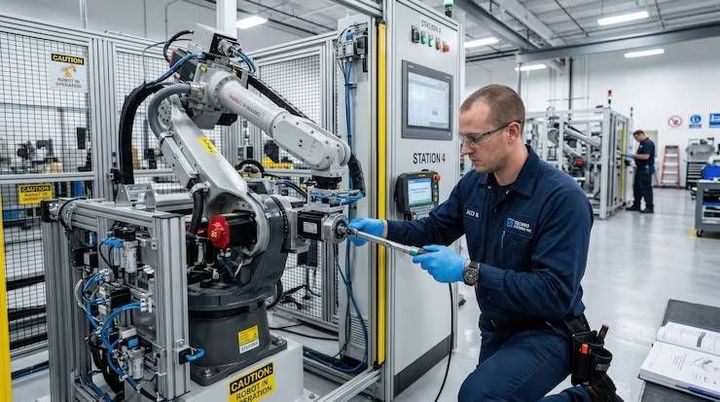
Industrial Equipment Automation Guide: Technologies, Control Systems, Functions and Uses
Industrial equipment automation refers to the use of control systems, sensors, software, and machines to perform industrial tasks with limited manual intervention. It is used in manufacturing plants, warehouses, processing facilities, packaging operations, and other industrial environments. Industrial equipment automation combines mechanical equipment with electronic controls to manage activities such as moving materials, monitoring temperatures, operating production lines, and inspecting manufactured products.
Context
Industrial equipment automation refers to the use of control systems, sensors, software, and machines to perform industrial tasks with limited manual intervention. It is used in manufacturing plants, warehouses, processing facilities, packaging operations, and other industrial environments. Industrial equipment automation combines mechanical equipment with electronic controls to manage activities such as moving materials, monitoring temperatures, operating production lines, and inspecting manufactured products.
The development of industrial automation began with mechanical devices designed to reduce repetitive physical work. As electrical systems, programmable controllers, computers, and industrial networks developed, factories gained the ability to coordinate multiple machines through centralized or distributed control systems. Modern automation can combine physical equipment with digital monitoring, data analysis, and remote supervision.
Understanding Industrial Automation Systems
An industrial automation system connects equipment, control devices, and software to perform defined tasks. For example, a production line may use sensors to detect an item, a programmable logic controller to process the signal, and an actuator to move or position the item.
Industrial automation can be divided into several categories:
Fixed automation: Equipment performs a consistent sequence of operations, commonly in high-volume production.
Programmable automation: Machines can be reconfigured for different production sequences or product types.
Flexible automation: Equipment and control software support changes between products with limited interruption.
Integrated automation: Multiple machines and information systems exchange data to coordinate production activities.
The appropriate arrangement depends on the production process, required output, product variety, safety requirements, and operating environment. Some facilities automate a single machine, while others connect complete production lines and material-handling systems.
Main Components of Industrial Equipment Automation
Industrial automation depends on several components working together. Each component has a particular role in measuring conditions, making decisions, or carrying out physical actions.
Sensors: Detect variables such as temperature, pressure, position, speed, and the presence of objects.
Controllers: Process input signals and execute programmed instructions.
Actuators: Convert control signals into physical movement or action.
Motors and drives: Control the movement, speed, or torque of industrial machinery.
Human-machine interfaces (HMIs): Display operating information and allow authorized operators to adjust settings.
Industrial communication networks: Transfer information between controllers, sensors, computers, and other equipment.
Supervisory control and data acquisition (SCADA) systems: Support monitoring and supervisory control across machines or industrial processes.
These components form a coordinated system. When a sensor detects a change, the controller evaluates the signal and determines whether an action is required according to its programmed logic and operating conditions.
Importance
Industrial equipment automation matters because industrial facilities must manage production speed, consistency, worker safety, equipment availability, and product quality. Manual operations can be physically demanding or difficult to repeat with consistent timing, especially when processes involve heavy materials, high temperatures, hazardous substances, or repetitive movements.
Automation can help reduce repetitive tasks and provide more consistent control over industrial processes. It also enables facilities to collect operating data that may help identify interruptions, unusual machine behavior, and maintenance requirements. However, automation does not eliminate every production problem, and its effectiveness depends on appropriate design, installation, training, and maintenance.
Applications Across Industrial Sectors
Industrial automation is used in a wide range of industries, although the equipment and control requirements differ.
Manufacturing: Automated assembly, cutting, welding, drilling, and component positioning.
Food and beverage processing: Temperature monitoring, filling, mixing, sorting, and packaging.
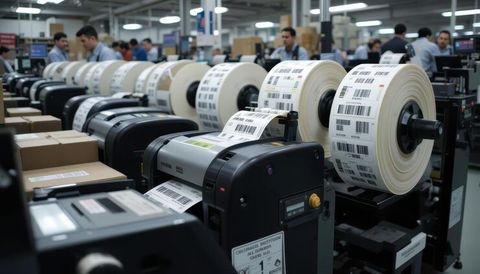
Warehousing: Conveyor systems, automated storage equipment, barcode scanning, and robotic material movement.
Chemical processing: Process monitoring, flow control, pressure regulation, and temperature management.
Automotive production: Robotic welding, painting, assembly, and inspection.
Water treatment: Pump control, tank-level monitoring, filtration management, and chemical process monitoring.
Pharmaceutical production: Controlled processing, equipment monitoring, packaging, and traceability.
These applications demonstrate how automation can connect physical operations with measurable control conditions. The system must be designed around the materials, equipment, environmental conditions, and safety requirements of each facility.
Benefits and Challenges of Industrial Automation
Automation may improve process consistency, reduce some forms of manual handling, and support continuous monitoring. Automated inspection systems can also identify selected product defects, while operating records help teams examine production patterns.
Nevertheless, industrial automation presents practical challenges. Equipment installation may require changes to existing machinery, electrical systems, software, and production layouts. Workers also need suitable training to operate, troubleshoot, and maintain the equipment.
Other challenges include cybersecurity risks, compatibility between older and newer machines, unexpected downtime, and the need for replacement parts. A highly automated facility may also depend on specialized technical knowledge, making documentation and maintenance planning important.
Recent Updates
Industrial equipment automation continues to develop through advances in artificial intelligence, industrial connectivity, robotics, and data analysis. During 2024–2026, major industry trends have included wider experimentation with AI-assisted production monitoring, increased attention to operational technology cybersecurity, and the integration of digital models with physical manufacturing systems. The extent of adoption varies by industry, facility size, and technical requirements.
Artificial Intelligence and Predictive Maintenance
Traditional maintenance schedules may rely on operating hours, calendar intervals, or equipment manufacturers' guidance. Predictive maintenance uses operating data, such as vibration, temperature, current, or pressure, to identify patterns that may indicate developing equipment problems.
AI-based tools can analyze large amounts of machine data and help identify unusual behavior. Their findings still require appropriate validation because sensor faults, changing operating conditions, incomplete data, and incorrect model assumptions can affect results. These tools support maintenance decisions rather than replacing all inspections or engineering judgment.
Connected Factories and Digital Twins
Industrial Internet of Things (IIoT) systems connect machines, sensors, and monitoring platforms to exchange operating information. This connectivity can help production teams view equipment status, compare performance across production lines, and investigate interruptions.
Digital twins are digital representations of physical equipment, processes, or facilities. Depending on their design, they may use operational data to simulate conditions, evaluate changes, or support equipment planning. Their accuracy depends on the quality of the underlying models and data, and not every digital model updates continuously.
Robotics and Human-Machine Collaboration
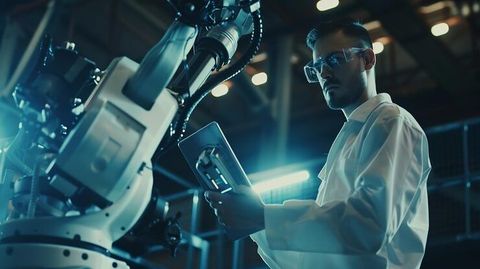
Industrial robots perform activities such as welding, palletizing, material handling, and precision assembly. Collaborative robots are designed for certain applications in which people and robots work in closer proximity, subject to appropriate risk assessment and safeguards.
Modern automation projects increasingly consider how workers interact with automated systems. Clear operating procedures, emergency-stop arrangements, access controls, and suitable training remain important even when machines include advanced sensors or intelligent control features.
Laws or Policies
Industrial equipment automation is shaped by workplace safety requirements, electrical and machinery standards, environmental rules, and cybersecurity considerations. The applicable requirements depend on the country, industry, machine type, and intended use.
Industrial Automation Regulations in India
In India, industrial facilities must consider applicable occupational safety, factory, electrical, environmental, and machinery requirements. The Occupational Safety, Health and Working Conditions Code, 2020, forms part of India's occupational safety legislative framework, with implementation and applicable provisions depending on the relevant commencement notifications and rules.
The Factories Act, 1948, and associated state rules have historically governed important aspects of factory safety, machinery guarding, and working conditions. The current legal position depends on the implementation status of relevant legislation and the rules applicable to the particular facility. Businesses must verify the provisions currently in force rather than assuming that a single rule applies to every industrial operation.
Electrical installations, pressure equipment, lifting machinery, and other specialized systems may be subject to additional technical and safety requirements. Relevant Indian Standards and applicable regulations can help define equipment design, inspection, installation, and operating practices.
Machinery Safety and Cybersecurity
Machinery safety measures may include physical guards, interlocks, emergency stops, protective sensors, and procedures for isolating energy before maintenance. The specific safeguards depend on the hazards identified during a risk assessment.
Connected industrial systems also require protection against unauthorized access, malware, and disruption of production. Organizations may use network segmentation, controlled remote access, software updates, access permissions, backups, and incident-response procedures. International guidance, including the IEC 62443 series for industrial automation and control system security, provides frameworks for addressing operational technology risks.
Compliance requires more than installing equipment that meets a technical specification. Training, maintenance records, inspections, documentation, and safe operating procedures also contribute to responsible industrial operation.
Tools and Resources
Industrial automation projects involve engineering software, monitoring platforms, technical documentation, and planning tools. The appropriate resources depend on whether the task involves machine control, process monitoring, equipment design, or maintenance.
Automation Software and Engineering Tools
Programmable logic controller (PLC) programming software is used to create and test control logic. HMI and SCADA software helps engineers develop operator displays, alarms, trends, and supervisory controls. Computer-aided design (CAD) tools support mechanical layouts and equipment integration.
Industrial automation professionals may also use simulation software to test control sequences before implementation. Examples of relevant technologies and platforms include Siemens TIA Portal, Rockwell Automation Studio 5000, and CODESYS. Their features and compatibility depend on the equipment, licensing arrangements, and project requirements.
Monitoring and Maintenance Resources
Condition-monitoring tools collect information about vibration, temperature, electrical current, pressure, and other operating variables. Maintenance management systems can organize inspection schedules, equipment histories, spare-parts records, and maintenance work orders.
Useful planning documents include:
Equipment inventory and component specifications.
Input/output lists showing sensor and actuator connections.
Control-system diagrams and electrical drawings.
Risk assessments and machine-safety checklists.
Preventive maintenance schedules and inspection logs.
Backup procedures and industrial cybersecurity plans.
Comparing Automation System Components
| Component | Primary function | Example application |
|---|---|---|
| Sensor | Measures or detects a condition | Detecting an item on a conveyor |
| PLC | Executes programmed control logic | Coordinating machine movements |
| Actuator | Produces physical action | Opening a control valve |
| Variable frequency drive | Controls compatible motor speed | Regulating conveyor movement |
| HMI | Displays information for operators | Showing alarms and machine status |
| SCADA | Supervises and records processes | Monitoring several production areas |
| Industrial robot | Performs programmed physical tasks | Welding or palletizing components |
These components may operate independently or as part of a larger integrated control architecture. Their selection depends on process requirements, operating conditions, compatibility, and safety considerations.
FAQs
What is industrial equipment automation?
Industrial equipment automation uses sensors, controllers, software, and machines to carry out industrial tasks with limited manual intervention. It can support manufacturing, processing, material handling, and equipment monitoring.
What are the main components of industrial automation systems?
Common components include sensors, PLCs, actuators, motors, drives, HMIs, industrial networks, and SCADA systems. Each component contributes to measuring conditions, processing information, or controlling equipment.
What are the main applications of industrial equipment automation?
Applications include automated assembly, robotic welding, packaging, warehouse conveyors, water treatment, and process control. The equipment varies according to the industry's production requirements and safety conditions.
What are the benefits and challenges of industrial automation?
Potential benefits include consistent process control, reduced repetitive manual work, and improved equipment monitoring. Challenges include integration, maintenance, workforce training, cybersecurity, and unexpected equipment downtime.
Which standards apply to industrial automation in India?
Applicable requirements may include machinery and electrical safety rules, occupational safety legislation, relevant Indian Standards, and industry-specific regulations. The exact requirements depend on the facility, equipment, and legislation currently in force.
Conclusion
Industrial equipment automation combines sensors, controllers, machinery, and software to coordinate industrial processes. Its applications range from individual machines to connected production facilities, with potential benefits in consistency, monitoring, and material handling. Successful implementation depends on suitable equipment selection, worker training, maintenance, cybersecurity, and compliance with applicable safety requirements. Understanding these systems helps readers recognize both the capabilities and limitations of modern industrial automation.