Industrial Foundry Equipment Guide: Melting Furnaces, Casting Machines and Molding Systems
Industrial foundry equipment plays an important role in manufacturing metal components used in automobiles, construction machinery, industrial systems, electrical equipment, and infrastructure. A foundry is a manufacturing facility where metals are heated until molten, poured into prepared molds, and cooled to produce components with specific shapes and dimensions. This manufacturing process is commonly known as metal casting.
Context
Industrial foundry equipment plays an important role in manufacturing metal components used in automobiles, construction machinery, industrial systems, electrical equipment, and infrastructure. A foundry is a manufacturing facility where metals are heated until molten, poured into prepared molds, and cooled to produce components with specific shapes and dimensions. This manufacturing process is commonly known as metal casting.
The development of foundry equipment is closely connected to the history of metalworking. Early foundries relied on basic furnaces, manually prepared molds, and simple casting techniques. Modern industrial foundries use specialized melting furnaces, automated casting machines, molding systems, and material-handling equipment to improve production consistency and manage complex manufacturing requirements.
Industrial foundry equipment generally includes three major categories: melting systems, casting machinery, and molding equipment. Each category performs a different function within the production process, from preparing molten metal to forming and finishing solid components.
Understanding Industrial Foundry Equipment
Foundry operations involve several connected stages. Raw metal materials are prepared, heated, transferred into molds, cooled, and removed for further processing. Equipment selection depends on the metal being processed, component dimensions, production volume, and required casting characteristics.
The main equipment categories include:
Melting furnaces: Heat metal materials to the temperatures required for melting and casting.
Casting machines: Control the movement and delivery of molten metal into molds or dies.
Molding systems: Create the cavities that determine the shape of finished metal components.
Core-making machines: Produce internal mold structures used to create hollow sections and complex passages.
Fettling equipment: Removes excess material, gates, and surface irregularities after casting.
Material-handling systems: Move raw materials, molten metal containers, molds, and finished castings throughout the facility.
Together, these systems support different stages of metal casting and help foundries manufacture components for a wide range of industrial applications.
Importance
Industrial foundry equipment matters because metal casting remains an important manufacturing method for producing components with complex shapes, internal cavities, and different material requirements. Industries such as automotive manufacturing, aerospace, agricultural machinery, construction, energy, and heavy engineering depend on cast metal parts.
The equipment used in a foundry influences production capacity, metal quality, energy consumption, workplace safety, and manufacturing consistency. Inadequate temperature control, unsuitable mold materials, or incorrect pouring conditions can result in casting defects, including cracks, cavities, incomplete filling, and dimensional variations.
Role of Melting Furnaces in Foundry Operations
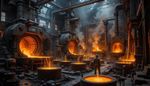
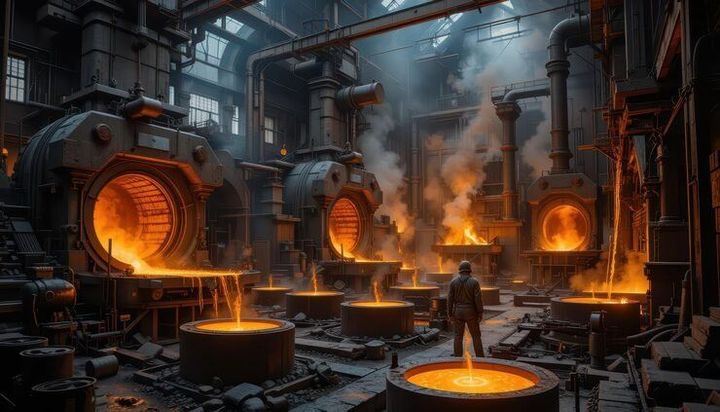
Melting furnaces prepare metals for casting by applying controlled heat. Different furnace technologies are used according to the metal type, required temperature, production capacity, and operating conditions.
Common industrial melting furnace types include:
Induction furnaces: Use electromagnetic induction to generate heat within conductive metal materials. They are commonly used for melting iron, steel, copper, and aluminum.
Electric arc furnaces: Generate heat through electrical arcs and are widely associated with steel production and metal recycling.
Cupola furnaces: Use coke combustion to melt iron in continuous foundry operations.
Gas-fired furnaces: Use natural gas or other suitable fuels to generate heat for melting different metals.
Crucible furnaces: Heat metal inside a refractory container called a crucible and are commonly used in smaller-scale casting operations.
Each furnace has different operating characteristics. The choice depends on production requirements, energy availability, metal composition, temperature control, and environmental considerations.
Role of Casting Machines and Molding Systems
Casting machines manage how molten metal enters and fills a mold. Depending on the manufacturing process, these machines may use gravity, pressure, centrifugal force, or continuous movement.
Molding systems prepare the shapes into which molten metal is poured. Sand molding is widely used because sand mixtures can form complex cavities and accommodate different casting dimensions. Other methods include permanent mold casting, investment casting, and shell molding.
Casting and molding systems work together to determine the shape, surface characteristics, and dimensional accuracy of manufactured components.
Common Foundry Equipment and Applications
| Equipment | Primary function | Common applications |
|---|---|---|
| Induction furnace | Melts metal using electromagnetic heating | Steel, iron, aluminum |
| Electric arc furnace | Melts metal using electrical arcs | Steel production |
| Sand molding machine | Forms sand molds | Engine blocks, machine parts |
| Die casting machine | Injects molten metal into metal dies | Automotive and electronic components |
| Centrifugal casting machine | Uses rotation to distribute molten metal | Pipes, cylindrical components |
| Core-making machine | Produces internal casting cores | Hollow metal components |
| Shot blasting machine | Cleans casting surfaces | Surface preparation |
| Fettling equipment | Removes excess casting material | Metal component finishing |
These machines may operate independently or as part of integrated production lines, depending on the foundry's manufacturing process.
Recent Updates
Industrial foundry technology has increasingly incorporated automation, digital monitoring, energy management, and improved process control. Developments during 2024–2026 reflect broader manufacturing trends toward connected production equipment, reduced material waste, and more consistent operating conditions.
Automation and Smart Foundry Systems
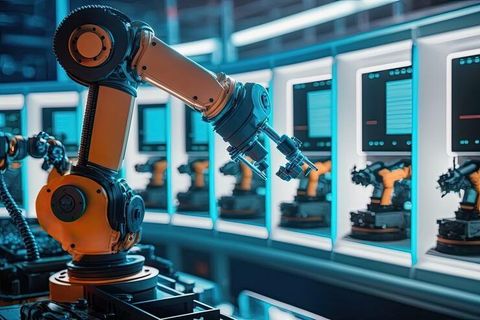
Modern foundries increasingly use automated equipment to manage repetitive production activities. Robotic systems can support mold handling, metal pouring, casting removal, grinding, and material movement.
Programmable logic controllers (PLCs), industrial sensors, and supervisory control systems help monitor operating conditions. These technologies can track furnace temperatures, production cycles, machine performance, and equipment status.
Some facilities also use digital monitoring systems to identify operating irregularities. Data collected from machines can support maintenance planning and help operators identify changes that may affect casting quality.
Energy Efficiency and Environmental Improvements
Melting furnaces require substantial energy because metals must reach specific temperatures before casting. As a result, foundries are examining furnace insulation, heat recovery, efficient heating systems, and improved production scheduling.
Induction melting technology is also relevant to discussions about electrical energy use and process control. However, its overall environmental impact depends on electricity generation, furnace efficiency, material inputs, and operating conditions.
Other developments include improved dust collection, emission monitoring, sand reclamation, and recycling of metal scrap. These measures can help foundries manage industrial waste and environmental impacts.
Digital Casting and Process Monitoring
Simulation software is increasingly used to study mold filling, metal flow, cooling patterns, and solidification behavior before physical production begins. These models can help engineers identify possible defects and adjust casting designs or process parameters.
Artificial intelligence and data analysis tools are also being explored for equipment monitoring and quality assessment. Their effectiveness depends on sensor accuracy, available production data, system integration, and operating conditions.
Laws or Policies
Industrial foundry operations are influenced by environmental regulations, workplace safety requirements, industrial equipment standards, building regulations, and energy-related policies. Requirements differ according to the country, production process, materials, furnace technology, and facility size.
Industrial Foundry Regulations in India
In India, foundries must consider applicable central, state, and local regulations governing industrial manufacturing and environmental protection.
The Environment (Protection) Act, 1986, provides an important framework for environmental regulation. The Air (Prevention and Control of Pollution) Act, 1981, and the Water (Prevention and Control of Pollution) Act, 1974, are also relevant to industrial operations.
Depending on the facility and its activities, foundries may require approvals or consents from the relevant State Pollution Control Board or Pollution Control Committee. These requirements can cover emissions, wastewater discharge, industrial waste, and pollution-control arrangements.
Workplace Safety and Equipment Standards
Foundry environments involve high temperatures, molten metals, heavy machinery, dust, noise, and material-handling risks. Applicable workplace safety requirements address machinery operation, protective equipment, ventilation, fire prevention, and employee safety.
India's Occupational Safety, Health and Working Conditions Code, 2020, forms part of the country's consolidated occupational safety framework, subject to its applicable commencement and implementation arrangements.
Relevant technical standards may also cover furnace construction, electrical installations, lifting equipment, protective systems, and machinery safety. The Bureau of Indian Standards (BIS) publishes standards applicable to various industrial products and processes.
Foundry operators must identify the specific regulatory requirements applicable to their location and manufacturing activities rather than assuming that one standard covers every machine.
Tools and Resources
Industrial foundry equipment planning involves technical references, production calculations, simulation software, and equipment documentation. These resources help engineers, manufacturers, and facility operators understand machine capabilities and manufacturing requirements.
Foundry Design and Simulation Software
Computer-aided design (CAD) software helps engineers prepare casting designs, mold layouts, and machine components. Casting simulation platforms can model molten metal flow, solidification, cooling behavior, and possible defect locations.
Examples include:
MAGMASOFT: Used for casting process simulation and foundry process analysis.
FLOW-3D CAST: Supports simulation of metal casting processes and fluid behavior.
SOLIDWORKS: Used for mechanical design, equipment modeling, and engineering drawings.
AutoCAD: Supports technical drawings, equipment layouts, and manufacturing documentation.
The suitability of these platforms depends on the engineering requirements, software capabilities, and available technical data.
Equipment Monitoring and Production Tools
Foundries can use industrial temperature sensors, thermocouples, programmable controllers, energy meters, and vibration monitoring systems to observe equipment conditions.
Production spreadsheets can also organize important operational information, including:
Furnace operating temperatures and melting cycles.
Metal composition and material batch records.
Casting production quantities and rejection rates.
Machine maintenance schedules.
Energy consumption and equipment operating hours.
Mold preparation and inspection records.
Technical Standards and Industry Resources
The following organizations provide technical information and industry-related references:
Bureau of Indian Standards (BIS): Publishes Indian standards relevant to industrial equipment and manufacturing.
Ministry of Environment, Forest and Climate Change: Provides information about environmental legislation and industrial environmental requirements.
Foundry Informatics Centre: Provides technical information and resources related to foundry engineering.
American Foundry Society: Publishes educational and technical material about metal casting and foundry processes.
These resources support general technical understanding, equipment research, and regulatory awareness.
FAQs
What is industrial foundry equipment?
Industrial foundry equipment refers to machines and systems used to melt metals, prepare molds, pour molten materials, and process finished castings. Major categories include furnaces, casting machines, molding systems, and finishing equipment.
What types of melting furnaces are used in industrial foundries?
Common types include induction furnaces, electric arc furnaces, cupola furnaces, gas-fired furnaces, and crucible furnaces. Their applications depend on metal composition, production capacity, and operating requirements.
How do casting machines and molding systems work together?
Molding systems create the cavities that define a component's shape, while casting machines control how molten metal enters those cavities. The metal cools and solidifies before the casting is removed.
What are the common applications of industrial foundry machines?
Foundry machines produce components used in automotive manufacturing, agricultural machinery, construction equipment, industrial pumps, electrical systems, pipes, and heavy engineering applications.
How is automation changing modern foundry equipment?
Automation is being used for metal pouring, mold handling, casting removal, inspection, and material movement. Sensors and digital monitoring systems also help track temperatures, production conditions, and machine performance.
Conclusion
Industrial foundry equipment combines melting furnaces, casting machines, molding systems, and finishing machinery to manufacture metal components for multiple industries. Automation, digital simulation, energy management, and process monitoring are influencing modern foundry operations. Environmental regulations and workplace safety requirements also shape equipment selection and facility management. Understanding the functions and applications of individual machines provides a foundation for understanding the complete metal casting process.