Industrial Laser Cutter Guide With Precision Cutting and Manufacturing Insights
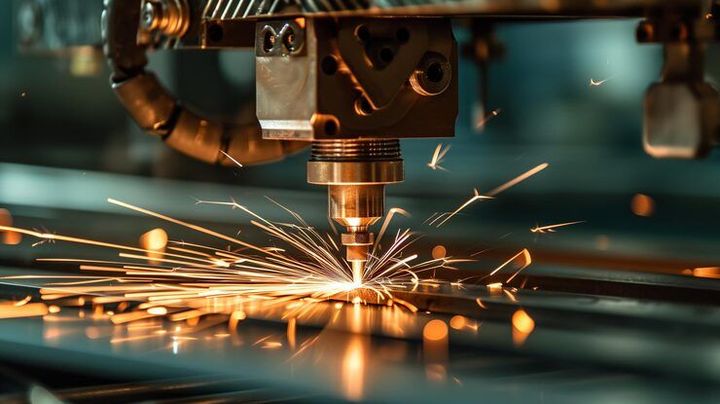
An industrial laser cutter is a machine that uses a concentrated beam of light to cut, engrave, or shape materials with controlled accuracy. The beam transfers energy to a small area, heating the material until it melts, vaporizes, or separates along a programmed cutting path.
Depending on the machine design, an assist gas may help remove molten material and produce a cleaner edge.
Industrial laser cutting is widely used in metal fabrication, automotive manufacturing, electronics, construction, appliance production, and equipment manufacturing. It developed alongside advances in laser technology, computer control, and automated production systems. As manufacturers began requiring more complex shapes and repeatable dimensions, laser cutting became an important alternative to several traditional mechanical cutting methods.
How an Industrial Laser Cutter Works
An industrial laser cutter combines optical equipment, motion controls, software, and material-handling components. A computer-aided design (CAD) drawing defines the required shape, while computer-aided manufacturing (CAM) software converts the drawing into instructions that guide the cutting head.
The machine follows these instructions while maintaining the required laser focus, speed, and cutting parameters. Depending on the application, the system may use oxygen, nitrogen, or compressed air as an assist gas.
The main components typically include:
Laser source: Generates the concentrated light beam.
Cutting head: Focuses the beam onto the material surface.
Motion system: Moves the cutting head or workpiece along programmed paths.
Control system: Coordinates movement, laser output, and cutting parameters.
Worktable: Supports the sheet, plate, or component during processing.
Extraction system: Removes smoke, fumes, and airborne particles generated during cutting.
Main Types of Industrial Laser Cutters
Different laser technologies serve different material requirements and production environments. The appropriate configuration depends on the material, thickness, required precision, and expected production volume.
Fiber lasers are commonly used for cutting metals such as stainless steel, carbon steel, aluminum, and brass. Their operating characteristics make them suitable for many industrial sheet-metal applications.
CO2 laser cutters use a gas-based laser source and can process materials such as wood, acrylic, textiles, and selected non-metallic materials. They can also cut certain metals when configured for suitable applications.
Other specialized laser systems, including ultraviolet and ultrafast lasers, are used where fine features, reduced thermal effects, or precise material modification are required. Their applications include electronics, delicate components, and specialized manufacturing processes.
Importance
Why Precision Cutting Matters
Industrial laser cutting helps manufacturers produce components with defined dimensions and repeatable shapes. Traditional cutting methods may require dedicated dies, physical contact, or several processing stages. Laser cutting can reduce the need for some of these operations, particularly when producing intricate outlines or changing component designs.
Precision is important because manufactured parts often need to fit together during assembly. Inaccurate dimensions can lead to alignment problems, additional finishing work, material waste, and production delays.
Laser cutting can also support flexible manufacturing. A digital design can be modified without necessarily creating a new physical cutting tool, making the process useful for prototypes, customized components, and changing production requirements.
Industries and Everyday Applications
The effects of industrial laser cutting extend beyond manufacturing facilities. Many everyday products contain components made using laser-based processes.
Automotive manufacturing: Body panels, brackets, frames, and selected structural components.
Construction: Metal supports, architectural panels, enclosures, and fabricated fittings.
Electronics: Device housings, precision brackets, and selected circuit-related components.
Medical equipment manufacturing: Metal instrument components and equipment enclosures, subject to applicable production controls.
Household appliances: Sheet-metal panels, ventilation components, and internal supports.
Renewable energy equipment: Enclosures, mounting components, and selected structural parts.
Limitations and Practical Challenges
Laser cutting requires careful control of heat, focus, cutting speed, and material characteristics. Excessive heat can cause discoloration, distortion, or changes near the cut edge. Reflective materials, including some highly reflective metals, may require specialized equipment and parameter settings.
Other considerations include ventilation, electrical safety, laser radiation protection, maintenance, and operator training. Thick materials may require slower processing or a different cutting method, depending on the machine's power and design.
Recent Updates
Developments in Laser Cutting Technology
Recent developments in industrial laser cutting have focused on automation, improved process monitoring, energy management, and software integration. Fiber laser systems have become increasingly important in metal fabrication, while advances in control software help operators coordinate cutting paths, material movement, and production planning.
Modern machines may include automatic nozzle changing, focus adjustment, sheet identification, and material-handling equipment. These features can reduce manual intervention, although their practical value depends on the application, production layout, and level of automation.
Manufacturers are also integrating sensors and monitoring software to identify process irregularities. Depending on the system, monitoring can help detect changes in cutting quality, gas pressure, or machine performance before they create larger production problems.
Artificial Intelligence and Connected Manufacturing
Artificial intelligence and connected factory systems are influencing how some laser cutting operations are managed. Software can analyze production information, help identify inefficient cutting paths, and support maintenance planning. However, the level of automation and analytical capability varies between machine models.
Digital manufacturing platforms also help coordinate design files, production schedules, and quality records. Integration with inventory and manufacturing execution systems can improve visibility into material usage and production progress.
The broader trend is toward more connected, data-informed manufacturing rather than relying entirely on manual adjustments. Human supervision remains important for checking results, managing unusual conditions, and ensuring safe operation.
Industrial Laser Cutter Comparison
The following table summarizes common laser technologies and their general applications. Actual capabilities depend on machine specifications, material properties, and operating conditions.
Laser technology | Common applications | Main consideration |
|---|---|---|
Fiber laser | Steel, aluminum, brass, and other metals | Reflectivity and thickness affect processing |
CO2 laser | Acrylic, wood, textiles, and selected metals | Material compatibility and optical maintenance |
Ultraviolet laser | Fine marking and specialized precision processing | Application-specific capabilities |
Ultrafast laser | Delicate components and fine material processing | Specialized equipment and process control |
Laws or Policies
Laser Safety and Workplace Requirements
Industrial laser cutter regulations depend on the country where the equipment is installed and operated. In many jurisdictions, manufacturers and employers must consider laser radiation hazards, electrical safety, machine guarding, ventilation, fire prevention, and worker training.
International laser safety standards provide frameworks for classifying laser equipment and managing exposure risks. Applicable standards may address protective enclosures, interlocks, warning indicators, access controls, and protective eyewear.
Enclosed industrial laser cutters are designed to contain hazardous radiation during normal operation. However, bypassing safety interlocks or opening protective enclosures during operation can create serious hazards. Equipment should be operated according to its documented safety procedures.
Environmental and Equipment Compliance
Laser cutting may generate smoke, fine particles, fumes, and gases, depending on the material and process. Workplace ventilation and extraction systems help control airborne contaminants, while suitable filtration may be required according to the material being processed and local environmental rules.
Electrical installations, compressed-gas systems, fire protection, and waste handling may also fall under applicable workplace or environmental requirements. Materials with unknown coatings or chemical treatments should be assessed before processing because heating them can release hazardous substances.
Businesses operating industrial laser cutters should identify the requirements that apply to their location, facility, equipment type, and materials. General technical information cannot replace a formal assessment of local compliance obligations.
Tools and Resources
Design and Cutting Software
CAD and CAM software are central to modern laser cutting. CAD programs create two-dimensional drawings or three-dimensional models, while CAM tools prepare cutting paths, nesting layouts, and machine instructions.
Nesting software arranges multiple component shapes on a sheet to improve material utilization. It can account for part spacing, sheet dimensions, cutting sequence, and material orientation. The results depend on the software settings and the limitations of the machine.
Common digital resources include:
CAD software for creating component drawings and defining dimensions.
CAM software for generating cutting paths and machine instructions.
Nesting tools for arranging components on sheet materials.
Maintenance logs for recording inspections, nozzle changes, and equipment faults.
Quality inspection tools, including calipers, micrometers, and coordinate measuring systems.
Material and Production Planning Tools
Material thickness charts, laser parameter references, and manufacturer documentation help operators understand the operating range of a particular machine. Such resources may describe recommended focus positions, cutting speeds, assist-gas settings, and nozzle configurations.
Production calculators can estimate sheet utilization, cutting length, processing time, and material requirements. These calculations are useful for preliminary planning, but actual results can differ because of machine acceleration, piercing time, loading delays, edge quality requirements, and material variation.
A structured quality checklist can record dimensions, burr formation, edge discoloration, surface damage, and part identification. Consistent documentation supports process comparisons and helps manufacturers investigate defects.
FAQs
What Is an Industrial Laser Cutter Used For?
An industrial laser cutter is used to cut, engrave, or shape materials according to digital designs. Common applications include sheet-metal fabrication, automotive components, equipment enclosures, architectural parts, and selected electronic components.
How Does a Fiber Laser Cutter Differ From a CO2 Laser Cutter?
A fiber laser cutter is widely used for metal processing, including many steel and aluminum applications. A CO2 laser cutter is commonly used for non-metallic materials such as acrylic, wood, and textiles, although suitable systems can also process certain metals.
What Materials Can an Industrial Laser Cutter Process?
Depending on the laser technology, industrial laser cutters can process stainless steel, carbon steel, aluminum, brass, acrylic, wood, textiles, and selected plastics. Not every material is suitable for laser processing, and some materials can release hazardous fumes when heated.
How Is Industrial Laser Cutting Accuracy Measured?
Accuracy is assessed by comparing the finished component with its specified dimensions and tolerances. Common methods include caliper measurements, micrometer checks, optical inspection, and coordinate measuring equipment for more complex geometries.
What Safety Precautions Are Needed for Industrial Laser Cutting?
Important precautions include using suitable protective enclosures, maintaining safety interlocks, controlling fumes, preventing fires, and following equipment-specific operating procedures. Operators also need appropriate training and must use protective equipment specified by the machine manufacturer and applicable safety requirements.
Conclusion
Industrial laser cutters use focused light and computer-controlled movement to produce precise shapes across a range of manufacturing applications. Fiber, CO2, and specialized laser technologies serve different material and production requirements. Automation, connected software, and process monitoring continue to influence industrial laser cutting, while ventilation, machine guarding, and operator training remain essential considerations. Understanding these capabilities and limitations provides a useful foundation for evaluating laser cutting within modern manufacturing.