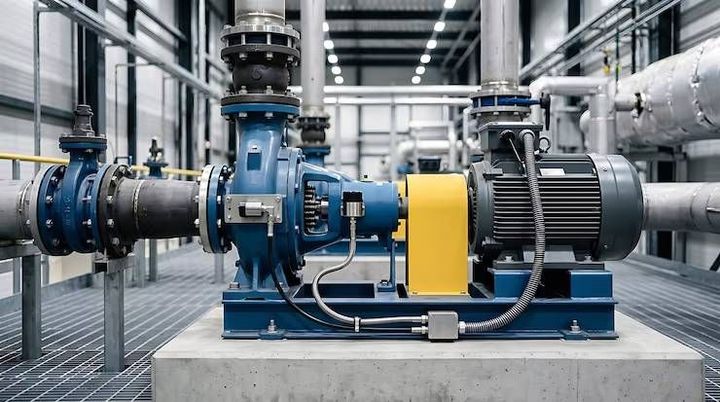
Industrial Pump Explore: Types, Configurations, Fluid Handling, Applications and Features
Industrial pumps are mechanical devices used to move liquids from one location to another or circulate fluids through a process. An industrial pump may handle water, chemicals, oils, wastewater, cooling fluids, slurries, or other process liquids, depending on its construction and operating conditions.
The basic idea behind pumping is simple: a pump transfers energy to a fluid so that the fluid can overcome pressure differences, elevation changes, and resistance inside pipes and equipment. Modern pumping systems have developed from relatively simple mechanical arrangements into systems that can include motors, variable frequency drives, sensors, control equipment, valves, and monitoring systems.
Industrial pumps are found in manufacturing facilities, water treatment plants, power generation, agriculture, mining, food processing, chemical production, construction, and many other sectors. Their configuration varies according to the type of fluid, required flow rate, pressure, temperature, operating environment, and installation arrangement.
How an Industrial Pump Works
A pump generally receives mechanical energy from an electric motor, engine, or another power source. The pump converts this energy into fluid movement. The exact process depends on the pump design.
Centrifugal pumps use a rotating impeller to increase the velocity of a liquid before converting part of that velocity into pressure. Positive displacement pumps work differently by trapping a defined quantity of fluid and moving it through the system during each operating cycle.
A complete pumping system normally includes more than the pump itself. Important components can include suction and discharge piping, valves, strainers, motors, couplings, control equipment, instrumentation, and storage tanks.
Importance
Industrial pumps matter because many industrial processes depend on controlled movement of liquids. Without suitable fluid handling equipment, processes such as cooling, circulation, filtration, chemical transfer, wastewater treatment, and material processing can become difficult to operate.
Pump selection also affects how a system responds to changing demand. A pump operating at a suitable point on its performance curve can provide the required flow and pressure without unnecessary hydraulic losses. The U.S. Department of Energy describes pumping as a system-level issue in which the pump, piping, controls, and demand should be considered together.
Problems Addressed by Industrial Pumps
Industrial pumping systems can address several practical requirements:
- Moving water between tanks, buildings, or process stages
- Circulating cooling or heating fluids
- Transferring liquids between production areas
- Handling wastewater and treated water
- Moving fluids through filtration systems
- Maintaining pressure within a process
- Handling liquids containing suspended solids
- Supporting hydraulic and lubrication systems
The correct configuration depends on the operating environment. A pump designed for clean water may not be suitable for abrasive slurry, corrosive chemicals, or fluids with high viscosity.
Understanding Basic Pump Measurements
Several measurements are commonly used when describing pump performance. Flow rate refers to the volume of liquid moved during a period. Head represents the energy added to the fluid and is often expressed as a height of liquid.
Pressure, temperature, fluid density, viscosity, motor power, rotational speed, and efficiency can also influence pump operation. The relationship between these factors helps engineers understand whether a particular pump configuration matches the requirements of a system.
| Pump consideration | What it describes | Why it matters |
|---|---|---|
| Flow rate | Quantity of fluid moved over time | Determines required fluid movement |
| Head | Energy added to the fluid | Helps overcome elevation and system resistance |
| Pressure | Force exerted by the fluid | Important for process requirements |
| Temperature | Thermal condition of the fluid | Influences materials and seals |
| Viscosity | Resistance of a fluid to movement | Affects pump selection and performance |
| Fluid composition | Chemical and physical properties | Influences materials and pump design |
| Motor power | Energy supplied to the pump | Determines operating capability |
| Speed | Rotational rate of the pump | Affects flow and pressure characteristics |
Recent Updates
From 2024 through 2026, industrial pumping has continued to move toward energy monitoring, variable-speed operation, digital measurement, and system-level efficiency. These developments are connected with broader industrial efforts to reduce unnecessary energy consumption and improve control of equipment.
India's Bureau of Energy Efficiency has published guidance for industrial pump operation that includes operating pumps near the manufacturer's specified operating point, using variable frequency drives for fluctuating loads where appropriate, monitoring important operating parameters, and measuring flow, head, and electricity consumption.
Variable-Speed Pumping
Variable frequency drives, commonly called VFDs, allow motor speed to be adjusted according to changing system requirements. This can be useful when flow demand changes during operation because the pump does not always need to operate at its full speed.
However, variable-speed control is not suitable for every pumping arrangement. System head, fluid characteristics, minimum-flow requirements, motor characteristics, and process conditions all need to be considered.
Digital Monitoring
Monitoring is becoming a more common part of industrial pump systems. Sensors can track variables such as pressure, temperature, vibration, flow, motor current, and operating hours.
Collected information can help operators identify changes in operating conditions. It can also support maintenance planning and performance analysis when used with appropriate measurement methods.
Energy-Efficient System Design
Recent guidance increasingly considers the entire pumping system rather than focusing only on the pump. Piping resistance, valves, controls, pump sizing, motor efficiency, operating schedules, and changing process demand can all influence energy use. India's BEE guidance specifically identifies system management, measurement, inspection, and appropriate pump and motor selection as areas for industrial energy management.
More Specialized Pump Configurations
Industrial applications are also using specialized designs for difficult fluids and operating conditions. These include pumps designed for corrosive liquids, high-temperature fluids, abrasive materials, wastewater, hygienic processing, and high-pressure applications.
The continued development of monitoring equipment and control systems allows pumps to be integrated more closely with wider industrial automation systems.
Laws or Policies
In India, industrial pump systems can be affected by several areas of regulation rather than by one single pump-specific law. Requirements can depend on the industry, fluid being handled, location, electrical installation, environmental impact, and type of equipment.
Water Pollution Requirements
The Water (Prevention and Control of Pollution) Act, 1974 provides the legal framework for preventing and controlling water pollution in India and establishes responsibilities for pollution control authorities. Industrial facilities handling wastewater or process effluent may therefore need to consider applicable environmental requirements when designing and operating pumping systems.
The exact requirements can vary according to the industry and the applicable central or state environmental authority.
Energy Efficiency
Energy efficiency is another relevant area. The Bureau of Energy Efficiency operates under the Energy Conservation Act framework and develops programs and guidance concerning efficient energy use. Its industrial pump guidance covers operating conditions, measurement, maintenance, variable frequency drives, and efficient motors.
BEE also maintains a Standards and Labelling program covering selected equipment. Its current listed equipment categories include some pump-related equipment, although the specific scope and labeling requirements depend on the equipment category.
Indian Standards
The Bureau of Indian Standards maintains standards covering different types of pumps and pumping equipment. For example, BIS records IS 1520 for horizontal centrifugal pumps used with clear, cold, fresh water. Other pump-related standards cover particular applications and configurations.
Applicable standards should be checked according to the specific pump type and intended application rather than assuming that one standard applies to every industrial pump.
Tools and Resources
Several resources can help readers understand pump operation, performance, and energy use. These resources are useful for learning the basic relationships between flow, pressure, head, power, and system resistance.
Pump Performance Curves
A pump performance curve normally shows relationships between flow rate, head, efficiency, and sometimes power. Reading these curves helps explain how a pump behaves at different operating points.
Flow and Head Calculations
Basic pump calculations can estimate the required flow and total head of a system. These calculations normally consider elevation, pipe friction, valves, fittings, pressure requirements, and fluid characteristics.
Energy Assessment Tools
The U.S. Department of Energy provides resources for industrial pumping systems, including the Pumping System Assessment Tool and technical guidance covering pump selection, variable-speed operation, parallel pumping, and system assessment.
For Indian facilities, BEE publications and guidance can also provide information about industrial energy management and pump operation.
Manufacturer Documentation
Technical documentation supplied with a pump normally contains information about operating ranges, materials, motor requirements, installation conditions, maintenance intervals, and performance characteristics. These documents are important because pump behavior can vary substantially between designs.
FAQs
What is an industrial pump?
An industrial pump is equipment used to move or circulate liquids in industrial processes. Depending on its configuration, it can handle water, chemicals, oils, wastewater, slurries, and other fluids.
What are the main types of industrial pumps?
The two broad categories are dynamic pumps and positive displacement pumps. Centrifugal pumps are common dynamic pumps, while gear, screw, diaphragm, piston, and other designs are examples of positive displacement pumps.
How does an industrial pump handle different fluids?
Fluid handling depends on characteristics such as viscosity, temperature, density, chemical composition, and the presence of suspended solids. Pump materials, seals, impeller design, speed, and internal clearances may need to correspond to these conditions.
What features are important in an industrial pump?
Important features can include flow capacity, head capability, materials of construction, temperature range, pressure rating, motor arrangement, sealing method, control options, and compatibility with the intended fluid.
Why are VFDs used with industrial pumps?
Variable frequency drives can adjust motor and pump speed when process demand changes. They can help match pump output more closely to system requirements, although their suitability depends on the specific pumping system and operating conditions.
Conclusion
Industrial pumps are central to fluid movement in manufacturing, water treatment, processing, cooling, wastewater handling, and many other applications. Their designs range from centrifugal and positive displacement pumps to specialized configurations for particular fluids and operating conditions. Recent developments have placed greater attention on energy monitoring, variable-speed control, digital measurement, and system-level performance. In India, pump-related activities can also be influenced by environmental rules, energy-efficiency programs, and applicable BIS standards.

You May Also Like