Industrial Pump Systems Guide: Designs, Flow Rates, Pressure Control and Industrial Uses
Industrial pump systems are used to move liquids through pipes, tanks, production equipment, and treatment facilities. An Industrial Pump Systems Guide explains the main pump designs, flow rates, pressure control methods, and industrial uses that determine how these systems operate. Pumps are important in manufacturing, agriculture, water distribution, energy production, food processing, and chemical handling because many industrial processes depend on the controlled movement of liquids.
Context
Industrial pump systems are used to move liquids through pipes, tanks, production equipment, and treatment facilities. An Industrial Pump Systems Guide explains the main pump designs, flow rates, pressure control methods, and industrial uses that determine how these systems operate. Pumps are important in manufacturing, agriculture, water distribution, energy production, food processing, and chemical handling because many industrial processes depend on the controlled movement of liquids.
The basic principle of pumping has existed for centuries, beginning with simple devices used to lift water for irrigation and household needs. Modern industrial pumps use electric motors, mechanical components, hydraulic principles, and electronic controls to move liquids through systems with different pressure and flow requirements. Their designs vary according to the liquid being handled, the distance it must travel, and the conditions under which the equipment operates.
Understanding Industrial Pump Designs
Industrial pumps generally fall into two main groups: centrifugal pumps and positive displacement pumps. Each group moves liquids differently, making it suitable for particular operating conditions.
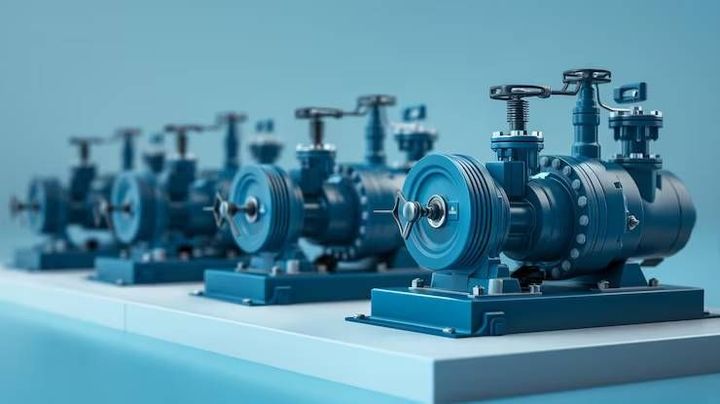
Centrifugal pumps use a rotating impeller to transfer energy to a liquid. The liquid moves outward from the impeller and enters the discharge pipe under pressure. These pumps are commonly used for water circulation, cooling systems, irrigation, and many general industrial processes.
Positive displacement pumps move a defined volume of liquid during each operating cycle. They may use gears, pistons, diaphragms, screws, or rotating lobes. These designs are often used when liquids are thick, flow must be carefully controlled, or a process requires a relatively consistent volume across changing pressure conditions.
Other designs include submersible pumps, which operate while immersed in liquid, and metering pumps, which deliver measured quantities for applications such as chemical dosing. Selecting a pump design requires consideration of the liquid's properties and the system's operating requirements.
Importance
Industrial pump systems support processes that affect everyday life, including drinking water distribution, wastewater treatment, food production, building cooling, and industrial manufacturing. When pumps operate outside their intended conditions, the results may include reduced flow, equipment damage, interruptions to production, or increased energy consumption.
Understanding pump performance helps engineers, plant operators, maintenance teams, and facility managers identify operating requirements and recognize potential problems. It also helps explain why a pump designed for clean water may not be appropriate for a thick liquid, abrasive mixture, or chemically aggressive substance.
Flow Rates and Pressure Control
Flow rate describes the volume of liquid that passes through a system during a particular period. It is commonly expressed in litres per minute, cubic metres per hour, or gallons per minute. The required flow rate depends on the process, such as filling a tank, circulating cooling water, or supplying a production line.
Pressure describes the force exerted by a liquid over an area. In a pumping system, pressure must be sufficient to overcome elevation differences, pipe friction, valves, filters, and other resistance. A pump's actual operating point depends on its performance characteristics and the resistance of the connected system.
Several factors influence pump performance:
Liquid properties: Density, viscosity, temperature, and the presence of suspended particles affect operation.
Pipe dimensions: Pipe diameter, length, bends, and fittings influence friction losses.
Elevation: Moving liquid to a higher point requires additional energy.
System demand: Valves, equipment requirements, and changing process conditions affect flow.
Pump speed: Changing rotational speed can alter flow, pressure, and power requirements.
Comparing Common Industrial Pump Types
| Pump type | Operating principle | Common industrial uses |
|---|---|---|
| Centrifugal | Rotating impeller transfers energy to liquid | Water circulation, cooling, irrigation |
| Gear | Meshing gears move liquid through a casing | Lubrication, oils, selected process liquids |
| Diaphragm | Flexible diaphragm displaces liquid | Chemical dosing, selected difficult liquids |
| Piston | Reciprocating piston moves liquid | High-pressure applications and metering |
| Screw | Rotating screws move liquid along a path | Oils, viscous liquids, process transfer |
| Submersible | Pump operates while immersed | Drainage, wastewater, groundwater removal |
These categories include different configurations, and their operating limits vary by model. The manufacturer's performance curves and material specifications help establish whether a particular design is suitable for an application.
Pressure Regulation and System Components
Pressure control helps keep a pumping system within its intended operating range. Depending on the application, systems may use pressure sensors, control valves, variable frequency drives, pressure switches, and control panels.
A variable frequency drive adjusts the speed of a compatible electric motor. When process demand changes, the controller can alter pump speed rather than continuously operating at one fixed speed. The achievable result depends on the pump design, system characteristics, and control settings.
Other components also affect performance. Pipes carry the liquid, valves regulate or isolate flow, filters remove selected particles, and check valves help prevent reverse flow. Pressure gauges and flow meters provide operating information that can assist with monitoring and fault identification.
Recent Updates
Industrial pump technology has increasingly focused on energy efficiency, digital monitoring, variable-speed control, and improved condition assessment. Developments during 2024–2026 reflect wider industrial efforts to reduce unnecessary energy use, improve equipment visibility, and manage maintenance around actual operating conditions. Adoption differs across industries, equipment generations, and regional investment priorities.
Smart Monitoring and Predictive Maintenance
Modern pump installations may use sensors to measure pressure, temperature, vibration, flow, and electrical power. These measurements can be reviewed locally or sent to industrial control systems for analysis. Unusual readings may indicate changes such as bearing wear, blockage, leakage, cavitation, or operation outside the intended range.
Some facilities use data-analysis software to identify patterns that precede equipment faults. Such tools can support maintenance planning, but their findings depend on sensor quality, suitable operating data, and correct interpretation. Monitoring does not eliminate the need for inspections or established safety procedures.
Energy Efficiency and Variable-Speed Operation
Energy efficiency remains an important consideration because pumps may run for long periods in industrial facilities. Correct pump sizing, suitable impeller selection, efficient motors, reduced pipe resistance, and appropriate control strategies can influence electricity use.
Variable-speed control is useful in systems with changing demand, although it is not appropriate for every installation. Engineers must account for minimum flow requirements, motor limits, pressure conditions, and the risk of unstable operation. Pump performance should be evaluated across the actual operating range rather than from a single rated figure.
Materials and Application-Specific Designs
Manufacturers continue to develop pump configurations and materials for demanding liquids and operating environments. Stainless steel, engineered polymers, coated components, and specialized alloys may be used where corrosion, abrasion, hygiene, or temperature is important.
Material suitability depends on the specific liquid and operating conditions. A material compatible with one chemical may react with another, while abrasive particles can accelerate wear even when chemical compatibility is acceptable. Application-specific assessment therefore remains essential.
Laws or Policies
Industrial pump systems are affected by regulations and technical standards covering electrical safety, machinery safety, environmental protection, water management, pressure equipment, and workplace conditions. The requirements depend on the equipment, industry, installation, and location.
Industrial Pump Regulations in India
In India, industrial pump installations may fall under applicable electrical safety requirements, state factory rules, environmental regulations, and building or process-specific standards. Facilities handling wastewater, industrial effluent, hazardous liquids, or regulated chemicals may also have additional obligations under relevant environmental and workplace legislation.
The Central Pollution Control Board and State Pollution Control Boards provide regulatory information related to pollution prevention and wastewater management. Depending on the facility and activity, permissions or compliance requirements may apply to effluent treatment, discharge, and associated pumping infrastructure.
Technical Standards and Workplace Safety
Technical standards help define test procedures, dimensions, performance measurements, and design practices. The International Organization for Standardization publishes standards relevant to pump testing and industrial equipment, while the Bureau of Indian Standards provides Indian standards and related technical information.
Industrial operators should consider electrical isolation, rotating machinery guards, pressure limits, leakage control, and safe maintenance access. Systems handling hazardous liquids may require additional containment, ventilation, monitoring, and emergency arrangements. Applicable legal obligations should be confirmed for the specific installation rather than assumed to be identical across all facilities.
Tools and Resources
Several technical resources help users understand industrial pump systems, estimate operating requirements, and interpret equipment performance. Their usefulness depends on the available system data and the user's level of technical knowledge.
Pump Selection and Calculation Tools
Pump selection software and hydraulic calculators can help estimate flow requirements, total dynamic head, friction losses, and approximate power demand. Manufacturer tools often allow users to compare pump performance curves with the intended operating point.
Common calculations include:
Flow rate: Liquid volume divided by the time required to move it.
Total dynamic head: The combined effect of elevation, pressure differences, and hydraulic losses, expressed as a liquid head.
Hydraulic power: The power transferred to the liquid, based on flow rate and pressure or head.
Efficiency: The relationship between useful hydraulic output and the energy supplied to the pump.
These calculations rely on correct input data. Actual performance can differ because of installation conditions, liquid properties, wear, and control settings.
Technical Documentation and Monitoring
Manufacturer manuals, pump performance curves, maintenance records, and equipment data sheets help users understand operating limits. Resources from the Hydraulic Institute, ISO, and the Bureau of Indian Standards can provide further technical context where relevant standards or guidance are applicable.
Digital monitoring platforms may display trends in flow, pressure, temperature, vibration, and power consumption. Maintenance teams can use these records to compare normal operation with unusual conditions and document inspections or repairs.
FAQs
What are the main types of industrial pump systems?
The main categories include centrifugal and positive displacement pumps. Other common designs include gear, diaphragm, piston, screw, metering, and submersible pumps, each suited to different liquid properties and operating requirements.
How is industrial pump flow rate measured?
Flow rate is measured as the volume of liquid moved over a period, commonly in litres per minute or cubic metres per hour. Flow meters and system calculations can help determine the actual operating rate.
How does pressure control work in industrial pump systems?
Pressure control uses devices such as sensors, valves, pressure switches, and variable frequency drives to manage operating conditions. The method depends on the pump design, system demand, and required pressure range.
What factors affect industrial pump performance?
Liquid viscosity, pipe dimensions, elevation, system resistance, pump speed, and maintenance condition all influence performance. The pump's operating point is determined by its characteristics and the connected system.
How can industrial pump energy efficiency be assessed?
Energy efficiency can be assessed by comparing hydraulic output with electrical input and examining flow, pressure, operating hours, and control settings. Performance measurements should reflect actual operating conditions rather than relying only on rated specifications.
Conclusion
Industrial pump systems move liquids through a wide range of manufacturing, water management, and process applications. Pump design, flow rate, pressure requirements, liquid properties, and pipe resistance all influence system performance. Digital monitoring and variable-speed control are increasingly used to support operational visibility and energy management. Applicable technical standards, environmental rules, and workplace safety requirements also shape the design, installation, and maintenance of industrial pumping equipment.