Learn About Industrial Power Machinery, Applications, and Modern Technologies
Industrial power machinery refers to equipment that generates, converts, controls, distributes, or uses mechanical and electrical power for industrial operations. Industrial power machinery includes electric motors, generators, turbines, compressors, pumps, gear systems, power transmission equipment, drives, and control systems.
Today, industrial power machinery connects physical equipment with electrical systems, automation, sensors, and digital monitoring. Modern facilities may combine conventional rotating machinery with variable frequency drives, programmable controllers, condition monitoring, and energy-management systems. Understanding these systems helps readers recognize how electricity and mechanical power move through industrial environments and why equipment selection, operating conditions, efficiency, and safety are important.
Context
What Industrial Power Machinery Means
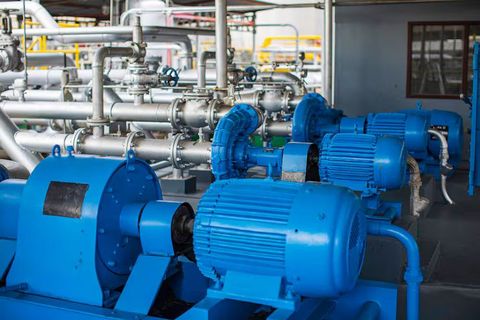
Industrial power machinery converts energy into useful mechanical or electrical output. An electric motor, for example, converts electrical energy into rotation, while a generator converts mechanical rotation into electrical energy. Pumps, compressors, fans, conveyors, and machine tools can then use that mechanical output for specific industrial tasks.
Industrial power machinery can be grouped into several broad categories:
- Power generation equipment, including generators and turbines
- Electric motors and motor control systems
- Power transmission equipment, including gearboxes, couplings, shafts, and belts
- Fluid power equipment, including hydraulic pumps and pneumatic compressors
- Electrical distribution equipment, including transformers, switchgear, and control panels
- Monitoring and automation equipment, including sensors, controllers, and industrial software
The appropriate machinery depends on the required power level, operating speed, load pattern, environment, and production process.
How Industrial Power Systems Developed
Early industrial facilities relied heavily on mechanical transmission systems powered by steam engines, water wheels, and other centralized sources. Electrification gradually changed industrial layouts because individual machines could be driven by their own motors instead of depending on one central mechanical shaft.
Modern industrial power machinery has continued this development by combining electric drives, electronic controls, sensors, and software. The result is a more connected power system in which machinery can be measured and adjusted according to operating conditions.
Main Machinery Types
| Machinery type | Main function | Common industrial application |
|---|---|---|
| Electric motors | Produce mechanical rotation | Pumps, conveyors, fans |
| Generators | Produce electrical power | Backup and distributed power |
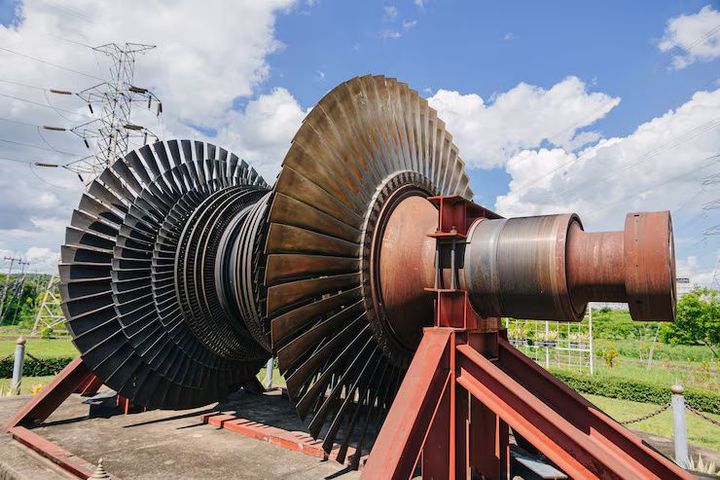
| Industrial turbines | Convert fluid energy into rotation | Power generation and processing |
| Gearboxes | Adjust speed and torque | Conveyors and machine systems |
| Compressors | Increase gas pressure | Manufacturing and processing |
| Pumps | Move liquids | Water, chemical, and process systems |
| Variable frequency drives | Control motor speed | Pumps, fans, conveyors |
| Transformers | Change electrical voltage | Industrial distribution |
| Switchgear | Control and protect circuits | Electrical distribution |
| Industrial controllers | Manage equipment functions | Automated machinery |
Importance
Why Power Machinery Matters
Industrial power machinery supports many activities that people encounter indirectly every day. Manufacturing plants use motors and drives to move materials, while pumps transport liquids through processing systems. Compressors support pneumatic equipment, generators can provide electrical continuity, and power transmission systems transfer mechanical energy between components.
The reliability of these systems can influence production continuity, equipment protection, energy use, and workplace safety. A motor operating under excessive load, for example, can experience overheating and increased wear. Proper monitoring can help identify abnormal operating conditions before they develop into larger equipment problems.
Who Uses Industrial Power Machinery
Industrial power machinery is used across many sectors, including:
- Manufacturing and assembly
- Food and beverage processing
- Water and wastewater treatment
- Mining and material processing
- Chemical and pharmaceutical production
- Construction equipment operations
- Energy and utility facilities
- Warehousing and material handling
- Transportation infrastructure
- Data and industrial facility operations
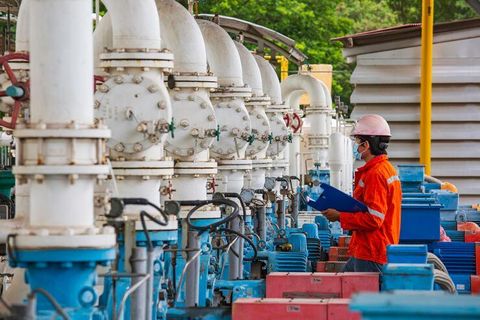
Different industries require different combinations of machinery. A pumping facility may focus on motors, pumps, valves, and drives, while a manufacturing plant may rely more heavily on conveyors, gearboxes, robots, machine tools, and automated controls.
Energy Efficiency and Equipment Management
Energy efficiency has become an important part of industrial machinery planning. Electric motors can represent a substantial portion of electricity consumption in facilities because they operate pumps, fans, compressors, conveyors, and other equipment.
Motor efficiency classifications such as IE2, IE3, and IE4 provide a framework for comparing motor efficiency. In India, the Bureau of Energy Efficiency maintains a star-rating framework for induction motors, with rating levels linked to efficiency classes.
Efficiency also depends on operating conditions. A highly efficient motor may not perform efficiently in practice if it is badly oversized, poorly maintained, incorrectly controlled, or operated far from its intended load range.
Recent Updates
Digital Monitoring and Smart Machinery
From 2024 through 2026, industrial power machinery has increasingly incorporated sensors, connected controllers, variable frequency drives, and digital monitoring. These technologies can measure variables such as temperature, vibration, current, pressure, speed, and operating hours.
Condition monitoring is becoming more accessible because sensor data can be collected continuously and analyzed through industrial software. This supports maintenance planning based on equipment condition rather than relying only on fixed schedules.
Higher-Efficiency Motors and Drives
Energy efficiency remains a major development area. Modern motor systems increasingly combine efficient motors with variable frequency drives that adjust motor speed according to demand. This can be particularly relevant for applications such as pumps and fans where the required output changes during operation.
India's Bureau of Energy Efficiency reported that its industrial Perform, Achieve and Trade framework covered 1,333 energy-intensive industries in its 2025 reporting, representing 55% of total industrial energy consumption within the program's scope.
Integration With Automation
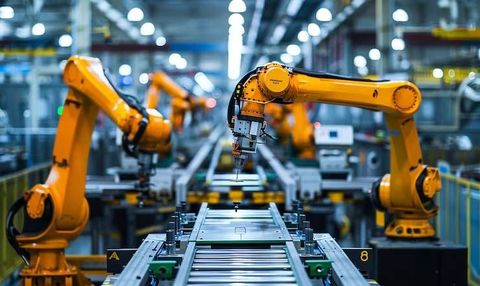
Industrial power machinery is also becoming more closely connected with automation platforms. Motor controllers, programmable logic controllers, sensors, and supervisory systems can exchange operating information. This allows equipment status to be viewed alongside process information rather than treating each machine as an isolated unit.
Another trend is the use of predictive analytics. Historical vibration, temperature, electrical, and performance data can help identify patterns associated with developing equipment problems. Such systems support engineering decisions but still require appropriate measurement methods and human review.
Laws or Policies
Electrical Safety Requirements in India
Industrial electrical equipment in India is subject to electrical safety requirements established under national rules and regulations. The Central Electricity Authority maintains the Central Electricity Authority (Measures relating to Safety and Electric Supply) Regulations, 2023, which address safety measures associated with electrical installations and supply. The authority's regulatory records also show an amendment framework updated in 2026.
These requirements are relevant to industrial power machinery because motors, generators, transformers, switchgear, control panels, and associated wiring form part of electrical installations. Specific compliance requirements can vary according to the installation, voltage level, equipment, and applicable authority.
Energy Efficiency Policies
India's Energy Conservation framework supports industrial energy-efficiency programs through the Bureau of Energy Efficiency. The Perform, Achieve and Trade mechanism applies to designated energy-intensive industries and establishes efficiency-related targets and reporting structures.
Motor efficiency labeling is another relevant area. BEE documentation describes star-rating levels for induction motors based on efficiency classes, including IE2 and higher efficiency levels.
Because requirements can change, organizations should consult the applicable current regulations, standards, and authority requirements for a particular installation. This article provides general information rather than technical or legal advice.
Tools and Resources
Equipment Selection Tools
Industrial engineers commonly use motor-sizing calculators, pump-performance calculators, compressor selection tools, power-factor calculators, and electrical-load calculation worksheets. These tools can help estimate required capacity before detailed engineering work is performed.
Monitoring Technologies
Common monitoring resources include:
- Power-quality analyzers for electrical measurements
- Vibration meters for rotating machinery
- Thermal imaging equipment for temperature patterns
- Energy meters for electricity monitoring
- Motor analyzers for electrical and mechanical assessment
- Industrial dashboards for equipment data
- Maintenance-management platforms for inspection records
Standards and Technical Information
Technical standards, manufacturer documentation, engineering databases, government energy-efficiency resources, and electrical safety publications can help readers understand equipment specifications and compliance requirements. The Bureau of Energy Efficiency and Central Electricity Authority are particularly relevant sources for Indian energy-efficiency and electrical-safety information.
FAQs
What is industrial power machinery?
Industrial power machinery is equipment used to generate, convert, transmit, control, or use electrical and mechanical energy. Examples include motors, generators, pumps, compressors, turbines, gearboxes, drives, transformers, and industrial control equipment.
How are industrial power machinery systems used?
Industrial power machinery systems operate equipment such as pumps, fans, conveyors, compressors, machine tools, and processing systems. Motors provide rotation, drives regulate operation, and control systems coordinate equipment functions.
What technologies are used in modern industrial power machinery?
Modern industrial power machinery can use variable frequency drives, sensors, programmable controllers, energy meters, vibration monitoring, digital dashboards, and data-analysis systems. These technologies provide information about equipment condition and operating performance.
Why are industrial motors important for energy efficiency?
Industrial motors commonly operate pumps, fans, compressors, conveyors, and other equipment. Motor efficiency, correct sizing, load conditions, and speed control can all influence electrical energy consumption.
What rules apply to industrial power machinery in India?
Electrical installations and equipment are affected by applicable safety regulations, including the Central Electricity Authority's safety and electric supply regulations. Energy-intensive industries can also fall under energy-efficiency programs administered by the Bureau of Energy Efficiency.
Conclusion
Industrial power machinery forms an important part of modern manufacturing, processing, infrastructure, and energy systems. Motors, generators, pumps, compressors, drives, transmission equipment, and control technologies work together to convert and manage electrical and mechanical energy. Recent developments have emphasized energy efficiency, digital monitoring, automation, and condition-based equipment management. In India, electrical safety regulations and industrial energy-efficiency programs provide an important policy framework for these technologies.