Mechanical Power Press Guide: Designs, Functions, Operations, Applications and Key Features
A mechanical power press is a machine used to shape, cut, punch, bend, or form sheet metal and other workable materials by applying controlled force through a moving ram and a die. The machine converts rotary motion from a motor into repeated linear motion, allowing a workpiece to be formed between tooling surfaces.
Mechanical power presses developed alongside industrial metalworking as factories needed repeatable ways to make parts with consistent shapes. Earlier forming work relied heavily on manual hammers, simple presses, and skilled hand operations. Modern press systems combine mechanical drive components, controls, guarding, tooling, and sensors to make production processes more organized.
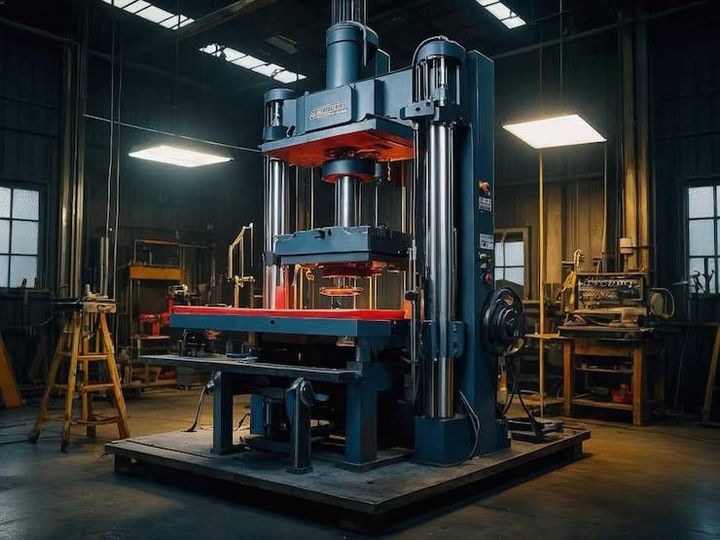
The basic arrangement includes a frame, motor, flywheel, clutch or brake system, crankshaft or eccentric mechanism, connecting rod, slide or ram, bolster, and die. When the drive system rotates, the crank mechanism moves the slide downward and upward. The die determines the shape or operation performed on the material.
Common designs include gap-frame presses, straight-side presses, eccentric presses, and linkage-driven presses. A gap-frame design provides access around the die area and is commonly associated with general forming work. Straight-side designs use a more rigid frame and are used where larger forces or heavier forming operations are involved.
Importance
Mechanical power presses matter because many everyday metal products require repeated forming operations. Enclosures, brackets, panels, automotive components, electrical parts, appliance components, hardware pieces, and other fabricated items can involve pressing, punching, bending, or blanking.
The machine also affects workplace safety and production planning. A press can generate substantial force within a small working area, so the relationship between tooling, material, operating controls, and guarding is important. Poorly selected tooling, incorrect setup, unexpected machine movement, or access to the point of operation can create serious hazards.
For general understanding, the main considerations include:
- Material: Sheet thickness, hardness, size, and formability influence the required process.
- Force: Press capacity must correspond with the forming or cutting operation.
- Stroke: The slide movement affects how the die performs its task.
- Speed: Cycles per minute influence production rhythm and process suitability.
- Tooling: Die design controls the shape and type of operation.
- Safety: Guards, interlocks, controls, emergency stopping arrangements, and safe work procedures help manage hazards.
Recent Updates
From 2024 through 2026, machine safety standards and regulatory frameworks in India have continued to receive attention. The Bureau of Indian Standards lists IS 17277 Part 2:2023 as the Indian Standard covering safety requirements for mechanical presses, within the broader IS 17277 series for press safety. BIS material also identifies general machine-risk principles and related electrical safety standards used for machine design and assessment.
Another current development is the wider movement toward connected and electronically monitored machinery. Modern press systems can incorporate programmable controls, position monitoring, two-hand controls, light curtains, presence sensing, fault diagnostics, and production data collection. These technologies can improve monitoring and process control, but they do not replace appropriate guarding, risk assessment, training, or operating procedures.
BIS continues to provide a searchable standards portal where users can look up Indian Standards by number or keyword and review related standard information. The portal was updated during 2026, making it a useful reference point when checking the current status of a standard.
Laws or Policies
In India, workplace use of industrial machinery is shaped by occupational safety requirements, factory rules, and applicable technical standards. The Occupational Safety, Health and Working Conditions Code, 2020 establishes a national framework covering occupational safety and working conditions, while detailed implementation depends on applicable rules and notifications. The Ministry of Labour and Employment has published draft central rules connected with the Code and maintains current information on labour codes and rules.
The earlier Factories Act, 1948 also contains machinery-safety provisions concerning fencing, dangerous machines, and controls related to moving machinery. Its provisions remain relevant to understanding the historical framework, while users should check the current legal position applicable to their state and establishment.
For technical safety, IS 17277 Part 1 addresses general safety requirements for presses, while Part 2 addresses mechanical presses specifically. These standards can help engineers, manufacturers, plant managers, and safety personnel understand risk-reduction principles and machine safeguards. The exact legal requirement for a particular installation can depend on the machine, workplace, state rules, and applicable notifications.
Tools and Resources
Several tools can help readers understand a mechanical power press and its operating requirements. The most useful resources generally combine machine documentation, engineering references, standards, and workplace safety information.
Machine manuals and drawings
The machine manual normally identifies rated capacity, stroke length, operating modes, lubrication points, tooling limits, adjustment procedures, and safety functions. Engineering drawings can also show the frame, drive arrangement, slide, bolster, and tooling interface.
Press-capacity calculations
Basic press calculations can help estimate the force associated with cutting or forming. Factors may include material strength, thickness, cutting perimeter, bend geometry, friction, and tooling design. Actual machine selection should use appropriate engineering calculations rather than relying on a simple rule of thumb.
Standards databases
The BIS Know Your Standard portal allows searches by Indian Standard number or keyword and provides access to information associated with standards, amendments, notifications, testing information, and related records.
Safety assessment tools
Risk-assessment worksheets can help identify hazards around the point of operation, moving components, electrical controls, stored energy, tooling changes, and unexpected machine movement. A practical assessment normally considers the complete work process rather than the press alone.
Typical press parameters
| Parameter | What it describes | Why it matters |
|---|---|---|
| Rated force | Maximum designed pressing capacity | Helps match the machine with the operation |
| Stroke | Slide travel distance | Influences forming depth and cycle |
| Stroke rate | Number of cycles in a given period | Affects operating rhythm |
| Bed size | Available tooling and work area | Helps determine part and die dimensions |
| Shut height | Distance between specified tooling surfaces | Affects die setup |
| Motor rating | Drive motor capacity | Relates to the machine's operating system |
FAQs
What is a mechanical power press?
A mechanical power press is a machine that uses a mechanical drive system to move a ram or slide and apply force to material through a die. It can perform operations such as blanking, punching, bending, forming, and drawing, depending on its design and tooling.
How does a mechanical power press work?
The motor drives a flywheel and mechanical transmission. A clutch or similar mechanism connects the stored rotational energy to a crank or eccentric system, which converts rotary motion into slide movement. The slide then moves the upper tooling toward the lower die.
What are the main mechanical power press designs?
Common designs include gap-frame and straight-side presses, along with different crank, eccentric, and linkage arrangements. The frame and drive design influence rigidity, stroke characteristics, tooling access, and the type of forming operation for which the press is intended.
What safety features are used on mechanical power presses?
Common safeguards include fixed or adjustable guards, interlocked guards, presence-sensing devices, two-hand controls, emergency stopping arrangements, control monitoring, and suitable die protection. The exact combination depends on the machine and risk assessment.
Which standards apply to mechanical power presses in India?
IS 17277 is the Indian Standard series for press safety. Part 1 covers general press safety requirements and Part 2 covers mechanical presses. Applicable workplace rules and state requirements should also be checked for the specific installation.
Conclusion
A mechanical power press converts mechanical motion into controlled force for cutting, bending, punching, and forming materials. Its main elements include the frame, drive system, slide, bolster, tooling, controls, and safeguards. Current Indian practice is shaped by occupational safety rules and technical standards, including the IS 17277 series for press safety. Understanding machine design, operating parameters, tooling, and risk controls helps readers interpret how these machines are used in modern manufacturing.